
The enduring fascination with the paranormal, and specifically with the practice of “ghost hunting,” reveals a complex tapestry of beliefs, motivations, and technological applications. While often relegated to the realm of entertainment, ghost hunting is, for many, a serious endeavor driven by a desire for answers, validation, and a deeper understanding of the unknown. This exploration delves into the diverse beliefs surrounding ghost hunting, examining its technological underpinnings, the psychological drivers, and the impact of its public perception.
The Technological Arsenal of the Paranormal Investigator
Ghost hunting, at its core, is an attempt to empirically gather evidence of a phenomenon that defies conventional scientific explanation. This pursuit has led to the development and adoption of a wide array of technologies, many of which are rooted in established scientific principles but repurposed for paranormal investigation. These tools are not merely props; for believers, they are extensions of their senses, designed to detect anomalies that might otherwise go unnoticed.

Electromagnetic Field (EMF) Detectors: The Whispering Winds of Energy
One of the most ubiquitous tools in a ghost hunter’s kit is the EMF detector. The underlying belief is that spirits, or at least their residual energy, can influence or be accompanied by fluctuations in electromagnetic fields. These devices measure the strength of these fields, and any spikes or unusual readings are often interpreted as potential indicators of paranormal activity. The theory, often cited, suggests that spirits might possess or manipulate energy, leading to detectable EMF changes. While mainstream science attributes EMF fluctuations to a multitude of sources, from faulty wiring to radio waves, ghost hunters often look for readings that occur without any apparent conventional cause, considering them anomalous and suggestive of a non-corporeal presence. The interpretation hinges on the assumption that a “ghost” is an energy signature, and EMF detectors are seen as a way to perceive this signature.
Electronic Voice Phenomena (EVP) Recorders: Capturing the Unseen Voices
The quest to hear evidence of the afterlife has given rise to the meticulous use of audio recording devices, specifically for capturing Electronic Voice Phenomena (EVP). The belief here is that spirits can, and do, communicate by imprinting their voices onto electronic media, often at frequencies or volumes imperceptible to the human ear. Ghost hunters meticulously record in allegedly haunted locations, playing back the audio at slower speeds or with amplification in the hope of discerning disembodied voices, whispers, or even full sentences. These captured “voices” are often fragmented, context-dependent, and open to subjective interpretation. However, for those who believe, the revelation of a name, a phrase, or an emotional utterance can be profound evidence of a lingering spirit. The very act of trying to capture these ethereal voices underscores a fundamental belief in the persistence of consciousness beyond physical death.
Thermal Imaging Cameras: Seeing the Cold Spots of the Unseen
Another technological advancement embraced by ghost hunters is thermal imaging. The prevailing theory here is that spirits, being non-corporeal entities, may interact with their environment by drawing heat from it, thereby creating localized “cold spots.” Thermal cameras detect infrared radiation, which is essentially heat, and translate it into visual images where different temperatures are represented by varying colors. Ghost hunters will scan rooms, looking for sudden drops in temperature that cannot be explained by drafts, faulty insulation, or HVAC systems. A distinct cold spot appearing in a thermal image, especially if it moves or correlates with other perceived anomalies, is often interpreted as the presence of a spectral entity. This technology offers a visual dimension to the investigation, allowing for the detection of subtle thermal changes that might otherwise go unnoticed by human perception.
Other Technological Tools and Their Beliefs
Beyond these core tools, ghost hunters employ a variety of other technologies, each reflecting a specific belief about the nature of ghosts. Motion detectors are used to identify unexplained movement in a space, with the assumption that a spirit could physically displace objects or create disturbances. Static cameras are deployed to capture visual anomalies, such as apparitions, shadows, or orbs – spherical lights that are often debated as dust, insects, or genuine spectral manifestations. Some investigators even utilize Geiger counters, based on the belief that spirits might emit a form of radiation, or devices that measure changes in ambient light, assuming spirits could disrupt the natural flow of light. The collective use of these diverse technologies highlights a multi-faceted approach to proving the existence of the paranormal, with each tool addressing a different hypothesized characteristic of a ghostly presence.
The Psychological and Sociological Underpinnings of Ghost Hunting Beliefs
The decision to believe in ghosts and engage in ghost hunting is rarely a purely intellectual one. It is deeply intertwined with psychological needs, cognitive biases, and sociological influences that shape how individuals perceive and interpret evidence. Understanding these underlying factors is crucial to comprehending the persistent appeal of paranormal investigation.
The Human Need for Meaning and Connection
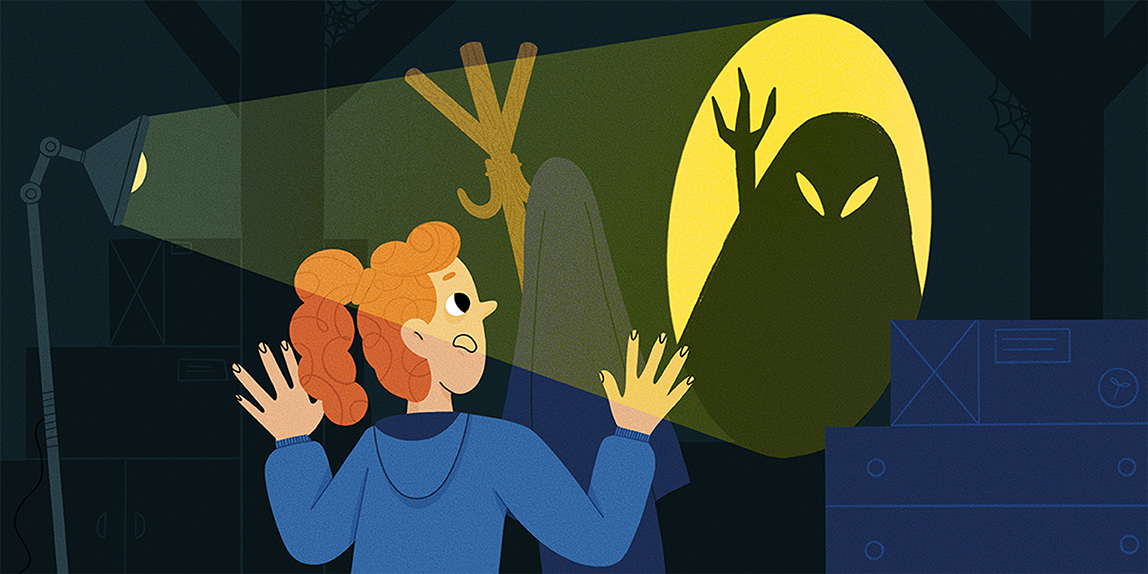
At a fundamental level, belief in ghosts often stems from a profound human need for meaning and connection, especially in the face of mortality. The idea that consciousness persists after death offers comfort and a sense of continuity, alleviating the fear of oblivion. For those who have experienced loss, the possibility of communicating with deceased loved ones, even through indirect means like EVP, can be a powerful motivator. This desire for connection transcends the purely scientific, tapping into deeply ingrained emotional and spiritual yearnings. Ghost hunting, in this context, becomes a ritualized attempt to bridge the gap between the living and the dead, offering a tangible pursuit of intangible solace.
Confirmation Bias and the Power of Interpretation
A significant factor influencing belief in ghost hunting is confirmation bias. Once an individual believes in the possibility of ghosts, they are more likely to interpret ambiguous phenomena as evidence supporting their belief. An EMF spike in a supposedly haunted house, a faint whisper on an EVP recording, or a shadow in a photograph can all be readily attributed to paranormal activity, even when more mundane explanations exist. The human brain is adept at finding patterns, and in the context of ghost hunting, these patterns are often seen as confirmation of the supernatural. This cognitive process, while common, can lead to a skewed perception of evidence, where contradictory explanations are overlooked in favor of those that align with pre-existing beliefs.
The Role of Media and Cultural Narratives
The widespread popularization of ghost hunting through television shows, movies, and online content has significantly shaped public perception and belief. These narratives often present ghost hunting as an exciting and conclusive endeavor, showcasing dramatic findings and definitive “proof.” This media portrayal can normalize the practice and foster belief, particularly among younger audiences who may not have had personal experiences to form their own opinions. Cultural narratives surrounding ghosts and the afterlife have long existed, but the modern iteration of ghost hunting, amplified by mass media, has solidified a specific set of beliefs about what constitutes evidence and how it is obtained. This continuous exposure can reinforce existing beliefs and introduce new adherents to the world of paranormal investigation.
The Skeptical Counterpoint: Demystifying Paranormal Claims
While belief in ghosts and ghost hunting is widespread, it is met with considerable skepticism from the scientific community and many individuals. Skepticism is not necessarily outright denial but rather a demand for rigorous evidence and adherence to established scientific principles. Understanding the skeptical perspective is vital for a balanced view of the ghost hunting phenomenon.
The Burden of Proof and Scientific Scrutiny
The core of the skeptical argument lies in the principle that extraordinary claims require extraordinary evidence. Skeptics argue that the evidence presented by ghost hunters – ambiguous EMF readings, subjective EVP interpretations, or fleeting visual anomalies – does not meet the rigorous standards of scientific proof. They emphasize that many of these phenomena can be explained by natural causes, such as faulty equipment, psychological suggestion, environmental factors, or simple misinterpretation. The lack of replicable results under controlled conditions further fuels skepticism. From a scientific standpoint, without consistent, measurable, and verifiable data, paranormal claims remain in the realm of anecdote and belief rather than established fact.
Alternative Explanations for Perceived Phenomena
Skeptics propose rational explanations for many of the phenomena attributed to ghosts. For instance, EMF detectors can pick up signals from a myriad of electronic devices, including mobile phones, Wi-Fi routers, and even power lines. The perception of voices in EVP recordings is often explained by pareidolia, a psychological phenomenon where the brain perceives familiar patterns, such as voices, in random stimuli. Cold spots can be attributed to drafts, convection currents, or the presence of moisture. Thermal imaging can detect subtle temperature variations due to natural environmental factors. Skeptics advocate for a cautious approach, urging investigators to exhaust all natural explanations before resorting to supernatural ones. This analytical approach seeks to debunk paranormal claims by offering logical and scientifically grounded alternatives.
The Ethical Considerations of Paranormal Investigation
Beyond the scientific debate, skepticism also extends to the ethical implications of ghost hunting. Some critics argue that the pursuit of ghosts can prey on vulnerable individuals, particularly those grieving or experiencing mental distress. The sensationalism often associated with paranormal investigations can contribute to fear and anxiety, while misleading individuals into believing in unsubstantiated phenomena. Furthermore, the intrusion into private properties, often without explicit consent or with exploitative motives, raises privacy concerns. Skeptics advocate for responsible investigation that prioritizes factual accuracy, ethical conduct, and respect for individuals and their beliefs, urging a move away from sensationalism towards a more evidence-based and ethical approach.
Conclusion: The Enduring Enigma of Belief
The beliefs surrounding ghost hunting represent a fascinating intersection of technology, psychology, and the enduring human quest for understanding the unknown. While technological advancements provide tools for investigation, it is the human mind, with its inherent desires for meaning, connection, and pattern recognition, that ultimately shapes the interpretation of the findings. The skeptical counterpoint, rooted in scientific rigor and a demand for verifiable evidence, plays a crucial role in challenging unsubstantiated claims and encouraging a more critical examination of paranormal phenomena. Ultimately, what people believe about ghost hunting is a reflection of their individual worldviews, their openness to the unexplained, and their willingness to engage with the mysteries that lie beyond the veil of conventional understanding. The debate, much like the alleged phenomena themselves, continues to persist, fueled by both fascination and doubt.
aViewFromTheCave is a participant in the Amazon Services LLC Associates Program, an affiliate advertising program designed to provide a means for sites to earn advertising fees by advertising and linking to Amazon.com. Amazon, the Amazon logo, AmazonSupply, and the AmazonSupply logo are trademarks of Amazon.com, Inc. or its affiliates. As an Amazon Associate we earn affiliate commissions from qualifying purchases.