
Google, or more accurately its parent company Alphabet Inc., is far more than just a search engine. It is a sprawling technological conglomerate that has intricately woven itself into the fabric of modern life, touching everything from communication and entertainment to transportation and healthcare. To ask “what does Google own?” is to embark on a journey through a vast and dynamic ecosystem of innovative products, influential platforms, groundbreaking research divisions, and strategic subsidiaries. This exploration will peel back the layers of Alphabet’s holdings, revealing a meticulously constructed empire built on data, connectivity, and an insatiable drive for technological advancement. Within the realm of technology, Google’s ownership extends across software, hardware, artificial intelligence, cloud computing, and even futuristic “moonshot” ventures, all designed to shape the digital future.
The Core Pillars: Search, Ads, and Android’s Ubiquity
At the heart of Alphabet’s dominion lie its foundational technologies, which not only generate the lion’s share of its revenue but also serve as the critical infrastructure for much of its broader technological ecosystem. These pillars represent Google’s initial triumphs and enduring strengths.
Google Search and Advertising Dominance
The quintessential Google product, Search, remains the bedrock of the company’s influence. It processes billions of queries daily, acting as the primary gateway to information for a significant portion of the global internet population. But Google Search isn’t just a utility; it’s a meticulously engineered platform that understands context, anticipates needs, and continually refines its algorithms to deliver increasingly relevant results. Complementing Search is Google’s colossal advertising business, primarily through Google Ads (formerly AdWords) and AdSense. This sophisticated ecosystem allows advertisers to bid on keywords and display ads across Google’s own properties and a vast network of third-party websites and apps. It’s an economic engine unparalleled in scale, leveraging vast amounts of user data (anonymized and aggregated) to deliver targeted advertising that underpins Alphabet’s financial success and fuels its ambitious ventures. The continued innovation in search, including advancements in semantic understanding, voice search, and visual search (Google Lens), ensures its enduring relevance and competitive edge.
Android: The World’s Most Popular Mobile OS
Beyond the desktop, Google’s ownership of Android has cemented its control over the mobile world. Acquired in 2005, Android has evolved into the dominant mobile operating system globally, powering billions of smartphones, tablets, smartwatches, and other devices. Its open-source nature, coupled with Google’s relentless development and the wealth of applications available through the Google Play Store, has created an unparalleled ecosystem. This ownership gives Google significant leverage in the mobile advertising space, ensures the widespread distribution of its services (Search, Maps, Gmail, YouTube), and provides an invaluable platform for data collection and user engagement. Android’s deep integration with Google’s cloud services and AI capabilities further solidifies its position as a central pillar of Google’s technological holdings, driving innovation in areas like mobile AI, IoT connectivity, and pervasive computing.
Chrome and Google Workspace: Productivity and Connectivity
Google’s influence extends deeply into how individuals and businesses work and connect. Google Chrome, the world’s most popular web browser, serves as another critical conduit for accessing Google services and the broader internet. Its tight integration with Google accounts, synchronization across devices, and robust extension ecosystem make it a central hub for many users’ online activities. Complementing Chrome is Google Workspace (formerly G Suite), a comprehensive suite of cloud-native productivity and collaboration tools. This includes Gmail, Google Docs, Sheets, Slides, Drive, Meet, and Calendar. By providing these essential tools, Google owns a significant portion of the digital workflow for millions of users and enterprises worldwide, fostering a powerful lock-in effect and further entrenching its presence in daily digital interactions. These services are constantly updated with AI-powered features, enhancing productivity and security, and demonstrating Google’s commitment to owning the future of work.
Beyond the Browser: Expanding into New Frontiers
Alphabet’s strategy isn’t limited to its core profit centers. The company has aggressively expanded its ownership into diverse and rapidly growing technological domains, diversifying its revenue streams and future-proofing its empire.
YouTube: The Global Video Powerhouse
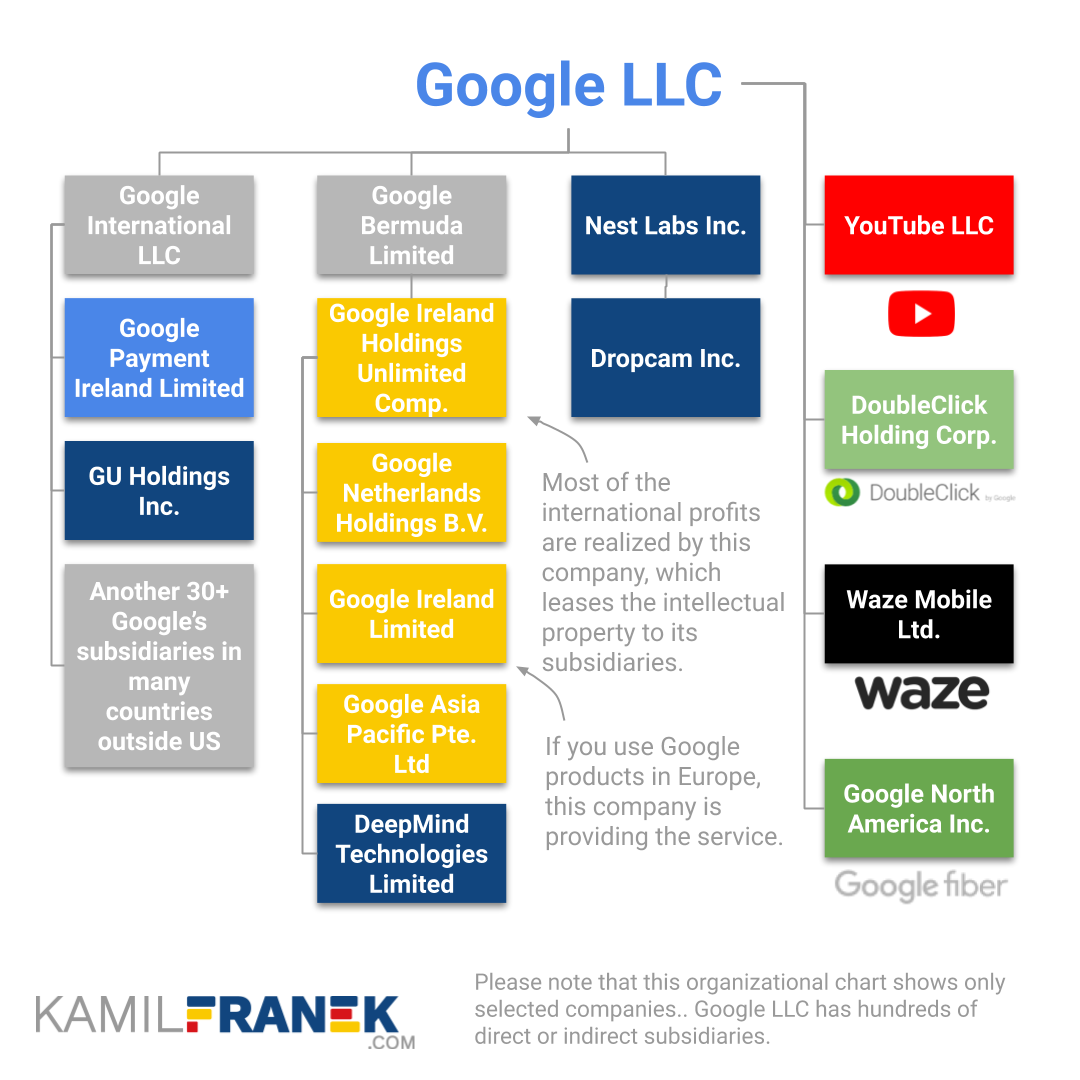
Acquired in 2006, YouTube has transcended its origins as a video-sharing platform to become a global cultural phenomenon and a media powerhouse. It hosts billions of videos, serves as a primary source of entertainment, education, and news, and supports an entire creator economy. Google’s ownership of YouTube provides an unparalleled platform for video advertising, rivaling traditional television in reach and impact. Furthermore, YouTube’s strategic importance extends to Google’s AI and machine learning initiatives, which power content recommendation, moderation, and monetization. It’s a critical asset in the battle for user attention and a crucial component of Google’s broader content strategy, encompassing everything from music streaming (YouTube Music) to premium content (YouTube Premium) and even live TV (YouTube TV).
Google Cloud Platform: Enterprise Solutions and Infrastructure
Recognizing the immense potential in enterprise computing, Google has heavily invested in the Google Cloud Platform (GCP). GCP offers a comprehensive suite of cloud computing services, including computing power, data storage, machine learning tools, and networking. It competes directly with industry giants like Amazon Web Services and Microsoft Azure, aiming to capture a larger share of the rapidly expanding cloud market. GCP leverages Google’s immense global infrastructure and its expertise in AI and data analytics to provide scalable, secure, and performant solutions for businesses of all sizes. This ownership represents a strategic pivot towards enterprise customers, diversifying Alphabet’s revenue away from its advertising reliance and positioning it at the forefront of the digital transformation driving modern industries.
Google Hardware: From Pixels to Nest
While primarily known for software, Google has made significant strides in hardware, strategically owning devices that bring its software and services directly into users’ hands and homes. This includes the Pixel line of smartphones, known for their exceptional cameras and pure Android experience; Nest smart home devices (thermostats, cameras, doorbells), which integrate Google Assistant and IoT capabilities; Google Home/Nest speakers and displays; and Chromecast streaming devices. These hardware ventures are crucial for several reasons: they allow Google to showcase the full potential of its software, provide direct control over the user experience, and gather valuable data to refine its AI and services. By owning the hardware, Google ensures seamless integration and a consistent user journey, strengthening its ecosystem.
The Moonshots and Future Bets: Alphabet’s Other Bets
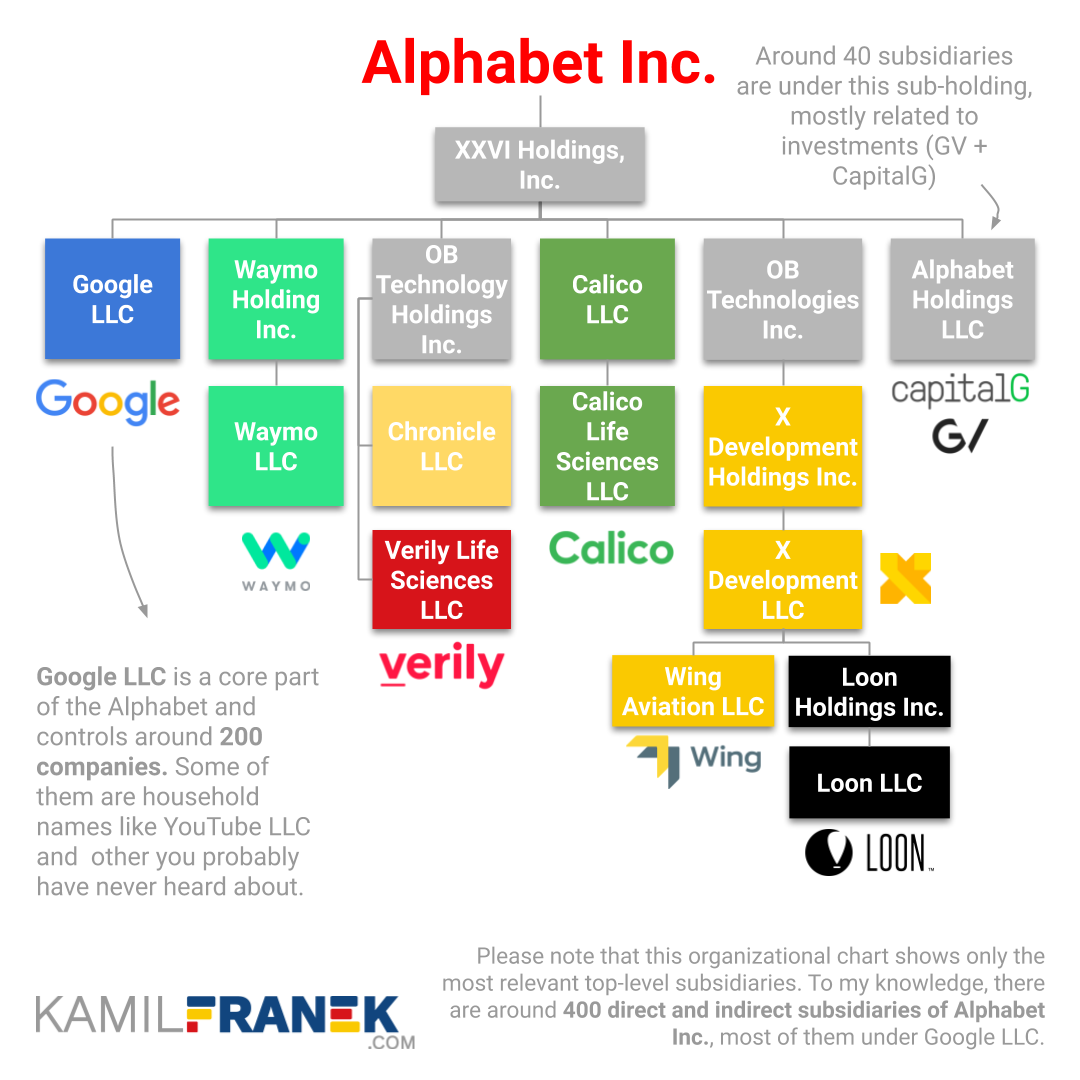
Alphabet’s organizational structure, which separates Google’s core business from its more experimental “Other Bets,” highlights its commitment to long-term, high-risk, high-reward ventures. These entities are designed to tackle ambitious challenges and potentially unlock entirely new markets, pushing the boundaries of what technology can achieve.
Waymo: Pioneering Autonomous Vehicles
Perhaps one of the most prominent “Other Bets” is Waymo, Alphabet’s self-driving technology company. Waymo is a leader in autonomous vehicle technology, developing sophisticated AI and sensor systems for fully driverless cars. Its long-term vision is to revolutionize transportation through ride-hailing services, logistics, and personal mobility solutions powered by its self-driving stack. Google’s ownership of Waymo represents a massive investment in a future where transportation is safer, more efficient, and more accessible, leveraging years of research in AI, robotics, and mapping.
DeepMind and Google AI: The Intelligence Engine
Artificial intelligence is not just a feature within Google’s products; it’s a fundamental capability that permeates nearly everything Alphabet does. DeepMind, a British AI company acquired by Google, is at the forefront of AI research, achieving breakthroughs in areas like reinforcement learning, medical diagnosis, and scientific discovery. Together with Google AI, these entities constitute the intelligence engine of Alphabet, driving advancements in natural language processing, computer vision, predictive analytics, and conversational AI. Their work powers everything from Search and recommendations to cloud services and autonomous systems, demonstrating Google’s commitment to owning the foundational intelligence that will define the next era of technology.
Verily and Calico: Innovations in Life Sciences
Alphabet has also ventured into the life sciences with Verily and Calico. Verily focuses on health and life sciences research and development, leveraging advanced data analytics, AI, and miniaturized electronics to create tools and platforms for precision medicine, disease prevention, and patient care. Calico (California Life Company) is dedicated to understanding the biology of aging and developing interventions to combat age-related diseases. These ventures signify Google’s long-term vision to apply its technological prowess to some of humanity’s most complex challenges, aiming to extend healthspan and improve quality of life through data-driven scientific discovery.
Other Ventures: From Fiber to Capital
The “Other Bets” category is broad and encompasses a variety of additional ventures. This includes Sidewalk Labs (formerly urban innovation, now absorbed into Google), Loon (formerly balloon-powered internet, now dissolved but its tech lives on in other areas), and Google Fiber (delivering high-speed internet to select communities). Alphabet also owns GV (formerly Google Ventures) and CapitalG, its venture capital arms that invest in promising startups across various industries, extending Google’s influence and access to emerging technologies and talent. These diverse holdings illustrate Alphabet’s appetite for innovation across an incredibly wide spectrum of technological applications.
The Strategic Underpinnings: How Acquisitions Shape the Empire
Google’s current portfolio is not solely the result of organic growth. A significant portion of its empire has been meticulously built through strategic acquisitions, allowing the company to rapidly enter new markets, acquire talent, and eliminate potential competitors.
A History of Strategic Acquisitions
From its early days, Google understood the power of acquisition. The purchases of Android and YouTube are prime examples of how acquiring promising startups allowed Google to quickly dominate nascent markets. Other notable acquisitions, such as DoubleClick (advertising technology), Waze (navigation), and Nest Labs (smart home), demonstrate a consistent strategy: identify valuable technology or market positions, integrate them into the Google ecosystem, and scale them globally. This aggressive M&A strategy has enabled Alphabet to consolidate its technological advantage, fill gaps in its product lineup, and expand into adjacent industries without the lengthy R&D cycles required for internal development.
Data and Intellectual Property: The Invisible Assets
Beyond physical products and companies, Google owns an immense trove of intangible assets: data and intellectual property. The sheer volume of data processed through Search, Android, YouTube, Maps, Gmail, and its other services is unparalleled. While this data is anonymized and aggregated for privacy, it forms the bedrock for training Google’s AI models, improving its services, and enabling its targeted advertising. Furthermore, Google holds thousands of patents covering everything from search algorithms and mobile operating systems to autonomous vehicle technology and quantum computing. These patents not only protect its innovations but also provide significant defensive and offensive capabilities in the highly competitive tech landscape, representing a critical, albeit invisible, part of what Google owns.

The Ecosystem Play: Interconnectedness and User Lock-in
Ultimately, what Google owns is a meticulously interconnected ecosystem designed for seamless user experience and maximum engagement. Each product and service, whether it’s an Android phone, a Chrome browser, a YouTube video, or a Google Maps query, is designed to work harmoniously with the others. This interconnectedness creates a powerful network effect and fosters a degree of user lock-in, where switching away from Google’s services becomes increasingly cumbersome due to the convenience and integration offered. This holistic ownership strategy ensures that users remain within the Google orbit, continually feeding data back into the system and reinforcing the company’s technological dominance across multiple facets of digital life.
In conclusion, asking “what does Google own?” reveals a technological leviathan, far surpassing its initial search engine identity. Alphabet Inc. possesses a monumental collection of software, hardware, AI platforms, cloud infrastructure, and groundbreaking “Other Bets” that collectively form an empire touching nearly every aspect of the modern technological landscape. From the ubiquitous presence of Android and Chrome to the vast content library of YouTube, the foundational power of Google Cloud, and the futuristic promise of Waymo and DeepMind, Google’s ownership is a testament to its relentless pursuit of innovation and its strategic prowess in shaping the digital world. Its continued expansion and strategic acquisitions underscore its ambition to not just participate in, but actively define, the technological future across an ever-growing array of industries.
aViewFromTheCave is a participant in the Amazon Services LLC Associates Program, an affiliate advertising program designed to provide a means for sites to earn advertising fees by advertising and linking to Amazon.com. Amazon, the Amazon logo, AmazonSupply, and the AmazonSupply logo are trademarks of Amazon.com, Inc. or its affiliates. As an Amazon Associate we earn affiliate commissions from qualifying purchases.