
When we ask “how old are bitcoins,” we’re not merely inquiring about a date on a calendar. We’re delving into the financial genesis, evolution, and maturation of an asset that has fundamentally reshaped global financial paradigms. Bitcoin, as the pioneer of decentralized digital currency, has a relatively short but incredibly impactful history, marked by unprecedented volatility, revolutionary technological innovation, and a steady march towards mainstream financial acceptance. Understanding its age is crucial to appreciating its journey from an obscure cryptographic experiment to a trillion-dollar asset class, a significant player in investment portfolios, and a symbol of monetary independence. Its lifespan to date offers a rich tapestry of financial lessons, highlighting market cycles, the power of network effects, and the inherent human drive for sound money.

The Genesis: Bitcoin’s Inception and Early Value
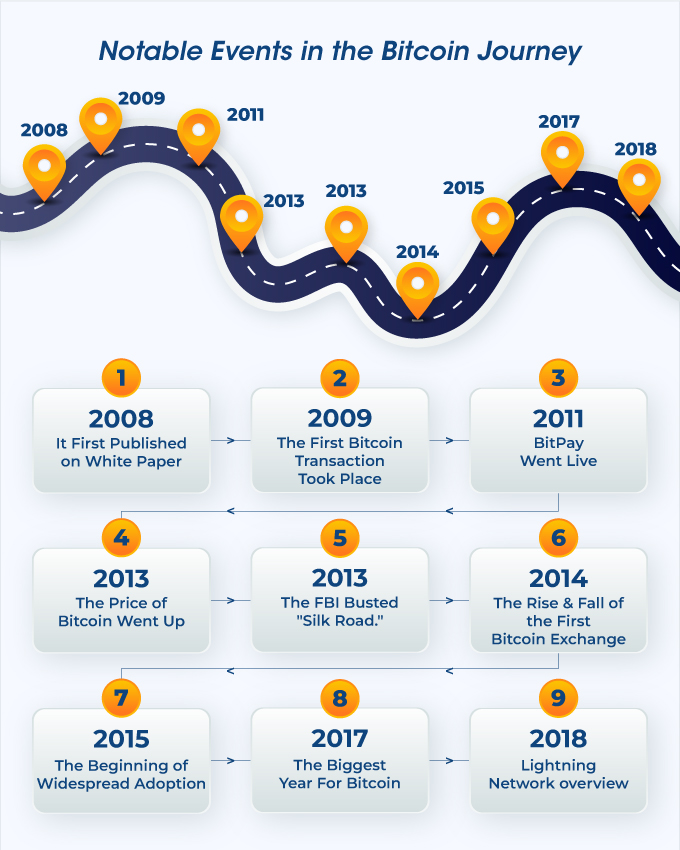
The story of Bitcoin’s age begins precisely on October 31, 2008, when an anonymous entity operating under the pseudonym Satoshi Nakamoto published the Bitcoin whitepaper, “Bitcoin: A Peer-to-Peer Electronic Cash System.” This seminal document outlined a revolutionary concept: a purely peer-to-peer version of electronic cash that would allow online payments to be sent directly from one party to another without going through a financial institution. However, the actual birth of the Bitcoin network, and thus its operational age, arrived a few months later.
The Whitepaper and the Genesis Block
The technical implementation of Nakamoto’s vision began with the mining of the Genesis Block (Block 0) on January 3, 2009. This moment marked the official launch of the Bitcoin network and the creation of the first 50 bitcoins. Embedded within the coinbase transaction of the Genesis Block was a headline from The Times newspaper: “Chancellor on brink of second bailout for banks.” This message was not just a timestamp; it was a potent political and financial statement, underscoring Bitcoin’s core principle as a decentralized alternative to a traditional financial system perceived as fragile and prone to crises. From this very inception, Bitcoin was deeply intertwined with an alternative monetary philosophy.
Early Transactions and the First Exchange Rate
For its initial year, Bitcoin existed largely within a niche community of cypherpunks and tech enthusiasts. Its monetary value was practically non-existent in traditional fiat terms. The first recorded commercial transaction occurred on May 22, 2010, when Laszlo Hanyecz famously purchased two pizzas for 10,000 bitcoins. At the time, this equated to roughly $41, setting an informal exchange rate of $0.0041 per bitcoin. This event, now celebrated annually as “Bitcoin Pizza Day,” serves as a stark reminder of Bitcoin’s humble beginnings and the exponential growth in its financial perception over the years. Early adopters acquired bitcoins through mining on personal computers or via direct transfers from other enthusiasts, often without any fiat currency involvement, highlighting its initial status as a curiosity rather than a financial instrument.
Bitcoin’s Monetary Philosophy
At its heart, Bitcoin’s age signifies the enduring resilience of a particular monetary philosophy. Satoshi Nakamoto engineered Bitcoin with principles of decentralization, scarcity, and censorship resistance—all fundamental attributes designed to counteract perceived flaws in fiat currencies and the traditional banking system. The fixed supply cap of 21 million bitcoins, coupled with a predictable halving schedule that reduces the rate of new coin issuance, created a form of digital scarcity akin to precious metals. This programmatic scarcity, embedded from day one, is a cornerstone of its long-term investment appeal and its narrative as “digital gold,” a hedge against inflation and economic uncertainty. These design choices, made at its inception, laid the financial groundwork for its future significance.
Navigating the Turbulent Teens: Growth, Volatility, and Maturation
After its quiet birth, Bitcoin entered a phase of rapid, often tumultuous, growth. Its “teenage years” were characterized by extreme price volatility, growing media attention, and an increasing, albeit often skeptical, awareness from traditional financial circles. This period solidified its identity as a truly novel financial asset, presenting both immense opportunities and significant risks to early investors.
The First Bull Runs and Bear Markets
Bitcoin’s price history is a saga of dramatic peaks and troughs. The first significant bull run occurred in 2013, pushing its price from mere dollars to over $1,000. These early surges were often fueled by increasing public interest, media speculation, and the growing accessibility of exchanges. However, these rallies were invariably followed by steep corrections, sometimes losing 80% or more of their value, demonstrating the nascent market’s inherent instability and the speculative nature of early investments. These cycles, while painful for some investors, also served to test the network’s resilience and to attract a new wave of participants who saw beyond the short-term price swings to its long-term potential as a financial innovation.
Regulatory Scrutiny and Market Acceptance
As Bitcoin grew in financial stature, it inevitably drew the attention of regulators worldwide. Governments grappled with how to classify and oversee this new digital asset, leading to a patchwork of approaches ranging from outright bans to cautious acceptance. Early regulatory actions often focused on concerns about illicit activities, money laundering, and investor protection. However, as the ecosystem matured, and financial institutions began to explore blockchain technology, the dialogue shifted towards integrating digital assets into existing financial frameworks. This period saw the emergence of dedicated crypto exchanges, improved custodial solutions, and clearer guidelines, slowly but surely paving the way for broader market acceptance and institutional involvement, crucial for its financial legitimization.
The Rise of Altcoins and the Expanding Crypto Economy
Bitcoin’s success did not merely create a new asset; it spawned an entirely new industry. Its open-source nature and underlying blockchain technology inspired thousands of “altcoins”—alternative cryptocurrencies—each aiming to improve upon Bitcoin’s design or fulfill different use cases. Ethereum, launched in 2015, was particularly significant, introducing smart contracts and decentralized applications (DApps) and creating a platform for decentralized finance (DeFi). The rise of altcoins diversified the crypto economy, but Bitcoin consistently maintained its dominance as the leading digital asset, often serving as the benchmark for the entire market. Its age and established network effects gave it a first-mover advantage and a perception of reliability that many newer projects struggled to emulate, reinforcing its position as the foundational investment in the crypto space.
Bitcoin in Adulthood: A Recognized Global Asset
As Bitcoin approached and crossed its first decade, it shed much of its “wild west” image, evolving into a recognized, albeit volatile, global asset class. Its maturity has been marked by increasing institutional adoption, clearer regulatory frameworks, and a growing narrative as a legitimate store of value, attracting a new demographic of investors and financial entities.
Institutional Adoption and Mainstream Integration
The latter half of Bitcoin’s history has seen a significant shift from retail-dominated speculation to institutional participation. Publicly traded companies like MicroStrategy began allocating substantial portions of their treasury reserves to Bitcoin, signaling a belief in its long-term value appreciation. Major financial players, including traditional banks, asset managers, and payment processors, started offering crypto services or investing directly in Bitcoin. The launch of Bitcoin Futures ETFs in the U.S. and spot Bitcoin ETFs in various jurisdictions marked a pivotal moment, providing regulated avenues for mainstream investors to gain exposure to Bitcoin without directly holding the asset. This integration into conventional finance underscores Bitcoin’s journey from a fringe asset to a sophisticated financial product.
Bitcoin as a Store of Value and Inflation Hedge
One of the most compelling narratives driving Bitcoin’s adoption in its mature years is its role as a “digital gold”—a reliable store of value and a potential hedge against inflation. In an era of unprecedented monetary expansion and rising concerns about fiat currency debasement, Bitcoin’s finite supply and decentralized nature present an attractive alternative. Investors are increasingly considering Bitcoin alongside traditional assets like gold and real estate as a component of a diversified portfolio designed to preserve wealth over time. Its age, marked by surviving multiple economic cycles and demonstrating consistent long-term appreciation despite volatility, strengthens this narrative.
The Geopolitical and Economic Impact
Bitcoin’s maturation has extended its influence beyond individual investment portfolios to impact geopolitical and macroeconomic landscapes. Countries like El Salvador have adopted Bitcoin as legal tender, showcasing its potential as a national currency and a tool for financial inclusion in developing economies. It offers a permissionless system for remittances, potentially disrupting traditional money transfer services. Furthermore, Bitcoin has become a vehicle for financial freedom in regions facing political instability or hyperinflation, offering citizens a way to protect their savings from government overreach or currency collapse. This broader economic and social impact highlights that Bitcoin’s age is not just a chronological measure, but a testament to its expanding influence on global financial systems.
The Age-Old Question: Bitcoin’s Enduring Financial Relevance
The question of “how old are bitcoins” is inherently linked to its future financial relevance. Its decade-plus existence has allowed it to build an impressive track record, but its true test lies in its ability to maintain and grow its utility and value in the decades to come.
Longevity and Network Security
Bitcoin’s age is a testament to its extraordinary longevity and the robustness of its underlying network. For over a decade, the Bitcoin network has operated without significant interruption, hacks (of the core protocol), or widespread consensus failures. The sheer computational power dedicated to securing the network through Proof-of-Work mining makes it arguably the most secure computing network in the world. This consistent operational history, often contrasted with the much shorter lifespans of traditional companies or even nation-states, lends immense credibility to Bitcoin as a durable financial technology. Investors understand that the network’s resilience is a critical factor in its long-term viability as an asset.
Halving Cycles and Scarcity Economics
The programmed halving events, occurring roughly every four years, are a unique feature of Bitcoin’s financial model. Each halving cuts the reward for mining new blocks in half, further reducing the rate at which new bitcoins enter circulation. This predictable supply shock, combined with consistent or increasing demand, has historically been a significant catalyst for price appreciation. Bitcoin’s age allows us to observe multiple halving cycles and their economic effects, reinforcing its scarcity model and validating its deflationary monetary policy. Understanding these cycles is crucial for investors looking at Bitcoin’s long-term financial trajectory.
Future Financial Trajectories
Looking ahead, Bitcoin’s age positions it as a battle-tested asset with several potential financial trajectories. It could solidify its role as a global reserve asset, a primary store of value for institutions and sovereign wealth funds. Its ongoing development, particularly around scalability solutions like the Lightning Network, hints at its potential for widespread use as a medium of exchange, further enhancing its utility. For emerging markets, Bitcoin might offer an alternative to volatile national currencies and provide access to global financial markets. Its financial journey is far from over, and its established history only serves as a prologue to its ongoing evolution within the global financial landscape.
Conclusion: Beyond the Calendar, Bitcoin’s Financial Legacy
The question of “how old are bitcoins” transcends a simple numerical answer. It encapsulates a profound financial narrative—a journey from an esoteric concept on an internet forum to a multi-trillion-dollar asset class challenging traditional finance. Bitcoin’s age, now well over a decade, is a testament to its unprecedented resilience, its ability to attract and retain capital, and its ongoing maturation into a global financial force.
From the intentional monetary philosophy embedded in its Genesis Block to its current status as an institutional investment vehicle and a perceived inflation hedge, every year of Bitcoin’s existence has contributed to its financial legacy. It has proven its ability to weather extreme volatility, adapt to regulatory pressures, and inspire an entirely new economic paradigm. For investors, economists, and financial institutions, understanding Bitcoin’s age means appreciating the depth of its financial history, the strength of its underlying principles, and the profound implications it holds for the future of money. Its journey is a powerful reminder that true innovation, even when born in obscurity, can fundamentally redefine wealth, value, and economic power.
aViewFromTheCave is a participant in the Amazon Services LLC Associates Program, an affiliate advertising program designed to provide a means for sites to earn advertising fees by advertising and linking to Amazon.com. Amazon, the Amazon logo, AmazonSupply, and the AmazonSupply logo are trademarks of Amazon.com, Inc. or its affiliates. As an Amazon Associate we earn affiliate commissions from qualifying purchases.