
In the realm of physics, a mechanical wave is defined by its inability to exist in a vacuum. Unlike electromagnetic waves—such as light or radio signals—which can traverse the empty void of space, mechanical waves require a physical substance to transport energy from one location to another. To answer the fundamental question: all mechanical waves travel through a medium.
In the context of modern technology, this “medium” is not merely a theoretical concept; it is the cornerstone of hardware engineering, digital communication, and sensory software. Whether it is the air vibrating to produce sound from a high-end speaker, the solid silicon of a haptic engine in a smartphone, or the liquid cooling systems monitored by ultrasonic sensors in a data center, the medium dictates the efficiency, speed, and reliability of our most advanced tools. Understanding how these waves interact with different states of matter is essential for anyone looking to grasp the future of tech innovation.
The Fundamental Medium: Why Mechanical Waves Require Matter
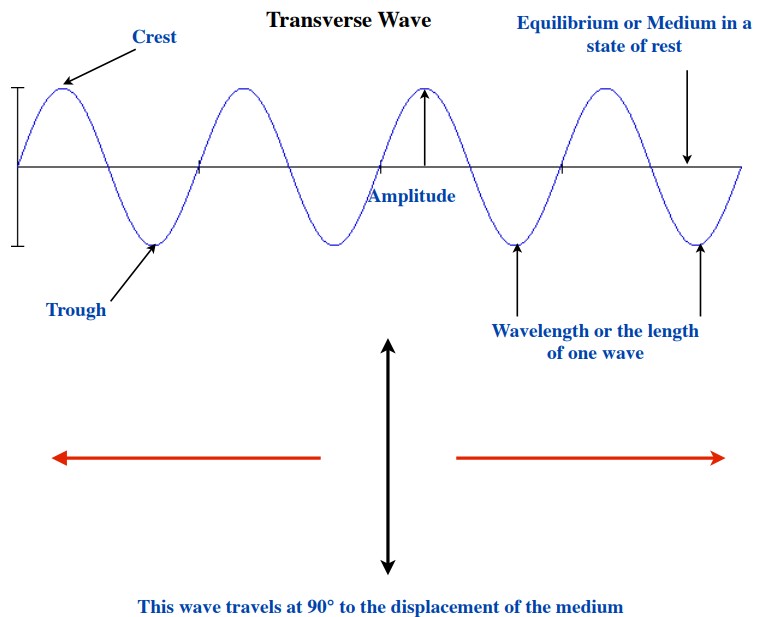
At its core, a mechanical wave is a disturbance that travels through a medium due to the restorative forces of that medium. When an initial energy source—like a vibrating transducer or a shifting tectonic plate—disturbs the first particle of a medium, that particle exerts a force on the next, transferring energy. This chain reaction is what we perceive as a wave.
Solids, Liquids, and Gases: The Hardware of Physics
The nature of the medium—whether it is a solid, liquid, or gas—determines the speed and behavior of the wave. In the tech industry, engineers must account for these properties when designing hardware.
- Gases (Air): The most common medium for sound waves. Tech products like microphones and noise-canceling headphones rely on the compressibility of air to capture and neutralize mechanical energy.
- Liquids: Used extensively in sonar technology and medical imaging. Water and biological tissues act as efficient mediums for ultrasonic waves, allowing for high-resolution data collection.
- Solids: The fastest medium for wave propagation. In computing hardware, mechanical vibrations through solid chassis components can lead to thermal issues or data corruption, requiring sophisticated damping technology.
Elasticity and Inertia in Technological Infrastructure
For a medium to support a mechanical wave, it must possess two key properties: elasticity and inertia. Elasticity allows the particles to return to their original position after the disturbance passes, while inertia allows the particles to transfer the energy to their neighbors.
In the world of high-performance computing (HPC) and data center management, understanding these properties is vital for digital security and physical maintenance. Seismic sensors (which detect waves through the solid medium of the Earth) are used to protect server farms from geological instability. By monitoring the elastic response of the ground, AI-driven software can preemptively trigger data backups or initiate emergency shutdowns before the peak of a mechanical wave reaches the facility.
Sound Waves and the Evolution of Telecommunications
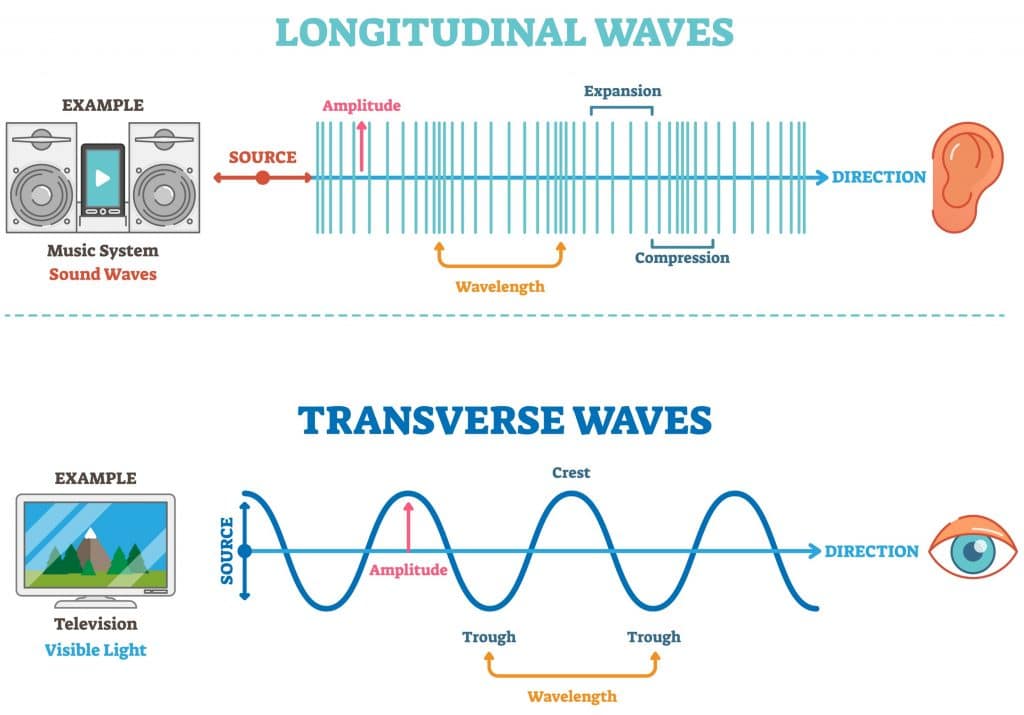
Sound is perhaps the most recognizable form of a mechanical wave. It travels through air (a gaseous medium) as a longitudinal wave. In the technology sector, the manipulation of this medium has led to some of the most significant advancements in consumer electronics over the last decade.
Acoustic Engineering in Consumer Tech
From the voice assistants in our homes to the sophisticated audio arrays in virtual reality (VR) headsets, acoustic engineering is about mastering the medium. When a smart speaker plays music, it uses a diaphragm to push against the air, creating high and low-pressure zones. The quality of the “medium” (the air density, temperature, and humidity) can actually affect the performance of these devices. Advanced software now uses “Room Calibration” algorithms to analyze how sound waves bounce off solid mediums (walls) to adjust the output in real-time, ensuring a perfect auditory experience.

Noise Cancellation and Wave Manipulation
Active Noise Cancellation (ANC) is a triumph of software-hardware integration. It works by detecting the mechanical waves of ambient noise traveling through the air and generating an “anti-wave.” This is a digital-to-analog process where the software calculates the exact inverse frequency required to interfere destructively with the incoming wave. Because the medium (air) can host multiple waves simultaneously, the two waves cancel each other out, leaving the listener in silence. This technology has become a staple in the “work from home” era, proving that a deep understanding of wave mediums is essential for modern productivity tools.
Seismic and Ultrasonic Waves in Industrial Tech
Beyond simple acoustics, the tech industry utilizes mechanical waves in the form of ultrasound and seismic monitoring to perform tasks that electromagnetic waves cannot handle as effectively.
Ultrasound in Medical and Material Diagnostics
Ultrasound uses high-frequency mechanical waves that travel through liquid or solid mediums. In the medical tech sector, this allows for non-invasive imaging. In the industrial tech sector, “Non-Destructive Testing” (NDT) uses ultrasonic waves to travel through the solid medium of airplane wings or skyscraper beams. Software algorithms analyze the reflection of these waves to detect microscopic cracks or flaws that are invisible to the naked eye. This is a critical component of digital twin technology, where a physical object’s integrity is mapped into a digital environment for predictive maintenance.
Haptic Feedback: Using Mechanical Waves for UX
User Experience (UX) has moved beyond the visual and auditory to the tactile. Haptic feedback in smartphones, gaming controllers, and automotive touchscreens uses mechanical waves traveling through the solid medium of the device’s frame.
Linear Resonant Actuators (LRAs) create precise vibrations that the software translates into “clicks” or “pulses.” This allows a flat glass screen to feel like a physical button. The engineering challenge here is to ensure the mechanical wave travels through the solid medium to the user’s fingertip without causing internal hardware components to rattle or fail.
The Future of Wave Propagation: Quantum and Nanotech Mediums
As we push the boundaries of technology into the microscopic and quantum realms, our definition of a “medium” is evolving. We are no longer just using existing mediums; we are creating new ones.
Nanomechanics and High-Frequency Signal Processing
At the nanoscale, mechanical waves are often referred to as phonons. Engineers are currently developing “phononic crystals”—engineered materials (metamaterials) designed to control the flow of mechanical waves in the same way that fiber optics control light. By manipulating the medium at a molecular level, we can create thermal barriers or ultra-high-frequency filters for the next generation of 6G telecommunications. This software-defined material approach allows us to “program” how a mechanical wave behaves within a solid.
The Role of AI in Optimizing Wave Transmission
Artificial Intelligence is becoming the primary tool for understanding complex mediums. Whether it’s predicting how sound travels through a crowded city (urban acoustics) or how seismic waves interact with a skyscraper’s foundation, AI models can simulate millions of variables in the medium. In the world of “Smart Cities,” IoT sensors constantly collect data on mechanical vibrations through the air and ground. AI then processes this data to optimize traffic flow, detect structural failures in bridges, or even locate gas leaks by listening for the specific mechanical frequency of escaping pressurized air.
Conclusion: The Inseparable Link Between Physics and Innovation
To the question “what do all mechanical waves travel through?”, the answer is a medium. However, to the tech professional, that medium is the canvas upon which innovation is painted. From the air that carries our voices to the silicon that vibrates in our pockets, mechanical waves are the invisible threads connecting the physical world to our digital systems.
As we look toward the future—marked by AI-driven diagnostics, haptic-heavy metaverses, and nanotech signal processing—the importance of the medium will only grow. We are moving away from simply observing how waves move through matter and toward a period of history where we can engineer the medium itself to suit our technological needs. By mastering the physics of mechanical waves, the tech industry continues to bridge the gap between abstract data and the tangible, physical reality of our lives.
aViewFromTheCave is a participant in the Amazon Services LLC Associates Program, an affiliate advertising program designed to provide a means for sites to earn advertising fees by advertising and linking to Amazon.com. Amazon, the Amazon logo, AmazonSupply, and the AmazonSupply logo are trademarks of Amazon.com, Inc. or its affiliates. As an Amazon Associate we earn affiliate commissions from qualifying purchases.