
Navigating the professional landscape, particularly when embarking on a job application journey, often requires a clear understanding of where your chosen industry fits within broader academic and professional disciplines. For those pursuing a career in hospitality, this question can sometimes be a point of gentle confusion. Is it primarily a business pursuit? Does it lean more towards service or operations? When filling out application forms that ask for a “major,” “discipline,” or “field of study,” what is the most appropriate and strategically advantageous selection? This article delves into the multifaceted nature of hospitality and clarifies its placement within the established disciplines, focusing specifically on how this understanding can be leveraged for job applications.

The Business Core of Hospitality
At its heart, hospitality is a dynamic and complex business. While the guest experience is paramount, the successful delivery of that experience relies on a robust foundation of business principles. This is why, for job application purposes, categorizing hospitality under a business-related discipline is generally the most accurate and beneficial approach. This encompasses a wide array of sub-disciplines, each contributing a vital element to the hospitality sector.
Management and Administration
The overarching umbrella for hospitality’s business orientation is management and administration. This is the most common and widely accepted classification. When a job application asks for your primary discipline, selecting “Business Administration,” “Hospitality Management,” “Management Studies,” or a similar variant is usually the most direct and readily understood choice. This acknowledges the core responsibilities within the industry, which include strategic planning, operational oversight, financial management, human resources, and marketing – all fundamental components of any business.
Within this broad category, specific hospitality programs often emphasize areas such as:
- Operations Management: This is crucial for the day-to-day functioning of hotels, restaurants, and event venues. It involves managing resources, optimizing processes, ensuring efficiency, and maintaining quality standards. A strong understanding of operations management allows hospitality professionals to streamline service delivery, control costs, and enhance guest satisfaction.
- Financial Management: The hospitality industry is heavily reliant on sound financial practices. This includes budgeting, forecasting, revenue management, cost control, and profitability analysis. Professionals with a background in financial management within hospitality can effectively track financial performance, make informed investment decisions, and ensure the economic viability of an establishment.
- Human Resources Management: People are the backbone of hospitality. Effective HR management in this sector involves recruitment, training, employee development, performance management, and fostering a positive work environment. The ability to attract, retain, and motivate a skilled workforce is critical to delivering exceptional guest experiences.
- Marketing and Sales: Understanding consumer behavior, developing effective marketing strategies, and driving sales are essential for any hospitality business. This includes branding, public relations, digital marketing, and customer relationship management. A marketing focus ensures that businesses can reach their target audience and attract customers.
Specializations Within Business
Beyond the general management framework, many hospitality programs offer specializations that further refine the business focus. These specializations allow individuals to hone their skills in specific areas of the industry.
- Event Management: This specialization focuses on the planning, execution, and management of various events, from corporate conferences and weddings to festivals and sporting events. It requires strong organizational skills, logistical planning, budgeting, and stakeholder management.
- Food and Beverage Management: This area concentrates on the operations of restaurants, bars, catering services, and other food and beverage outlets. It involves menu planning, inventory management, cost control, quality assurance, and customer service in a food and beverage context.
- Lodging and Accommodation Management: This specialization deals with the operations of hotels, resorts, and other accommodation providers. It encompasses front desk operations, housekeeping, guest services, property management, and revenue optimization for lodging facilities.
When applying for a role within these specialized areas, stating your primary discipline as “Business Administration” with a specialization in, for instance, “Event Management” or “Food and Beverage Management” provides a clear and comprehensive picture of your background.
The Service and Experiential Dimension
While the business underpinnings are undeniable, it is crucial to acknowledge that hospitality is fundamentally a service-oriented industry. The “experience” is the product, and this experiential aspect distinguishes it from many other business sectors. Therefore, while business remains the primary disciplinary classification for job applications, it’s important to articulate how your education and experience have prepared you for the unique demands of service delivery and customer engagement.
Understanding Customer Needs and Expectations
The core of hospitality lies in anticipating and exceeding customer needs and expectations. This requires a deep understanding of human psychology, communication, and problem-solving. While not typically a primary academic discipline in itself for job applications, skills developed in areas like psychology, sociology, or even communication studies can be highly relevant and should be highlighted in a resume or cover letter.

- Customer Relationship Management (CRM): Modern hospitality relies heavily on CRM systems and philosophies. This involves building rapport, gathering feedback, and personalizing guest experiences. A background that emphasizes customer service, empathy, and communication is invaluable.
- Service Design: This is the process of creating and improving services to make them more useful, usable, and desirable for customers. It involves understanding the customer journey and identifying opportunities for enhancement. While often a component of hospitality management programs, it can also be seen as an intersection with design thinking.
Soft Skills and Interpersonal Competencies
The experiential nature of hospitality places a premium on a suite of “soft skills” that are often developed through practical experience and are implicitly taught within hospitality education. These skills are vital for excelling in customer-facing roles and leadership positions.
- Communication: Clear, concise, and empathetic communication is paramount. This includes active listening, verbal articulation, and written correspondence.
- Problem-Solving: The ability to quickly and effectively address issues, complaints, or unexpected situations is critical.
- Teamwork: Hospitality environments are highly collaborative. Success depends on individuals working harmoniously with their colleagues.
- Adaptability and Resilience: The pace of the industry and the dynamic nature of guest needs require individuals who can adapt to changing circumstances and remain composed under pressure.
- Cultural Competence: In a globalized world, understanding and respecting diverse cultural backgrounds is essential for providing inclusive and welcoming service.
When applying for roles, even if your formal discipline is listed as business, ensure your resume and cover letter showcase these crucial soft skills and their application within hospitality contexts.
Strategic Considerations for Job Applications
The way you categorize your academic background on a job application can significantly impact how your profile is perceived by recruiters and hiring managers. Choosing the most appropriate discipline demonstrates self-awareness and aligns your qualifications with industry expectations.
Aligning with Job Descriptions
The first step in any job application process is to carefully read the job description. Look for keywords and phrases that indicate the employer’s primary focus. If the role heavily emphasizes operational efficiency, financial performance, or strategic planning, then highlighting your business management background will be most effective. If the role is more guest-facing and emphasizes service excellence, you can still frame your business education through the lens of service delivery.
- Entry-Level Positions: For entry-level roles, a broad “Hospitality Management” or “Business Administration” degree is usually sufficient. The emphasis will be on your willingness to learn and your foundational understanding.
- Specialized Roles: For positions in areas like event planning, food and beverage management, or revenue management, specifying your specialization within your chosen discipline becomes more important.
- Management Trainee Programs: These programs are often designed for individuals with a strong business acumen, so emphasizing your business education is key.
The Role of Certifications and Additional Training
While a degree is foundational, the hospitality industry also values practical experience and specialized certifications. If you have pursued additional training or certifications in areas like wine knowledge, food safety, project management, or customer service, these should be prominently featured in your application materials, regardless of your primary discipline.
- Industry-Specific Certifications: For example, a Certified Food Protection Manager (CFPM) certification for food and beverage roles, or a Certified Meeting Professional (CMP) for event planners.
- Software Proficiency: Familiarity with industry-specific software such as Property Management Systems (PMS), Point of Sale (POS) systems, or Customer Relationship Management (CRM) platforms is highly valuable.
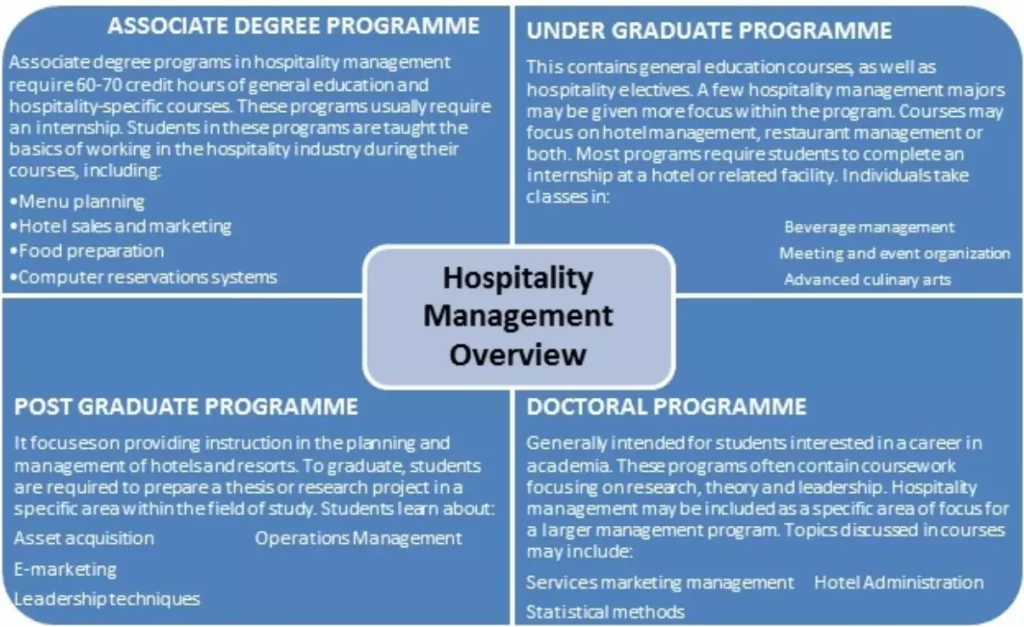
Framing Your Narrative
Ultimately, how you present your educational background is a form of personal branding. Even if your degree is in a broader field like “Business Administration,” you can tailor your narrative to emphasize your passion and aptitude for the hospitality industry.
- Highlighting Relevant Coursework: Even within a general business degree, mention specific courses that are directly applicable to hospitality, such as marketing, finance, operations, and human resources.
- Showcasing Internships and Practical Experience: Internships and work experience are critical in hospitality. Ensure these are detailed and highlight the skills and knowledge you gained. This practical application of your business knowledge in a hospitality setting is what truly sets you apart.
- Passion and Career Goals: In your cover letter and interviews, articulate your genuine interest in hospitality and how your chosen discipline has equipped you to succeed in this dynamic and rewarding field.
In conclusion, when faced with the question of which discipline hospitality falls under for job applications, the most accurate and strategic answer is Business. This umbrella term effectively encompasses the management, operational, financial, and marketing principles that are essential for success in the industry. While the service and experiential elements are crucial to the industry’s identity, they are best viewed as specialized applications of a solid business foundation. By understanding this classification and effectively articulating your skills and experiences within this framework, you can present yourself as a well-qualified and highly desirable candidate in the competitive hospitality job market.
aViewFromTheCave is a participant in the Amazon Services LLC Associates Program, an affiliate advertising program designed to provide a means for sites to earn advertising fees by advertising and linking to Amazon.com. Amazon, the Amazon logo, AmazonSupply, and the AmazonSupply logo are trademarks of Amazon.com, Inc. or its affiliates. As an Amazon Associate we earn affiliate commissions from qualifying purchases.