
History often views the fall of the Roman Empire through the lens of dramatic battles, barbarian invasions, and the sack of the Eternal City. However, beneath the surface of the military conflicts lay a much more insidious and preventable cause: a total systemic failure of the financial and monetary systems. For the modern investor, business leader, or student of personal finance, the collapse of Rome is not just a historical anecdote; it is a masterclass in the dangers of currency debasement, over-leveraged infrastructure, and the erosion of a middle-class tax base.
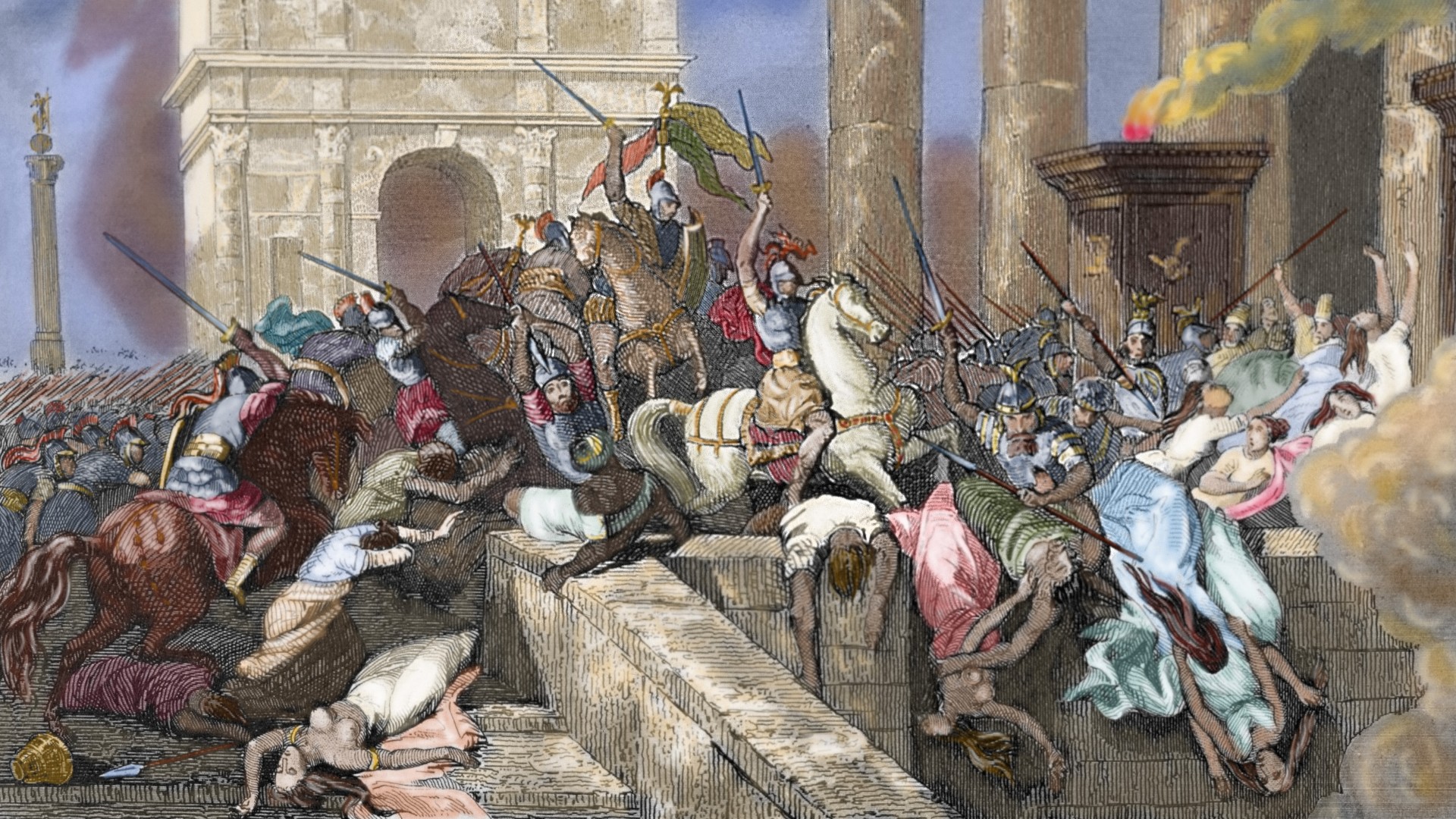
Understanding what caused the Roman Empire to collapse from a financial perspective allows us to identify the red flags in today’s global economy. By analyzing the fiscal trajectory of Rome, we can derive timeless principles for wealth preservation and economic stability.
The Debasement of the Denarius: A Masterclass in Inflationary Risk
At the height of its power, the Roman currency—the silver denarius—was the reserve currency of the known world. It was a symbol of stability and trust. However, as the empire’s expenses began to outpace its revenues, the leadership turned to a tactic that has become all too familiar in modern monetary policy: the “printing” of money, or in the Roman case, the systematic debasement of the coinage.
From Silver to Slag: The Gradual Erosion of Purchasing Power
During the reign of Augustus, the denarius was approximately 95% pure silver. It was a high-value asset that facilitated trade from Londinium to Alexandria. However, by the time of Marcus Aurelius, the purity had dropped to about 75%. The trend accelerated during the 3rd century, where emperors, desperate to pay their legions and fund lavish public works, reduced the silver content to less than 5%, eventually reaching a point where the coins were little more than copper washed in a thin layer of silver.
This physical debasement was the ancient equivalent of hyperinflation. As the intrinsic value of the currency vanished, merchants naturally raised prices to compensate for the lower quality of the money they received. This led to a feedback loop where the state had to “print” even more coins to meet its obligations, further devaluing the currency. For the modern investor, this serves as a stark reminder of the importance of holding assets with intrinsic value or limited supply, such as commodities or equities, rather than relying solely on fiat cash.
The Hidden Tax: How Devaluation Replaces Direct Revenue
Currency debasement was, in essence, a hidden tax on the Roman populace. Instead of legislating higher taxes—which might lead to political unrest or assassination—the emperors simply stole purchasing power from every citizen holding denarii. This destroyed the incentive for long-term saving. Why hold a currency that would be worth half as much in ten years?
This shift in behavior led to a “flight to quality.” Wealthy Romans began to hoard gold and silver bullion, removing capital from the productive economy. When a society loses trust in its medium of exchange, the velocity of money slows down, and the foundation of the economy begins to crumble.
The Logistics of Overextension: The High Cost of Maintaining an Empire
The Roman Empire was a victim of its own success. As it expanded, the cost of maintaining its borders, infrastructure, and administrative bureaucracy grew exponentially. This “burn rate” became unsustainable when the empire reached its geographic limits and could no longer rely on the spoils of war—gold, slaves, and land—to balance its books.
Military Spending and the Debt Trap
The Roman military was the empire’s largest expense, often consuming over 70% of the total budget. In the early days of expansion, the army was a profit center; conquest paid for itself. However, as the empire transitioned to a defensive posture, the army became a massive fixed cost. To keep the soldiers from revolting or installing a new emperor, the state had to continually increase military pay and bonuses.
In modern business terms, Rome was a company with massive overhead and a shrinking market share. Without new territories to “monetize,” the empire was forced to squeeze its existing tax base. When a financial entity—be it a state or a corporation—reaches a point where its debt servicing and fixed costs exceed its growth potential, it enters a debt trap. Rome’s inability to pivot its “business model” from expansion to sustainable maintenance was a primary driver of its eventual bankruptcy.
The Bureaucratic Bloat: When Governance Becomes a Liability
To manage its vast territories, Rome developed an intricate bureaucracy. While this allowed for efficient tax collection and legal administration for a time, it eventually became top-heavy. As the economy weakened, the cost of the civil service remained high, creating a parasitic relationship between the state and the productive sectors of the economy. This illustrates a critical principle in business finance: the danger of administrative bloat. When the cost of managing the work exceeds the value of the work itself, the organization is on the path to failure.
Fiscal Policy and the Erosion of the Middle Class
One of the most devastating economic factors in Rome’s decline was the systematic destruction of the middle class—the small-scale farmers and tradesmen who formed the backbone of the economy. Through a combination of aggressive taxation and competition from state-subsidized slave labor, the Roman middle class was essentially regulated and taxed out of existence.
Tax Flight and the Rise of the Proto-Feudal State
As the state became more desperate for revenue, it implemented draconian tax policies. The curiales, or local city officials, were made personally liable for any shortfall in tax collection from their districts. Unsurprisingly, this led to a mass exodus of the wealthy from urban centers to rural estates.
These large estates, known as latifundia, became self-sufficient economic units. The owners, or possessores, used their political influence to gain tax exemptions, further shifting the burden onto the poor and the middle class. This led to a “bifurcation” of the economy—a tiny elite with immense wealth and a massive underclass with no upward mobility. For modern financial planners, this highlights the risk of “capital flight.” When tax policies become too burdensome, capital naturally flows to more favorable jurisdictions or into “off-grid” self-sufficiency, depriving the state of its revenue.
Modern Parallels: Diversification and Capital Preservation
The Roman experience offers a lesson in the importance of diversification. Those who survived the economic collapse were those who had transitioned their wealth into tangible assets—land, productive equipment, and essential commodities. The reliance on “paper” wealth (or in Rome’s case, debased coinage) proved fatal for many.
In today’s volatile financial environment, the Roman collapse underscores the need for a resilient portfolio. This includes a mix of liquid assets for immediate needs and hard assets that can withstand periods of high inflation or systemic instability. The “Roman Middle Class” failed because they had no exit strategy; modern investors must ensure they are not similarly trapped by a single currency or a single tax regime.
Disruption of Global Trade and Supply Chain Fragility
The Roman Empire created the first truly globalized economy, with supply chains that stretched from the silk roads of China to the tin mines of Britain. This integration brought immense prosperity, but it also created a fragile system where a disruption in one area could have a domino effect across the entire empire.
From Integrated Markets to Local Autarky
As the currency failed and the military could no longer guarantee the safety of the roads and sea lanes, trade began to contract. The “cost of doing business” rose as insurance risks (piracy and brigandage) spiked. Merchants stopped shipping grain, olive oil, and wine across the Mediterranean because the risks outweighed the potential profits.
This led to a shift toward localism or “autarky.” Communities stopped specializing in what they were best at and instead tried to produce everything they needed locally. While this increased their immediate survival chances, it drastically reduced the overall standard of living. This historical shift mirrors modern concerns about “de-globalization” and supply chain resilience. When global trade networks break down due to economic or geopolitical instability, the result is almost always higher costs and reduced innovation.
The Impact of Resource Scarcity and Labor Markets
The Roman economy was also hit by exogenous shocks, including plagues and climate shifts that affected crop yields. A shrinking population meant a shrinking labor force, which led to wage “stickiness” and labor shortages. The state’s response—freezing people in their professions and making jobs hereditary—effectively killed the free market. This serves as a warning about the unintended consequences of government intervention in labor and resource markets during times of financial stress.
Conclusion: Building a Resilient Financial Future
The collapse of the Roman Empire was not an overnight event; it was the result of centuries of fiscal mismanagement, currency debasement, and unsustainable spending. By looking at the fall of Rome through a financial lens, we see that the same “laws of money” that governed the ancient world still apply today.
Trust in currency is the bedrock of any economy. Once that trust is broken through inflation or debasement, the social contract begins to unravel. Furthermore, an entity—whether an empire or a household—cannot indefinitely spend more than it earns without facing a day of reckoning.
To avoid the “Roman fate” in our personal and professional lives, we must prioritize fiscal discipline, maintain a diversified asset base, and remain vigilant against the erosion of purchasing power. History shows us that while empires may fall, the principles of sound money and prudent investing remain constant. By learning from the fiscal failures of the past, we can better navigate the economic uncertainties of the future.
aViewFromTheCave is a participant in the Amazon Services LLC Associates Program, an affiliate advertising program designed to provide a means for sites to earn advertising fees by advertising and linking to Amazon.com. Amazon, the Amazon logo, AmazonSupply, and the AmazonSupply logo are trademarks of Amazon.com, Inc. or its affiliates. As an Amazon Associate we earn affiliate commissions from qualifying purchases.