
Mark Zuckerberg, the architect of the social media era, has recently orchestrated one of the most significant strategic shifts in the history of Silicon Valley. For years, the narrative surrounding Zuckerberg was defined by the ubiquity of Facebook and the subsequent controversies regarding data privacy. However, in a remarkably short period, Zuckerberg has fundamentally altered the trajectory of his empire, pivoting from a “social-first” company to an “AI and Metaverse-first” powerhouse. To understand what Zuckerberg did is to understand the current technological zeitgeist: a calculated bet on open-source artificial intelligence, the maturation of spatial computing, and the integration of these technologies into the hardware we wear on our faces.

The Transition from Social Media to Spatial Computing
The most visible change Zuckerberg initiated was the rebranding of Facebook Inc. to Meta. While critics initially dismissed this as a distraction from regulatory scrutiny, the technical reality has proven much more substantive. Zuckerberg directed tens of billions of dollars toward Reality Labs, a move that signaled a departure from mobile-centric software toward an entirely new computing paradigm: spatial computing.
Redefining Reality Labs
Reality Labs is no longer just a research division; it is the engine of Meta’s future hardware ecosystem. Zuckerberg’s vision for the Metaverse—a persistent, shared 3D virtual space—was initially met with skepticism due to the “uncanny valley” of early avatars and the bulkiness of headsets. What Zuckerberg did, however, was iterate relentlessly. He transitioned the focus from purely social VR to a blend of productivity and entertainment, ensuring that the hardware could support professional workflows alongside gaming. This required massive investments in micro-display technology, spatial audio, and hand-tracking sensors that set the industry standard for consumer-grade VR.
The Hardware Evolution: Quest 3 and Beyond
With the release of the Meta Quest 3, Zuckerberg successfully transitioned from basic Virtual Reality (VR) to high-fidelity Mixed Reality (MR). By incorporating full-color passthrough technology, Zuckerberg changed the user experience from being isolated in a digital void to interacting with digital objects overlaid on the real world. This move was a direct response to the technical challenges of full-scale Augmented Reality (AR), providing a “bridge” technology that allows developers to build for the future of AR using existing MR hardware.
Open-Sourcing the Intelligence: The Llama Revolution
Perhaps the most impactful technical move Zuckerberg has made in recent years is his approach to Artificial Intelligence. While competitors like Google and OpenAI have opted for “closed” models—keeping their underlying code and weights proprietary—Zuckerberg chose the path of open-source (or more accurately, open-weights) development with the Llama (Large Language Model Meta AI) series.
Democratizing Large Language Models
By releasing Llama 2 and Llama 3 to the public, Zuckerberg effectively disrupted the burgeoning AI market. This decision allowed independent developers, researchers, and startups to build sophisticated AI applications without the prohibitive costs of licensing proprietary APIs. Zuckerberg’s logic was deeply technical and strategic: by making Llama the industry standard for open-source development, he ensured that the global developer ecosystem would optimize Meta’s models for various hardware and software environments, effectively crowdsourcing the improvement of Meta’s core AI architecture.
Integrating AI Across the “Family of Apps”
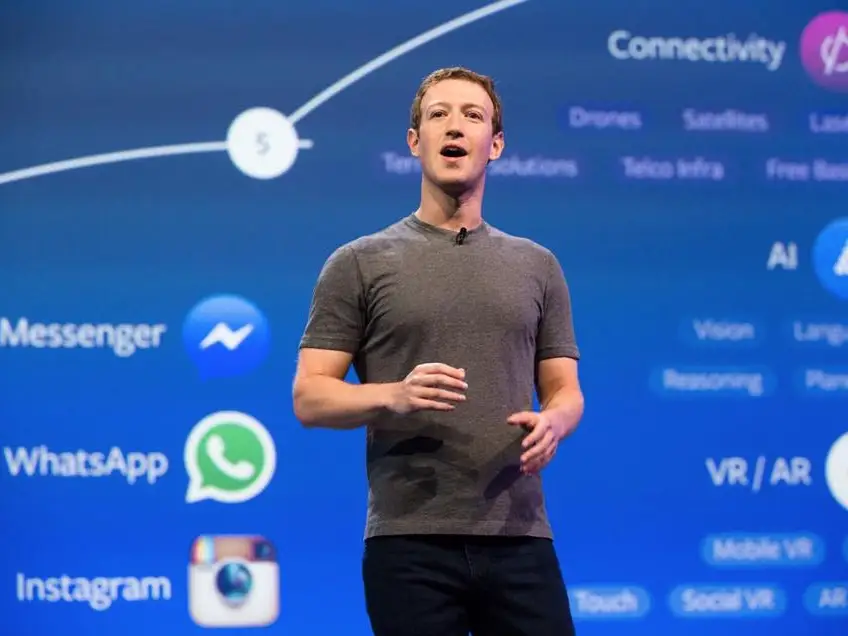
Zuckerberg didn’t just release AI to the world; he integrated it into the DNA of Instagram, WhatsApp, and Facebook. He oversaw the deployment of “Meta AI,” an assistant powered by Llama, across these platforms. This wasn’t merely a chatbot implementation. Zuckerberg directed the use of AI to revolutionize content discovery. The transition from a “social graph” (seeing what your friends post) to a “content graph” (AI-driven recommendations based on interests) saved Instagram and Facebook from stagnation in the face of competition from TikTok. This pivot required a massive overhaul of Meta’s data center infrastructure to handle real-time AI inference at a global scale.
The Synergy of Wearables and Augmented Reality
While the VR headsets grabbed headlines, Zuckerberg was quietly working on a more subtle, yet perhaps more revolutionary, category of hardware: smart glasses. This segment represents the convergence of AI and wearable tech, moving away from the screen-bound interactions of the last two decades.
Ray-Ban Meta Smart Glasses: The Surprise Success
Zuckerberg’s partnership with EssilorLuxottica resulted in the Ray-Ban Meta smart glasses, a product that succeeded where many others failed. By stripping away the bulky displays of the past and focusing on high-quality audio, a powerful camera, and integrated AI, Zuckerberg created a device people actually wanted to wear. The “multimodal AI” update allowed the glasses to “see” what the user sees and “hear” what they hear, providing real-time translations, object identification, and contextual information. This was a masterclass in minimalist tech design, prioritizing utility and aesthetics over raw processing power.
Project Nazaré and the AR Frontier
Looking further ahead, Zuckerberg has been vocal about “Project Nazaré,” Meta’s first pair of true Augmented Reality glasses. What Zuckerberg did here was commit to the “holy grail” of tech: fitting a full computer, holographic displays, and batteries into a standard eyeglass frame. The technical hurdles—ranging from waveguide optics to custom silicon—are immense. By allocating resources to custom chip design, Zuckerberg is attempting to break Meta’s dependence on third-party silicon providers, mirroring the vertical integration strategies of other tech giants but applied specifically to the AR medium.
The Infrastructure of Tomorrow
Behind the software and the consumer gadgets, Zuckerberg has overseen a fundamental reconstruction of Meta’s physical and digital infrastructure. To support the dual pillars of AI and the Metaverse, the company had to rethink how it builds and manages data centers.
Massive GPU Investments and Data Center Overhauls
Zuckerberg made headlines by announcing that Meta would acquire hundreds of thousands of NVIDIA H100 GPUs, making Meta one of the largest holders of AI compute power in the world. This wasn’t just a purchase; it was a total pivot in data center architecture. Traditional data centers designed for social media feeds were not equipped for the intense thermal and power demands of training massive AI models. Zuckerberg directed a redesign of Meta’s data center roadmap, opting for liquid-cooling solutions and modular designs that can be rapidly scaled as AI models grow in complexity.
Navigating the Ethical Landscapes of Generative AI
As Meta moved deeper into AI, Zuckerberg had to navigate the technical and ethical challenges of generative content. He implemented “Llama Guard” and other safety classifiers to ensure that Meta’s open-source contributions were not used for malicious purposes. Furthermore, he pushed for the “Content Credentials” standard, which uses cryptographic metadata to label AI-generated images. This technical framework is crucial for maintaining the integrity of digital information in an era where synthetic media is becoming indistinguishable from reality.

Conclusion: The Architect of the New Stack
When we ask “what did Zuckerberg do,” the answer lies in his transition from a software developer to a full-stack visionary. He has successfully navigated Meta through a period of existential threat by embracing the most difficult technical challenges of our time. By open-sourcing AI, he has positioned Meta as the foundation of the next generation of software. By investing in the Quest and Ray-Ban Meta glasses, he has claimed a stake in the hardware that will likely replace the smartphone.
Zuckerberg’s recent actions reflect a belief that the future of technology is not just about connecting people through screens, but about augmenting the human experience through intelligent, wearable hardware and ubiquitous AI. Whether or not the Metaverse reaches the heights he envisions, the technical infrastructure and the AI standards he has established in the process have already reshaped the global technology landscape. He has moved beyond the “move fast and break things” era into a more mature, yet equally aggressive, era of building the foundational layers of the next computing epoch.
aViewFromTheCave is a participant in the Amazon Services LLC Associates Program, an affiliate advertising program designed to provide a means for sites to earn advertising fees by advertising and linking to Amazon.com. Amazon, the Amazon logo, AmazonSupply, and the AmazonSupply logo are trademarks of Amazon.com, Inc. or its affiliates. As an Amazon Associate we earn affiliate commissions from qualifying purchases.