
The Dow Jones Industrial Average (DJIA), often referred to simply as “the Dow,” is perhaps the most recognized financial barometer in the world. When people ask, “How did the market do today?” they are usually referring to the closing number of this century-old index. Understanding what the Dow did today requires more than just looking at a green or red number on a screen; it involves dissecting the underlying economic catalysts, the performance of the thirty blue-chip companies that comprise it, and the broader sentiment of the global financial landscape. For the modern investor, the daily movement of the Dow serves as a pulse check on the health of the American industrial and financial sectors.

Decoding the Daily Performance of the Dow Jones Industrial Average
To understand what the Dow did today, one must first understand how it is constructed. Unlike the S&P 500 or the Nasdaq Composite, which are market-capitalization-weighted, the Dow is a price-weighted index. This means that companies with higher share prices have a greater influence on the index’s daily fluctuations than those with lower share prices, regardless of the company’s total market value.
The Price-Weighting Mechanism
In a price-weighted system, a $5 move in a stock trading at $200 carries more weight than a $5 move in a stock trading at $50. This unique structure often leads to scenarios where a massive gain in a high-priced component like UnitedHealth Group or Goldman Sachs can pull the entire index into positive territory, even if the majority of the other twenty-nine stocks are trading lower. When analyzing today’s performance, savvy investors look at which specific “heavyweights” drove the price action.
The Role of the Dow Divisor
The movement of the Dow is not a simple average of thirty stock prices. Instead, it uses a mathematical tool called the “Dow Divisor.” This number is adjusted to account for stock splits, spin-offs, and other structural changes within the component companies. When you see the Dow rise or fall by 100 points, it is the result of the aggregate price changes of its components divided by this continuously updated figure. Understanding this helps investors realize that the “points” moved are a reflection of structural consistency over time, rather than just raw price fluctuations.
Key Catalysts Behind Today’s Trading Session
The Dow does not move in a vacuum. Every daily close is the result of a complex interplay between macroeconomic data, corporate earnings, and geopolitical shifts. If the Dow showed significant volatility today, it was likely driven by one of several recurring themes that dominate the current financial era.
Federal Reserve Policy and Interest Rates
In the current economic climate, few factors influence the Dow more than the Federal Reserve’s stance on interest rates. Because the Dow is comprised of mature, established companies—many of which carry significant debt or rely on consumer financing—interest rate hikes or cuts directly impact their bottom lines. If the Dow dipped today, it might have been a reaction to “hawkish” commentary from Fed officials or a higher-than-expected Consumer Price Index (CPI) report, which suggests that interest rates may stay higher for longer. Conversely, a rally often signals investor optimism that the cost of borrowing will soon decrease.
Corporate Earnings Reports
As a collection of thirty major industry leaders, the Dow is highly sensitive to earnings season. When a component like Microsoft, Boeing, or Caterpillar releases its quarterly results, the impact is immediate. Strong earnings and positive forward guidance can ignite a rally, whereas a miss on revenue or a downward revision of future profits can drag the entire index down. Today’s action was likely influenced by the specific performance of these corporate giants, reflecting the operational health of the sectors they represent.
Global Geopolitics and Macro Events
The Dow’s components are multinational corporations with massive global footprints. Therefore, trade tensions, international conflicts, or shifts in foreign currency exchange rates can move the needle. A strengthening dollar, for example, can make American exports more expensive, potentially hurting the multinational industrials within the Dow. If there were major geopolitical headlines today, they likely manifested in the Dow’s price action as investors weighed the risks to global supply chains and international demand.
The Psychological Weight of the Dow in Modern Investing

While many professional fund managers prefer the S&P 500 as a broader benchmark, the Dow remains the primary vehicle for public sentiment. What the Dow did today often dictates the tone of evening news broadcasts and shapes the “kitchen table” conversations of retail investors.
Market Sentiment and the “Wealth Effect”
The daily performance of the Dow has a profound psychological impact known as the “wealth effect.” When the Dow reaches new highs or maintains a steady upward trajectory, consumers tend to feel wealthier and more confident in their financial security. This confidence often leads to increased consumer spending, which in turn fuels the economy. On days when the Dow suffers a sharp decline, it can trigger a sense of caution, leading to reduced discretionary spending and a “wait-and-see” approach to major financial decisions.
The Dow as a Indicator of Stability
Because the index is limited to “blue-chip” stocks—companies that are generally profitable, stable, and have a long history of growth—the Dow is often viewed as a “safe haven” within the equity markets. On days when the high-growth, high-risk tech stocks of the Nasdaq are plummeting, the Dow may hold steady or experience smaller losses. This “flight to quality” is a common trend during periods of market uncertainty. If the Dow outperformed other indices today, it suggests that investors were seeking the relative safety of established industry leaders.
Navigating Daily Fluctuations: A Guide for the Disciplined Investor
For those tracking “what the Dow did today,” it is essential to distinguish between market noise and meaningful signals. Daily volatility is a natural part of the market cycle, and while it is tempting to react to every 1% swing, successful investing requires a more calculated approach.
Noise vs. Signal
A single day’s movement in the Dow is rarely a reason to overhaul a long-term investment strategy. Professional investors look for “signals”—trends that persist over weeks or months—rather than the “noise” of daily fluctuations. If the Dow fell today because of a temporary technical glitch or a one-off news event, it may be irrelevant to the long-term holder. However, if the movement is part of a broader trend of declining industrial production or rising inflation, it warrants closer attention.
The Importance of Diversification
While the Dow provides a snapshot of thirty massive companies, it does not represent the entire economy. It lacks significant exposure to small-cap stocks, emerging industries, and certain high-tech sectors. An investor who only watches the Dow might miss out on the broader movements occurring in the Russell 2000 or the S&P 500. Using the Dow’s daily performance as just one piece of a larger diagnostic puzzle is the hallmark of a sophisticated financial strategy.
Rebalancing and Risk Management
If today’s movement in the Dow was particularly drastic, it might serve as a reminder to check your portfolio’s asset allocation. Sharp moves can cause certain positions to become “overweighted” or “underweighted” relative to your original plan. Rather than panic selling or emotional buying, disciplined investors use these moments to objectively evaluate whether their risk tolerance still aligns with their current holdings.
Looking Beyond the Closing Bell: What Today’s Action Signals for the Future
The final number at the 4:00 PM EST closing bell is the end of a chapter, but not the end of the story. Analysts look at the “internals” of today’s Dow performance to predict what might happen tomorrow and in the weeks to follow.
Volume and Breadth
A major move in the Dow is considered more significant if it occurs on high trading volume. High volume indicates strong conviction among institutional investors, whereas a move on low volume might be easily reversed the following day. Additionally, analysts look at “breadth”—how many of the thirty stocks actually participated in the move. If the Dow rose 200 points but only five stocks were up while twenty-five were down, the rally is considered “narrow” and potentially fragile.
Technical Levels of Support and Resistance
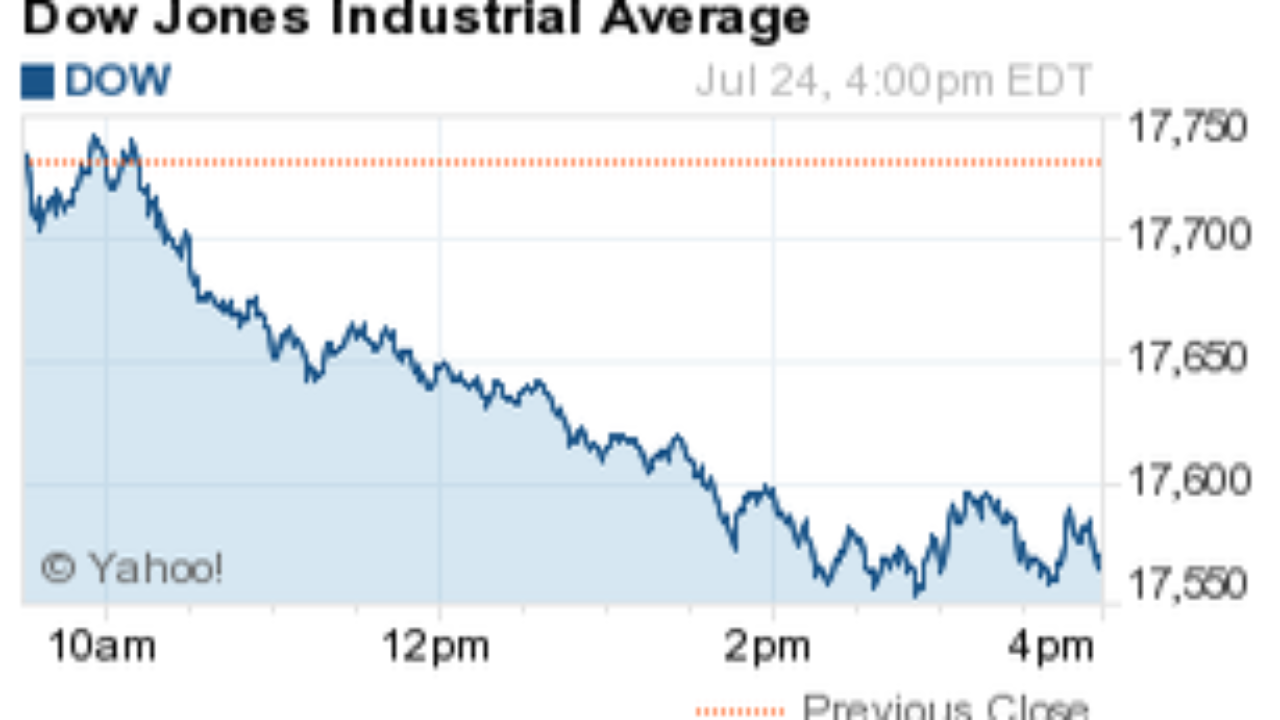
Traders often look at the Dow through the lens of technical analysis. They identify “support” levels (price points where the index historically struggles to fall below) and “resistance” levels (points where it struggles to rise above). If today’s action caused the Dow to break through a significant resistance level, it could signal the start of a new bullish trend. Conversely, falling below a support level might suggest further downside to come.
In conclusion, understanding what the Dow Jones average did today involves looking past the headlines and into the machinery of the global economy. Whether it was a day of record highs or a sobering correction, the Dow’s movement provides a valuable narrative about corporate health, investor sentiment, and the shifting tides of financial policy. By maintaining a professional and analytical perspective, investors can use these daily updates not as a source of stress, but as a tool for informed, long-term wealth building.
aViewFromTheCave is a participant in the Amazon Services LLC Associates Program, an affiliate advertising program designed to provide a means for sites to earn advertising fees by advertising and linking to Amazon.com. Amazon, the Amazon logo, AmazonSupply, and the AmazonSupply logo are trademarks of Amazon.com, Inc. or its affiliates. As an Amazon Associate we earn affiliate commissions from qualifying purchases.