
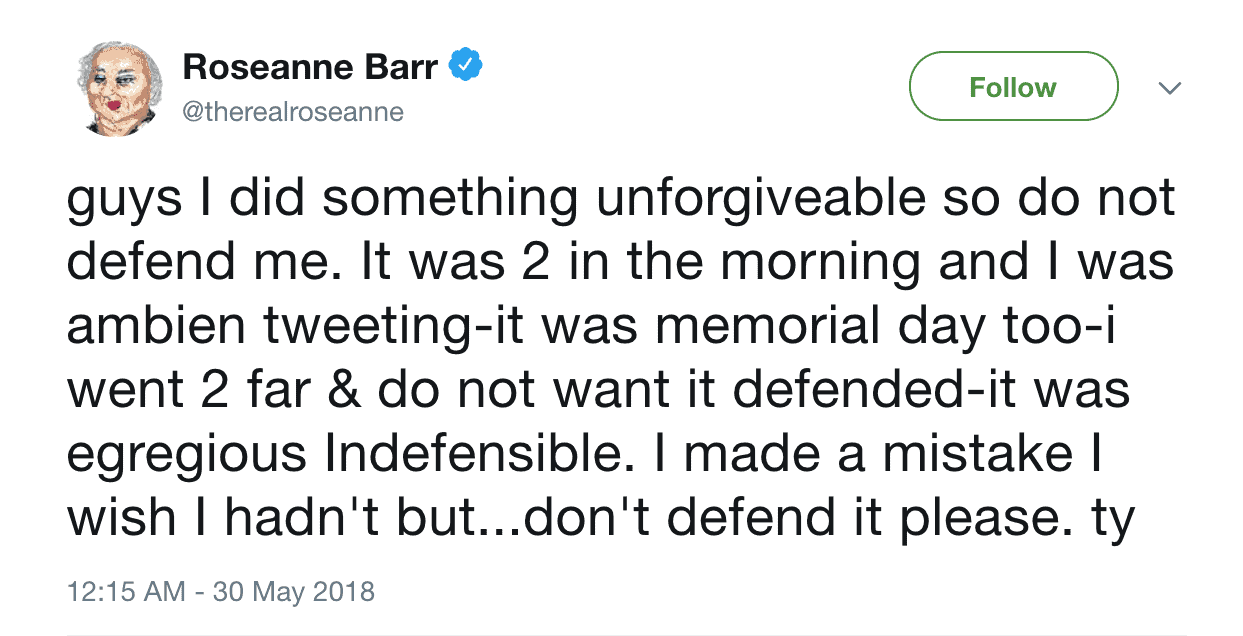
The digital age has fundamentally reshaped the landscape of public persona, transforming celebrities from distant figures on silver screens into accessible, often unfiltered, voices on social media. This shift has democratized communication but also introduced unprecedented risks to personal and corporate brands. Few incidents underscore this volatile dynamic as starkly as the controversy surrounding Roseanne Barr’s tweets in 2018. The question, “what did Roseanne tweet?”, became a shorthand for a swift, comprehensive brand implosion, demonstrating the immense power of digital communication to build, and just as rapidly dismantle, a carefully constructed public image. This event serves as a critical case study for understanding personal branding in the age of instant virality, the fragility of reputation, and the unforgiving microscope under which public figures now operate.
The Anatomy of a Digital Crisis: Roseanne Barr’s Tweets and Their Immediate Aftermath
The incident involving Roseanne Barr’s social media activity transcended a mere gaffe; it became a seismic event that sent shockwaves through the entertainment industry and ignited a broader conversation about accountability, speech, and brand responsibility. For anyone involved in personal branding, marketing, or crisis communications, the swiftness and severity of the fallout offer invaluable, albeit cautionary, lessons.
The Inciting Incident: The Tweets That Shook a Comeback
In May 2018, Roseanne Barr, fresh off the wildly successful reboot of her eponymous sitcom, posted a series of controversial and widely condemned tweets. While the specific content of these tweets is not the focus here, their nature as offensive, racially charged, and conspiratorial was the catalyst. They represented a profound deviation from the inclusive, family-friendly image that her sitcom, even in its revived form, largely projected. This wasn’t a minor slip-up; it was a public expression that directly contradicted the perceived values and expected behavior of a figure headlining a major network show.
From a branding perspective, the tweets were a catastrophic breach of trust with her audience, her network, and the advertisers who supported her program. Personal brands, especially those built around public entertainment, thrive on perceived authenticity, relatability, and often, an unspoken contract of shared values with their audience. When a public figure’s digital persona dramatically clashes with the brand identity they are paid to embody, the dissonance can be irreparable. The tweets laid bare a personal ideology that was, for many, irreconcilable with the mainstream appeal required of a network star. This immediately triggered an avalanche of public outrage, forcing stakeholders to confront a crisis of monumental proportions.
Rapid Response and Repercussions: The Speed of Brand Damage in the Digital Age
What followed the controversial tweets was a textbook example of how rapidly brand damage can escalate in the digital era. The response from ABC, the network behind “Roseanne,” was swift and unequivocal. Within hours, and certainly by the next business day, the network announced the cancellation of the highly-rated show. This wasn’t a decision arrived at lightly; the reboot had been a ratings juggernaut, a major financial success, and a cultural phenomenon. Yet, the network deemed the reputational risk too great to continue.
This rapid response illustrates several critical branding principles. Firstly, in an age where information spreads instantaneously, brand crises demand equally swift action. Hesitation can be interpreted as complicity or indifference, further eroding public trust. Secondly, the decision highlighted the increasing premium placed on brand values and corporate social responsibility. In 2018, and even more so today, audiences expect brands to take a stand against offensive behavior, especially when it emanates from their own talent. ABC’s cancellation was a clear message: the financial success of a show could not outweigh the damage to the broader Disney/ABC brand’s reputation and values. The speed of the decision underscored the understanding that in a highly interconnected world, controversial statements by a key figure can contagiously tarnish the entire ecosystem of associated brands, from the network to advertisers and even other cast members.
Personal Branding in the Public Eye: The Unforgiving Microscope of Social Media
The Roseanne Barr incident served as a stark reminder that for public figures, the distinction between personal life and professional brand is, at best, a permeable membrane, and at worst, non-existent. Social media platforms, while offering unparalleled direct access to audiences, simultaneously expose every utterance to intense scrutiny.
Celebrities as Walking Brands: The Blurring Lines Between Private Person and Public Persona
Every public figure, whether an actor, musician, athlete, or politician, functions as a living, breathing brand. Their actions, words, associations, and even their silence, contribute to a holistic perception that dictates their marketability, fan loyalty, and commercial viability. For Roseanne Barr, her personal brand was inextricably linked to her comedic persona and the character she played. The expectation was that the “Roseanne” brand, whether the show or the person, would operate within certain parameters of public acceptability.
The digital age, however, has obliterated the traditional PR gatekeepers that once curated celebrity images. Celebrities can now tweet directly to millions, offering an unfiltered glimpse into their thoughts. While this can foster authenticity and deeper connection, it also means that a single ill-considered post can bypass any editorial oversight, directly impacting their carefully constructed brand image. The incident proved that even highly successful, established brands are not immune to this vulnerability; in fact, their prominence makes them even bigger targets for public scrutiny and subsequent fallout. The “private” thoughts shared on a “personal” Twitter account quickly become “public” statements with severe “professional” consequences.
The Double-Edged Sword of Authenticity: When “Real” Becomes “Risky”
In personal branding, authenticity is often touted as a virtue, a way to connect deeply with an audience. Fans often laud celebrities who appear “real” and unafraid to speak their minds. However, the Roseanne incident highlights the critical caveat to this principle: there’s a fine line between authentic self-expression and brand self-sabotage. For public figures, “authenticity” must be strategically managed to align with their overarching brand narrative and market expectations.
When Barr’s tweets went viral, many interpreted them as an unfiltered glimpse into her true beliefs. While some might have applauded her “authenticity” for speaking her mind, the vast majority, including her network and the broader public, found the content deeply offensive and damaging. This case underscores that “authenticity” is not an unconditional good for a brand. When a celebrity’s authentic voice expresses sentiments that clash with societal norms, legal standards, or the values of their associated brands, that authenticity becomes a profound liability. It transforms from a unique selling proposition into a source of significant brand risk, demonstrating that self-expression, for a public brand, always carries a profound responsibility.
The Power of Association: How Individual Actions Impact Corporate Brands
The decision by ABC to cancel “Roseanne” was a powerful illustration of the principle of brand association. Corporate brands like ABC (and its parent company, Disney) invest billions in cultivating a specific public image, built on values, content quality, and audience trust. When a prominent individual associated with that corporation engages in behavior that contradicts these carefully constructed values, the corporate brand itself faces contamination.
ABC’s swift action wasn’t just about punishing an individual; it was a proactive measure to protect its own reputation and brand integrity. Allowing the show to continue would have implicitly signaled an endorsement, or at least tolerance, of the offensive sentiments expressed by its star. This would have risked alienating advertisers, other talent, and a significant portion of their audience who expect networks to uphold certain ethical standards. The incident serves as a stark reminder for all brand managers that individuals, particularly those in highly visible roles, are extensions of the larger corporate entity. Their actions, online or offline, can directly impact the perceptions, values, and ultimately, the financial health of the brands they represent. Protecting the core brand often necessitates decisive disengagement from toxic associations, even if those associations are financially lucrative in the short term.
Crisis Management in the Digital Era: Lessons from Roseanne’s Brand Implosion
The Roseanne Barr saga offers a masterclass in crisis management, both in what was done right (by ABC) and what proved challenging (for Barr herself). Navigating a public relations storm in the digital age requires speed, clarity, and a deep understanding of audience expectations.
The Imperative of Swift Action: Decisiveness in Reputation Management
ABC’s immediate cancellation of “Roseanne” demonstrated the paramount importance of swift action in reputation management. In a world of 24/7 news cycles and instant social media amplification, a crisis can spiral out of control within hours. Delaying a response can be perceived as indecision, weakness, or even tacit approval of the problematic behavior, further eroding public trust. By acting decisively, ABC mitigated potential long-term damage to its corporate brand, effectively quarantining the controversy to an individual rather than allowing it to engulf the entire network.
This quick response also helped to control the narrative. Instead of being seen as grappling with a difficult decision, ABC positioned itself as a network committed to its values, even at significant financial cost. This demonstrated a strong brand identity and a clear line in the sand, which is crucial for maintaining credibility with both the public and internal stakeholders. For any brand, big or small, the lesson is clear: when a crisis hits, speed, clarity, and decisiveness are not just desirable; they are essential for effective damage control.
Apology and Accountability: The Difficult Path to Brand Redemption (or Lack Thereof)

Roseanne Barr’s response to the crisis was characterized by a series of apologies, retractions, and sometimes contradictory statements. While initially apologizing and claiming she was leaving Twitter, she later offered various explanations for her tweets, including attributing them to a medication side effect, and in other instances, suggesting they were misinterpreted. This inconsistent approach to apology and accountability significantly hampered any potential path to brand redemption.
For a brand, an effective apology must be immediate, sincere, unconditional, and take full responsibility for the offense. It must focus on the impact on others, not on the intent of the offender, and it should be followed by concrete actions demonstrating a commitment to change. Barr’s multifaceted and often defensive responses failed to meet these criteria. They blurred the lines of accountability, making it difficult for the public to accept her sincerity or believe in any genuine remorse. This case illustrates that a muddled or self-serving apology can be as damaging, if not more so, than no apology at all, further entrenching negative public perception and making brand rehabilitation exceedingly difficult.
Strategic Disengagement: Protecting the Core Brand from Contagion
ABC’s strategic disengagement from Roseanne Barr was a textbook example of protecting a core brand from contagious controversy. While the show was a major financial asset, the potential for long-term reputational damage to the network and its parent company, Disney, was deemed far greater. This decision underscored a fundamental principle in brand management: sometimes, it is necessary to cut ties with a toxic asset, no matter how valuable it appears in the short term, to preserve the health and integrity of the overall brand ecosystem.
This move also sent a clear message to other talent and stakeholders within the industry: there are consequences for actions that violate ethical standards and corporate values. By severing ties, ABC established a precedent, reinforcing its commitment to its brand values and demonstrating that no individual, regardless of their star power, is bigger than the brand itself. This act of strategic disengagement was a difficult but necessary maneuver to prevent Roseanne Barr’s personal brand crisis from metastasizing into a full-blown corporate reputation crisis.
Rebuilding and Redefining: Post-Crisis Pathways for a Tarnished Brand
The aftermath of a significant brand crisis is a long and arduous journey, often characterized by persistent challenges in regaining trust and redefining public perception. For Roseanne Barr, the path to rebuilding her brand has been particularly fraught.
The Long Tail of Digital Footprints: Why Internet Memory Never Forgets
One of the most profound challenges in post-crisis brand management in the digital age is the indelible nature of online content. The internet has an exceptionally long memory, and controversial tweets or statements, once published, are virtually impossible to erase completely. Screenshots, news articles, and public records ensure that past missteps can resurface at any time, perpetually tethering a brand to its controversial history.
For Roseanne Barr, despite her attempts to apologize or explain, the original tweets and the ensuing cancellation remain a permanent part of her digital footprint. Any future endeavors, professional or personal, will inevitably be viewed through the lens of that incident. This “long tail” effect means that brand rehabilitation is not just about moving forward, but also about consistently addressing and contextualizing past events. It requires a sustained, authentic effort to demonstrate change and commitment to new values, understanding that the ghost of the past will always linger.
Niche Markets and Alternative Platforms: The Search for a New Brand Home
In the wake of her mainstream cancellation, Roseanne Barr, like many controversial figures, has largely found a new home in niche markets and alternative digital platforms. When a brand is deemed too toxic for mainstream networks or advertisers, it often pivots to platforms or audiences that are more tolerant or even appreciative of their controversial stances. This can involve appearing on podcasts, independent streaming services, or engaging with specific online communities that align with their views.
This strategy allows a tarnished brand to continue to operate and monetize its audience, albeit often a smaller and more specialized one. It represents a redefinition of the brand’s target demographic and market positioning. For Barr, this has meant engaging with audiences outside the traditional network television ecosystem, focusing on platforms that prioritize unfiltered content or cater to specific political ideologies. While this offers a pathway for continued visibility, it also inherently limits mainstream appeal and the broader commercial opportunities that come with it. It’s a strategic retreat to a smaller, more sympathetic pond when the larger ocean becomes too hostile.
Evolving Public Perception: The Possibility (or Impossibility) of Brand Rehabilitation
The Roseanne Barr case raises a fundamental question about brand rehabilitation: can a brand, once severely tarnished, ever fully recover its mainstream appeal and trust? The answer is complex and often depends on the severity of the offense, the sincerity of subsequent actions, and the willingness of the public to forgive and forget. For some, brand rehabilitation is possible through sustained effort, genuine remorse, and consistent demonstration of changed behavior. For others, the damage is too profound, the offense too egregious, or the attempts at apology too inconsistent to ever fully regain public trust.
In Barr’s case, while she remains active in certain spheres, her brand has undeniably been altered irrevocably. Her mainstream commercial viability as a network star, particularly in a family-friendly context, has been severely diminished. Her incident serves as a stark reminder that while individual actions can have profound, instantaneous negative effects on a brand, the process of rebuilding and redefining that brand is an incredibly long, uncertain, and often incomplete journey. Public perception, once broken, is exceedingly difficult to mend fully.
Broader Implications for Brand Professionals and Public Figures
The Roseanne Barr incident, while unique in its specifics, offers universal lessons for anyone managing a brand in the public sphere. Its ramifications extend far beyond one celebrity, providing critical insights into risk mitigation, value alignment, and sustained brand management in a perpetually connected world.
Social Media Policy as a Brand Imperative: Proactive Risk Mitigation
One of the clearest takeaways from the Roseanne crisis is the critical need for robust social media policies, not just for employees, but for high-profile talent and even individual entrepreneurs. For corporate brands, this means establishing clear guidelines, expectations, and consequences for the online behavior of anyone representing the company. For public figures, it means developing a personal social media strategy that considers potential brand impacts, including tone, content filters, and crisis protocols.
Proactive risk mitigation involves understanding that every tweet, post, or comment carries potential brand implications. It’s about establishing boundaries, understanding the audience, and having a plan for when things inevitably go wrong. This imperative underscores that social media engagement should never be an afterthought; it must be an integral, strategically managed component of any comprehensive brand strategy, complete with training, review processes, and clear lines of accountability.
The Role of Values in Brand Building: Alignment with Audience Expectations
The Roseanne Barr saga powerfully demonstrated that brand values are not mere marketing buzzwords; they are the bedrock upon which trust and loyalty are built. Audiences, consumers, and partners increasingly demand that brands not only articulate their values but also consistently demonstrate them through their actions and the behavior of their representatives. When there’s a disconnect—when a brand’s stated values (e.g., diversity, inclusion) are contradicted by the actions of its public face—the damage can be immense.
This incident forces all brands to scrutinize their core values and ensure that they are genuinely embedded in every facet of their operation, from content creation to talent selection and crisis response. The alignment between a brand’s stated values and its demonstrated actions is paramount for building and maintaining long-term credibility and resilience in an era where consumers are more discerning and socially conscious than ever before.
Beyond the Immediate Tweet: Sustaining a Positive Brand Narrative
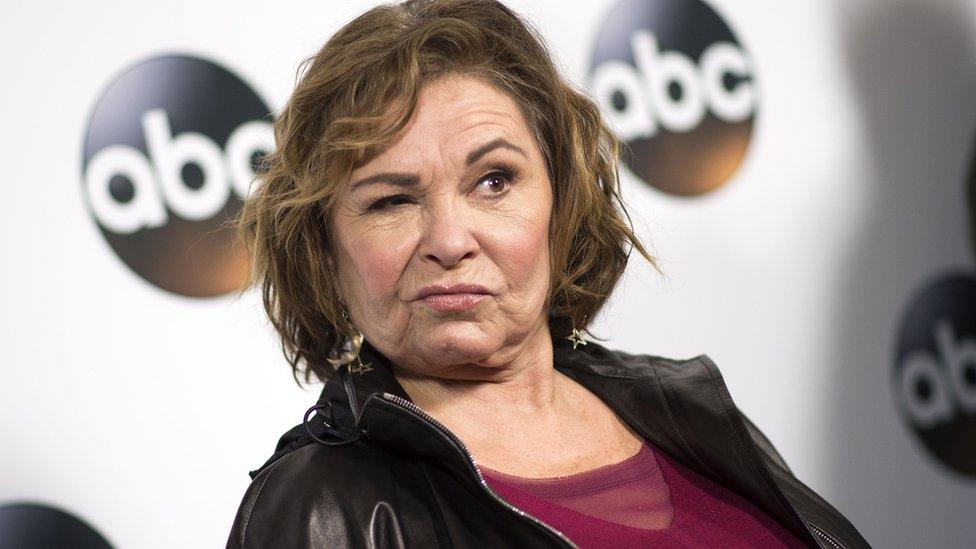
Ultimately, the Roseanne Barr incident highlights that successful personal branding is an ongoing, holistic endeavor, extending far beyond any single tweet or public statement. It’s about consistently cultivating and sustaining a positive brand narrative that resonates with the target audience and aligns with prevailing societal values. A single misstep can unravel years of careful brand building if not managed effectively within a broader strategy.
For public figures and brand professionals, the lesson is to view their brand as a living entity that requires constant nurturing, protection, and strategic evolution. It means understanding that every interaction, every piece of content, and every public appearance contributes to the overall brand story. The story of “what did Roseanne tweet” is a profound cautionary tale about the power of digital footprints, the unforgiving nature of public scrutiny, and the absolute necessity of integrating robust brand management principles into every aspect of public life in the digital age.
aViewFromTheCave is a participant in the Amazon Services LLC Associates Program, an affiliate advertising program designed to provide a means for sites to earn advertising fees by advertising and linking to Amazon.com. Amazon, the Amazon logo, AmazonSupply, and the AmazonSupply logo are trademarks of Amazon.com, Inc. or its affiliates. As an Amazon Associate we earn affiliate commissions from qualifying purchases.