
In the world of finance, few questions are asked more frequently at the end of a trading day than, “What did the Dow close at today?” For millions of investors, from seasoned Wall Street traders to individuals managing their 401(k) plans, the Dow Jones Industrial Average (DJIA) serves as more than just a number; it is a pulse check on the American economy and a primary indicator of market sentiment. While the daily fluctuations of the stock market can often feel like a chaotic series of ticks and charts, the closing price of the Dow provides a definitive anchor point for financial analysis.
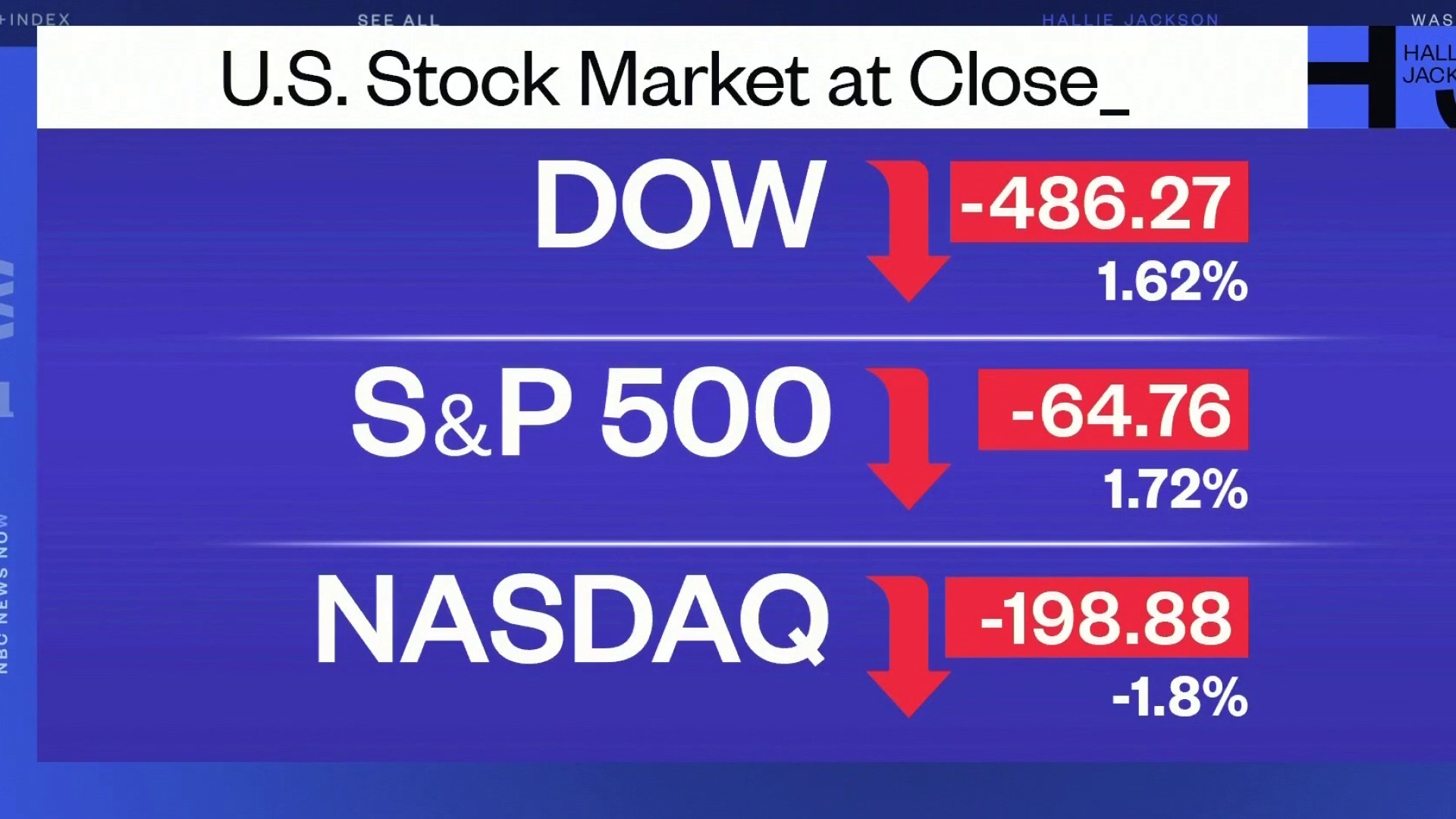
Understanding what the Dow’s closing number represents—and why it moves the way it does—is essential for anyone looking to navigate the complexities of personal finance and investing. This article explores the mechanics of the DJIA, the factors that drive its daily performance, and how investors should interpret these movements within a long-term financial strategy.
Decoding the Dow Jones Industrial Average (DJIA)
To understand the daily close, one must first understand the instrument itself. Founded in 1896 by Charles Dow and Edward Jones, the Dow Jones Industrial Average is the second-oldest stock market index in the United States. It was originally designed to track the performance of the industrial sector, but today it encompasses a broad range of industries, including technology, healthcare, and consumer goods.
What is the “Dow” and How is it Calculated?
Unlike the S&P 500, which is weighted by market capitalization (the total value of a company’s shares), the Dow is a price-weighted index. This means that companies with higher stock prices have a greater influence on the index’s movements than those with lower stock prices. The index is calculated by adding up the prices of the 30 constituent stocks and dividing the sum by a “Dow Divisor.” The divisor is a constantly adjusted figure that accounts for stock splits, dividends, and other corporate actions, ensuring that these events do not artificially distort the index’s value.
The Significance of the 30 Blue-Chip Stocks
The Dow is composed of 30 “blue-chip” companies—large, well-established, and financially sound corporations that are leaders in their respective industries. Because these companies, such as Apple, Microsoft, and Goldman Sachs, are so integral to the global economy, their collective performance is viewed as a proxy for the health of the U.S. stock market. When an investor asks about the Dow’s close, they are essentially asking how the giants of American industry fared over the course of the day.
Why the Closing Number Impacts the Global Economy
The stock market is a continuous stream of data, but the “close” holds a unique psychological and functional weight. When the closing bell rings at the New York Stock Exchange (NYSE) at 4:00 PM EST, it marks the official end of the standard trading session. This final price is used to calculate the performance of mutual funds, pension funds, and various derivatives.
Market Sentiment and the Psychology of the Close
The closing price represents the final consensus of all market participants for that day. It filters out the “noise” of mid-day volatility and provides a snapshot of where investors are willing to put their money overnight. A strong close (ending near the day’s highs) often suggests bullish sentiment, indicating that investors are confident heading into the next day. Conversely, a weak close can signal uncertainty or a desire to move into safer assets like bonds or cash.
Institutional Trading and the “Closing Cross”
Large institutional investors, such as hedge funds and insurance companies, often execute significant portions of their trades at the end of the day. This process, often referred to as the “closing cross,” ensures they receive the official closing price for their transactions. Because so much volume is concentrated in the final minutes of trading, the Dow’s closing level is often the most accurate reflection of institutional conviction, which carries more weight than the speculative trades of retail investors during the lunch hour.
Factors That Influence the Dow’s Daily Performance
The question of why the Dow closed up 200 points or down 500 points can rarely be answered with a single reason. Instead, the daily movement is the result of a complex interplay of geopolitical events, economic data, and corporate news.

Macroeconomic Indicators: Interest Rates and Inflation
One of the most potent drivers of the Dow is the Federal Reserve’s monetary policy. When inflation rises, the Fed may increase interest rates to cool the economy. Higher rates make borrowing more expensive for companies and can lead to a decrease in consumer spending. Consequently, when the Fed hints at a rate hike, the Dow often closes lower. Conversely, news of cooling inflation or a “dovish” stance from the Fed can spark a massive rally, as investors anticipate cheaper capital and continued growth.
Corporate Earnings Reports and Guidance
Since the Dow consists of 30 specific companies, the individual performance of these stocks can significantly move the needle. During “earnings season,” companies release their quarterly financial results. If a heavyweight like UnitedHealth Group or Boeing reports better-than-expected profits or raises its future guidance, it can lift the entire index. On the other hand, a disappointing outlook from a major constituent can drag the Dow down, even if the rest of the market is performing relatively well.
Beyond the Number: How to Use Daily Market Data for Long-Term Investing
While the daily close is a vital piece of information, it is easy for individual investors to fall into the trap of “ticker-watching.” Obsessing over daily fluctuations can lead to emotional decision-making, which is often the enemy of wealth accumulation.
Distinguishing Between Market Volatility and Fundamental Value
Volatility is a natural feature of the equity markets. The Dow may drop 1% today due to a temporary geopolitical headline, but that does not necessarily mean the underlying companies have lost 1% of their long-term value. Intelligent investors use the daily close as a data point, not a directive. They understand that the Dow’s long-term trajectory has historically been upward, driven by innovation, productivity, and economic expansion, despite the inevitable short-term dips.
Diversification: Looking Beyond the Dow 30
Because the Dow is limited to 30 companies and is price-weighted, it does not represent the entire market. For instance, it may not accurately reflect the performance of small-cap companies or specific emerging sectors. Therefore, while tracking the Dow’s close is helpful, it should be done in conjunction with other indices like the S&P 500 or the Nasdaq Composite. A well-rounded personal finance strategy involves a diversified portfolio that mitigates the risk of a single index’s volatility.
Tools and Resources for Tracking Real-Time Financial Data
In the digital age, finding out what the Dow closed at today is easier than ever. However, the quality of the insights you receive depends on the tools you use. Professional investors rely on sophisticated platforms to move beyond the headline number and understand the “why” behind the market movement.
Digital Platforms and FinTech Solutions
From mobile apps like Yahoo Finance and Bloomberg to comprehensive desktop platforms like TD Ameritrade’s thinkorswim or E*TRADE, investors have access to real-time streaming data. These tools allow users to see which of the 30 Dow components were the “leaders” (best performers) and “laggards” (worst performers) of the day. Understanding these internals provides a much clearer picture of whether a market move was broad-based or driven by a single outlier.
Setting Up Alerts and Managing Information Overload
To avoid the anxiety of constant monitoring, many successful investors set up automated alerts. You can configure your financial apps to notify you only if the Dow moves by a certain percentage or if it hits a specific psychological milestone (e.g., crossing 35,000 or 40,000). This approach allows you to stay informed about significant market shifts without being consumed by the minute-by-minute noise of the trading floor.

Conclusion
The question “What did the Dow close at today?” is the starting point for a deeper conversation about wealth, risk, and the global economy. For the individual investor, the daily closing price of the Dow Jones Industrial Average is a useful benchmark for evaluating the current market environment. However, the true value of this information lies in how it is applied.
By understanding the mechanics of the index, the macroeconomic forces that influence it, and the psychological impact of the closing bell, you can transform a simple number into a powerful tool for financial planning. Whether the Dow closes up or down on any given day, the most successful investors are those who maintain a professional perspective, stay focused on their long-term goals, and use daily data to refine, rather than redefine, their investment strategies. In the grand journey of personal finance, the daily close is just one step; the destination is built on consistency, diversification, and an informed understanding of the markets.
aViewFromTheCave is a participant in the Amazon Services LLC Associates Program, an affiliate advertising program designed to provide a means for sites to earn advertising fees by advertising and linking to Amazon.com. Amazon, the Amazon logo, AmazonSupply, and the AmazonSupply logo are trademarks of Amazon.com, Inc. or its affiliates. As an Amazon Associate we earn affiliate commissions from qualifying purchases.