
When we look at the monolith that is Amazon today, it is difficult to see it as anything other than a global utility. It is the infrastructure of modern life, providing everything from cloud computing services and grocery delivery to original cinematic content and smart home hardware. However, the origin of this corporate giant was far more humble and intensely focused. The answer to “what did Amazon sell first” is famously books, but the brand strategy behind that choice is what truly defined the trajectory of the company.

The decision to launch with books was not a matter of literary passion for Jeff Bezos. Instead, it was a cold, calculated move based on data, scalability, and market positioning. By examining how a small online bookstore transformed into the “Everything Store,” we can uncover the core principles of brand strategy, corporate identity, and market disruption that continue to influence the business world today.
The Strategic Choice: Why Books Were the Perfect Entry Point
In 1994, Jeff Bezos observed that internet usage was growing at a staggering rate of 2,300% per year. He realized that this was not just a fad, but a tectonic shift in how commerce would be conducted. To capitalize on this, he needed a product category that was ideally suited for the limitations and strengths of the early web. After evaluating several options—including computer software, hardware, and office supplies—he landed on books.
The Power of Infinite Inventory
The primary brand advantage Amazon held over brick-and-mortar competitors like Barnes & Noble or Borders was the concept of “infinite shelf space.” A physical bookstore, no matter how large, is limited by its square footage. There are millions of titles in print at any given time, yet the largest physical stores could only stock around 150,000.
By positioning itself as “Earth’s Biggest Bookstore,” Amazon created a brand identity centered on selection. This was a unique value proposition that a physical store simply could not match. The branding was built on the promise that if a book existed, you could find it on Amazon.
Low Risk and Standardized Quality
From a logistical and marketing perspective, books were a low-risk product. Unlike clothing or shoes, a book does not need to be tried on. Unlike electronics, a book is rarely defective in a way that requires complex troubleshooting. A customer ordering a copy of The Great Gatsby knows exactly what they are going to receive. This predictability was essential for building trust in an era when many consumers were still skeptical of entering their credit card information on the internet.
The Evolution of Identity: From “Cadabra” to “Amazon”
The branding of the company underwent significant refinement before it even launched to the public. The original name Bezos chose was “Cadabra,” as in “abracadabra.” However, his lawyer pointed out that the name sounded too much like “cadaver” over the phone. Recognizing that a brand name evoking death was suboptimal for a retail business, Bezos began searching for a new identity.
The “A” List and the River
The choice of “Amazon” was strategic for two reasons. First, in the early days of the internet, many website directories listed companies alphabetically. Starting with the letter “A” ensured that the brand would appear at the top of these lists.
Second, the Amazon River is the largest in the world by volume, dwarfing its competitors. This served as a powerful metaphor for the scale Bezos envisioned. The brand was never intended to stay confined to books; the name was chosen to represent something vast, unstoppable, and life-sustaining. The corporate identity was designed for expansion from day one.
The Visual Language: The Smile Logo
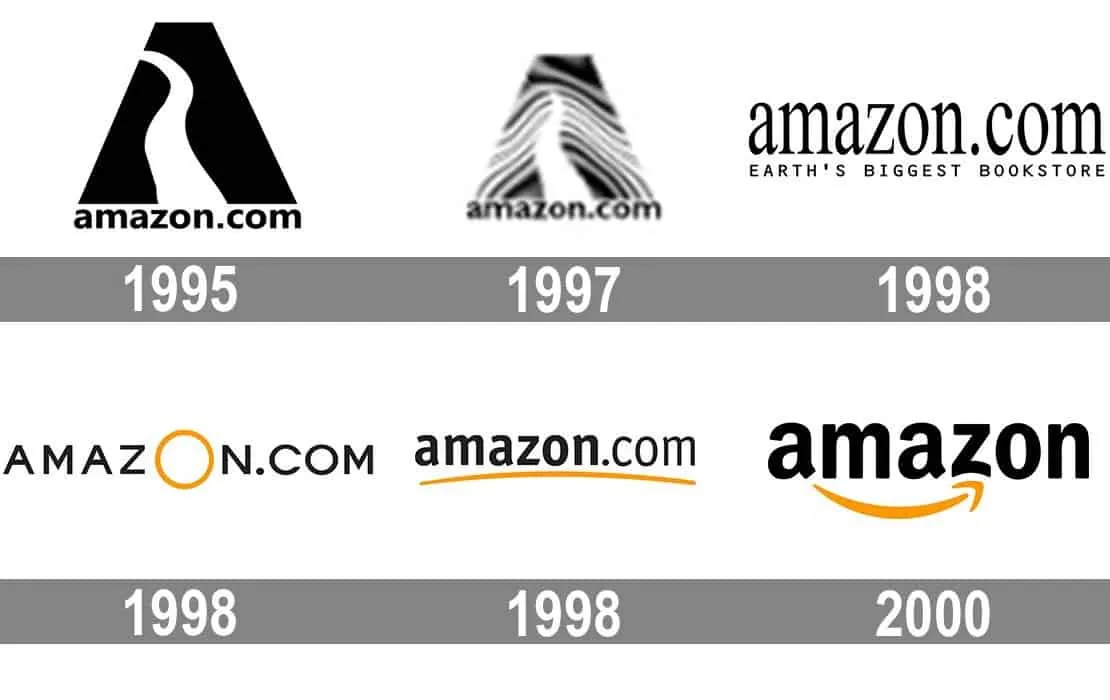
The visual evolution of the Amazon brand reflects its transition from a niche retailer to a global provider. The current logo, featuring an arrow that curves like a smile from the letter “A” to “Z,” is a masterclass in brand communication. It tells the consumer two things: first, that the company provides everything from A to Z; and second, that the customer experience is intended to be positive and satisfying. This “smile” has become one of the most recognizable brand assets in the world, symbolizing a brand that has moved beyond its origins into a state of total ubiquity.
Scaling the Narrative: Becoming the “Everything Store”
Once Amazon had dominated the book market and established a baseline of consumer trust, it began to execute its long-term strategy of category expansion. This transition was a delicate branding exercise. How does a brand known as “Earth’s Biggest Bookstore” convince consumers to buy their vacuum cleaners, toys, and electronics from the same platform?
Permission to Expand
Amazon earned the “permission” to expand by focusing on the customer experience rather than the product category. By the late 1990s, the brand was no longer just about books; it was about a specific method of shopping. It was about reviews, one-click ordering, and reliable shipping.
By centering the brand identity on “customer obsession” rather than “bookselling,” Amazon made the products themselves secondary to the platform. This allowed them to move into music and DVDs in 1998, followed by electronics, tools, and toys. Each new category was an extension of the core brand promise: a wide selection at competitive prices with unparalleled convenience.
The Marketplace Model and Brand Dilution
A pivotal moment in Amazon’s brand history was the decision to allow third-party sellers to compete directly on the site. Initially, this was seen as a risk. Would it confuse the brand identity? Would it lower the quality of the customer experience?
Instead, the marketplace model solidified Amazon’s identity as a platform rather than a retailer. It turned the brand into a destination. By aggregating third-party sellers, Amazon ensured that it would always have the lowest price and the best selection, even if it wasn’t the one selling the item. This move shifted the brand from being a “store” to being an “ecosystem.”
The Prime Effect: Redefining Customer Loyalty as a Brand Moat
In 2005, Amazon launched Prime, a move that would fundamentally alter the psychology of online shopping and brand loyalty. At its core, Prime is a marketing masterstroke. By charging an upfront annual fee for “free” two-day shipping, Amazon changed the consumer’s internal calculation from “Where is the cheapest place to buy this?” to “I need to get my money’s worth out of my Prime membership.”
Frictionless Branding
Prime is the ultimate expression of Amazon’s brand strategy: the removal of friction. The brand identity became synonymous with speed and reliability. The “Prime” badge became a seal of quality and a psychological trigger. When a consumer sees that logo, they know they can have the product in their hands within 48 hours without additional cost. This has created a level of brand stickiness that is nearly impossible for competitors to replicate.
Expanding the Brand Ecosystem
Over time, Amazon Prime evolved from a shipping program into a comprehensive lifestyle brand. The inclusion of Prime Video, Prime Music, and Kindle lending libraries transformed the subscription into a “value bundle.” This expansion ensured that the Amazon brand was present in multiple facets of the consumer’s life—from the groceries they eat (Whole Foods) to the movies they watch at night.
Key Takeaways for Brand Strategists
The story of what Amazon sold first—and what it became—offers several critical lessons for modern brand strategy and corporate identity.
1. Strategy Precedes Execution
Amazon’s choice of books was a strategic maneuver designed to exploit the specific advantages of the internet. Successful brands do not choose their niche at random; they choose categories where their unique value proposition can be most clearly demonstrated. For Amazon, that was “infinite selection” and “standardized quality.”
2. Build for Where You Are Going, Not Where You Are
Jeff Bezos’s refusal to name the company “Book-of-the-Month Online” or “The Book Warehouse” was intentional. He chose a name that allowed for growth. Brand names and identities should be broad enough to accommodate future pivots while being specific enough to build immediate equity.
3. Customer Obsession as a Brand Pillar
While many companies claim to be customer-centric, Amazon institutionalized it. From the “empty chair” at meetings (representing the customer) to the obsession with reducing delivery times, the brand is built on a promise of efficiency. When a brand becomes known for a standard of service rather than a type of product, it gains the flexibility to enter almost any market.
4. The Power of the Ecosystem
Amazon’s transition from a bookstore to a platform and then to an infrastructure provider (via AWS) shows the power of an integrated brand ecosystem. By owning the marketplace, the logistics, and the cloud technology that powers the internet, Amazon has made itself indispensable. Its brand identity is no longer about “selling things”; it is about the “modern standard of convenience.”
In conclusion, while the answer to “what did Amazon sell first” is a simple one—books—the “why” and “how” behind that answer reveal the DNA of a brand designed for global dominance. By starting with a product that offered high predictability and low risk, Amazon built the trust necessary to eventually sell everything to everyone, everywhere. It is a case study in how a focused entry strategy, paired with a relentless long-term vision, can turn a garage startup into a brand that defines an era.
aViewFromTheCave is a participant in the Amazon Services LLC Associates Program, an affiliate advertising program designed to provide a means for sites to earn advertising fees by advertising and linking to Amazon.com. Amazon, the Amazon logo, AmazonSupply, and the AmazonSupply logo are trademarks of Amazon.com, Inc. or its affiliates. As an Amazon Associate we earn affiliate commissions from qualifying purchases.