
For most vehicle owners, receiving a car insurance renewal notice is a moment of mild trepidation. Often, the premium has shifted—sometimes slightly, sometimes significantly—leaving the policyholder wondering what goes on behind the scenes of an actuary’s spreadsheet. Car insurance is not a flat-fee service; it is a sophisticated financial product priced through a meticulous assessment of risk.
In the world of personal finance, understanding these determinants is crucial for effective budgeting and wealth preservation. Insurance companies utilize thousands of data points to predict the likelihood that a driver will file a claim and how much that claim might cost. By deconstructing the factors that influence these rates, consumers can make informed decisions to optimize their coverage and minimize their expenses.
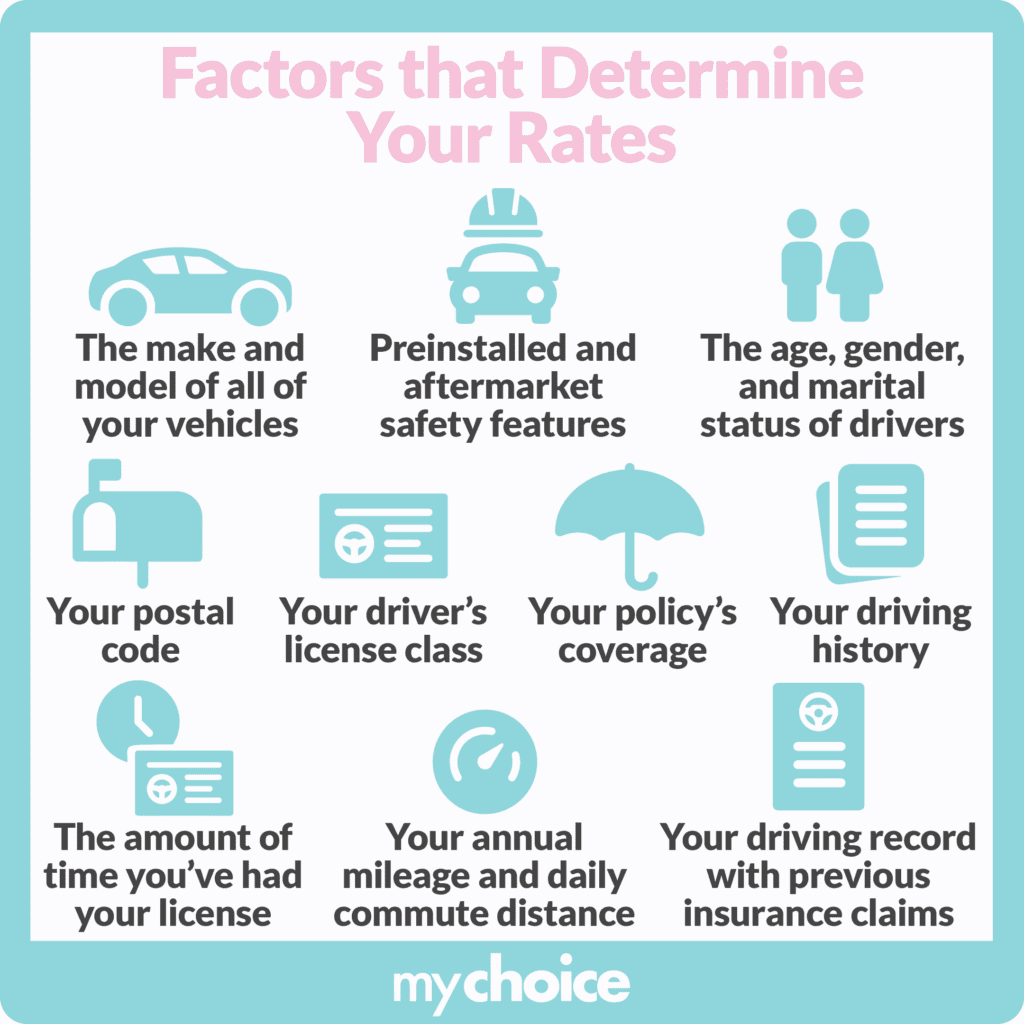
1. Demographic Profiles and Actuarial Risk
The foundation of any insurance premium lies in demographic data. While it may feel personal, insurance companies view individuals as members of specific cohorts. These cohorts are studied over decades to determine which groups are statistically more likely to cost the insurer money.
Age and Driving Experience
Age is perhaps the most significant demographic factor. Statistically, younger drivers—particularly those under the age of 25—lack the experience necessary to navigate complex driving environments. This lack of experience correlates with a higher frequency of accidents and higher-severity claims. Conversely, middle-aged drivers typically enjoy the lowest rates due to years of experience and a statistical tendency toward lower-risk behavior. However, rates often begin to climb again once a driver reaches their 70s or 80s, as physical reaction times and cognitive sharpness may decline, re-introducing a higher risk profile.
Location: The Zip Code Variable
Where you park your car at night is just as important as how you drive it. Insurance companies analyze claims data by zip code. If you live in a densely populated urban center, your rates will likely be higher than if you lived in a rural area. This is due to increased traffic density, which leads to a higher probability of fender-benders, as well as higher rates of vehicle theft, vandalism, and litigation. Furthermore, areas prone to extreme weather—such as hail-prone regions in the Midwest or flood-prone coastal cities—will see these environmental risks reflected in the local premium averages.
Gender and Marital Status
In many jurisdictions, gender and marital status play a role in rate determination. Statistical data often suggests that young male drivers are more prone to reckless driving than their female counterparts, though this gap narrows significantly with age. Marital status is also a key indicator; insurance companies have found that married individuals tend to be more risk-averse and are involved in fewer accidents than single, divorced, or widowed individuals. From a financial strategy perspective, being “stable” in the eyes of an actuary translates directly to lower monthly premiums.
2. Behavioral Factors and the Vehicle Profile
While demographics provide a baseline, your personal choices—both in how you drive and what you drive—allow for more granular adjustments to your insurance rate. These factors represent the variables over which the consumer has the most direct control.
Your Driving Record: The Safety Premium
Nothing impacts your car insurance rate more dramatically than your driving history. A clean record—free of speeding tickets, at-fault accidents, and DUIs—is a signal to the insurer that you are a low-risk investment. Conversely, a single “moving violation” can cause premiums to spike by 20% to 30%. Major infractions like a DUI can double or even triple your rates, and in some cases, lead to the cancellation of your policy. For the financially savvy, maintaining a clean record is the most effective way to protect against “premium creep.”
Vehicle Make, Model, and Safety Technology
The car itself is a massive variable in the pricing equation. Insurers look at the “loss history” of specific models. A high-performance sports car is more likely to be driven at high speeds, increasing the risk of a severe crash. On the other hand, a family sedan equipped with modern Advanced Driver Assistance Systems (ADAS)—such as automatic emergency braking and lane-departure warnings—is viewed more favorably. However, there is a paradox: while technology makes cars safer, it also makes them more expensive to repair. Replacing a bumper on a 2010 sedan is inexpensive; replacing a bumper on a 2024 model equipped with radar sensors and cameras is a high-cost endeavor, which can keep premiums high even for “safe” cars.
Annual Mileage and Usage Patterns
The more time you spend on the road, the higher the mathematical probability that you will be involved in an accident. Insurance applications typically ask for your estimated annual mileage and whether the vehicle is used for pleasure, commuting, or business. Someone who commutes 40 miles round-trip in heavy traffic every day will pay more than a “pleasure user” who only takes the car out for weekend errands. In the modern economy, “Usage-Based Insurance” (UBI) has become a popular financial tool, allowing drivers to share their real-time driving data via telematics in exchange for potential discounts based on low mileage and safe habits.

3. Financial Health and Coverage Structures
Car insurance is not just an operational expense; it is a financial shield for your assets. The way you structure your policy and your overall financial standing significantly influence the final cost of the premium.
Credit-Based Insurance Scores
In most U.S. states, insurance companies use a “credit-based insurance score” to help determine premiums. This is not the same as a traditional FICO score used for loans, but it utilizes similar data. Actuarial studies have shown a strong correlation between how a person manages their finances and how they manage their driving. Individuals with high credit scores are statistically less likely to file claims. From a personal finance standpoint, maintaining a healthy credit profile is not just about getting a low-interest mortgage; it is also a vital component of securing lower insurance costs.
Deductibles and Coverage Limits
The structure of the policy itself is a direct lever for the price. The “deductible” is the amount you pay out-of-pocket before the insurance company covers the rest of a claim. Choosing a higher deductible (e.g., $1,000 instead of $500) lowers the insurer’s risk and results in a lower premium. However, this requires the policyholder to have an emergency fund capable of covering that $1,000 at a moment’s notice. Similarly, the limits of liability you choose—how much the insurance will pay for bodily injury or property damage to others—will affect the price. While state minimums are cheaper, they often leave the driver financially vulnerable to lawsuits, making higher limits a wiser long-term financial decision.
Insurance History and Continuous Coverage
Insurers value loyalty and consistency. If you have a history of “lapses” in coverage—periods where you owned a vehicle but did not have insurance—you will be flagged as high-risk. Maintaining continuous coverage, even if you switch providers, signals financial responsibility. Furthermore, many companies offer “loyalty discounts” or “bundling discounts” (combining car and home insurance), which can reduce premiums by 5% to 15%.
4. Macroeconomic and Regulatory Forces
Sometimes, car insurance rates rise even when your driving record is perfect and your car is aging. These shifts are often driven by broader economic trends and state-level regulations that are outside of an individual’s control.
Inflation and the Cost of Labor
Insurance is deeply affected by the “Cost of Goods Sold.” When inflation drives up the price of auto parts and the hourly wages of mechanics, the cost of settling a claim rises. Recently, the insurance industry has faced “social inflation,” a term used to describe the rising costs of legal settlements and jury awards in accident lawsuits. As it becomes more expensive for insurance companies to defend and settle claims, those costs are inevitably passed down to the consumer in the form of higher premiums.
State Regulations and Mandatory Coverages
Insurance is regulated at the state level, meaning your rates are influenced by your local legislature. Some states operate under “no-fault” laws, where each driver’s insurance pays for their own medical bills regardless of who caused the accident. Other states are “tort” states, which can lead to higher litigation costs. Additionally, state-mandated minimum coverage levels vary wildly. A driver in a state with high minimum requirements will naturally pay more than a driver in a state with lower requirements, simply because the baseline of protection is higher.
Reinsurance and Global Risk
In a globalized financial market, local car insurance rates can even be affected by international disasters. Primary insurers often buy “reinsurance” to protect themselves against massive losses. If a series of global catastrophes—like major hurricanes or wildfires—depletes the capital of global reinsurers, the cost of reinsurance goes up. This creates a trickle-down effect where the local car insurance company must raise rates to cover their own increased costs of doing business.

Conclusion: Strategic Management of Insurance Costs
Understanding what determines car insurance rates is the first step toward managing this essential personal finance expense. While you cannot control your age or the macroeconomic climate, you can influence your premium through vehicle selection, credit management, and driving behavior.
By viewing car insurance not as a fixed bill but as a dynamic financial product, you can shop more effectively, leverage discounts, and choose coverage levels that provide the best balance of cost and protection. In the long run, the most effective way to lower your insurance rates is to remain a low-risk prospect in the eyes of the insurer: drive safely, maintain your financial health, and choose your vehicle and coverage limits with a long-term strategy in mind.
aViewFromTheCave is a participant in the Amazon Services LLC Associates Program, an affiliate advertising program designed to provide a means for sites to earn advertising fees by advertising and linking to Amazon.com. Amazon, the Amazon logo, AmazonSupply, and the AmazonSupply logo are trademarks of Amazon.com, Inc. or its affiliates. As an Amazon Associate we earn affiliate commissions from qualifying purchases.