
The question “what descent is my last name?” was once a mystery solved only by dusty library archives or oral traditions passed down through generations. Today, the answer lies at the intersection of big data, bioinformatics, and sophisticated software algorithms. Determining the origin and movement of a surname has transitioned from a hobbyist’s pastime into a high-tech frontier. As digital tools become more accessible, the technology powering genealogical research has evolved to offer unprecedented accuracy in identifying the geographic and cultural roots of our identities.
The Digital Evolution of Onomastics: From Records to Algorithms
Onomastics, the study of the origin and history of proper names, has been revolutionized by computational linguistics and database management. In the past, tracing a surname required manual cross-referencing of census records, parish registers, and immigration logs. Today, this process is automated through powerful search engines and specialized software designed to handle billions of data points.
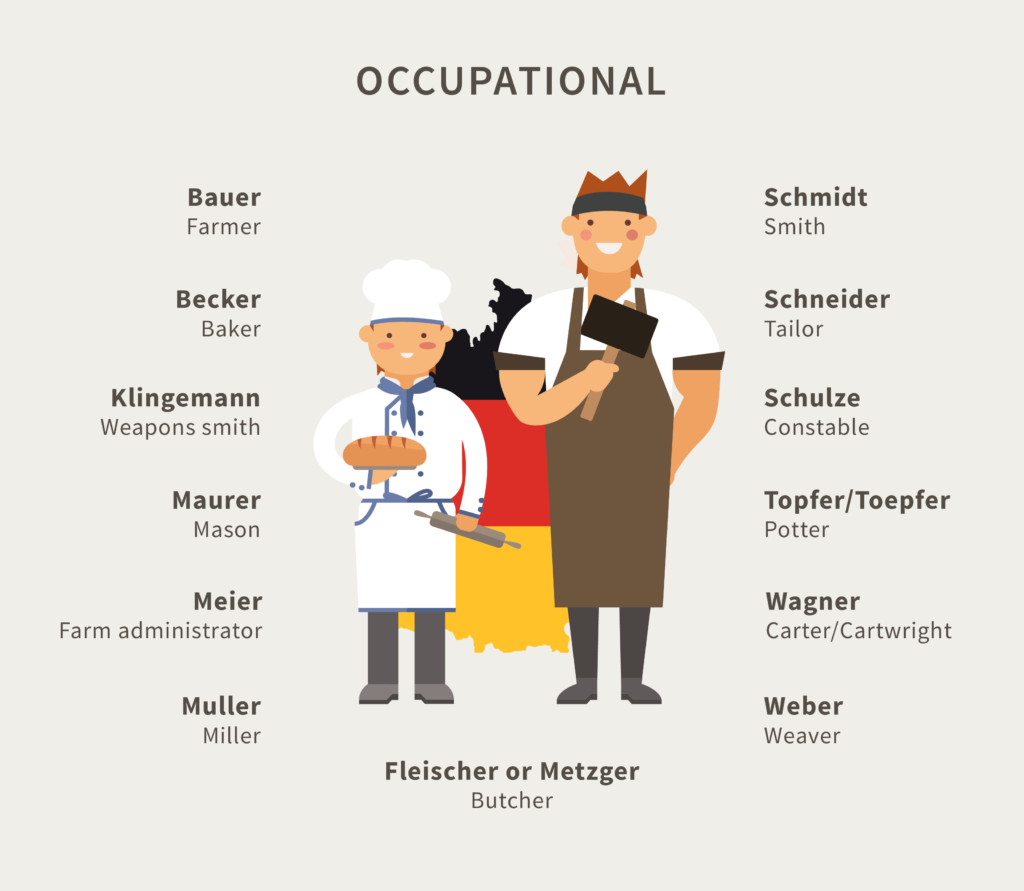
From Paper Records to Global Databases
The foundational technology of modern surname research is the digitization of historical records. Companies and non-profit organizations have utilized Optical Character Recognition (OCR) and high-speed scanning to transform centuries of handwritten documents into searchable, structured data. These databases serve as the backbone for any digital inquiry into a name’s descent.
By using distributed database systems, genealogy platforms can query millions of records in milliseconds. When a user inputs a surname, the system doesn’t just look for an exact match; it utilizes fuzzy logic and phonetic algorithms, such as Soundex or the Metaphone system. These algorithms account for historical spelling variations—often caused by phonetic transcriptions at border crossings or literacy gaps in the 18th and 19th centuries—ensuring that a search for “Smyth” correctly identifies connections to “Smith.”
How AI Algorithms Decode Surname Origins
Artificial Intelligence (AI) and Machine Learning (ML) have taken surname analysis a step further. Modern software can now predict the geographic origin of a name by analyzing linguistic patterns and phonemes. For example, specific suffixes like “-son” in English, “-ez” in Spanish, or “-poulos” in Greek are easily identified, but AI can go deeper.
Neural networks can analyze the distribution of surnames across global heat maps, correlating them with historical migration patterns. If a specific surname appears with high density in a particular region of Northern Italy but also shows a significant cluster in Argentina, ML models can cross-reference shipping manifests and historical migration data to determine the likely era and cause of the name’s movement. This predictive modeling provides users with a data-driven narrative of their lineage that goes far beyond a simple dictionary definition.
DNA Testing and the Tech of Genetic Mapping
While databases provide the historical context, the “wetware” of genealogy—DNA—provides the biological proof. The rise of Direct-to-Consumer (DTC) genetic testing has turned the quest for surname descent into a masterclass in bioinformatics.
The Bioinformatics of Autosomal DNA
When you provide a saliva sample to a testing service, the technology at work is nothing short of miraculous. Using DNA microarrays, laboratories look for hundreds of thousands of genetic markers called Single Nucleotide Polymorphisms (SNPs). These markers act as biological breadcrumbs.
Bioinformatics software then compares your genetic profile against a massive reference panel of thousands of individuals with deep, documented roots in specific geographic regions. This “admixture analysis” allows the tech to calculate percentages of your heritage. While your surname typically follows the paternal line (linked to the Y-chromosome), the technology can now triangulate the descent of a name by seeing which genetic clusters frequently correlate with specific surnames in a global database. This is particularly useful for individuals whose surnames may have been changed, identifying “biological surnames” that differ from their legal ones.
Cloud Computing in Large-Scale Ancestry Platforms
The scale of these genetic comparisons requires immense computational power. Ancestry platforms rely on high-performance cloud computing to run “matching algorithms” that connect millions of users. These systems must constantly calculate the “Centimorgans” (cM) of shared DNA between users to determine how closely they are related.
Because the database grows every time a new user joins, the computational complexity increases exponentially. Cloud-based infrastructure allows these platforms to scale, ensuring that if someone with your last name—or a derivative of it—takes a test halfway across the world, the system can notify you of the match in real-time. This interconnectedness is what makes the modern search for “descent” a collaborative, tech-driven global project.
Software Tools for Tracing Your Lineage
Beyond the major DNA testing giants, a suite of specialized software and open-source tools has emerged to help tech-savvy genealogists visualize and organize their findings. These tools turn raw data into a cohesive story of descent.
Open-Source Genealogy Frameworks
For those wary of proprietary “walled gardens,” open-source software like Gramps (Genealogical Research and Analysis Management Programming System) provides a professional-grade environment for tracking surnames. These tools allow users to import and export data using the GEDCOM (Genealogical Data Communication) standard, a universal file format that has been the industry standard since the 1980s.
Modern iterations of these tools integrate with Google Earth and other mapping APIs. This allows users to plot the movement of their surname over time, creating 4D visualizations that show their family’s migration across continents over several centuries. By layering historical maps over modern satellite imagery, the tech provides a visceral sense of where a surname truly “lives.”
Integrating Digitized Historical Records with OCR
One of the most exciting developments in the tech space is the use of AI to read “unreadable” documents. Many records that could reveal the descent of a surname are written in archaic scripts or are physically degraded.
Advanced OCR technology, powered by deep learning, is now being used to transcribe old German Fraktur, cursive Latin, and other challenging scripts. This unlocks millions of previously “dark” records. For a user searching for the origin of a rare surname, this tech can mean the difference between a dead end and a breakthrough in a 17th-century village census that was previously untranslatable by machines.
Privacy and Data Security in Ancestry Tech
As we use technology to answer “what descent is my last name,” we must also reckon with the digital footprint we create. The intersection of personal identity and data security is one of the most critical topics in the tech world today.
The Risks of Shared Genetic Data
When you upload your DNA data or family tree to a digital platform, you are dealing with the most sensitive form of Personal Identifiable Information (PII). There have been high-profile cases where law enforcement has used genealogical databases to identify suspects through “familial searching.” While this has solved cold cases, it raises significant questions about consent and data sovereignty.
Tech companies are now implementing more robust privacy controls. Features like “law enforcement opt-out” and the ability to delete your genetic data after processing are becoming standard. However, the decentralized nature of the internet means that once a family tree is public, it is difficult to retract. The tech community is currently debating the implementation of “Differential Privacy” in genealogy—a method of sharing patterns about surname descent without revealing the specific identity of individual data contributors.
Encrypting Your Digital Heritage
To combat these risks, new startups are looking toward blockchain technology as a way to secure genealogical records. By using a decentralized ledger, a person could theoretically “own” their surname’s digital history and DNA profile, granting temporary access to research platforms without giving up permanent ownership of the data.
Furthermore, end-to-end encryption is being applied to family tree software to ensure that the intimate details of a family’s history—including the “scandals” or sensitive discoveries often found when researching descent—remain private. As we move forward, the technology that tells us who we are must also be the technology that protects our right to keep that information secure.

The Future of Ancestry: AI as the Ultimate Genealogist
The quest to find the descent of a surname is no longer a static search; it is a dynamic, evolving digital experience. In the near future, we can expect AI “agents” that act as personal genealogists. These agents will autonomously scour the web, identifying new record releases, connecting with distant relatives, and even translating foreign-language documents in real-time to build a comprehensive map of our origins.
As natural language processing (NLP) improves, we may soon be able to simply ask our devices, “What is the descent of my last name?” and receive a multi-media presentation including historical maps, genetic breakdown, and a synthesized history of our ancestors’ migration. The technology doesn’t just provide a name; it restores a lost heritage, proving that in the digital age, our past is more accessible than ever before.
aViewFromTheCave is a participant in the Amazon Services LLC Associates Program, an affiliate advertising program designed to provide a means for sites to earn advertising fees by advertising and linking to Amazon.com. Amazon, the Amazon logo, AmazonSupply, and the AmazonSupply logo are trademarks of Amazon.com, Inc. or its affiliates. As an Amazon Associate we earn affiliate commissions from qualifying purchases.