
For investors, financial professionals, and anyone engaged in the world of finance, understanding the operating schedule of the stock market is as fundamental as understanding market trends or company earnings. Unlike many businesses that operate year-round with minimal interruptions, stock exchanges adhere to a specific calendar of closures, primarily observed national holidays. These closures are not arbitrary; they serve critical functions for market stability, operational efficiency, and the well-being of the broader financial ecosystem. Navigating the rhythm of these closures is a core component of informed investing and strategic financial planning.
In the United States, the primary stock exchanges, such as the New York Stock Exchange (NYSE) and the NASDAQ Stock Market, generally observe federal holidays. However, the exact list and occasional nuances, such as early closures or specific global market holidays, require a deeper look. This guide aims to demystify stock market closures, providing a comprehensive overview of why they occur, which days are observed, and how investors can best prepare for and leverage these periods of inactivity.
The Rationale Behind Stock Market Closures
The decision to close stock markets on certain days is rooted in a combination of tradition, operational necessity, and systemic stability. These closures are not merely about giving traders a day off; they are integral to the robust functioning of the financial markets. Understanding the underlying reasons can provide a deeper appreciation for the structured nature of global finance.
Observing National Holidays
The most straightforward reason for market closures is the observance of national holidays. In the U.S., this typically means federal holidays. These days are often designated for national remembrance, celebration, or reflection, and the financial markets, as pillars of the national economy, align with this broader societal rhythm. The tradition of closing markets on holidays also provides a unified break for market participants, from floor traders and institutional investors to back-office support staff and regulatory bodies. This synchronicity prevents fragmented trading activity, where some parts of the market might be operational while others are not, which could lead to inefficiencies or unfair advantages. It ensures that all market participants have a shared understanding of when trading is active and when it is not, fostering a level playing field.
Ensuring Operational Efficiency and Stability
Modern stock markets are incredibly complex systems, reliant on intricate technological infrastructure, high-speed data transfer, and sophisticated algorithms. While much of the trading process is automated, significant human oversight, maintenance, and support are still required. Market closures provide essential windows for exchanges and financial institutions to perform system maintenance, upgrade software, test new protocols, and reconcile vast amounts of data without disrupting live trading. These periods are crucial for ensuring that the underlying technology remains robust, secure, and capable of handling the immense volume and speed of daily transactions. Furthermore, a collective break helps to prevent market fatigue among participants, reducing the likelihood of human error that could arise from continuous, high-pressure trading environments. It’s a proactive measure to maintain the health and integrity of the financial system.
Facilitating Settlement and Reconciliation
Behind every trade, there is a complex process of settlement and reconciliation, where ownership of securities changes hands and funds are transferred. While digital systems have drastically sped up this process, it still involves numerous entities, including brokers, custodians, and clearinghouses. Market closures provide a buffered period for these post-trade activities to catch up, ensuring that all transactions are accurately recorded and settled without the added pressure of new trading activity. For instance, if a holiday falls in the middle of a trading week, it might affect the settlement cycle (e.g., T+2, meaning trade date plus two business days). By closing the entire market, these processes can be managed more smoothly, reducing the risk of errors or bottlenecks that could propagate through the financial system and potentially lead to systemic risk.
A Comprehensive Guide to U.S. Stock Market Holidays
The U.S. stock market adheres to a well-defined holiday schedule, primarily observing federal holidays. While most closures are for full days, there are instances of early closures that investors must also be aware of. Staying informed about these dates is critical for planning trading strategies, managing portfolios, and avoiding missed opportunities or unexpected delays.
Major Federal Holidays Observed
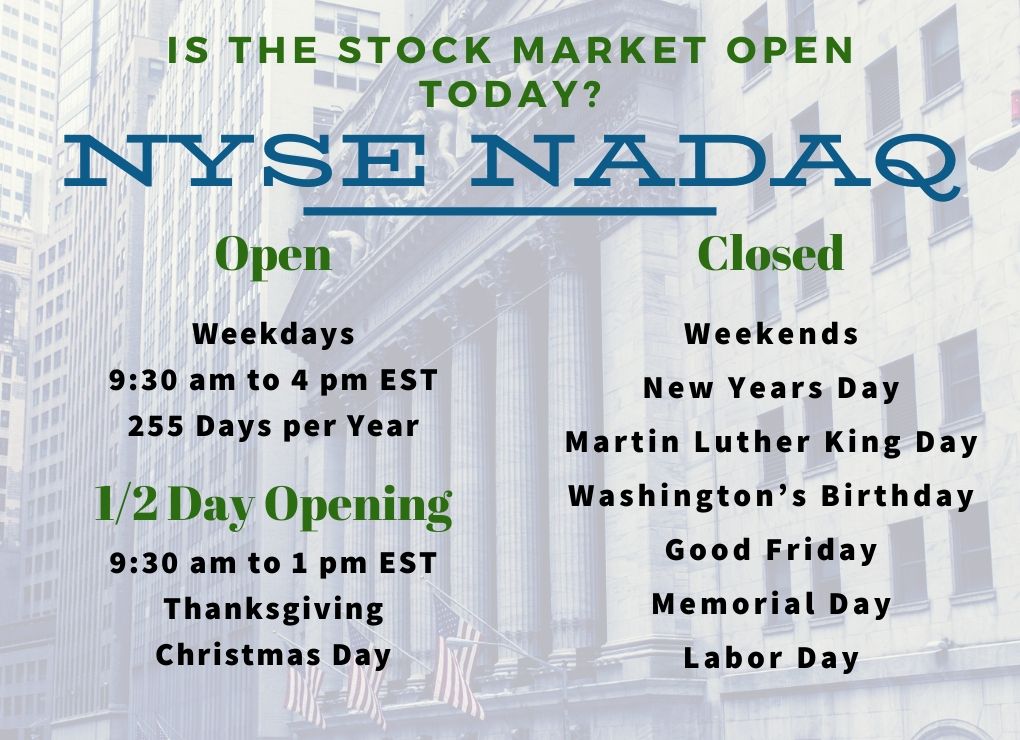
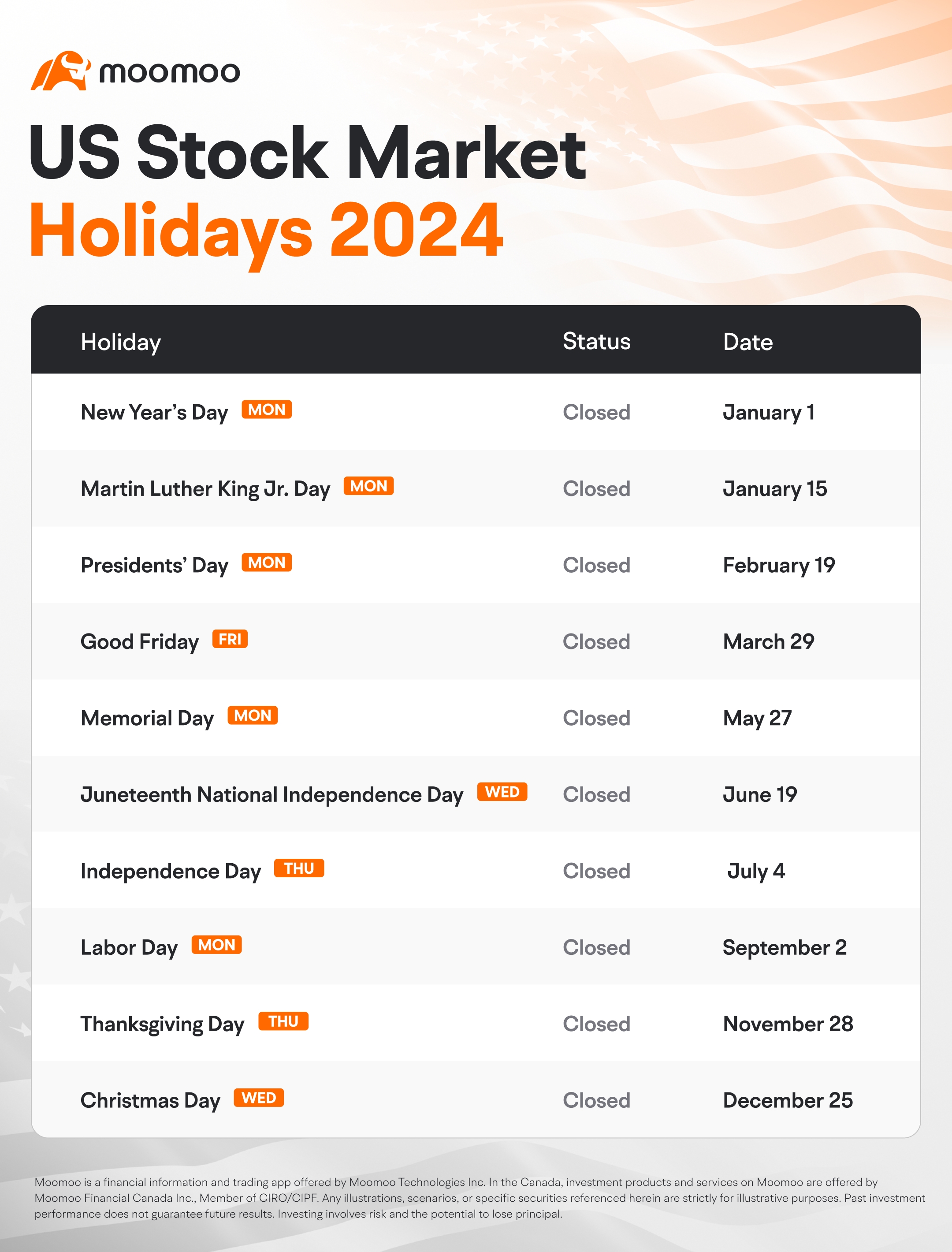
The NYSE and NASDAQ typically observe nine federal holidays each year, during which the markets remain closed for the entire trading day. These holidays represent significant national observances and provide predictable breaks in the trading calendar.
- New Year’s Day (January 1): The first day of the year marks a full market closure. If January 1 falls on a Saturday, the market observes the preceding Friday. If it falls on a Sunday, the market observes the following Monday.
- Martin Luther King, Jr. Day (Third Monday in January): A more recent addition to the observed holidays, honoring the civil rights leader.
- Washington’s Birthday / Presidents’ Day (Third Monday in February): Celebrated in honor of George Washington, often recognized as Presidents’ Day.
- Good Friday (Friday before Easter Sunday): While not a federal holiday, Good Friday is a traditional market holiday for both the NYSE and NASDAQ, reflecting its historical significance in the financial community.
- Memorial Day (Last Monday in May): A day of remembrance for those who died serving in the U.S. military.
- Juneteenth National Independence Day (June 19): This became a federal holiday in 2021 and has since been observed by the stock markets. If Juneteenth falls on a Saturday, it’s observed on the preceding Friday; if on a Sunday, it’s observed on the following Monday.
- Independence Day (July 4): Celebrating the signing of the Declaration of Independence. Similar to New Year’s Day, if July 4 falls on a Saturday, the market observes the preceding Friday; if on a Sunday, the market observes the following Monday.
- Labor Day (First Monday in September): A tribute to the contributions of American workers.
- Thanksgiving Day (Fourth Thursday in November): A day of national gratitude.
- Christmas Day (December 25): The widely observed Christian holiday. If December 25 falls on a Saturday, the market observes the preceding Friday; if on a Sunday, the market observes the following Monday.
It’s important to note that Veterans Day (November 11) and Columbus Day (Second Monday in October) are federal holidays but are not observed by the U.S. stock markets, meaning trading continues as usual on those days.
Early Closures and Special Circumstances
Beyond full-day closures, the U.S. stock market occasionally operates on an abbreviated schedule. The most common early closure occurs on the day after Thanksgiving, often referred to as “Black Friday.” On this day, the market typically closes early, usually at 1:00 PM ET, instead of the standard 4:00 PM ET. Similarly, if Independence Day or Christmas Day falls on a Tuesday or Thursday, the market might have an early closure on the preceding Monday or following Friday, respectively, to create an extended weekend for market participants. These early closures are often announced well in advance, giving investors ample time to adjust their trading plans. While less common, unexpected closures can occur due to extreme weather events, national emergencies, or significant technical issues. Such instances are rare but highlight the importance of staying updated with official exchange announcements.
Understanding Market Operating Hours
For days when the market is open, standard trading hours for the NYSE and NASDAQ are from 9:30 AM to 4:00 PM Eastern Time (ET) on weekdays. However, pre-market and after-hours trading sessions allow investors to trade outside these core hours. Pre-market trading typically runs from 4:00 AM to 9:30 AM ET, and after-hours trading from 4:00 PM to 8:00 PM ET. While these extended hours offer flexibility, they often come with lower liquidity and wider bid-ask spreads, making them potentially riskier for less experienced traders. Understanding both the regular hours and the extended sessions, alongside market holidays, provides a complete picture of when and how trading can be conducted.
Global Perspectives: International Market Closures
While this discussion focuses on U.S. stock markets, it’s crucial for globally-minded investors to recognize that market closures are a worldwide phenomenon. International markets have their own distinct holiday schedules, reflecting national traditions, religious observances, and regional customs. For investors with diversified portfolios that include international equities or those engaged in global macro strategies, understanding these variances is essential to avoid surprises and manage risk effectively.
European Market Variations
European stock exchanges, such as the London Stock Exchange (LSE), Euronext (covering Paris, Amsterdam, Brussels, and Lisbon), and the Frankfurt Stock Exchange (Xetra), each follow their respective national holiday calendars. For example, many European markets observe additional holidays like Easter Monday, May Day (International Workers’ Day), and Boxing Day (the day after Christmas). Religious holidays, such as Assumption Day or All Saints’ Day, are also observed in predominantly Catholic countries. These closures mean that a U.S. investor might find European markets closed on days when the NYSE or NASDAQ are fully operational, creating a disjointed trading schedule for cross-border investments.
Asian Market Observances
Markets in Asia exhibit even greater diversity in their holiday schedules due to a wide array of cultural and religious traditions. The Tokyo Stock Exchange, for instance, observes national holidays like New Year’s Day, Coming-of-Age Day, National Foundation Day, and Golden Week, a series of public holidays clustered in late April/early May. Similarly, Chinese markets (Shanghai and Shenzhen) close for major festivals like Chinese New Year, Qingming Festival, Dragon Boat Festival, and the Mid-Autumn Festival, in addition to national holidays. Indian markets (BSE and NSE) observe Hindu festivals like Diwali and Holi, as well as national holidays. These closures can significantly impact liquidity and trading volumes in specific regions and have ripple effects on global capital flows.
Impact on Global Trading
For investors involved in international diversification, ETFs with global exposure, or those trading foreign exchange (forex) or commodities, international market closures can have several implications. First, they can lead to periods of reduced liquidity for specific asset classes, potentially increasing volatility or widening spreads. Second, major news or economic data releases from a country whose market is closed might not be fully priced in until the market reopens, leading to potential “gap openings” or sudden price movements. Finally, the interconnectedness of global markets means that even if one market is closed, events occurring elsewhere can still influence investor sentiment and impact futures markets or other derivatives that trade continuously. Therefore, a comprehensive understanding of global market holidays is a prerequisite for sophisticated international investment strategies.
The Impact of Market Closures on Investors
Market closures, while serving essential functions, inevitably impact investor activity and decision-making. Far from being mere inconveniences, these periods require investors to adapt their strategies, manage expectations, and potentially leverage the downtime for strategic planning.
Strategic Planning and Portfolio Management
Market holidays offer a valuable opportunity for investors to step back from the daily grind of trading and engage in deeper analysis and strategic planning. With the market closed, there’s no immediate pressure to react to price fluctuations, allowing for a more deliberate review of portfolio performance, assessment of investment goals, and research into potential new opportunities. This is an ideal time to:
- Revisit Investment Thesis: Re-evaluate the fundamental reasons behind current holdings. Are the initial conditions still valid? Have company fundamentals changed?
- Conduct Due Diligence: Research new companies, industries, or asset classes without the distraction of live market data.
- Rebalance Portfolios: Identify areas where the portfolio has drifted from its target asset allocation and plan rebalancing trades for the next open market session.
- Review Financial News and Economic Calendars: Catch up on broader economic trends, geopolitical events, and upcoming earnings reports or economic data releases that could influence future market movements.
This proactive planning can lead to more informed decisions when trading resumes, reducing impulsive reactions driven by market noise.
Managing News and Geopolitical Events
A significant challenge during market closures is the potential for major news or geopolitical events to unfold. Such events, whether positive or negative, cannot be immediately reflected in asset prices, as trading is halted. This can lead to a build-up of market sentiment, often resulting in significant price gaps when the market reopens. For example, an unexpected political announcement or a major natural disaster over a long weekend could cause a dramatic surge or plunge in stock prices on Monday morning.
Investors need to be aware of this “weekend risk” or “holiday risk” and adjust their positions accordingly. Some might choose to reduce their exposure to volatile assets before a long closure, while others might prepare to react swiftly upon reopening. Monitoring reliable news sources and understanding the potential impact of unfolding events is crucial for mitigating surprises. This awareness helps in formulating contingent strategies, such as setting stop-loss orders for when the market reopens or identifying potential entry points based on pre-market indicators.
Opportunities in Off-Market Hours
While traditional stock exchanges are closed on holidays, some financial instruments and markets operate continuously or with extended hours. The most prominent examples include:
- Forex Market: The foreign exchange market operates 24 hours a day, five days a week, only closing briefly from Friday evening to Sunday evening ET. This allows for continuous currency trading, though liquidity might be lower during periods when major financial centers are closed.
- Cryptocurrency Market: The cryptocurrency market operates 24/7, 365 days a year, unaffected by traditional stock market holidays. This provides an alternative for investors seeking continuous trading opportunities, albeit with higher volatility and different regulatory landscapes.
- Futures Markets (e.g., E-mini S&P 500 futures): While their hours vary, many futures contracts tied to stock indices trade nearly 24 hours a day, five days a week. These can offer a glimpse into market sentiment even when the cash equity markets are closed, often serving as an indicator for how the stock market might open after a holiday.
However, it’s vital to remember that trading in these off-market or alternative venues carries its own set of risks, including lower liquidity and higher volatility, which can lead to rapid and unpredictable price movements. Investors should approach these opportunities with caution and a clear understanding of the associated risks.
Navigating Market Breaks: Best Practices for Investors
Effectively managing market closures is an integral part of successful investing. It requires proactive planning, continuous learning, and strategic use of downtime. By adopting a disciplined approach, investors can transform potential periods of uncertainty into opportunities for growth and refinement of their investment process.
Monitoring Economic Calendars
One of the most fundamental best practices is to regularly consult and internalize the market holiday calendar. Reputable financial news outlets, exchange websites (like NYSE and NASDAQ), and brokerage platforms typically provide comprehensive schedules of market closures and early closings for the upcoming year. Subscribing to alerts or integrating these dates into personal calendars ensures that investors are never caught off guard. Beyond specific market holidays, it’s also wise to monitor broader economic calendars that highlight upcoming central bank meetings, unemployment reports, inflation data, and other significant economic announcements. While these don’t necessarily lead to market closures, they can significantly influence market behavior when trading resumes, allowing investors to anticipate potential volatility.
Utilizing Financial Tools and Alerts
The digital age provides an array of financial tools designed to help investors stay informed and manage their portfolios. Setting up customized alerts through brokerage platforms, financial news apps, or dedicated market tracking tools can notify investors of important market events, including holiday schedules, economic data releases, and significant price movements in off-market hours (e.g., futures). Many platforms offer features to simulate the impact of various scenarios on a portfolio, allowing investors to stress-test their holdings during downtime. Additionally, using advanced charting tools for technical analysis during market breaks can help identify patterns and trends that might inform future trading decisions without the pressure of real-time price changes.
Rebalancing and Reassessing Investment Goals
Market closures provide a natural pause button for investors, encouraging a reflective approach to their financial journey. This downtime is perfectly suited for periodic portfolio rebalancing. Over time, market movements can cause a portfolio’s asset allocation to drift from its target. For instance, a strong bull market might cause equities to represent a larger percentage of the portfolio than initially intended. Holidays offer a chance to identify these drifts and plan corrective actions (e.g., selling some overperforming assets and buying underperforming ones) for when the market reopens, thus maintaining the desired risk profile. Moreover, it’s an opportune time to reassess personal financial goals, such as retirement planning, saving for a down payment, or funding education. Are the current investment strategies still aligned with these evolving objectives? A holistic review during market breaks ensures that investments remain purposeful and on track.

Leveraging Educational Resources
Finally, market closures are an excellent time for continuous learning and professional development. The world of finance is constantly evolving, with new instruments, strategies, and regulatory changes emerging regularly. Utilizing this quiet period to read financial literature, take online courses, attend webinars, or review market analysis reports can significantly enhance an investor’s knowledge base and decision-making capabilities. Many financial institutions and educational platforms offer free resources during holiday periods. Investing in one’s financial education is arguably one of the highest-return investments an individual can make, and market holidays provide an ideal, low-pressure environment to do just that, fostering a deeper understanding of market dynamics and personal finance principles.
By embracing market closures as strategic opportunities rather than mere interruptions, investors can maintain a disciplined approach, refine their strategies, and ultimately improve their long-term financial outcomes.
aViewFromTheCave is a participant in the Amazon Services LLC Associates Program, an affiliate advertising program designed to provide a means for sites to earn advertising fees by advertising and linking to Amazon.com. Amazon, the Amazon logo, AmazonSupply, and the AmazonSupply logo are trademarks of Amazon.com, Inc. or its affiliates. As an Amazon Associate we earn affiliate commissions from qualifying purchases.