
For anyone engaged in the world of finance, from seasoned institutional investors to individual retail traders, understanding the operational schedule of stock exchanges is not merely a matter of curiosity – it is a critical component of strategic planning and risk management. The notion that the stock market operates relentlessly, twenty-four hours a day, seven days a week, is a common misconception. In reality, stock exchanges around the globe observe a structured calendar of holidays, during which trading ceases. These closures, dictated by a blend of national holidays, traditional customs, and practical considerations, have significant implications for market participants, affecting everything from trade execution and liquidity to investment strategies and portfolio management.
Navigating these closures requires more than just knowing a list of dates; it demands an understanding of why markets close, the distinct impact these closures have, and how to adapt financial strategies accordingly. This comprehensive guide delves into the intricacies of stock exchange holidays, offering insights into their historical context, practical implications, and the best practices for staying informed to make well-timed financial decisions.
Understanding Stock Market Holidays: The Basics
Stock market holidays are scheduled non-trading days observed by stock exchanges. While seemingly straightforward, the rationale and impact behind these closures are multifaceted, extending beyond simply giving market participants a day off.
Why Do Stock Exchanges Close?
The primary reasons stock exchanges close on specific days are rooted in a combination of historical precedent, societal norms, and operational necessity. Historically, financial markets were closely tied to banking systems, which themselves observe national holidays. As such, many stock market holidays align with national bank holidays or significant cultural and religious observances (e.g., Christmas, Easter, national independence days). These closures serve several practical purposes:
- Operational Integrity: Trading requires extensive back-office operations, including settlement and clearing processes, which often rely on banks and other financial institutions. When these supporting services are closed, full market operations become impractical or impossible.
- Market Stability: Closures provide a deliberate pause in trading, particularly during times when market participants might be distracted or dispersed dueating peak holiday seasons. This can prevent erratic trading patterns driven by reduced participation or speculative rushes.
- Employee Well-being: Like any industry, the financial sector requires its professionals – traders, analysts, support staff – to have periods of rest, which are often aligned with broader national holidays to facilitate family and social engagements.
- Preventing Information Asymmetry: While news can break at any time, a coordinated closure ensures that all market participants have an equal opportunity to absorb and react to significant events once the market reopens, rather than a select few having an early-mover advantage during reduced trading hours.
Distinguishing Between Major and Minor Closures
Not all market closures are created equal. It’s crucial to differentiate between various types of non-trading days:
- Full-Day Closures: These are the most common and are observed for major national or religious holidays, where the exchange remains completely closed for the entire trading day.
- Early Closures (Half-Day Closures): Some exchanges may operate for a reduced number of hours on certain days, often preceding or following a major holiday (e.g., the day before Thanksgiving or Christmas Eve in some markets). While trading occurs, liquidity might be significantly reduced during these periods.
- Local vs. International Holidays: An exchange’s holiday schedule is primarily dictated by its host country’s public holidays. This means that while the New York Stock Exchange might be closed for Thanksgiving, the London Stock Exchange will be fully operational, and vice-versa for UK Bank Holidays. Investors with international portfolios must track multiple calendars.
The Impact of Closures on Trading and Liquidity
When an exchange closes, trading activity for instruments listed on that exchange ceases. This has several direct implications:
- Order Execution: No buy or sell orders can be executed on the primary exchange during a closure. Any orders placed will typically be queued until the market reopens.
- Price Discovery: With no active trading, there is no real-time price discovery. The value of assets remains static until trading resumes, at which point prices may “gap” up or down based on news and events that occurred during the closure.
- Liquidity Reduction: Even leading up to a closure or during early-closure days, market liquidity often diminishes significantly as fewer participants are active. This can lead to wider bid-ask spreads and increased volatility for large orders.
- Opportunity Cost: For active traders, closures represent lost trading opportunities. For long-term investors, the inability to react to sudden news can introduce an element of risk.
Key Holidays for Major Global Exchanges
Understanding the specific holidays observed by the world’s leading stock exchanges is fundamental for global investors. While some holidays are universally recognized (e.g., New Year’s Day, Christmas), many are unique to individual countries and cultures.
United States: NYSE and NASDAQ
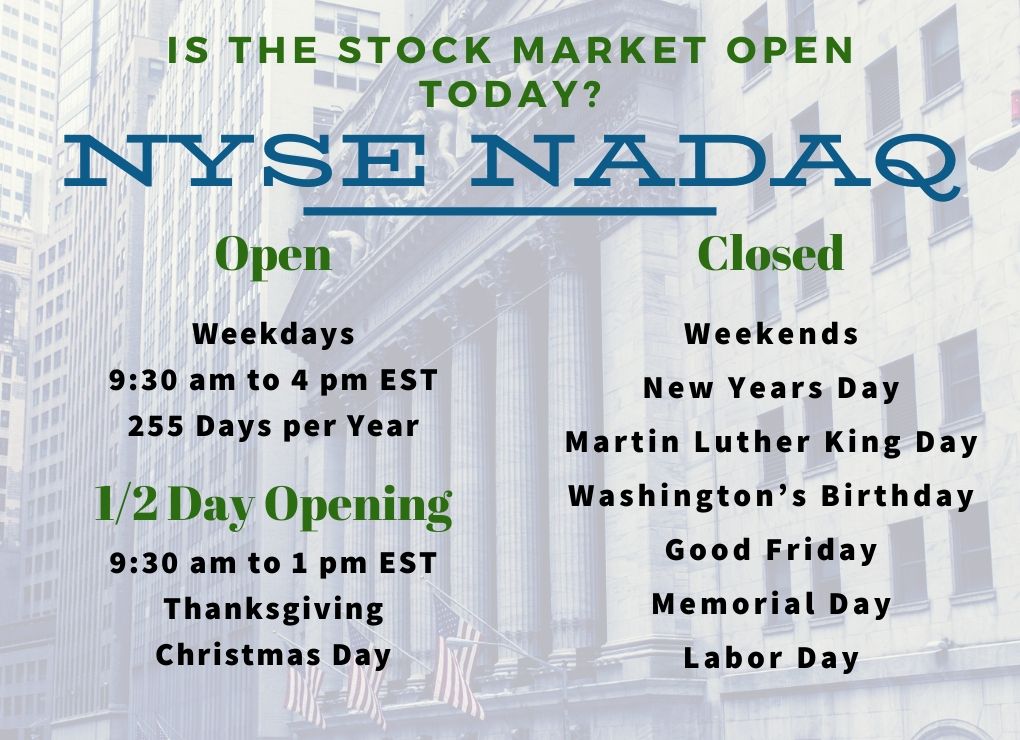
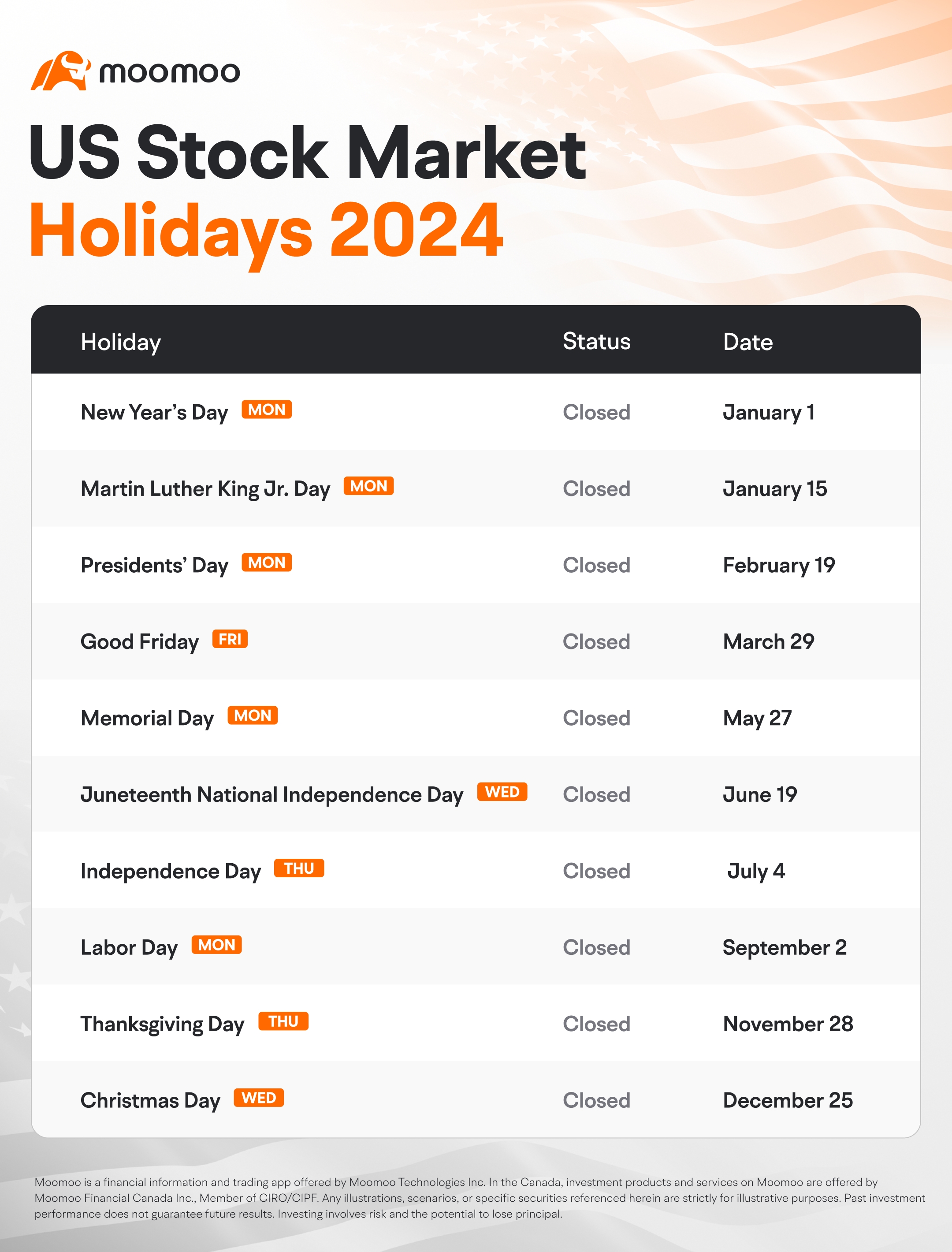
The New York Stock Exchange (NYSE) and NASDAQ, two of the world’s largest exchanges, share the same holiday schedule. Their closures primarily align with federal holidays, with a few notable exceptions. Key full-day closures include:
- New Year’s Day: January 1st
- Martin Luther King, Jr. Day: Third Monday in January
- Presidents’ Day (Washington’s Birthday): Third Monday in February
- Good Friday: Varies (Friday before Easter Sunday)
- Memorial Day: Last Monday in May
- Juneteenth National Independence Day: June 19th
- Independence Day: July 4th
- Labor Day: First Monday in September
- Thanksgiving Day: Fourth Thursday in November
- Christmas Day: December 25th
The US markets also observe occasional early closures, typically on the day before Independence Day (if it falls on a weekday) and on Black Friday (the day after Thanksgiving), closing at 1:00 PM ET. Christmas Eve may also see an early close if it falls on a weekday.
United Kingdom: London Stock Exchange (LSE)
The London Stock Exchange (LSE) observes UK bank holidays, which include both traditional Christian holidays and specific public holidays unique to the UK:
- New Year’s Day: January 1st
- Good Friday: Varies
- Easter Monday: Varies
- Early May Bank Holiday: First Monday in May
- Spring Bank Holiday: Last Monday in May
- Summer Bank Holiday: Last Monday in August
- Christmas Day: December 25th
- Boxing Day: December 26th
Similar to the US, the LSE may also have reduced trading hours or full closures on certain days around Christmas and New Year’s if they fall on a weekend or require adjusted schedules.
European Markets (e.g., Euronext, Deutsche Börse)
European markets present a more complex picture due to the multitude of countries and exchanges. While some major holidays are commonly observed, national holidays can lead to localized closures.
- Commonly Observed Across Europe: New Year’s Day, Good Friday, Easter Monday, Christmas Day, and Boxing Day are frequently observed by exchanges like Euronext (which operates exchanges in Amsterdam, Brussels, Dublin, Lisbon, Oslo, and Paris) and Deutsche Börse (Frankfurt Stock Exchange).
- National Specificities: Beyond these, each country will have its own national holidays. For example, Germany observes Unity Day (October 3rd), France observes Bastille Day (July 14th), and many Catholic countries observe Epiphany (January 6th) or Assumption Day (August 15th). Investors trading on specific European exchanges must consult that particular exchange’s calendar.
Asian Markets (e.g., Japan Exchange Group, Shanghai Stock Exchange, Hong Kong Stock Exchange)
Asian markets have a rich tapestry of cultural and national holidays, making their schedules particularly diverse.
- Japan Exchange Group (JPX – Tokyo Stock Exchange): Observes numerous national holidays, including New Year’s holidays (multiple days), Coming of Age Day (second Monday in January), Emperor’s Birthday (February 23rd), Vernal Equinox Day (around March 20th), Showa Day (April 29th), Constitution Memorial Day (May 3rd), Greenery Day (May 4th), Children’s Day (May 5th) – these last four often create the “Golden Week” of closures – Marine Day (third Monday in July), Mountain Day (August 11th), Respect for the Aged Day (third Monday in September), Autumnal Equinox Day (around September 23rd), Sports Day (second Monday in October), and Culture Day (November 3rd), Labor Thanksgiving Day (November 23rd).
- Shanghai Stock Exchange (SSE): Heavily influenced by Chinese traditional and national holidays. Key closures include New Year’s Day, Lunar New Year (Spring Festival – often a week-long closure), Qingming Festival, Labor Day (often a multi-day holiday), Dragon Boat Festival, Mid-Autumn Festival, and National Day (another multi-day holiday in early October).
- Hong Kong Stock Exchange (HKEX): A blend of Western and Chinese holidays, including New Year’s Day, Lunar New Year, Good Friday, Easter Monday, Ching Ming Festival, Labor Day, Buddha’s Birthday, Dragon Boat Festival, Hong Kong Special Administrative Region Establishment Day, Mid-Autumn Festival, National Day, Chung Yeung Festival, Christmas Day, and Boxing Day.
The sheer variety underscores the need for investors to maintain an accurate and up-to-date calendar for each market they operate in.
The Strategic Implications of Market Closures
Market closures are not just blank spots on the calendar; they present unique strategic considerations for investors and traders. Understanding how these pauses influence market behavior can provide an edge in managing positions and making informed decisions.
Pre-Holiday Trading Behavior
Leading up to a market holiday, trading patterns often shift in predictable ways:
- Reduced Liquidity: As the holiday approaches, many participants, particularly institutional traders, may reduce their activity or close positions to avoid exposure during the off-market period. This decrease in trading volume can lead to reduced liquidity and wider bid-ask spreads.
- “Window Dressing”: Towards the end of a quarter or year, fund managers might engage in “window dressing,” buying stocks that have performed well and selling those that haven’t to make their portfolios appear more attractive before reporting periods. This can sometimes create unusual price movements just before a holiday closure.
- Anticipation and Positioning: Traders may try to anticipate news or market sentiment that could emerge during the holiday. This might lead to pre-holiday positioning, where some traders take speculative positions in anticipation of a certain market reaction upon reopening.
- Risk Aversion: Many investors prefer to reduce their exposure to the market over a long holiday weekend, especially if there are geopolitical events or economic data releases expected. This risk aversion can lead to selling pressure.
Post-Holiday Market Dynamics
The reopening of markets after a holiday can often be characterized by increased volatility and significant price movements:
- “Catch-Up” Moves: If major news (economic, corporate, or geopolitical) breaks during the closure, the market will attempt to price that information in immediately upon reopening. This can lead to sharp “gap” openings, where prices open significantly higher or lower than the previous close.
- Increased Volatility: The initial hours or even days after a holiday can see heightened volatility as market participants react to accumulated news and adjust their positions.
- Fresh Sentiment: Holidays can provide a psychological reset for market participants. Traders and investors might return with fresh perspectives, leading to shifts in overall market sentiment.
- Liquidity Rebound: After an initial flurry of activity, liquidity typically returns to normal levels as all participants come back online.
Managing Risk During Off-Market Hours
The inability to trade during market closures introduces inherent risks, particularly for those holding open positions. Prudent risk management strategies are essential:
- Review and Adjust Positions: Before a long closure, evaluate all open positions. Consider reducing exposure, taking profits, or cutting losses on volatile assets.
- Utilize Stop-Loss Orders: While stop-loss orders offer protection during trading hours, they may not execute at the desired price if the market gaps significantly upon reopening. However, they still provide a baseline of protection against adverse movements.
- Consider Hedging Strategies: For sophisticated investors, hedging strategies using derivatives (e.g., options, futures) on related assets that might trade during the closure can help mitigate risk.
- Monitor Global News and Related Markets: Even if your primary market is closed, global events continue. Keep an eye on international news, commodity markets, and forex movements, as these can signal potential moves in your portfolio when your market reopens.
- Understand Your Broker’s Policies: Be aware of how your brokerage handles orders placed during off-market hours and any specific risks associated with holding positions over holidays.
Impact on Derivatives and Crypto Markets
While traditional stock exchanges close, other financial markets may remain open or have different schedules:
- Derivatives Markets: Futures and options markets, particularly those for major indices or commodities, often have extended trading hours or different holiday schedules than their underlying stock markets. Some index futures, for instance, might trade overnight or during periods when equity markets are closed, providing a gauge of market sentiment.
- Cryptocurrency Markets: Cryptocurrency exchanges operate 24/7/365, without traditional holidays. This constant availability means that significant shifts in crypto prices can occur during stock market closures, potentially influencing sentiment when equities reopen. Investors with diversified portfolios need to monitor these interrelated markets.
Tools and Resources for Staying Informed
In the fast-paced financial world, staying current with market schedules is not just about avoiding missed opportunities; it’s about making informed decisions. Fortunately, numerous reliable resources are available.
Official Exchange Calendars
The most authoritative source for market holidays is always the official website of the specific stock exchange you are interested in. These calendars are updated annually and provide precise dates, including any early closures.
- NYSE/NASDAQ: Often available directly on their respective websites under “Trading Hours” or “Holiday Schedule.”
- LSE: The London Stock Exchange website provides a detailed “Trading Hours & Market Holidays” section.
- Other Exchanges: A quick search for “[Exchange Name] Trading Hours” or “[Exchange Name] Holidays” will typically lead you to the official page.
Financial News Outlets and Data Providers
Reputable financial news services and data providers compile and disseminate holiday schedules as part of their comprehensive market coverage:
- Bloomberg, Reuters, Dow Jones: These services provide real-time news and often include detailed market calendars for global exchanges.
- Major Financial Websites: Websites like The Wall Street Journal, Financial Times, CNBC, Yahoo Finance, and Investing.com regularly publish and update holiday calendars. Many also offer email alerts for important market events.
- Market Data Terminals: Professional platforms like Bloomberg Terminal or Refinitiv Eikon offer integrated calendars and real-time alerts.
Trading Platforms and Broker Notifications
Your chosen trading platform or brokerage firm is another crucial source of information.
- Integrated Calendars: Many online brokerage platforms include an integrated market calendar showing upcoming holidays and adjusted trading hours relevant to the markets you trade.
- Client Notifications: Brokers typically send email alerts or in-platform notifications to clients well in advance of any closures or changes to trading schedules, especially if these might affect open positions or order execution.
Calendar Integration and Alerts
Leveraging digital tools can streamline the process of tracking holidays:
- Personal Calendar Integration: Many online market calendars offer the option to subscribe or export holiday dates to your personal digital calendar (e.g., Google Calendar, Outlook Calendar), allowing you to receive automated reminders.
- Mobile Apps: Various financial apps offer customizable alerts for market holidays and trading hour adjustments.
By actively utilizing these resources, investors can ensure they are always aware of when markets are open and closed, enabling proactive planning and safeguarding against unexpected market downtime.
Conclusion
Understanding “what days the stock exchange is closed” is more than a trivial detail for anyone navigating the financial markets; it’s a fundamental aspect of financial literacy and prudent investment management. From the major federal holidays observed by the NYSE and NASDAQ to the diverse cultural and national celebrations that pause trading across Europe and Asia, each closure presents unique challenges and opportunities.
For investors, being informed about market holidays means:
- Effective Planning: Incorporating closures into trading strategies, especially for short-term traders.
- Risk Mitigation: Actively managing open positions and potential exposure to overnight news during non-trading periods.
- Avoiding Surprises: Preventing missed trading opportunities or delayed order executions due to an unawareness of market schedules.
- Informed Decision-Making: Recognizing how pre-holiday and post-holiday market dynamics can influence asset prices and liquidity.
In a globalized economy where financial markets are increasingly interconnected, vigilance is paramount. By consistently consulting official exchange calendars, leveraging financial news resources, and staying attuned to broker notifications, investors can confidently navigate the rhythm of the stock market, ensuring their financial strategies remain robust and responsive, regardless of whether the trading bells are ringing or temporarily silent.
aViewFromTheCave is a participant in the Amazon Services LLC Associates Program, an affiliate advertising program designed to provide a means for sites to earn advertising fees by advertising and linking to Amazon.com. Amazon, the Amazon logo, AmazonSupply, and the AmazonSupply logo are trademarks of Amazon.com, Inc. or its affiliates. As an Amazon Associate we earn affiliate commissions from qualifying purchases.