
Understanding when financial markets pause is a critical piece of knowledge for investors, traders, and anyone engaged in personal finance. While often perceived as continuously active, major exchanges observe a structured calendar of closures, primarily for national holidays, which significantly impacts trading activity, settlement processes, and investment strategy. These periods of inactivity are not merely breaks; they present unique considerations for portfolio management and risk assessment.
Understanding Market Holidays and Their Impact on Investors
The scheduled closure of financial markets serves multiple fundamental purposes beyond simply granting employees time off. These designated non-trading days are integral to the operational stability and strategic rhythms of the global financial system.
The Rationale Behind Market Closures
At its core, the primary reason for market closures is the observance of major national holidays. For instance, in the United States, federal holidays are commonly adopted by exchanges like the New York Stock Exchange (NYSE) and NASDAQ. This standardization ensures that market participants across the nation can observe these significant cultural and historical days. Historically, these closures also served to prevent panic trading on days of national mourning or uncertainty, providing a necessary cool-down period. Furthermore, they allow for a collective pause, enabling the financial ecosystem to take a breath from the intense, fast-paced environment of daily trading.
Economic and Operational Significance
Market holidays are not just about rest; they are also crucial for the underlying infrastructure of finance. These periods allow exchanges, clearinghouses, and financial institutions to perform essential back-end maintenance, system upgrades, and critical reconciliation processes without disrupting live trading. This downtime ensures the integrity and efficiency of trading platforms and data networks. Additionally, the closure impacts the release of economic data; agencies often adjust their schedules to avoid releasing market-moving information on days when investors cannot react immediately, thus maintaining fairness and order. The settlement cycle for trades also halts, extending the time before transactions are officially completed and funds or securities are transferred.
The Investor’s Perspective on Downtime
For individual and institutional investors alike, market closures offer a unique opportunity. Without the immediate pressure of market fluctuations, investors can engage in deeper research, re-evaluate their portfolios, and fine-tune their long-term strategies. It’s a valuable period for reflection, learning, and planning, away from the noise and volatility of active trading. Rather than viewing these days as impediments, seasoned investors often leverage them for strategic advantage, using the quiet to prepare for the market’s reopening.
Key Holiday Closures for Major US Stock Exchanges
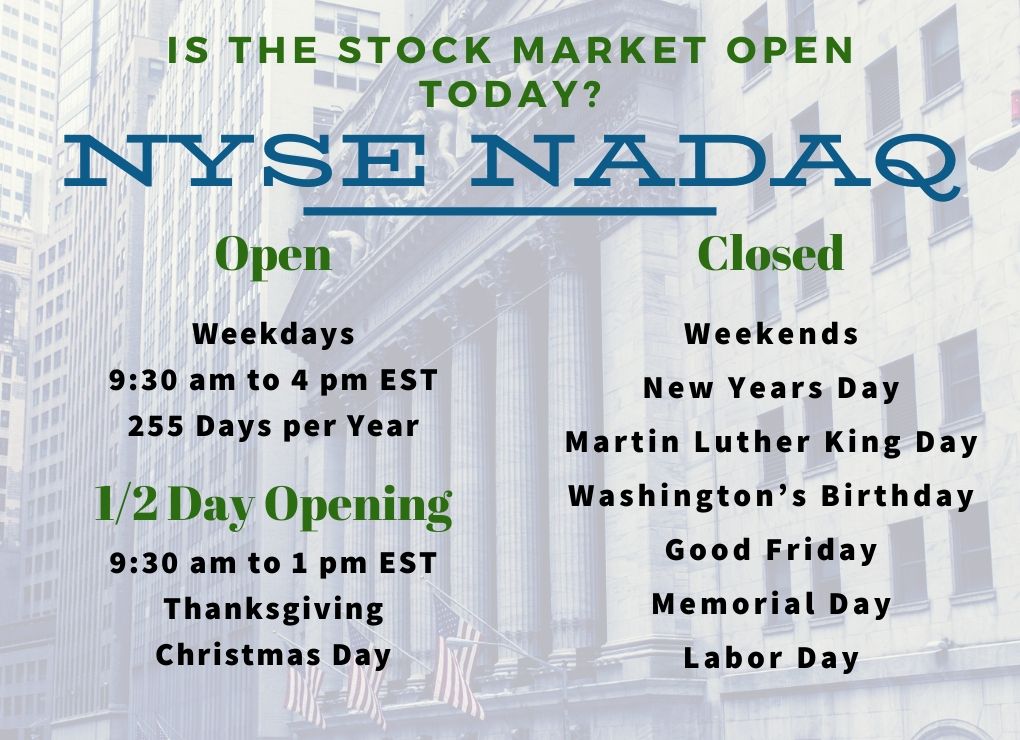
The two largest stock exchanges in the United States, the New York Stock Exchange (NYSE) and NASDAQ, largely follow the same holiday schedule, which is primarily based on federal holidays, with a few notable exceptions. Understanding this calendar is crucial for anyone trading or investing in US equities.
Here are the standard holidays observed by the NYSE and NASDAQ, which typically result in a full market closure:
- New Year’s Day: January 1st. If this falls on a Saturday, the market closes the preceding Friday. If it falls on a Sunday, the market closes the following Monday.
- Martin Luther King, Jr. Day: Third Monday in January.
- Washington’s Birthday (Presidents’ Day): Third Monday in February.
- Good Friday: A variable date in March or April, observed the Friday before Easter Sunday. Notably, this is not a federal holiday but is a long-standing market observance.
- Memorial Day: Last Monday in May.
- Juneteenth National Independence Day: June 19th. If this falls on a Saturday, the market closes the preceding Friday. If it falls on a Sunday, the market closes the following Monday.
- Independence Day: July 4th. Similar to New Year’s Day and Juneteenth, if it falls on a weekend, the observance shifts to the nearest weekday.
- Labor Day: First Monday in September.
- Thanksgiving Day: Fourth Thursday in November.
- Christmas Day: December 25th. Observance rules for weekend occurrences follow the same pattern as New Year’s Day.
Specifics on Holiday Observance
When a holiday falls on a weekend, the market’s observance of that holiday often shifts. For example, if Christmas Day falls on a Saturday, the market typically closes the preceding Friday. If it falls on a Sunday, the market closes the following Monday. This ensures that market participants still receive a day off in observance of the holiday. It’s essential for investors to check the official exchange calendars annually, as exact observance dates for weekend holidays are confirmed each year.
Early Closures and Special Circumstances
Beyond full-day closures, markets sometimes observe early closures. A common example is the day after Thanksgiving (Black Friday), where the market often closes early, typically at 1:00 PM ET. Christmas Eve can also be a half-day, depending on how it falls in the week and exchange decisions. These early closures allow for reduced trading hours while still acknowledging the holiday period.
In very rare and exceptional circumstances, markets may close due to unforeseen events. Historically, this has included national emergencies (e.g., the aftermath of the September 11th attacks), severe weather events that impact trading operations, or periods of national mourning declared by presidential proclamation. Such closures are rare, temporary, and usually announced with immediate effect, highlighting the importance of staying informed through reliable financial news sources.

Navigating Closures Across Different Financial Instruments
While US stock markets adhere to a relatively standardized holiday schedule, the broader landscape of financial instruments presents a more varied picture. Different markets, from bonds to cryptocurrencies, have their own distinct operating hours and holiday observances, which can significantly affect global trading strategies.
Bond Markets and Fixed Income
The bond market, particularly for US Treasury securities, often follows a holiday schedule that differs from the stock market, observing more holidays in some instances. The Securities Industry and Financial Markets Association (SIFMA) provides recommendations for bond market holidays. For example, bond markets typically observe Columbus Day (or Indigenous Peoples’ Day, the second Monday in October) and Veterans Day (November 11th) as full holidays, days when stock markets remain open. Additionally, bond markets may have more frequent early closures, for instance, on days preceding major holidays or on specific trading days like the last day of the year. This distinction is crucial for investors with diversified portfolios that include fixed-income assets, as liquidity and pricing can be affected on these specific dates.
Futures and Options Markets
Derivatives markets, including futures and options, often operate on a slightly different timetable. While closely tied to the underlying assets (stocks, commodities, indices), many futures and options contracts trade for longer hours and may close for fewer holidays or have abbreviated hours on certain days. For instance, some futures contracts for commodities or indices might trade overnight or during periods when the cash equity markets are closed, albeit with potentially lower liquidity. Given their global nature, these markets often have segments that operate nearly continuously, responding to news and economic developments regardless of specific national holidays. It’s essential for derivatives traders to consult the specific exchange calendar (e.g., CME Group, CBOE) for the contracts they trade.
Forex Market
The foreign exchange (forex) market stands apart as a truly global, 24-hour-a-day, five-day-a-week market. It operates continuously from Sunday evening EST through Friday evening EST, transcending individual national holidays. Because it’s an over-the-counter (OTC) market without a central exchange, there are no official “forex holidays” in the traditional sense. However, liquidity can significantly decrease on major bank holidays in key financial centers like London, New York, Tokyo, and Sydney. While trading technically remains open, spreads may widen, and volatility might increase due to thinner trading volumes, making some periods less conducive to active trading.
Cryptocurrency Markets
Cryptocurrency markets operate on an entirely different paradigm. They are fundamentally decentralized and digital, existing on global networks that run 24 hours a day, 7 days a week, 365 days a year. This means there are no “holidays” or scheduled closures for crypto exchanges or blockchain networks. Investors can buy, sell, and trade cryptocurrencies at any time, day or night, regardless of national holidays or traditional market closures. This constant accessibility is a defining feature of the crypto space, appealing to investors seeking continuous market exposure, but it also means there’s no official downtime for reflection or a collective pause in trading activity.
Strategic Implications for Investors When Markets Are Closed
Market closures, whether for a national holiday or a specific instrument, are not simply periods of inactivity. They carry significant strategic implications for investors, influencing how portfolios are managed, risks are assessed, and future moves are planned. Savvy investors leverage these periods to their advantage.
Reassessing Your Portfolio and Strategy
Periods of market closure offer invaluable time away from the immediate pressures of price fluctuations and trading decisions. This downtime is ideal for comprehensive portfolio reviews. Investors can step back and analyze their holdings against their long-term financial goals, assess asset allocation, and identify areas for rebalancing. It’s an opportune moment to conduct in-depth research into potential new investments, read financial news and analyses, and educate oneself on market trends without the distraction of real-time trading. This strategic pause allows for more considered decision-making, helping to refine or even redefine one’s investment strategy in a calm, analytical environment.
Managing Pending Orders and Market Gaps
Orders placed when markets are closed, such as limit orders or stop orders, are typically queued for execution when the markets reopen. Understanding this queuing mechanism is crucial, as the opening prices can be significantly different from the closing prices of the last trading day. This phenomenon, known as a “market gap,” occurs when news or economic data released during the closure influences investor sentiment, causing a sharp price discrepancy between the previous close and the next open. For example, a major corporate announcement or a geopolitical event over a long weekend can lead to stocks opening significantly higher or lower, potentially affecting the execution price of queued orders. Investors should be aware of this potential for price dislocation and factor it into their risk management.
The Importance of Diversification and Risk Management
Market closures underscore the importance of a well-diversified portfolio and robust risk management strategies. If an investor’s entire portfolio is concentrated in a single market that observes a holiday, they are completely exposed to any news or events occurring during that closure, with no ability to react. Diversifying across different asset classes, geographical markets, and even different types of financial instruments (e.g., global equities, bonds, commodities, or even non-traditional assets like cryptocurrencies which trade 24/7) can mitigate this risk. A globally diversified portfolio means that even if one major market is closed, others may be open, allowing for some level of responsiveness and continued opportunity.
Utilizing Financial Tools and Resources
Even when exchanges are closed, a wealth of financial tools and resources remain accessible and highly valuable. Investors can use this time to explore financial planning software, analyze market data and historical trends, read insightful articles from financial publications, or engage with educational platforms to enhance their financial literacy. Many brokerages offer robust analytical tools that can be used offline for charting and backtesting strategies. Leveraging these resources during market downtime can provide deeper insights, improve decision-making, and prepare investors more effectively for when trading resumes. The market may be closed, but the pursuit of financial knowledge and strategic planning never stops.
aViewFromTheCave is a participant in the Amazon Services LLC Associates Program, an affiliate advertising program designed to provide a means for sites to earn advertising fees by advertising and linking to Amazon.com. Amazon, the Amazon logo, AmazonSupply, and the AmazonSupply logo are trademarks of Amazon.com, Inc. or its affiliates. As an Amazon Associate we earn affiliate commissions from qualifying purchases.