
Travel is often one of the largest discretionary expenses in a household budget. For those committed to rigorous personal finance management, the cost of a flight isn’t just a number on a screen; it represents a significant allocation of capital that could otherwise be directed toward investments, debt reduction, or high-yield savings. Understanding the nuances of the aviation industry’s dynamic pricing models is essential for any savvy consumer looking to optimize their spending.
The question of “what days are flights cheapest” is frequently met with anecdotal evidence and outdated myths. However, by analyzing market data and the economic principles of supply and demand, we can identify a strategic framework for booking travel that maximizes value. This guide explores the financial strategies behind airfare procurement, moving beyond simple “hacks” to a disciplined approach to travel budgeting.

1. The Economics of Dynamic Pricing and Market Timing
To save money on airfare, one must first understand that airline pricing is an exercise in complex yield management. Airlines utilize sophisticated algorithms that adjust prices in real-time based on historical data, competitor pricing, and remaining inventory. For the individual looking to protect their net worth, navigating these algorithms is a matter of financial arbitrage.
The Distinction Between Booking Days and Flying Days
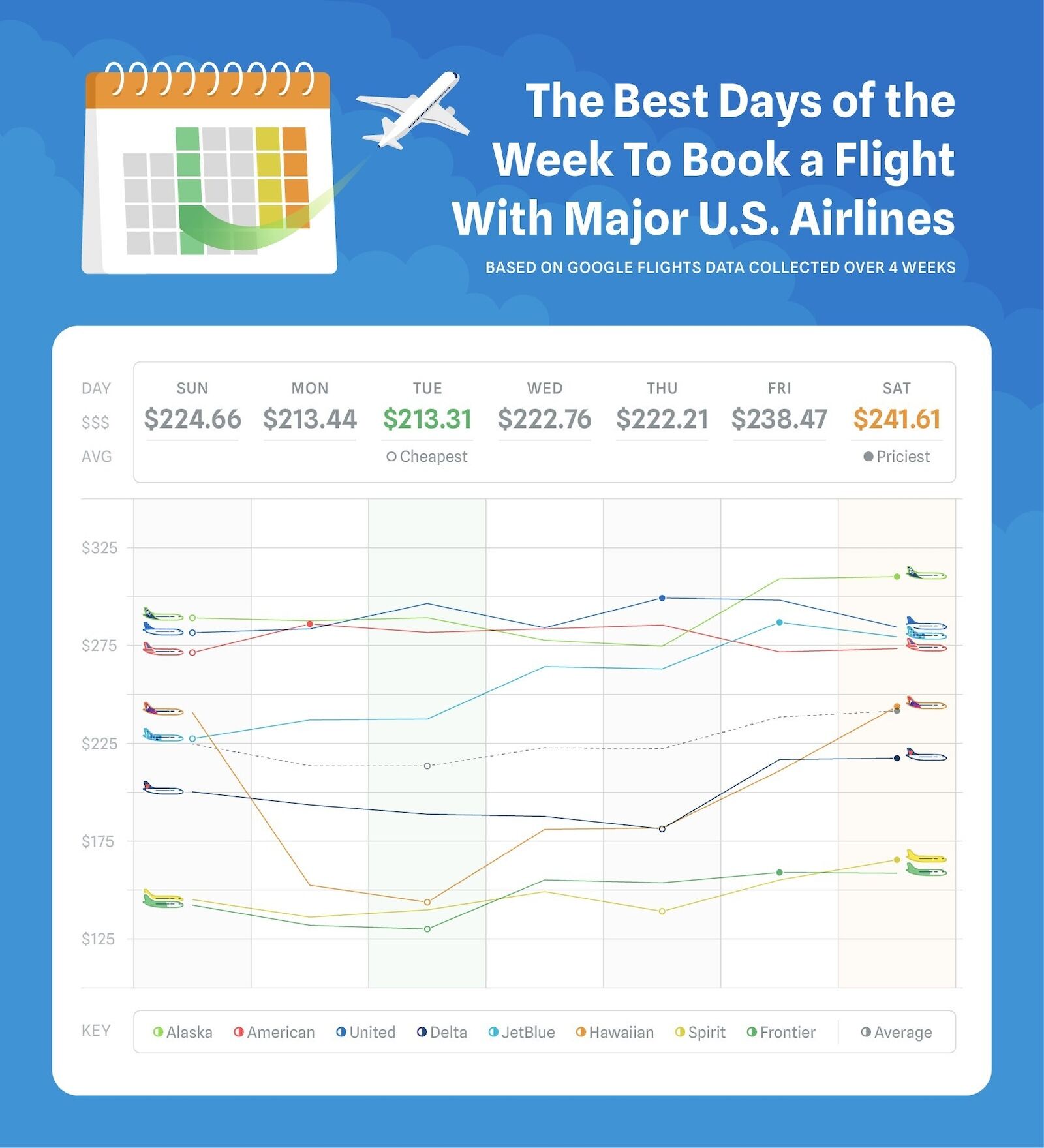
It is a common misconception in personal finance circles that the day you purchase a ticket is the sole factor in the price. In reality, there is a sharp distinction between the booking day (the day you swipe your card) and the travel day (the day you actually board). While the “Tuesday afternoon” booking myth has largely been debunked by the rise of automated 24/7 pricing, the day of the week you choose to fly remains a primary driver of cost.
Why Mid-Week Travel is the Gold Standard for Savings
Statistically, Tuesday and Wednesday remain the cheapest days to fly. From a business finance perspective, this makes perfect sense. Monday and Friday are dominated by corporate travelers who are price-insensitive because their companies are footing the bill. Weekends are claimed by leisure travelers with rigid schedules. By opting for mid-week departures, you are effectively entering the market when demand is at its lowest, allowing you to secure “distressed inventory” at a fraction of the peak price.
The Impact of “Dead Zones” on Your Travel Budget
In the world of finance, we look for cycles. In travel, “dead zones” are periods of low demand that follow major holidays or events. For example, the first two weeks of December or the month of January (post-New Year) offer some of the lowest price points of the year. Strategizing your travel around these periods can result in savings of 30% to 50%, which, when compounded over a lifetime of travel, represents a significant preservation of capital.
2. Strategic Booking Windows: Protecting Your Liquidity
Effective personal finance requires planning. Just as you wouldn’t wait until the day of a market crash to diversify your portfolio, you shouldn’t wait until the last minute to book a flight. Timing your purchase is about finding the “Goldilocks Window”—not too early, and certainly not too late.
The Domestic “Sweet Spot”
For domestic travel, the optimal booking window generally falls between one and three months before departure. Research suggests that booking too early (more than six months out) can be detrimental, as airlines often set high “placeholder” prices before they begin to optimize for occupancy. Conversely, booking within 21 days of a flight triggers “last-minute” pricing tiers designed to exploit desperate business travelers or those with emergencies. For the disciplined budgeter, the 45-day mark is often the point of maximum price efficiency.
International Capital Allocation
International travel requires a longer lead time. Because the stakes are higher and the inventory is more limited, the ideal window is typically three to six months in advance. If you are planning to travel during a “peak” season (such as summer in Europe), this window shifts even earlier. From a cash-flow perspective, booking international flights well in advance allows you to “sink” the cost early, preventing a massive hit to your monthly budget closer to the departure date.
Utilizing Price Protection and Tracking Tools
In any financial endeavor, data is your greatest ally. Utilizing tools like Google Flights or dedicated price-tracking software allows you to monitor fluctuations without emotional bias. Setting price alerts is the travel equivalent of a “limit order” in stock trading; you decide the price you are willing to pay, and you execute the transaction only when the market meets your criteria.
3. Leveraging Financial Tools and Loyalty Arbitrage
The price of a flight is not always the price you pay. For those focused on “Money” as a category, the integration of credit card strategy and loyalty programs is a vital component of lowering the effective cost of travel.
Credit Card Rewards as a Non-Taxable Rebate
Using the right financial instruments to purchase your flight can yield a “return on spend” of 2% to 5% or more. High-tier travel rewards cards offer points that can be redeemed for future travel, effectively acting as a discount on your current purchase. Furthermore, many premium cards offer “Travel Interruption Insurance,” which protects your investment against unforeseen cancellations—a critical component of risk management in personal finance.
The Logic of Miles and Points Redemptions
When considering whether to use cash or miles, one must calculate the “Cents Per Point” (CPP). If a flight costs $500 or 50,000 miles, the value is 1 cent per mile. If the historical average value of those miles is 1.5 cents, paying cash is the mathematically superior choice. Treating your airline miles as an asset class—subject to inflation and devaluation—is a hallmark of sophisticated financial planning.
Hidden Costs: The “Total Cost of Ownership” for a Ticket
A cheap flight on a Tuesday is only “cheap” if you account for the ancillary fees. Budget airlines often utilize a “unbundled” pricing model. When comparing flights, always calculate the total cost, including baggage fees, seat selection, and transportation to the airport. A $40 flight that requires a $60 Uber ride and a $50 bag fee is more expensive than a $120 flight from a central hub that includes a carry-on.
4. Seasonal Cycles and the Macro-View of Travel Spending
Just as investors look at quarterly earnings, travelers should look at the annual travel calendar to identify macro-trends in pricing. This long-term view allows for better budgeting and higher “Return on Experience” (ROE).
The “Shoulder Season” Strategy
The “Shoulder Season”—the period between peak and off-peak—is the “sweet spot” for personal finance. For example, visiting the Mediterranean in September rather than July offers a 40% reduction in costs with nearly identical weather. By shifting your demand to these periods, you are practicing a form of “contrarian investing” in your lifestyle, enjoying high-value assets (vacations) when the rest of the market is overpaying.
Avoiding the “Holiday Premium”
Traveling on the actual day of a holiday (e.g., Thanksgiving Day or Christmas Day) is often significantly cheaper than traveling the day before. For the truly budget-conscious, this sacrifice of time can result in hundreds of dollars in savings. In a household budget, these savings can be redirected toward the holiday itself, increasing the overall quality of the celebration without increasing the total spend.
Business Cycles and Airfare
Economic downturns often lead to lower airfare as discretionary spending tightens globally. Conversely, in a booming economy, corporate demand drives prices up. Keeping an eye on the broader economic climate can help you decide when to book that “bucket list” international trip and when to opt for a more localized, cost-effective “staycation.”
5. Building a Robust Travel Sinking Fund
The best way to capitalize on “cheap flight days” is to have the liquidity available to act when a deal appears. This is where the discipline of a “Sinking Fund” comes into play.
The “Deal-Ready” Reserve
A sinking fund is a strategic savings category for a specific future expense. By contributing a fixed amount to a “Travel Fund” every month, you remove the stress of fluctuating flight prices. When a price drop occurs on a Tuesday for a mid-week flight, you can execute the purchase immediately, knowing the funds are already allocated. This prevents “budget shock” and ensures you never have to put travel on high-interest credit card debt.
Opportunity Cost and Travel
Every dollar spent on a flight is a dollar not invested in the S&P 500. While travel provides immense personal value and mental health benefits, it should always be viewed through the lens of opportunity cost. By consistently finding the cheapest days to fly, you minimize the “drag” on your investment portfolio, allowing you to enjoy the world today without compromising your financial freedom tomorrow.

Conclusion: The Disciplined Traveler
Finding the cheapest days to fly is not about luck; it is about the application of financial principles to a volatile market. By prioritizing mid-week travel, utilizing strategic booking windows, and leveraging the right financial tools, you can significantly reduce your travel overhead. In the realm of personal finance, every saved dollar is a tool for future growth. Treat your travel booking with the same analytical rigor as your investment portfolio, and you will find that the world becomes much more accessible—and affordable.
aViewFromTheCave is a participant in the Amazon Services LLC Associates Program, an affiliate advertising program designed to provide a means for sites to earn advertising fees by advertising and linking to Amazon.com. Amazon, the Amazon logo, AmazonSupply, and the AmazonSupply logo are trademarks of Amazon.com, Inc. or its affiliates. As an Amazon Associate we earn affiliate commissions from qualifying purchases.