
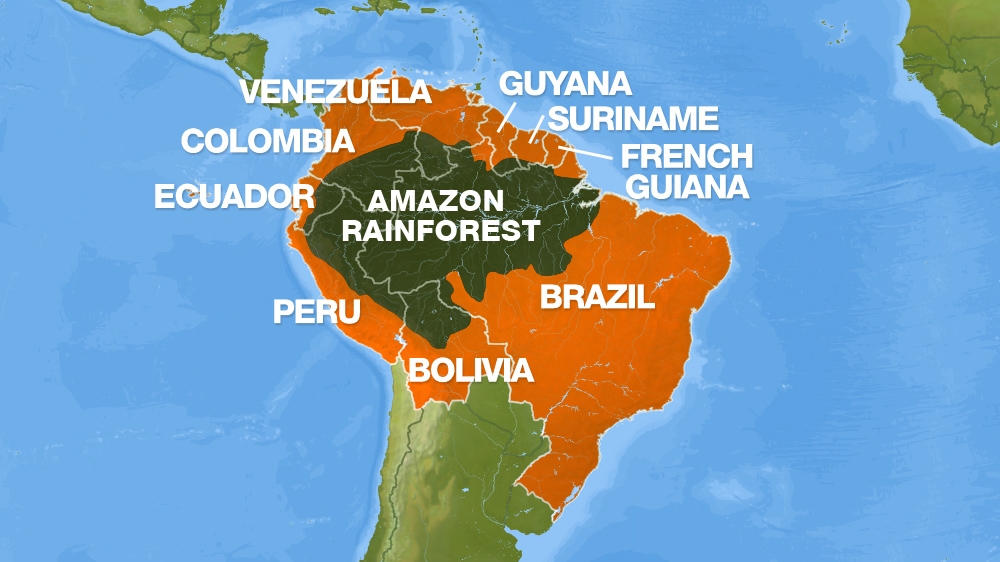
The question “what country is the Amazon in?” can evoke images of lush rainforests and winding rivers, predominantly in Brazil and other South American nations. However, within the realm of technology, this seemingly simple query takes on a vastly different and profoundly more complex meaning. It shifts focus from a natural wonder to a technological behemoth: Amazon.com, Inc. To ask what country this Amazon is in isn’t merely to pinpoint its headquarters, but to trace the sprawling, intricate network of innovation, infrastructure, and influence that defines one of the world’s most transformative tech companies.
Amazon.com, the e-commerce titan and cloud computing leader, is not confined to a single country. While its origins and primary operational base are firmly rooted in the United States, its technological footprint extends across continents, powering businesses, connecting consumers, and driving innovation in virtually every corner of the globe. This article delves into Amazon’s technological identity, exploring its foundational home, its global infrastructure, and how its relentless pursuit of technological advancement has transcended national borders to shape the modern digital landscape.
The American Core: Amazon’s Technological Genesis and Headquarters
Amazon.com’s story began in a garage in Bellevue, Washington, in 1994, before moving to Seattle. This makes the United States the undisputed birthplace and primary operational nerve center of the tech giant. From its humble beginnings as an online bookstore, Amazon rapidly leveraged nascent internet technologies to disrupt traditional retail, laying the groundwork for its current colossal stature.
Seattle: The Epicenter of Early Innovation
For decades, Seattle, Washington, served as Amazon’s primary global headquarters. This city fostered the environment where Amazon developed its pioneering e-commerce platform, its sophisticated logistics algorithms, and its early foray into digital content delivery. The culture of innovation, rapid experimentation, and customer-centricity that defines Amazon was largely forged in the Pacific Northwest. Engineers, data scientists, and product developers converged here, contributing to the iterative development of technologies that would eventually reshape global commerce and computing. Key innovations, such as one-click ordering, customer reviews, and personalized recommendations, all sprang from this Seattle-based engineering ecosystem.
Arlington, Virginia: A New Technological Horizon
More recently, Amazon expanded its corporate footprint with the establishment of its second headquarters, HQ2, in Arlington, Virginia. This move signifies not just growth, but a strategic broadening of its technological talent pool and its engagement with different regional tech ecosystems within the U.S. HQ2 is slated to house tens of thousands of employees focused on various aspects of Amazon’s business, including new technology development, further solidifying the United States’ role as the nucleus of Amazon’s strategic decision-making and high-level technological leadership. This expansion underscores Amazon’s commitment to investing heavily in talent and infrastructure within its home country to maintain its competitive edge in the global tech race.
Building the Global Tech Backbone: AWS and Data Centers
While its corporate mind resides in the U.S., Amazon’s technological body, the Amazon Web Services (AWS) cloud, is a truly global phenomenon. AWS is not just a service; it’s the fundamental technological infrastructure underpinning countless websites, applications, and enterprises worldwide, including many of Amazon’s own operations. To ask “what country is the Amazon in?” when referring to AWS is to point to virtually every major economic region on Earth.
The Distributed Nature of AWS Regions
AWS operates a vast global infrastructure of “Regions,” each an isolated geographical area containing multiple “Availability Zones.” These zones are physically separate data centers, designed for fault tolerance and high availability. As of late 2023, AWS boasts dozens of Regions spanning six continents. For instance, there are Regions in North America (e.g., Northern Virginia, Ohio, Oregon), South America (São Paulo), Europe (e.g., Ireland, Frankfurt, London, Paris), Asia Pacific (e.g., Tokyo, Sydney, Singapore, Mumbai), Africa (Cape Town), and the Middle East (e.g., Bahrain, UAE). This global distribution allows customers to deploy their applications and data geographically close to end-users, reducing latency and complying with data residency requirements.
The Role of Data Centers in Global Connectivity
Each AWS Region is a massive technological hub, housing hundreds of thousands of servers, networking equipment, and storage devices. These data centers consume immense amounts of power and require sophisticated cooling and security systems. They are the physical manifestation of the internet’s backbone, enabling everything from streaming services and mobile apps to scientific research and government operations. The technological complexity of designing, building, and maintaining these global data centers is immense, requiring cutting-edge hardware, software, and highly specialized engineering talent located across various countries. This distributed infrastructure ensures that Amazon’s technological reach is truly global, providing an unparalleled scale and reliability for its customers worldwide.
Innovation Beyond Borders: R&D and AI Labs Worldwide

Amazon’s commitment to innovation isn’t confined to its American headquarters. Its research and development (R&D) efforts, particularly in fields like artificial intelligence (AI), machine learning (ML), and robotics, are distributed globally, tapping into diverse talent pools and local technological expertise.
Alexa’s Global Voices: AI and Language Development
The development of Amazon’s AI assistant, Alexa, is a prime example of its international innovation strategy. While the core AI research might originate in the U.S., tailoring Alexa for different languages, accents, and cultural nuances requires dedicated teams in various countries. For instance, engineers and linguists in Germany work on German Alexa, those in India on Indian English and Hindi Alexa, and so on. This distributed approach ensures that Alexa’s intelligence and utility are globally relevant, making it a truly international AI product. These global AI labs contribute to advancements in natural language processing, speech recognition, and contextual understanding.
Robotics and Logistics: Engineering for Efficiency
Amazon’s vast fulfillment network relies heavily on robotics and advanced automation. Its robotics research and development facilities are located in several countries, including the U.S. and Europe (e.g., Italy, Germany). These centers focus on developing the next generation of robotic systems for warehouses, drone delivery technologies, and supply chain optimization. The engineering challenges in designing robots that can efficiently navigate complex warehouse environments, safely handle diverse products, and work alongside human employees are immense, requiring a collaborative global effort of hardware and software engineers. The technological solutions developed in one country are often scaled and adapted for deployment across Amazon’s entire global logistics network.
E-commerce Ecosystems: Tailoring Tech for Global Markets
Amazon’s e-commerce platform, while globally consistent in its underlying technology, requires significant localization and adaptation to thrive in diverse national markets. This involves tailoring not just product offerings but also the very technological experience for users in different countries.
Localized Platform Features and Payment Systems
Operating in countries like India, Japan, Brazil, or the UK requires more than just translating the website. It involves integrating local payment gateways, supporting country-specific tax regulations, and developing features that cater to unique consumer behaviors. For example, in India, Amazon Pay provides a localized digital payment solution, and its logistics technology has been adapted for challenging last-mile delivery in dense urban and rural areas. In Japan, Amazon’s technical teams have focused on integrating local shipping preferences and developing features that resonate with the Japanese consumer experience. These localized tech adaptations ensure that the core Amazon platform feels indigenous to users, despite being part of a global technological framework.
Global Marketplaces and Seller Technology
Amazon’s marketplace model, allowing third-party sellers, is also a global phenomenon. The technological tools and services provided to sellers (e.g., inventory management, analytics, advertising platforms) must be robust enough to support businesses of all sizes across different countries. This requires development teams to build scalable, flexible software that can handle the specific legal, financial, and logistical requirements of each national market. The seamless integration of global sellers and buyers across various Amazon domains is a testament to the underlying technological architecture that supports such a complex, international ecosystem.
Navigating Digital Sovereignty and Geopolitical Tech Landscapes
The question of “what country is the Amazon in?” becomes particularly poignant when considering the evolving landscape of digital sovereignty, data localization, and geopolitical tech competition. As a global tech giant, Amazon operates within a patchwork of national regulations and political pressures.
Data Residency and Compliance
Many countries now mandate that certain types of data (e.g., personal health information, government data) must reside within their national borders. This is a key reason why AWS continues to expand its global footprint, establishing new Regions and Availability Zones in various countries. Amazon’s engineering teams work tirelessly to ensure that its services and infrastructure comply with these complex and often varying data residency and privacy laws, such as GDPR in Europe or specific cybersecurity laws in China. This isn’t just a legal challenge; it’s a significant technological undertaking to design and operate systems that are both globally scalable and locally compliant.

Geopolitical Pressures and Market Access
Operating as a U.S.-headquartered company with a global presence, Amazon is not immune to geopolitical tensions. Access to certain markets, restrictions on technology transfer, and pressures regarding national security are all factors that influence where and how Amazon deploys its technology. Its presence in countries like China, for instance, has involved significant adaptation to local regulatory frameworks and competition with domestic tech giants. The future trajectory of Amazon’s global tech expansion will undoubtedly be shaped by these complex interactions between technology, national policy, and international relations.
In conclusion, to answer “what country is the Amazon in?” for the tech giant is to acknowledge a multifaceted reality. Its technological heart beats strongest in the United States, where its vision and core innovations originate. Yet, its body, comprising the vast AWS cloud, its distributed R&D centers, and its localized e-commerce platforms, is deeply embedded in dozens of countries around the world. Amazon is a testament to how technology transcends geographical boundaries, creating a truly global enterprise that is simultaneously rooted in its origins and universally distributed in its operational and innovative footprint.
aViewFromTheCave is a participant in the Amazon Services LLC Associates Program, an affiliate advertising program designed to provide a means for sites to earn advertising fees by advertising and linking to Amazon.com. Amazon, the Amazon logo, AmazonSupply, and the AmazonSupply logo are trademarks of Amazon.com, Inc. or its affiliates. As an Amazon Associate we earn affiliate commissions from qualifying purchases.