
Gold, a timeless symbol of wealth and stability, continues to play a pivotal role in the global financial landscape, particularly for sovereign nations. While the intricate dance of international economics often focuses on currencies, interest rates, and trade balances, the accumulation and management of gold reserves remain a cornerstone of national financial policy. These reserves are not merely a historical relic; they represent a tangible asset that central banks strategically hold to bolster economic stability, hedge against inflationary pressures, and project financial strength on the world stage.
Understanding which country holds the most gold reserves offers more than just a snapshot of wealth distribution; it provides insights into geopolitical strategies, historical economic trajectories, and the future outlook for global finance. While the United States has consistently held the top position for decades, the dynamics of gold accumulation are constantly evolving, particularly with emerging economies increasing their holdings as a deliberate move towards diversifying away from traditional fiat currencies. This article delves into the significance of gold reserves, explores the leading nations in this strategic asset class, and examines the nuances of how these precious holdings shape global economic power.
The Enduring Allure of Gold in National Treasuries
The fascination with gold is deeply embedded in human history, transcending cultures and civilizations. For central banks and national treasuries, this fascination translates into a pragmatic necessity, reflecting gold’s unique properties as a store of value and a universal symbol of wealth. Its role in modern finance, while having evolved significantly since the abandonment of the gold standard, remains fundamentally important, providing a bedrock of security in an increasingly volatile global economy.
Gold’s Historical Role as a Store of Value
For millennia, gold has served as the ultimate store of value, a commodity revered for its scarcity, durability, and intrinsic beauty. Before the advent of fiat currencies, gold coins and bullion were the primary medium of exchange and a universal measure of wealth. The 19th and early 20th centuries saw the widespread adoption of the gold standard, a monetary system where a country’s currency was directly convertible into a fixed amount of gold. This system provided stability and limited government spending, as currency issuance was tied to physical gold reserves. While the gold standard ultimately dissolved, most notably with the United States fully decoupling the dollar from gold in 1971, the legacy of gold as a foundational asset persisted. Central banks, having accumulated vast quantities during this era, recognized its enduring value even as monetary systems transitioned. They continued to hold gold not just as a historical artifact, but as a strategic asset, acknowledging its proven track record as a reliable hedge against various economic maladies.
Economic Stability and Crisis Hedge
One of the primary reasons central banks maintain substantial gold reserves is its role as a hedge against economic instability and crises. During periods of high inflation, currency devaluation, or geopolitical uncertainty, gold typically performs well. Unlike fiat currencies, which can be printed in limitless quantities, gold’s supply is finite, contributing to its stable value. When investors lose confidence in traditional financial assets or government bonds, they often flock to gold as a “safe haven.” For a nation, this means its gold reserves can act as a crucial buffer, providing liquidity and maintaining confidence in its financial system even when other assets are declining. This counter-cyclical behavior makes gold an invaluable component of a diversified national reserve portfolio, offering a measure of independence from the fluctuating fortunes of individual currencies or geopolitical blocs. It’s a tangible asset that is not subject to the credit risk of a particular issuer, further cementing its role as a fundamental pillar of national financial security.
Diversification and International Standing
Beyond its role as a crisis hedge, gold serves as a vital tool for diversification within a nation’s reserve portfolio. Central banks typically hold a mix of foreign currencies (primarily the US Dollar, Euro, Yen, and Pound Sterling), government bonds, and other financial instruments. Including gold helps reduce the overall risk of the portfolio, as its value often moves independently of or inversely to these other assets. This diversification strategy is crucial for mitigating exposure to the volatility of any single currency or market. Furthermore, possessing significant gold reserves can enhance a nation’s international standing and financial credibility. It signals fiscal prudence and economic strength to global markets and other nations, particularly during negotiations or in times of economic stress. For countries seeking to assert greater independence from dominant reserve currencies, increasing gold holdings is a strategic move to build an alternative foundation of wealth and influence. It’s a quiet yet powerful statement of financial autonomy and long-term vision.
The Top Tier: A Look at the Major Players
While gold is held by nearly every nation in some capacity, a select group of countries dominates the landscape of official gold reserves. These nations, through historical accumulation, deliberate policy, or strategic purchasing, hold the lion’s share, influencing global perceptions of economic power and stability.
The United States: A Legacy of Accumulation
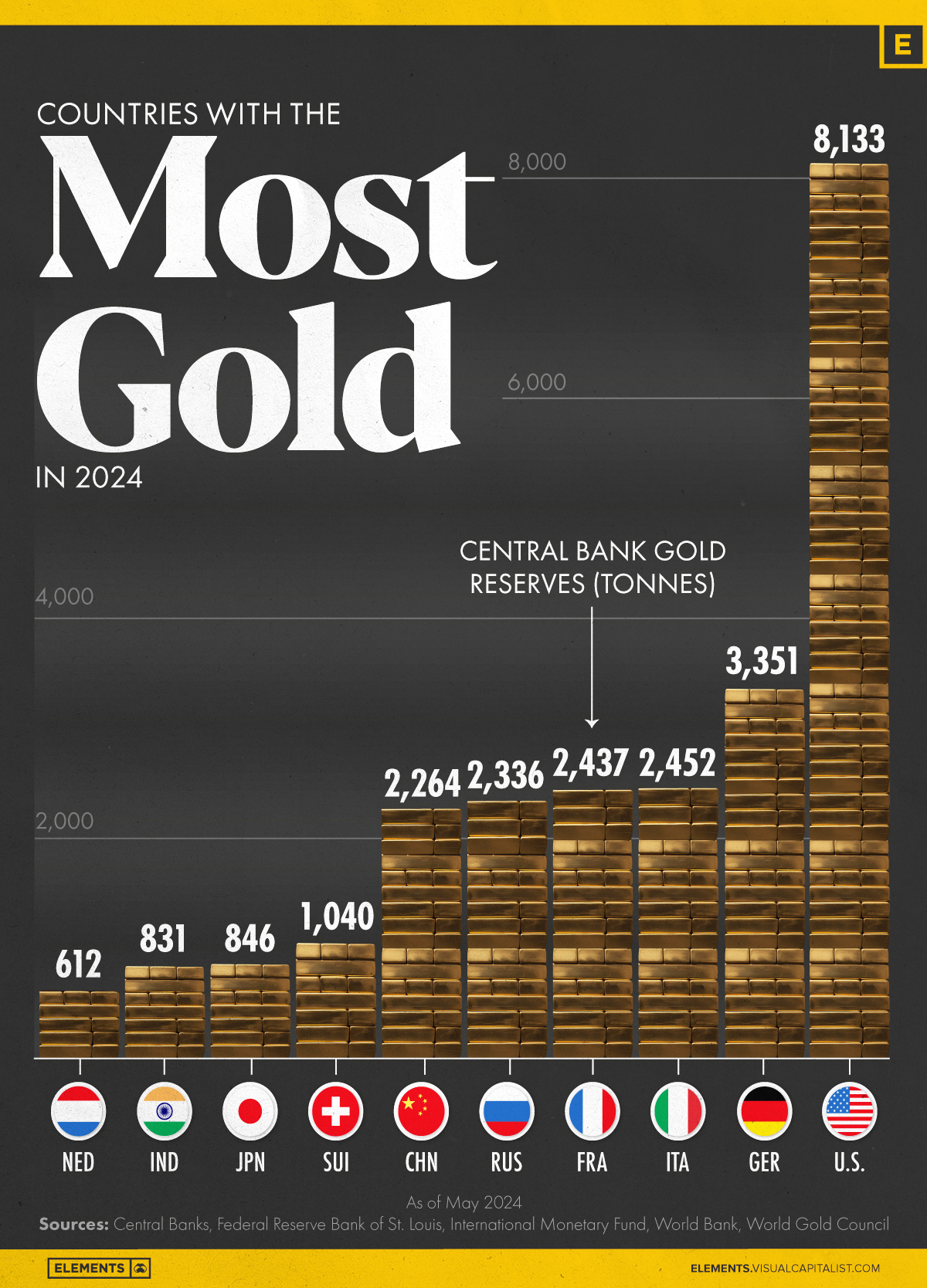
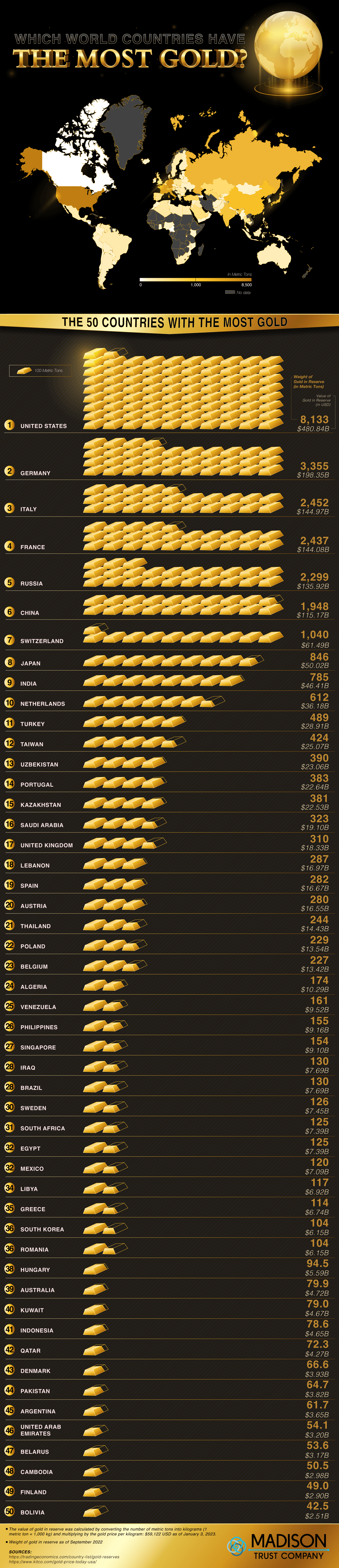
Unquestionably, the United States stands as the unchallenged leader in terms of official gold reserves, holding an astonishing quantity that far surpasses any other nation. With holdings typically reported around 8,133 tonnes, its reserves account for approximately 70-80% of its total foreign reserves, a testament to gold’s enduring role in US financial policy. This unparalleled accumulation largely stems from the post-World War II Bretton Woods Agreement, where the US dollar was pegged to gold, making it the world’s reserve currency. Nations exchanging their gold for dollars to facilitate international trade contributed to the massive influx of gold into US vaults, primarily Fort Knox in Kentucky and the Federal Reserve Bank of New York. This immense reserve base has provided a bedrock of confidence for the dollar’s global dominance, underscoring America’s long-standing financial strength and its historical position at the center of the international monetary system.
Germany: Prudence and Repatriation
Germany holds the second-largest gold reserves globally, typically around 3,359 tonnes, demonstrating a deep-seated financial conservatism and a commitment to stability. Historically, much of Germany’s gold was stored abroad, primarily in the vaults of the Federal Reserve in New York, the Bank of England in London, and the Banque de France in Paris. However, in a significant strategic move initiated in 2013 and completed in 2017, the Bundesbank (Germany’s central bank) undertook a large-scale repatriation effort, bringing a substantial portion of its gold back to Frankfurt. This decision, driven by public and political pressure for greater transparency and control over national assets, underscored a broader trend among nations to ensure their vital reserves are physically within their borders. Germany’s substantial holdings reflect its economic prowess and its prudent approach to managing national wealth within the Eurozone.
Italy and France: European Economic Pillars
Following Germany, Italy and France also maintain significant gold reserves, holding approximately 2,452 tonnes and 2,437 tonnes respectively. These substantial holdings underscore the historical economic strength of these two core European Union nations. Like Germany, their gold reserves were largely accumulated during the post-war economic boom and the era of the Bretton Woods system. For both countries, gold serves as a critical component of their national balance sheets, providing a strategic asset that complements their roles within the Eurozone. Their commitment to maintaining these large reserves reflects a shared European perspective on the importance of gold as a foundational element of financial security, even within a unified currency block. These reserves provide confidence, act as a hedge, and reinforce their stature among global financial powers.
Russia and China: Strategic Accumulators

In stark contrast to the Western nations whose gold reserves were largely accumulated historically, Russia and China have been aggressive strategic accumulators of gold in recent decades. Russia, currently holding around 2,333 tonnes, has consistently bought gold from its domestic production, significantly increasing its reserves as a deliberate policy to reduce its reliance on the US dollar and other Western currencies. This “de-dollarization” strategy is motivated by geopolitical considerations, aiming to bolster financial independence and mitigate the impact of potential sanctions.
Similarly, China, while often secretive about its exact holdings, officially reports around 2,262 tonnes, though many analysts believe its actual reserves might be significantly higher given its vast domestic gold production and consistent buying from international markets. China’s accumulation is driven by similar geopolitical objectives: strengthening its currency, diversifying its foreign exchange reserves, and asserting its growing economic influence on the global stage. Both Russia and China view gold as a fundamental component of a multipolar financial world, signaling a strategic shift away from Western financial hegemony.
Beyond Raw Tonnage: The Nuances of Gold Reserve Management
While the sheer volume of gold held is an important metric, the strategic management of these reserves by central banks is equally crucial. It involves complex decisions influenced by global economics, geopolitical events, and evolving financial tools.
Active Management vs. Passive Holding
Central banks are not merely passive custodians of gold; many engage in active management strategies. This can involve buying or selling gold in response to market conditions, interest rate movements, or currency fluctuations. For instance, if a central bank anticipates a period of high inflation, it might increase its gold holdings. Conversely, if high-yielding debt instruments become particularly attractive, some central banks might reduce their gold exposure to free up capital for investments with higher immediate returns, though such decisions are rare and often met with scrutiny. The decision to actively manage gold also takes into account geopolitical risks and the desire to balance diversification with potential opportunity costs. Some central banks prefer a more passive “buy and hold” strategy, viewing gold as a long-term, stable asset that should not be subject to speculative trading. The approach taken often reflects a country’s risk appetite, its overall economic philosophy, and its specific strategic objectives.
The Role of the International Monetary Fund (IMF)
The International Monetary Fund (IMF) itself holds a significant amount of gold, approximately 2,814 tonnes, making it one of the largest official holders in the world. This gold was primarily contributed by member countries as part of their quota subscriptions upon joining the Fund. The IMF’s gold holdings serve several purposes: they provide a fundamental resource that underpins the financial strength of the institution, can be used as a means of payment to members, and contribute to its general resources. While the IMF typically uses its Special Drawing Rights (SDRs) and currency contributions for its lending operations, its gold reserves serve as a critical backstop, enhancing its credibility and capacity to act as a lender of last resort for struggling economies. The IMF occasionally sells small amounts of gold to finance specific initiatives, but generally maintains its holdings, reflecting the enduring value of gold in international finance.
Transparency and Reporting Standards
Transparency in reporting gold reserves is paramount for maintaining confidence in a nation’s financial health and in the global monetary system. Central banks typically report their official gold holdings to the IMF, which then publishes this data. These reports usually specify the quantity of gold held in tonnes and its current valuation based on market prices. However, the level of detail and frequency of reporting can vary. While most major economies are transparent about their official holdings, the precise physical location of all reserves (e.g., within the country or held abroad) is sometimes kept confidential for security reasons. The integrity of these reporting standards is crucial for investors, analysts, and other central banks to accurately assess a country’s financial stability and its capacity to withstand economic shocks, ensuring a degree of predictability in international financial relations.
The Future of Gold as a Reserve Asset
The global financial landscape is in constant flux, shaped by technological advancements, geopolitical tensions, and evolving economic theories. Despite these changes, gold’s fundamental appeal as a reserve asset shows no sign of diminishing, albeit with new considerations entering the frame.
Geopolitical Shifts and Central Bank Strategies
The 21st century has witnessed significant geopolitical shifts, with the rise of new economic powers and increasing competition among nations. This dynamic environment is profoundly influencing central bank gold strategies. Many non-Western nations, particularly those in the BRICS bloc (Brazil, Russia, India, China, South Africa) and other emerging markets, are actively increasing their gold reserves. This trend is driven by a desire to reduce dependence on the US dollar, which has been weaponized through sanctions, and to build a more diversified, multipolar international monetary system. As global power dynamics continue to evolve, the strategic accumulation of gold by these nations is likely to persist, further solidifying gold’s role as an independent and politically neutral asset. This ongoing shift could lead to a more balanced distribution of gold reserves globally, potentially altering the long-standing hierarchy of financial power.
The Rise of Digital Currencies and Gold
The advent of digital currencies, including cryptocurrencies and Central Bank Digital Currencies (CBDCs), introduces a new dimension to the future of reserve assets. While some enthusiasts predict that digital currencies could eventually displace gold, the reality is more nuanced. Gold’s physical, immutable nature and its millennia-long track record as a store of value provide a level of trust and security that digital assets, still in their infancy, have yet to fully earn. CBDCs, backed by central banks, aim to combine the stability of fiat money with the efficiency of digital technology. However, they are still fiat currencies at their core, susceptible to inflation and government policy. Gold, in contrast, offers a hard asset that is outside the direct control of any single government or digital network. It’s more probable that gold and digital currencies will coexist, serving different but complementary roles in national reserve strategies. Some nations may even explore “digital gold” tokens, combining the liquidity of digital assets with the underlying value of physical gold reserves.
Investment Implications for Individuals
The national strategies surrounding gold reserves have direct implications for individual investors. The continued demand for gold by central banks reinforces its status as a valuable asset, supporting its long-term price stability and appeal. For individuals looking to diversify their personal finance portfolios, gold remains a compelling option. Investors can access gold through various avenues, including physical bullion (coins and bars), gold exchange-traded funds (ETFs) that track gold prices, or by investing in gold mining stocks. Holding gold can provide a hedge against inflation, currency depreciation, and stock market volatility, much as it does for national treasuries. Understanding the fundamental reasons why nations prize gold for their reserves can inform personal investment decisions, encouraging a balanced approach to wealth preservation and growth in an ever-changing economic environment.
Conclusion
The question of “what country has the most gold reserves” reveals more than just a numerical ranking; it unveils the intricate layers of global finance, historical legacy, and strategic foresight. The United States continues to hold the top position, a testament to its historical economic dominance. However, the consistent and strategic accumulation by nations like Germany, Russia, and China underscores gold’s enduring significance as a bulwark against economic uncertainty and a tool for asserting financial independence.
Gold’s role as a reliable store of value, a hedge against inflation, and a diversifier for national wealth ensures its continued relevance for central banks worldwide. As the global financial system navigates geopolitical shifts, the rise of digital currencies, and evolving economic paradigms, gold remains a tangible and trusted asset. For nations and individuals alike, understanding the enduring allure and strategic importance of gold reserves is essential for navigating the complexities of modern wealth management and securing financial stability in an unpredictable world.
aViewFromTheCave is a participant in the Amazon Services LLC Associates Program, an affiliate advertising program designed to provide a means for sites to earn advertising fees by advertising and linking to Amazon.com. Amazon, the Amazon logo, AmazonSupply, and the AmazonSupply logo are trademarks of Amazon.com, Inc. or its affiliates. As an Amazon Associate we earn affiliate commissions from qualifying purchases.