
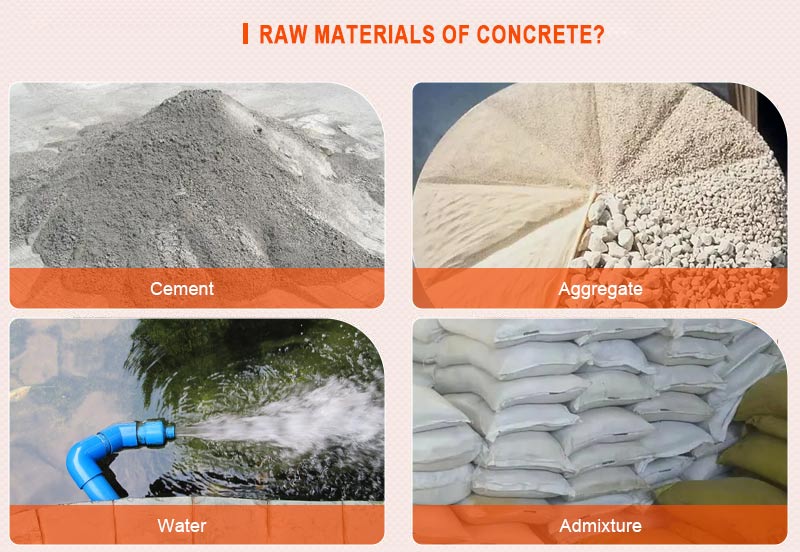
For decades, the fundamental recipe for concrete remained largely unchanged: a rudimentary mixture of water, aggregate, and Portland cement. However, as we move deeper into the fourth industrial revolution, the composition of the world’s most used man-made material is undergoing a radical technological transformation. No longer viewed as a static block of stone, modern concrete is being reimagined through the lenses of materials science, biotechnology, and data-driven engineering. To understand what concrete is made of today is to explore a sophisticated composite of chemical admixtures, nanomaterials, and even living organisms designed to meet the rigorous demands of smart cities and sustainable infrastructure.

Beyond Sand and Stone: The Molecular Engineering of Modern Concrete
At its core, the traditional “ingredients” of concrete serve as the canvas for a much more complex technological interplay. While the volumetric bulk of concrete still consists of fine and coarse aggregates—typically sand and crushed stone—the focus of modern construction technology has shifted to the “interfacial transition zone” (ITZ). This is the microscopic region where the cement paste meets the aggregate, and it is where the most significant technological breakthroughs are occurring.
High-Performance Chemical Admixtures
The “secret sauce” of modern concrete composition lies in chemical admixtures. These are not merely additives but precision-engineered molecules that dictate the behavior of the material in its fluid and hardened states. Superplasticizers, or high-range water reducers (HRWRs), are perhaps the most influential. These polycarboxylate ether-based chemicals allow for the creation of “Self-Consolidating Concrete” (SCC). By altering the surface charge of cement particles, these chemicals enable the concrete to flow into complex, heavily reinforced formwork under its own weight without the need for mechanical vibration. This technological shift has drastically reduced labor costs and improved the structural integrity of high-rise developments.
Nanotechnology in Cementitious Matrices
The integration of nanotechnology has redefined the molecular makeup of concrete. By incorporating nano-silica and carbon nanotubes into the mix, engineers can manipulate the hydration process at a cellular level. Nano-silica acts as a highly reactive filler that speeds up the formation of calcium silicate hydrate (C-S-H) gel—the “glue” that provides concrete its strength. Furthermore, the addition of carbon nanotubes creates a “nano-fiber” reinforcement network that inhibits the formation of micro-cracks before they can propagate. This results in a material that is not only significantly stronger but also more ductile, challenging the traditional view of concrete as a brittle substance.
Smart Concrete: Integrating Sensors and Self-Healing Biotechnologies
The most provocative shift in what concrete is made of involves the transition from passive materials to “active” or “smart” systems. In the tech-driven construction landscape, concrete is being engineered to monitor its own health and even repair itself when damaged.
The Rise of Bio-Concrete and Calcifying Bacteria
One of the most innovative components found in specialized modern concrete is biological: extremophile bacteria. Bio-concrete, or self-healing concrete, contains dormant bacteria—such as Bacillus pseudofirmus—and a nutrient source (usually calcium lactate) encapsulated within small clay pellets or biodegradable capsules. When a crack forms and water enters the structure, the capsules rupture, and the moisture “wakes up” the bacteria. As the bacteria consume the nutrient source, they produce limestone (calcite) as a byproduct, effectively plugging the crack from the inside out. This biotechnological integration extends the lifespan of infrastructure by decades, significantly reducing the long-term maintenance costs associated with bridges and tunnels.
Embedded IoT Sensors and Structural Health Monitoring
The composition of concrete in high-value infrastructure now frequently includes embedded technological components. “Conductive concrete” is created by adding carbon fiber, graphite, or steel shavings to the mix. This allows the concrete to conduct electricity, enabling a variety of applications from de-icing airport runways without chemicals to acting as a giant touch-sensitive sensor. Furthermore, the inclusion of embedded Micro-Electro-Mechanical Systems (MEMS) and RFID sensors allows for real-time structural health monitoring. These sensors, cast directly into the concrete, transmit data regarding internal temperature, humidity, and stress levels to cloud-based platforms, providing a digital twin of the physical structure that can predict failure points before they are visible to the naked eye.
Decarbonization Tech: The Chemistry of Sustainable Substitutes
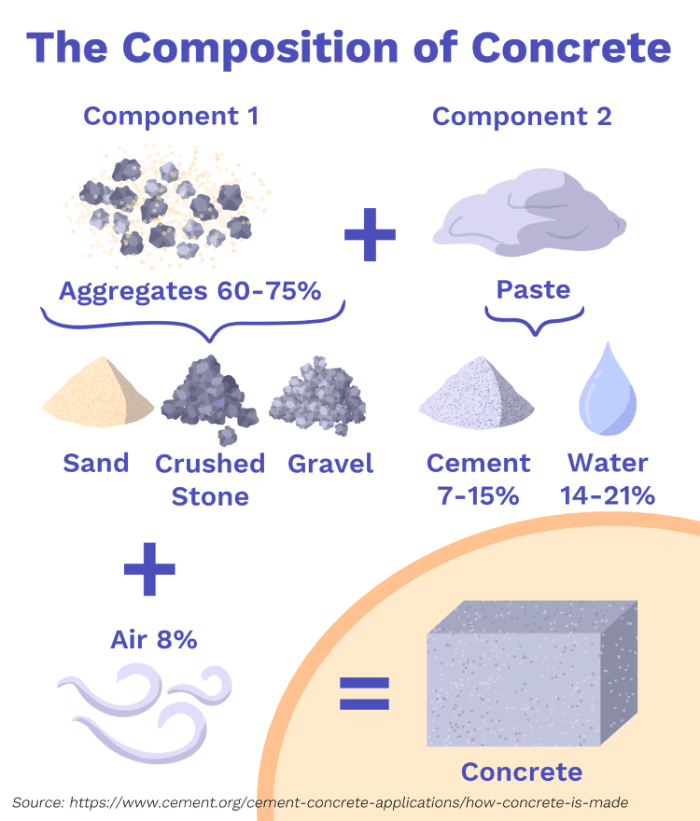
The environmental impact of traditional Portland cement—responsible for approximately 8% of global CO2 emissions—has catalyzed a technological race to change the chemical foundation of concrete. The “what” of concrete is increasingly defined by industrial byproducts and carbon-sequestering compounds.
Carbon Capture and Mineralization Technologies
Leading-edge concrete companies are now treating CO2 not as a waste product, but as a primary ingredient. Technologies developed by firms like CarbonCure involve injecting recycled carbon dioxide into the concrete during the mixing process. Once injected, the CO2 undergoes a chemical reaction with calcium ions from the cement to form nano-sized calcium carbonate minerals. These minerals become permanently embedded in the concrete, sequestering the carbon and simultaneously increasing the material’s compressive strength. This process represents a fundamental shift in the material’s lifecycle, turning a major polluter into a carbon sink.
Geopolymer Concrete and Industrial Byproduct Integration
The move toward “Zero-Cement” concrete is another major tech trend. Geopolymer concrete replaces Portland cement entirely with industrial waste products like fly ash (from coal power plants) or ground granulated blast-furnace slag (from steel production). The technological challenge here lies in the activation process; these materials require a sophisticated alkaline activator—a chemical solution that triggers the polymerization process. The resulting material is chemically distinct from traditional concrete, offering superior resistance to chemical attacks and extreme temperatures, making it the preferred choice for heavy industrial and marine applications.
Digital Fabrication: Formulating Concrete for 3D Printing and Robotics
As construction moves toward automation, the composition of concrete is being reformulated to meet the specific requirements of 3D printing (3DP) and robotic extrusion. The “ink” used in large-scale 3D printers is a highly specialized variant of concrete that must balance contradictory physical properties.
Rheology and the Mechanics of Extrudable Mixes
In 3D printing, the concrete must be fluid enough to be pumped through a robotic nozzle but “thixotropic” enough to hold its shape immediately after deposition without the support of formwork. Achieving this requires a precise cocktail of chemical accelerators and viscosity-modifying agents (VMAs). The mix design is often optimized using computational fluid dynamics (CFD) software to ensure that the material can support the weight of subsequent layers while maintaining a perfect bond between them. This focus on “buildability” and “extrudability” has turned concrete mix design into a branch of high-precision chemical engineering.
Generative Design and Material Optimization
The shift to 3D-printed concrete is also changing the volumetric composition of structures. By using AI-driven generative design, engineers can create concrete components that use material only where it is structurally necessary. These “optimized” concrete structures often feature complex, organic geometries that would be impossible to cast in traditional forms. This technology reduces the total volume of concrete needed for a structure by up to 50%, fundamentally changing the relationship between the material’s composition and its structural performance.
The Future of Synthetic Infrastructure: AI-Driven Mix Design
The ultimate evolution in what concrete is made of is not a physical ingredient, but the data that governs its creation. The industry is moving toward “AI-driven mix design,” where machine learning algorithms analyze millions of data points—including local aggregate quality, ambient weather conditions, and required strength parameters—to generate the optimal recipe for a specific project.
This technological approach allows for “performance-based” specifications rather than “recipe-based” ones. Instead of following a standard ratio, AI platforms can predict how a specific combination of local recycled materials and new chemical admixtures will behave over a fifty-year lifespan. This digital layer of concrete technology ensures that every batch of the material is precisely calibrated for its environment, minimizing waste and maximizing durability.
In conclusion, the question of what concrete is made of no longer has a simple answer. While it remains a composite of aggregate and binder, its true modern identity is defined by the technological layers embedded within it. From carbon-sequestering minerals and self-healing bacteria to nano-reinforcements and IoT-enabled conductivity, concrete has become a high-tech platform. As we continue to innovate, the world’s most essential material will continue to evolve, bridging the gap between the physical world and the digital future of smart, sustainable infrastructure.
aViewFromTheCave is a participant in the Amazon Services LLC Associates Program, an affiliate advertising program designed to provide a means for sites to earn advertising fees by advertising and linking to Amazon.com. Amazon, the Amazon logo, AmazonSupply, and the AmazonSupply logo are trademarks of Amazon.com, Inc. or its affiliates. As an Amazon Associate we earn affiliate commissions from qualifying purchases.