
To the casual observer, the word “Nasdaq” evokes images of a flickering electronic ticker tape, a high-tech studio in Times Square, or a benchmark index that tracks the world’s most powerful technology stocks. However, in the world of professional finance and corporate strategy, Nasdaq is far more than just a list of names or a physical location. It is a sophisticated, publicly traded multinational corporation officially known as Nasdaq, Inc. (ticker symbol: NDAQ).
Understanding Nasdaq as a company is essential for any investor or business professional. It is a pioneer that transformed the way global markets function, evolving from a simple marketplace into a diversified financial technology powerhouse. To answer the question of what company Nasdaq is, one must look past the stock prices and delve into its corporate structure, revenue models, and strategic role in the global economy.
The Evolution of Nasdaq, Inc.: From Marketplace to Fintech Leader
Nasdaq was founded in 1971 by the National Association of Securities Dealers (NASD). At its inception, it was revolutionary because it was the world’s first electronic stock market. Before Nasdaq, stock trading was a physical endeavor, relying on floor brokers shouting orders in “open outcry” pits. Nasdaq’s electronic system narrowed spreads, increased transparency, and democratized access to the markets.
From NASD to a Publicly Traded Entity
Originally, Nasdaq was a subsidiary of the NASD. However, as the 21st century approached, the organization underwent a massive structural shift. Between 2000 and 2006, Nasdaq decoupled from the NASD through a series of transactions, eventually becoming a fully independent, publicly traded corporation. It listed its own shares on its own exchange under the symbol NDAQ.
This transition was pivotal. It transformed Nasdaq from a membership-based utility into a profit-driven corporation responsible to its shareholders. This change catalyzed a decade of aggressive expansion, including the landmark 2008 merger with the Swedish-Finnish exchange operator OMX AB. This merger transformed the company into the Nasdaq OMX Group, significantly expanding its footprint into European markets and, more importantly, into the realm of exchange technology.
The Modern Identity
Today, the company has dropped “OMX” from its name, simply operating as Nasdaq, Inc. While it still operates one of the world’s most prestigious stock exchanges, its identity has shifted toward being a “SaaS” (Software as a Service) and data provider. Modern Nasdaq focuses on providing the plumbing—the software, the data, and the surveillance tools—that powers other exchanges and financial institutions worldwide.
Analyzing the Revenue Streams: How Nasdaq Makes Money
To understand Nasdaq as a business, one must examine its income statement. Unlike a traditional brokerage that might rely on commissions, Nasdaq’s revenue is diversified across several high-margin business segments. It has successfully moved away from a reliance on volatile transaction volumes toward a more stable, recurring revenue model.
Market Platforms
This is the most visible arm of the company. It encompasses the trading of equities, options, fixed income, and derivatives. Nasdaq earns money through transaction fees every time a trade is executed on its platforms. However, this segment also includes “trade management services,” where Nasdaq provides the physical and digital infrastructure for firms to connect to its markets. By offering high-speed connectivity and co-location services (where firms place their servers in the same data center as Nasdaq’s), the company generates consistent, monthly subscription-style revenue.
Capital Access Platforms
This segment is divided into two primary areas: Listing Services and Indexing.
-
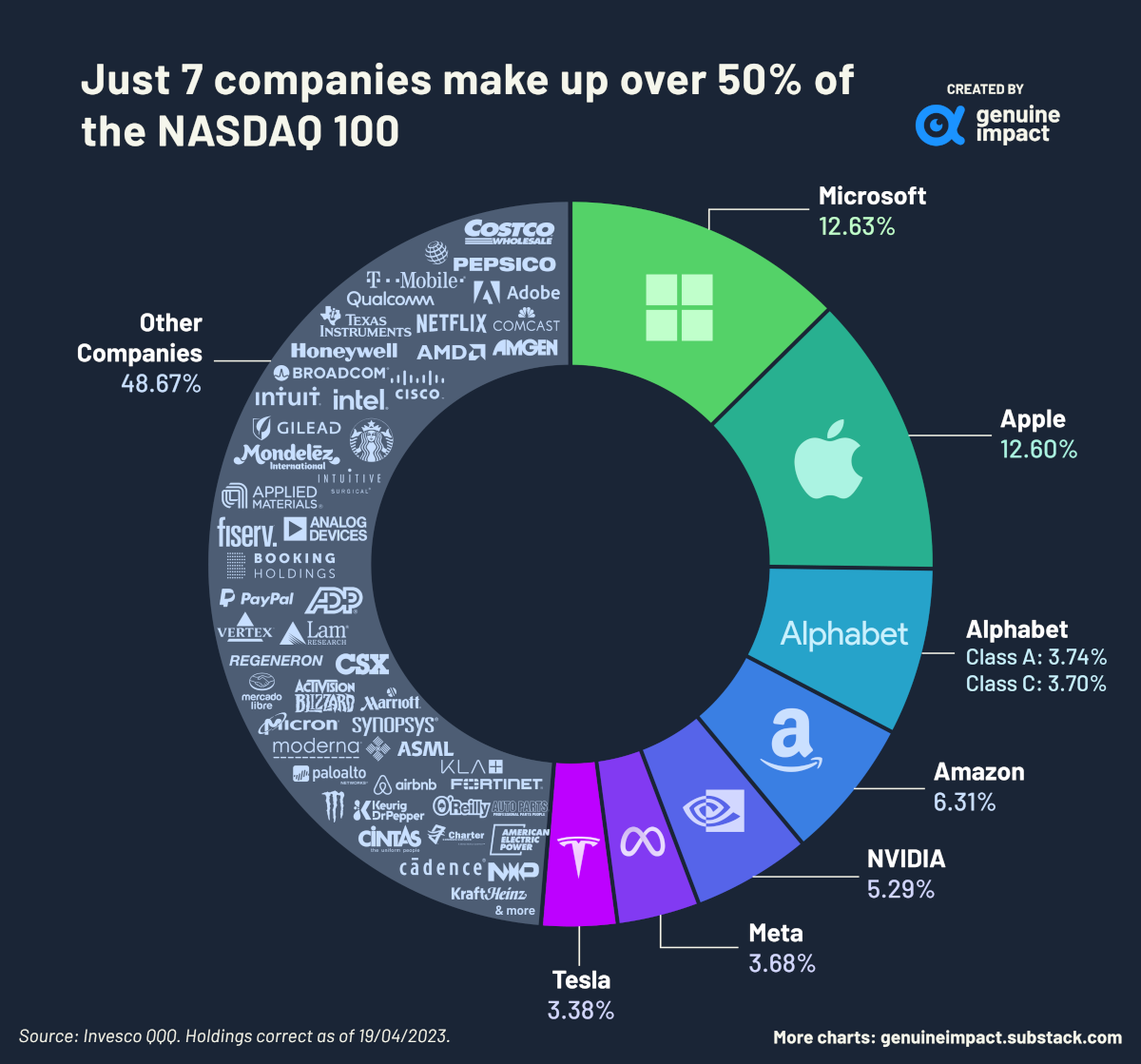
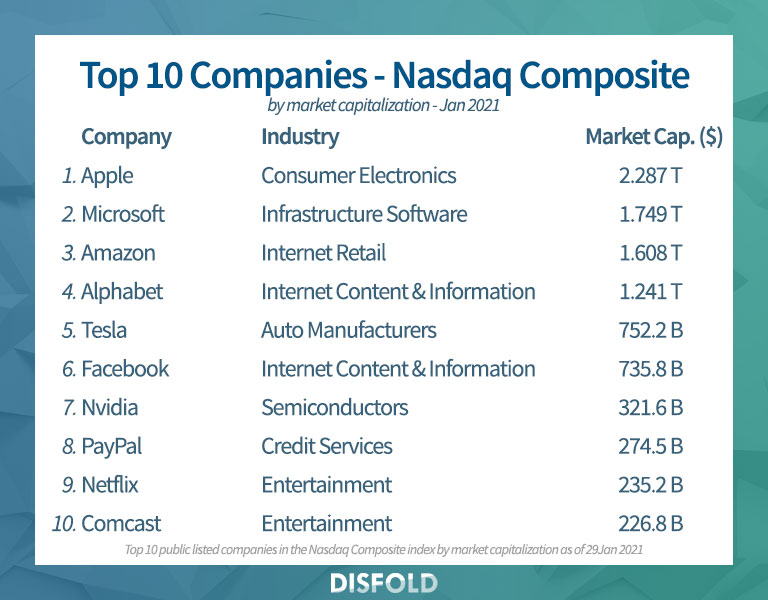
Listing Services: When a company like Apple or Microsoft “lists” on Nasdaq, they pay an initial fee and a substantial annual fee to remain on the exchange. This is a highly prestigious business, as Nasdaq competes directly with the New York Stock Exchange (NYSE) to attract the world’s largest Initial Public Offerings (IPOs).
-
Indexing: Nasdaq is one of the world’s premier index providers. The Nasdaq-100, the Nasdaq Composite, and various thematic indexes are owned by the company. When an investment firm like Invesco creates an ETF (such as the QQQ) that tracks a Nasdaq index, they pay Nasdaq a licensing fee based on the Assets Under Management (AUM). As more investors flock to passive index funds, this becomes a massive, high-margin profit center.
Financial Technology and Data
Perhaps the most significant shift in Nasdaq’s business model is its focus on Financial Technology (Fintech). Nasdaq sells its exchange technology—the “matching engines” that pair buyers and sellers—to over 130 other marketplaces globally.
Furthermore, through its acquisition of firms like Verafin, Nasdaq has become a leader in anti-financial crime software. This software helps banks and financial institutions detect money laundering and fraud. This segment is almost entirely recurring revenue, providing the “sticky” cash flow that investors prize in the modern economy.
Nasdaq vs. The Competition: A Strategic Moat
In the business of finance, “moats”—or competitive advantages—are hard to build. Nasdaq’s moat is constructed from brand prestige, technological superiority, and network effects.
The Rivalry with the NYSE
The primary competitor for Nasdaq in the United States is the Intercontinental Exchange (ICE), which owns the New York Stock Exchange. Historically, the NYSE was seen as the home of “blue-chip” industrial companies, while Nasdaq was the home of “growth” and “tech.”
Nasdaq disrupted this dynamic by aggressively branding itself as the platform for the future. By maintaining lower listing fees and providing superior IR (Investor Relations) tools, Nasdaq has managed to lure massive non-tech entities and retain tech giants even as they mature. This competition is not just about prestige; it is a battle for the data and the derivative products that flow from these listings.
The Data Advantage
In the modern financial landscape, data is the new oil. Nasdaq owns the proprietary data generated by its trades. Professional traders and hedge funds require “Level 2” data feeds to see the depth of the market—the limit orders that haven’t been executed yet. Nasdaq sells this data at a premium. Because they own the exchange, they have a monopoly on this specific data set, creating an incredibly high barrier to entry for any competitor.
Investing in NDAQ: The Stockholder Perspective
For an investor looking at Nasdaq, Inc. as a potential portfolio addition, the company represents a “pick and shovel” play on the financial markets. Regardless of whether the market goes up or down, people will trade, companies will need to remain listed, and banks will need anti-fraud software.
Financial Performance and Dividends
Nasdaq has historically shown strong financial resilience. Because it has transitioned much of its revenue to a subscription basis, it is less vulnerable to market crashes than it was twenty years ago. The company has a track record of increasing its dividend and performing share buybacks, which appeals to value-oriented investors.
However, it is also priced like a growth stock. Because of its software-heavy business model, Nasdaq often trades at a higher Price-to-Earnings (P/E) ratio than more traditional financial services firms. Investors are paying a premium for the scalability of its technology and the reliability of its indexing revenue.
Strategic Risks
No company is without risk. For Nasdaq, the primary threats are regulatory and competitive. Regulatory bodies like the SEC frequently scrutinize exchange fees and data pricing, which could impact Nasdaq’s margins. Additionally, the rise of “off-exchange” trading (dark pools) and decentralized finance (DeFi) represents a long-term theoretical threat to the centralized exchange model. Nasdaq has responded by investing heavily in blockchain technology and cloud integration to ensure they remain at the center of the trade, regardless of the medium.
The Future of Nasdaq: Beyond the Trading Floor
The future of Nasdaq, Inc. lies in its transition into a global technology provider. The company has recently made headlines for its partnership with Amazon Web Services (AWS) to move its markets into the cloud. This is a monumental shift that aims to reduce latency and increase the reliability of global financial transactions.
Artificial Intelligence and Market Integrity
Nasdaq is also heavily integrating Artificial Intelligence (AI) into its surveillance products. In an era where “flash crashes” and high-frequency trading can destabilize markets, Nasdaq’s AI tools monitor billions of signals in real-time to detect manipulative patterns. By selling these tools to regulators and other exchanges, Nasdaq is positioning itself as the “police officer” of the global financial system.
Expansion into Private Markets
Traditionally, Nasdaq dealt with public companies. However, companies are staying private longer. In response, Nasdaq has developed the “Nasdaq Private Market,” which provides liquidity and secondary trading for employees and investors in private unicorns. This allows Nasdaq to capture the value of a company’s growth long before it ever hits the IPO stage.

Conclusion
Nasdaq is not just a ticker or a tech-heavy index. It is a sophisticated, forward-thinking corporation that sits at the intersection of capital markets and cutting-edge technology. Through its diverse revenue streams—from transaction fees and index licensing to anti-money laundering software—Nasdaq, Inc. has built a resilient and profitable business model.
For the investor, understanding Nasdaq means recognizing the value of the infrastructure that makes global capitalism possible. It is a company that has successfully navigated the shift from a physical floor to a digital cloud, proving that in the world of finance, those who own the technology usually own the future. Whether you are looking at it as a marketplace to trade stocks or as a stock to hold in your own portfolio, Nasdaq remains one of the most influential and strategically positioned companies in the modern financial era.
aViewFromTheCave is a participant in the Amazon Services LLC Associates Program, an affiliate advertising program designed to provide a means for sites to earn advertising fees by advertising and linking to Amazon.com. Amazon, the Amazon logo, AmazonSupply, and the AmazonSupply logo are trademarks of Amazon.com, Inc. or its affiliates. As an Amazon Associate we earn affiliate commissions from qualifying purchases.