
The S&P 500 is arguably the most referenced and influential stock market index in the world, serving as a critical barometer for the health of the U.S. economy and a benchmark for global market performance. For investors, understanding “what companies are in the S&P 500” is fundamental, not just for curiosity, but for comprehending market dynamics, evaluating investment performance, and making informed financial decisions. It’s a collection of 500 leading U.S. publicly traded companies, carefully selected to represent a broad spectrum of industries and the robust economic fabric of the nation. However, the S&P 500 is not a static list; it’s a dynamic entity, continually evolving to reflect the shifting landscape of corporate America. This article delves into the composition, significance, and ongoing evolution of this pivotal financial index, offering insights vital for anyone engaged in personal finance, investing, or business finance.
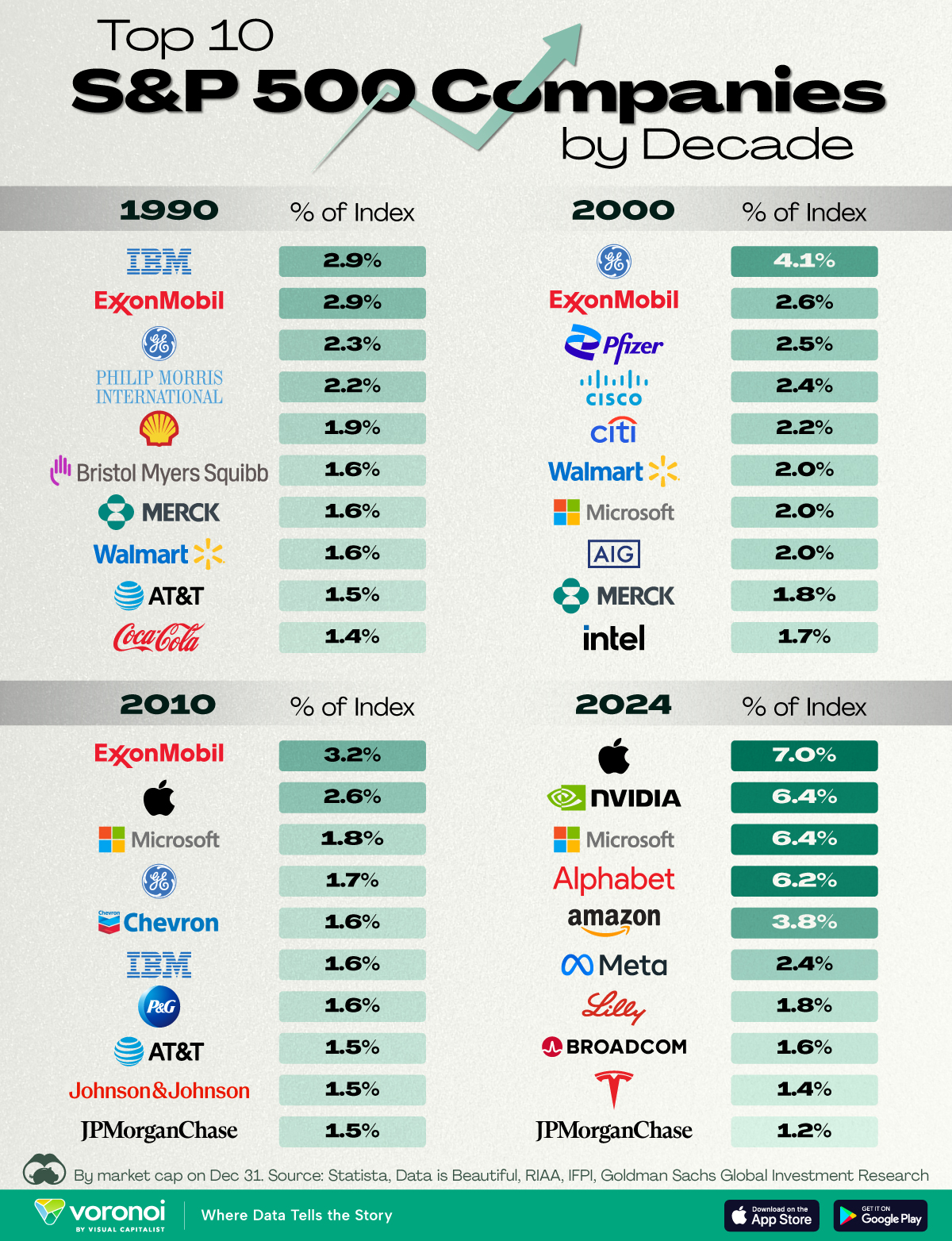
Understanding the S&P 500: More Than Just a Number
To truly grasp the implications of the S&P 500, it’s essential to look beyond its numerical representation and understand the principles that govern its construction and its profound importance to the investment world.
The Mechanics of the Index
The “S&P” in S&P 500 stands for Standard & Poor’s, a division of S&P Global, which maintains the index. Unlike the Dow Jones Industrial Average, which is price-weighted, the S&P 500 is a market-capitalization-weighted index. This means that companies with larger market capitalizations (total value of all outstanding shares) have a greater impact on the index’s performance. For example, if Apple, a company with an enormous market cap, sees its stock price rise by 1%, it will move the S&P 500 more significantly than a 1% rise in a smaller S&P 500 constituent. This weighting methodology inherently gives more prominence to the largest, often most successful, companies in the U.S. economy.
Inclusion in the S&P 500 is not automatic, nor is it merely about being one of the 500 largest U.S. companies by market cap. A committee at S&P Dow Jones Indices makes qualitative and quantitative judgments based on several stringent criteria. Key requirements for a company to be considered for inclusion include:
- U.S. Company: The company must be domiciled in the U.S.
- Market Capitalization: It must meet a minimum market cap threshold, which is periodically adjusted (typically in the multi-billion dollar range).
- Liquidity: The company’s stock must be highly liquid, meaning it trades frequently and in high volumes, ensuring ease of buying and selling.
- Public Float: A sufficient percentage of its shares must be available for public trading, not held by insiders or governments.
- Profitability: The sum of the most recent four consecutive quarters’ GAAP (Generally Accepted Accounting Principles) earnings must be positive, and the most recent quarter must also be positive. This ensures that only financially sound companies are included.
- Sector Representation: The committee also considers the company’s sector to ensure the index remains a broad representation of the U.S. economy, aligning with the Global Industry Classification Standard (GICS).
Why the S&P 500 Matters to Investors
For individual and institutional investors alike, the S&P 500 serves multiple critical functions. Firstly, it acts as a benchmark for investment performance. If an actively managed fund aims to outperform the market, its success is often measured against the S&P 500’s returns. Secondly, it is a powerful proxy for the broader U.S. economy. Its ups and downs are often seen as reflections of economic expansion or contraction, consumer confidence, and corporate health. A rising S&P 500 generally signals economic optimism and growth, while a decline can indicate recessionary fears or actual downturns.
Crucially, the S&P 500 forms the basis for incredibly popular and accessible investment vehicles, such as Exchange Traded Funds (ETFs) and mutual funds. These instruments allow investors to gain diversified exposure to 500 large U.S. companies with a single purchase, offering a cost-effective and low-effort way to invest in the U.S. stock market. This inherent diversification is a significant benefit, as it mitigates the risk associated with investing in individual stocks.
A Snapshot of the S&P 500’s Composition
The S&P 500’s composition is a reflection of the leading industries and most valuable corporations operating in the United States. While the exact list of companies can change, the sectoral breakdown and the dominance of certain giants remain key features.
The Dominant Sectors
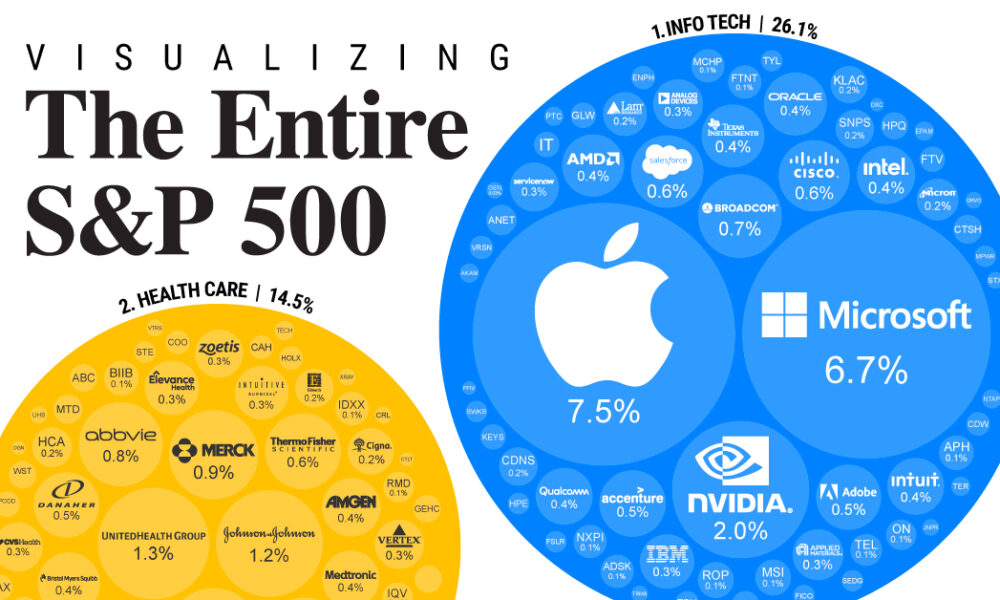
The S&P 500 is classified into 11 broad sectors according to the Global Industry Classification Standard (GICS). These sectors ensure that the index provides a comprehensive cross-section of the U.S. economy, mitigating over-concentration in any single area. Historically, and particularly in recent years, certain sectors have commanded a larger weighting due to the sheer size and growth of their constituent companies.
- Information Technology (IT): Consistently holds the largest weighting, driven by innovation, digital transformation, and the global demand for software, hardware, and semiconductor solutions. Companies like Apple, Microsoft, and NVIDIA anchor this sector.
- Healthcare: Another significant component, propelled by an aging population, medical advancements, and consistent demand for pharmaceutical, biotechnology, and healthcare services. Giants like UnitedHealth Group, Johnson & Johnson, and Eli Lilly are prominent.
- Financials: Includes banks, insurance companies, and diversified financial services firms, essential for economic activity. Berkshire Hathaway, JPMorgan Chase, and Visa are major players.
- Communication Services: Encompasses telecommunications, media, and interactive media and services. Alphabet (Google) and Meta Platforms (Facebook) dominate this evolving sector.
- Consumer Discretionary: Features companies whose products and services are considered non-essential but desirable, often reflecting consumer spending power. Amazon and Tesla are defining companies here.
Other sectors, including Industrials, Consumer Staples, Energy, Utilities, Real Estate, and Materials, round out the index, ensuring a balanced representation of the economy. The relative weighting of these sectors shifts over time, reflecting long-term economic trends and the rise and fall of industries. For instance, the Energy sector’s weighting has seen considerable fluctuation based on global oil prices and the shift towards renewable energy.
The Largest Companies by Market Cap
Due to the market-cap weighted nature of the S&P 500, a handful of mega-cap companies exert a disproportionate influence on the index’s performance. These are often household names, global leaders in their respective fields, and companies with substantial financial might. While their exact ranking can change quarterly or even monthly, the consistent presence of certain titans is undeniable.
- Apple (AAPL): A leader in consumer electronics, software, and online services.
- Microsoft (MSFT): Dominant in software, cloud computing (Azure), and gaming.
- Amazon (AMZN): E-commerce giant and cloud computing leader (AWS).
- Alphabet (GOOGL/GOOG): Parent company of Google, YouTube, and various other tech ventures.
- NVIDIA (NVDA): A critical player in graphics processing units (GPUs) for gaming, data centers, and AI.
- Meta Platforms (META): Owner of Facebook, Instagram, WhatsApp, and a key player in virtual reality.
- Tesla (TSLA): Leading electric vehicle manufacturer and energy company.
- Berkshire Hathaway (BRK.A/BRK.B): A diversified conglomerate led by Warren Buffett.
- Johnson & Johnson (JNJ): A global healthcare and pharmaceutical giant.
- UnitedHealth Group (UNH): A diversified health and well-being company.
These companies, often referred to as “the Magnificent Seven” or similar monikers, often drive the index’s returns, especially during periods when growth stocks are favored. Their sustained success is a testament to their innovation, market dominance, and ability to generate substantial profits.
The Dynamic Nature of S&P 500 Inclusion
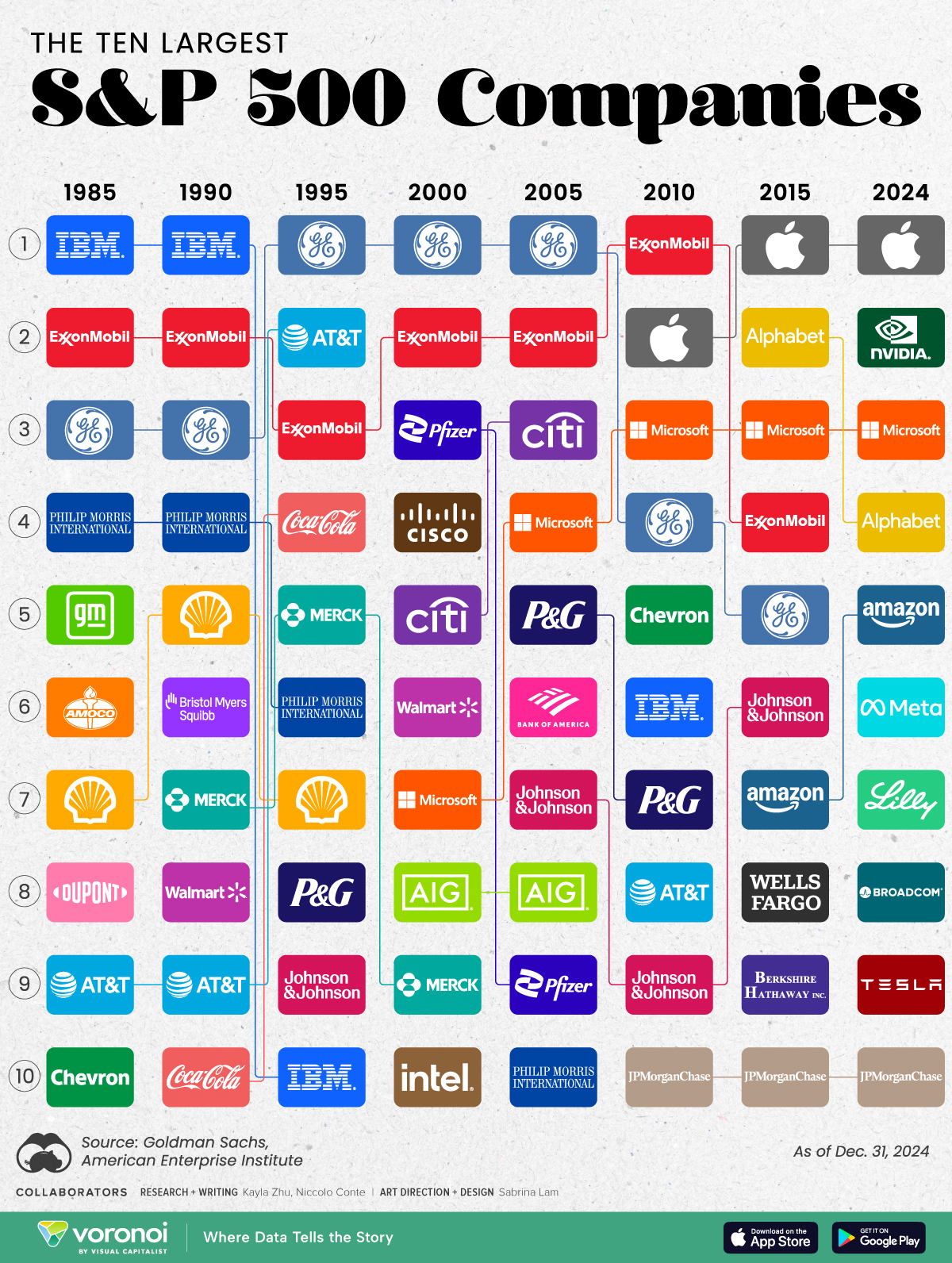
The list of companies in the S&P 500 is anything but static. It’s a living index, constantly being reviewed and adjusted by the S&P Dow Jones Indices committee to ensure it remains relevant, representative, and reflective of the current market landscape.
Additions and Deletions: A Constant Evolution
Companies are regularly added to and deleted from the S&P 500. These changes occur for a variety of reasons:
- Additions: A company might be added if it grows significantly, meets all the inclusion criteria, and becomes a major player in its sector. Notable IPOs of large companies, or the rapid expansion of existing smaller public companies, can lead to their inclusion. For example, Tesla’s highly anticipated addition in late 2020 was a significant event for the market.
- Deletions: Companies are removed for several reasons. The most common is acquisition, where one S&P 500 company buys another, or a non-S&P 500 company acquires an S&P 500 constituent. Other reasons include bankruptcy, failing to meet the market capitalization requirements (e.g., if its stock price declines substantially), or a fundamental shift in its business model that no longer aligns with the index’s criteria.
These adjustments typically occur quarterly, but the committee can make changes at any time if necessary. The goal is to maintain the index’s integrity and its representative nature.
Impact on Investors and the Market
The announcement of a company’s inclusion in or exclusion from the S&P 500 can have a tangible impact on its stock price, an phenomenon often dubbed the “S&P Effect.”
- For Added Companies: Inclusion typically leads to increased demand for the stock. This is because countless index funds and ETFs that track the S&P 500 must purchase shares of the newly added company to accurately mirror the index’s composition. This guaranteed buying pressure often drives up the stock’s price in the period leading up to its official inclusion. It also provides the company with increased visibility and legitimacy among investors.
- For Deleted Companies: Conversely, a company’s removal can lead to selling pressure as index funds liquidate their holdings. This can result in a temporary dip in the stock price, although the long-term fundamentals of the company usually dictate its future performance.
Understanding these dynamics is crucial for investors, especially those who engage in short-term trading or wish to anticipate market movements surrounding such announcements. For long-term passive investors in S&P 500 index funds, these changes are managed automatically by the fund provider, ensuring the portfolio remains aligned with the index without any action required from the investor.
Investing in the S&P 500: Accessibility for Every Investor
One of the most appealing aspects of the S&P 500 is its accessibility. While directly buying shares of all 500 companies would be impractical for most, a variety of investment vehicles make it easy and affordable for nearly anyone to invest in this broad market index.
ETFs and Mutual Funds
The primary way most investors gain exposure to the S&P 500 is through Exchange Traded Funds (ETFs) and mutual funds that track the index. These funds pool money from numerous investors to buy shares in all 500 companies, proportionally mirroring the index’s weighting.
- ETFs: Popular S&P 500 ETFs include SPDR S&P 500 ETF Trust (SPY), iShares Core S&P 500 (IVV), and Vanguard S&P 500 ETF (VOO). These trade like individual stocks on exchanges, offering flexibility and often very low expense ratios.
- Mutual Funds: Well-known mutual funds tracking the S&P 500 include the Vanguard 500 Index Fund (VFIAX) and the Fidelity 500 Index Fund (FXAIX). These funds are typically purchased directly from the fund provider and are suitable for long-term, hands-off investing.
The benefits of investing in these funds are substantial:
- Diversification: Instantaneous diversification across 500 large U.S. companies, significantly reducing company-specific risk.
- Low Cost: Index funds and ETFs are passively managed, leading to very low expense ratios compared to actively managed funds.
- Ease of Access: Simple to buy and sell through brokerage accounts.
- Long-Term Growth Potential: Historically, the S&P 500 has delivered robust long-term returns, making it a cornerstone of many retirement and wealth-building strategies.
Beyond Index Funds: Active vs. Passive Investing
The success and accessibility of S&P 500 index funds have fueled the broader debate between active and passive investing. Passive investing, which involves simply tracking an index like the S&P 500, often outperforms active management, where fund managers try to “beat the market” by picking individual stocks or timing market movements. This is largely due to the lower fees associated with passive funds and the difficulty active managers face in consistently outperforming the market after accounting for those higher fees. For many, especially those focused on long-term wealth accumulation for retirement, a core allocation to an S&P 500 index fund is a cornerstone of their financial strategy. It represents a belief in the enduring strength and innovation of the U.S. economy.
Conclusion
The S&P 500 is far more than a mere collection of companies; it’s a dynamic, living index that encapsulates the economic power, innovation, and ever-evolving landscape of the United States. Comprising 500 leading companies, carefully selected and weighted by market capitalization, it serves as an indispensable benchmark for market performance, an indicator of economic health, and a foundational tool for investors worldwide. From the dominant tech giants and healthcare innovators to the critical financial institutions and consumer staples providers, the S&P 500 offers a diversified window into corporate America.
Its constant evolution, with companies regularly added and removed, ensures its relevance and responsiveness to market shifts, while also creating measurable impacts on individual stock prices. For those engaged in personal finance and investing, understanding what companies are in the S&P 500, and how to access them through accessible vehicles like ETFs and mutual funds, is a vital step towards informed decision-making and long-term financial success. The S&P 500 remains a testament to growth, adaptation, and the enduring potential of the U.S. economy as a whole.
aViewFromTheCave is a participant in the Amazon Services LLC Associates Program, an affiliate advertising program designed to provide a means for sites to earn advertising fees by advertising and linking to Amazon.com. Amazon, the Amazon logo, AmazonSupply, and the AmazonSupply logo are trademarks of Amazon.com, Inc. or its affiliates. As an Amazon Associate we earn affiliate commissions from qualifying purchases.