
The Nasdaq is far more than just a ticker tape running across a television screen; it is a global electronic marketplace that has become synonymous with innovation, growth, and the modern digital economy. Since its inception in 1971 as the world’s first electronic stock market, it has evolved into a powerhouse that hosts some of the most influential corporations on the planet. For investors, understanding what companies are in the Nasdaq is essential for navigating the balance between aggressive growth and market volatility.
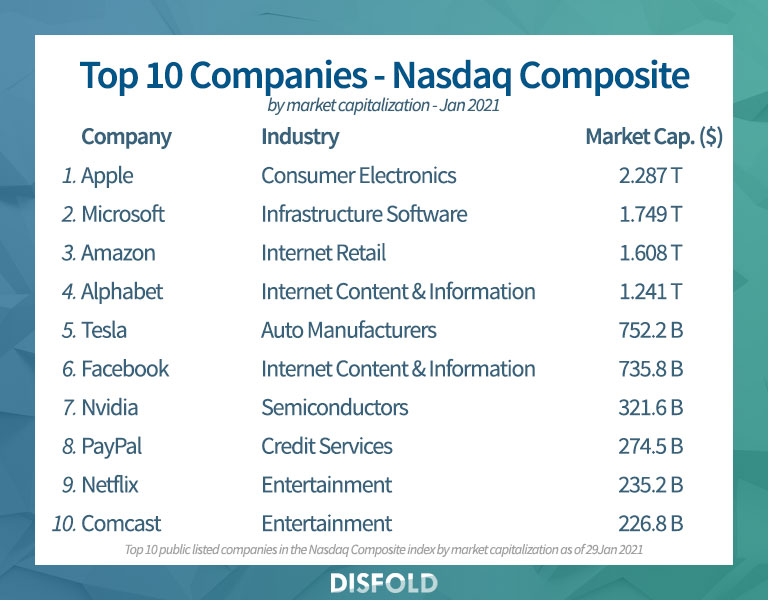
When people ask “what companies are in the Nasdaq,” they are usually referring to one of two things: the Nasdaq Composite Index, which includes nearly all stocks listed on the Nasdaq exchange, or the more exclusive Nasdaq-100, which tracks the 100 largest non-financial companies on the platform. Together, these entities represent trillions of dollars in market capitalization and dictate the direction of global technology and consumer trends.
The Dual Identity of the Nasdaq: Composite vs. Nasdaq-100
To understand the composition of the Nasdaq, one must first distinguish between the exchange itself and the indices that track it. The Nasdaq Stock Market is the physical (or rather, virtual) exchange where shares are bought and sold. There are over 3,000 companies listed on this exchange, ranging from small-cap biotech startups to trillion-dollar tech conglomerates.
The Nasdaq Composite Index
The Nasdaq Composite is a broad-based index that includes almost all companies listed on the Nasdaq stock exchange. To be included, a security must be listed exclusively on the Nasdaq and must be a common type of stock (not a preferred stock or a closed-end fund). Because it includes over 3,000 companies, it is often used as a barometer for the health of the technology sector and the broader “growth” economy. If a company is a household name in tech, software, or biotechnology, it is almost certainly part of the Composite.
The Nasdaq-100 (NDX)
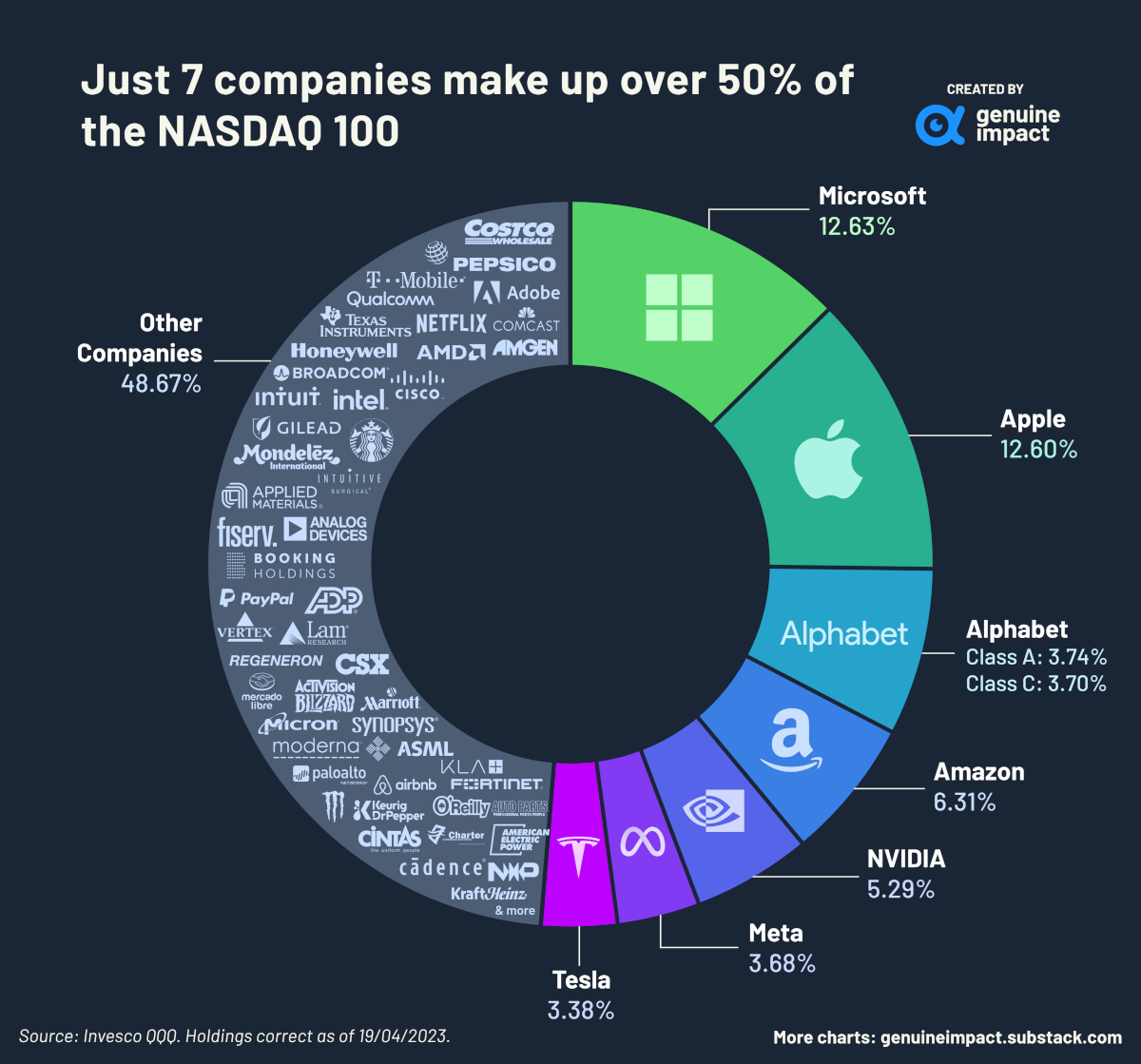
The Nasdaq-100 is the “elite” tier of the exchange. It consists of the 100 largest non-financial companies listed on the Nasdaq. Because this index excludes banks and investment firms, it has a much higher concentration in technology, healthcare, and consumer services. This is the index tracked by the famous Invesco QQQ Trust ETF. When investors talk about the “performance of the Nasdaq,” they are frequently referencing the movements of these 100 powerhouse firms.
The Titans of Tech: The “Magnificent Seven” and Beyond
The identity of the Nasdaq is inextricably linked to the “Magnificent Seven”—a group of high-performing, high-valuation stocks that carry immense weight in the index due to their massive market capitalizations. Because the Nasdaq is market-cap weighted, these companies have a disproportionate impact on the index’s daily movement.
The Trillion-Dollar Leaders: Microsoft, Apple, and Nvidia
Microsoft and Apple have long fought for the top spot as the most valuable company in the Nasdaq. Apple’s dominance in consumer hardware and services, combined with Microsoft’s enterprise software and cloud computing (Azure) prowess, makes them the foundational pillars of the exchange. Joining them recently in the top tier is Nvidia. As the primary provider of the hardware required for artificial intelligence, Nvidia’s meteoric rise has made it one of the most influential components of the Nasdaq-100.
The Infrastructure of the Modern Internet: Alphabet, Amazon, and Meta
Alphabet (the parent company of Google) and Meta Platforms (formerly Facebook) represent the dominant forces in digital advertising and communications. Their presence in the Nasdaq ensures the index is highly sensitive to the health of the global ad market. Amazon, while often categorized as a retailer, is a core Nasdaq component because of its technological infrastructure (Amazon Web Services) and its disruption of traditional logistics.
The Future of Transportation: Tesla
Tesla remains one of the most talked-about companies in the Nasdaq. Unlike the traditional automotive giants listed on the New York Stock Exchange (NYSE), Tesla is treated by investors as a technology company specializing in energy, AI, and robotics. Its inclusion in the Nasdaq highlights the exchange’s preference for companies that use technology to disrupt legacy industries.
Beyond Tech: Diversification Within the Nasdaq
A common misconception is that the Nasdaq is exclusively for software and hardware companies. While technology makes up approximately 50% of the index, the Nasdaq is home to massive players in healthcare, retail, and consumer staples. These “non-tech” companies provide a layer of stability to the otherwise volatile index.
Healthcare and Biotechnology Innovation
The Nasdaq is the preferred home for the biotechnology sector. Companies like Amgen, Gilead Sciences, and Vertex Pharmaceuticals are heavyweights within the index. These firms represent the cutting edge of genomic sequencing, immunology, and drug development. For investors interested in the “Money” side of healthcare, the Nasdaq offers exposure to high-margin, research-heavy corporations that can see explosive growth based on FDA approvals and patent successes.
Consumer Services and Retail Disruption
Many of the world’s most recognizable consumer brands choose to list on the Nasdaq. Costco Wholesale and PepsiCo are two of the largest non-tech components. Their presence balances the index; while a software company might trade at a high price-to-earnings (P/E) ratio based on future growth, Costco and PepsiCo provide consistent earnings and dividends based on physical goods and consumer demand. Other notable consumer-focused Nasdaq companies include Starbucks, Airbnb, and Booking Holdings.
Industrial and Financial Technology
While the Nasdaq-100 excludes traditional retail banks like JP Morgan, it does include “FinTech” and payment processing giants. PayPal and Fiserv are key members of the index, bridging the gap between finance and technology. Additionally, industrial tech companies like Honeywell International—which operates in aerospace and building technologies—find their home on the Nasdaq, further diversifying the exchange’s industrial footprint.
Why Companies Choose the Nasdaq Over the NYSE
The choice of where to list is a strategic business decision. Historically, the New York Stock Exchange (NYSE) was seen as the venue for “old money”—industrial giants, oil companies, and century-old banks. The Nasdaq, by contrast, was the “new money” exchange.
Listing Fees and Requirements
From a financial perspective, listing on the Nasdaq is often more cost-effective for growing companies. The initial listing fees and annual fees are generally lower than those of the NYSE. This attracts startups and mid-cap companies that would rather allocate their capital toward R&D than exchange fees. Furthermore, the Nasdaq’s electronic-only model was seen as more efficient and modern than the floor-trading model long held by the NYSE.
Branding and Association
Companies often choose the Nasdaq because they want to be associated with the “innovation” brand. For a tech startup, being listed alongside Google and Microsoft is a signal to investors that the company is part of the future economy. This branding helps in attracting talent and institutional investors who specifically target growth-oriented portfolios.
Investing in the Nasdaq: Strategies and Tools
For the individual investor, the question isn’t just “what companies are in the Nasdaq,” but how to profit from them. Because the Nasdaq is heavily weighted toward growth stocks, it tends to outperform during periods of economic expansion and low interest rates, though it can suffer more than the Dow Jones or S&P 500 during market corrections.
The Power of ETFs (Exchange-Traded Funds)
The most popular way to gain exposure to Nasdaq companies is through the Invesco QQQ Trust. This ETF tracks the Nasdaq-100 and is one of the most liquid trading instruments in the world. For those looking for even more aggressive plays, there are “leveraged” ETFs like the ProShares UltraPro QQQ (TQQQ), which seeks to return three times the daily performance of the index. However, these are high-risk tools that require a deep understanding of market mechanics.
Direct Equity Investment
Investors who prefer a more surgical approach may choose to buy individual stocks within the Nasdaq. By looking at the Nasdaq-100 list, an investor can build a “barbell” portfolio—combining high-growth AI stocks like Nvidia with stable consumer staples like Costco. This allows for participation in the tech upside while mitigating some of the sector-specific risks.

Monitoring Rebalancing and Volatility
The Nasdaq-100 undergoes an “annual reconstitution” every December, where companies are added or removed based on their market capitalization. Additionally, the index may undergo “special rebalances” if a few companies become too dominant (as happened in 2023 when the “Magnificent Seven” grew so large they threatened the diversification of the index). Staying informed about these shifts is crucial for any serious investor focused on the Nasdaq ecosystem.
The Nasdaq remains the heartbeat of the modern global economy. From the chips in our smartphones to the coffee we drink and the platforms we use to work, the companies in the Nasdaq define the way we live. By understanding the composition of this exchange—from its tech titans to its biotech innovators—investors can better position themselves to capitalize on the trends that are shaping the financial future.
aViewFromTheCave is a participant in the Amazon Services LLC Associates Program, an affiliate advertising program designed to provide a means for sites to earn advertising fees by advertising and linking to Amazon.com. Amazon, the Amazon logo, AmazonSupply, and the AmazonSupply logo are trademarks of Amazon.com, Inc. or its affiliates. As an Amazon Associate we earn affiliate commissions from qualifying purchases.