
Engine coolant, often colloquially referred to as antifreeze, is a vital fluid within any internal combustion engine and increasingly critical in hybrid and electric vehicle thermal management systems. Far from being a mere aesthetic choice, the color of coolant fluid serves as a critical indicator, a visual identifier that points to its chemical composition, intended application, and often, its underlying technological lineage. Understanding these colors is paramount for proper vehicle maintenance, preventing costly damage, and ensuring optimal thermal performance in increasingly sophisticated automotive technology.
The Engineering Behind Engine Coolant Chemistry
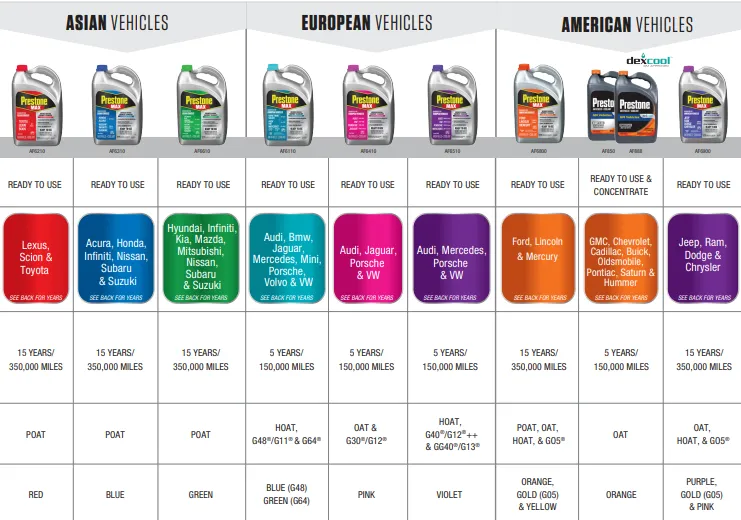
At its core, engine coolant is a precisely engineered blend designed to manage heat, prevent freezing, and protect engine components from corrosion. The primary components are usually a glycol base (ethylene glycol or propylene glycol) mixed with distilled water, augmented by a complex array of corrosion inhibitors and other additives. The evolution of engine materials, particularly the widespread use of aluminum, necessitated a revolution in coolant chemistry, moving beyond simple silicate-based formulas to highly specialized organic acid technologies. This chemical sophistication is often visually cued by color.
Beyond Water: The Role of Glycols and Additives
The glycol component is responsible for raising the boiling point and lowering the freezing point of water, enabling the engine to operate efficiently in a wide range of temperatures. Ethylene glycol (EG) has historically been the more common choice due to its superior heat transfer properties and lower cost, though propylene glycol (PG) is increasingly used for its lower toxicity.
Beyond the glycol, the true technological marvel lies in the additive package. These chemical inhibitors prevent corrosion, cavitation, and scale formation, which are critical for the longevity of metallic and non-metallic components within the cooling system, including the radiator, water pump, thermostat, and engine block. Early inorganic additive technologies (IATs) used silicates and phosphates. Modern coolants employ advanced organic acid technologies (OATs), hybrid organic acid technologies (HOATs), and even phosphorus-free or silicate-free versions, each tailored to specific engine materials and operational demands. The particular blend of these additives directly influences the fluid’s specified service life and, often, its characteristic color.
Decoding Coolant Colors: A Technical Diagnostic Guide
The various colors of coolant are not arbitrary. While some manufacturers might use a specific dye for branding or regional differentiation, the color often correlates directly with the underlying chemistry and the type of corrosion inhibitors it contains. This makes color a crucial diagnostic tool for technicians and informed vehicle owners alike.
Green: The Traditional Inorganic Acid Technology (IAT)
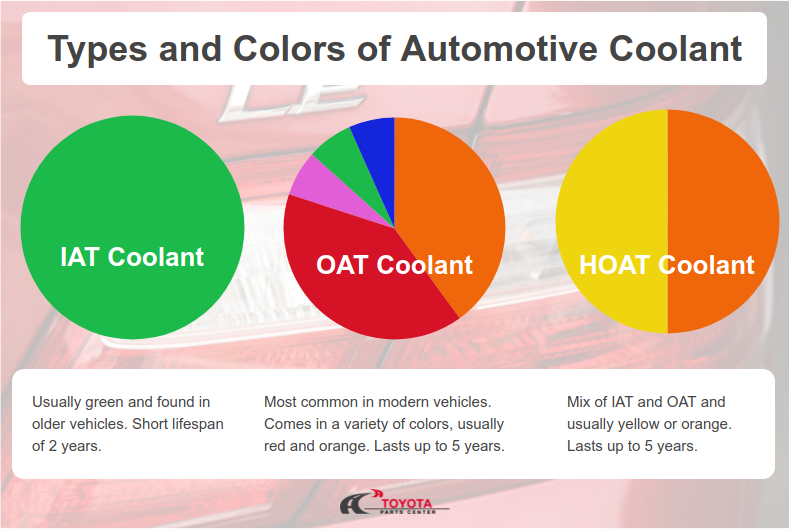
Historically, green coolant has been synonymous with conventional Inorganic Acid Technology (IAT) formulations. These coolants typically utilize silicates, phosphates, and sometimes borates as corrosion inhibitors. They are effective for older engines predominantly featuring cast iron blocks and copper/brass radiators. The green dye, usually an emerald green, provided a distinct visual for these formulations.
However, IAT coolants have a shorter service life (typically 2-3 years or 30,000-50,000 miles) because their inhibitors deplete over time. The silicates can also “drop out” of solution, forming abrasive gels that can damage water pump seals and clog radiator passages, particularly in aluminum systems. While still available, green IAT is generally not recommended for modern vehicles with aluminum components and complex cooling systems due to potential compatibility issues and shorter lifespan.
Orange/Red: Organic Acid Technology (OAT)
The introduction of Organic Acid Technology (OAT) marked a significant leap in coolant engineering. OAT coolants, typically dyed orange, red, or sometimes pink, utilize organic acids like 2-ethylhexanoic acid (2-EHA) as corrosion inhibitors. Unlike IATs, OATs do not contain silicates or phosphates, which can be detrimental to modern aluminum radiators and plastic components.
OAT coolants offer an extended service life, often up to 5 years or 100,000-150,000 miles, because their inhibitors are consumed much slower. They form a protective layer on metal surfaces without depleting rapidly. Brands like DEX-COOL (General Motors) are prime examples of orange OAT coolants. While highly effective for specified engines, mixing OAT with IAT coolants is generally discouraged as it can lead to gelling, reduced corrosion protection, and premature fluid degradation.
Blue/Pink/Purple: Specialized Formulations and OEM Specifics
As engine technology advanced, particularly with the proliferation of aluminum engine blocks and advanced gasket materials, a need for even more specialized coolants arose. This led to Hybrid Organic Acid Technology (HOAT) and other specific OEM formulations, which often manifest in a spectrum of blue, pink, purple, or even yellow dyes.
- HOAT Coolants (e.g., yellow, gold, sometimes blue): These are a hybrid, combining organic acids with a small amount of silicates (and sometimes phosphates) for enhanced protection of both aluminum and ferrous metals. HOATs offer extended life comparable to OATs but provide quicker initial corrosion protection due to the silicates. Many European and some Asian manufacturers specify HOAT coolants.
- Silicated HOAT (Si-OAT) (e.g., blue, purple): These are a specific type of HOAT, often found in Volkswagen/Audi (G11, G12+, G13, G12 EVO specifications). They offer excellent long-term protection for mixed-metal cooling systems. The distinct blue or purple color is a strong indicator of its specific chemistry and compatibility.
- Phosphated HOAT (P-HOAT) (e.g., pink, red): Commonly used by some Japanese manufacturers (e.g., Toyota, Honda), these coolants combine organic acids with phosphates, offering robust protection for aluminum components without silicates. The pink or red dye often signifies this particular formulation.
- Lobrid Coolants (e.g., purple, pink): Representing the latest evolution, lobrid coolants (e.g., VW G12evo, G13) combine OATs with a minimal amount of mineral inhibitors. They offer excellent performance and are often biodegradable.
It is crucial to emphasize that color is a general guide, not an absolute. Always consult the vehicle owner’s manual or OEM specifications to ensure the correct type of coolant is used. Using the wrong coolant can lead to chemical incompatibilities, reduced protection, and severe engine damage.
The Critical Role of Coolant in Modern Automotive Technology
Beyond just preventing overheating or freezing, the correct coolant plays an integral role in the overall performance, longevity, and efficiency of modern automotive systems. Its interaction with advanced engine materials, sophisticated sensors, and complex thermal management circuits makes its selection and maintenance a critical technical consideration.
Thermal Management in High-Performance Engines
Modern engines, particularly turbocharged direct-injection units, generate immense heat in compact packages. High-performance cars and heavy-duty vehicles push these thermal limits even further. The coolant’s ability to efficiently transfer heat away from critical components like cylinder heads, turbochargers, and oil coolers is fundamental to preventing thermal stress, detonation, and catastrophic failure. The specific heat capacity and thermal conductivity of the coolant, influenced by its chemical composition, are precisely calculated to meet the demanding thermal loads of these advanced powertrains.
Compatibility and Material Science
Contemporary cooling systems integrate a wide array of materials: aluminum alloys, cast iron, various plastics, rubber hoses, and specialized gasket compounds. Each of these materials reacts differently to various chemical environments. Using a coolant with an incompatible additive package can lead to:
- Corrosion: Pitting, galvanic corrosion, or general surface degradation of metals.
- Seal Degradation: Softening or hardening of rubber and plastic seals, leading to leaks.
- Cavitation: Erosion of water pump impellers due to localized boiling, especially problematic in high-flow systems.
- Clogging: Deposition of degraded inhibitors or foreign particles, restricting flow and reducing heat transfer efficiency.
Automotive engineers meticulously test coolant formulations against all system components to ensure long-term compatibility and performance. The color, therefore, is often a visual shorthand for this validated compatibility profile.
Early Warning Systems: Coolant Condition Monitoring
While many modern vehicles feature advanced temperature sensors and low coolant level warnings, changes in coolant color can serve as an early, visual diagnostic indicator of underlying issues that might not immediately trigger an electronic fault code.
- Discoloration (e.g., brown, murky): Can indicate rust, scale buildup, contamination with oil (head gasket leak), or severe degradation of the coolant’s inhibitors.
- Oily Sheen: A clear sign of oil ingress, usually from a leaking head gasket or oil cooler.
- Particle Suspension: Suggests corrosion, silicate drop-out, or debris from deteriorating hoses.
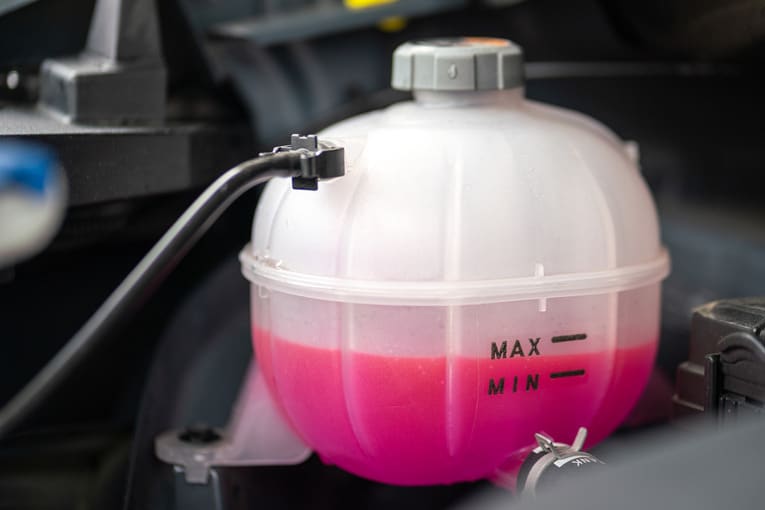
Regular visual inspection of the coolant reservoir for color, clarity, and level provides invaluable insights into the health of the cooling system and the engine as a whole, enabling proactive maintenance before minor issues escalate into major repairs.
Best Practices for Coolant Management: A Tech-Driven Approach
Given the critical nature of coolant to modern engine technology, adherence to best practices for its management is non-negotiable. This involves understanding the correct type, avoiding contamination, and following manufacturer-recommended service intervals.
Selecting the Right Coolant for Your Vehicle’s Technology
The single most important rule is to always consult your vehicle’s owner’s manual or service manual. It will specify the exact type of coolant required, often denoted by a specific OEM part number or a standard like ASTM D3306, ASTM D6210, or a manufacturer-specific designation (e.g., VW G12evo, Ford WSS-M97B44-D). Relying solely on color can be misleading due to variations between brands and regions. Using a universal coolant might seem convenient but often provides less optimized protection than a vehicle-specific formula and can still lead to compatibility problems.
The Dangers of Mixing Coolant Types
Mixing different coolant chemistries is one of the quickest ways to induce cooling system problems. Even seemingly similar colors can hide vastly different additive packages. For example, mixing an OAT coolant with an IAT coolant can lead to:
- Chemical Reaction: Formation of corrosive compounds or gels that clog the radiator and heater core.
- Inhibitor Degradation: The additive packages may neutralize each other, leaving the system unprotected.
- Foaming: Air entrapment that reduces cooling efficiency and promotes cavitation.
In most cases, if an unknown coolant is added or if the existing coolant is suspected of being mixed, a complete flush and refill with the correct, specified coolant is the safest course of action.
Environmental Considerations and Disposal Technology
As an automotive chemical, used coolant requires responsible disposal. It is toxic and harmful to the environment if improperly discarded. Many automotive service centers and municipal waste facilities offer coolant recycling or disposal services. Modern coolant formulations are also evolving to be more environmentally friendly, with some propylene glycol-based coolants offering reduced toxicity. The technology extends beyond the fluid itself to its lifecycle, encompassing safe use and ecological stewardship.
In conclusion, the color of coolant fluid is much more than just a dye; it’s a technical fingerprint of its chemical makeup and intended application. Understanding these distinctions is fundamental to proper vehicle care, maximizing engine longevity, and harnessing the sophisticated thermal management capabilities designed into today’s advanced automotive technologies.
aViewFromTheCave is a participant in the Amazon Services LLC Associates Program, an affiliate advertising program designed to provide a means for sites to earn advertising fees by advertising and linking to Amazon.com. Amazon, the Amazon logo, AmazonSupply, and the AmazonSupply logo are trademarks of Amazon.com, Inc. or its affiliates. As an Amazon Associate we earn affiliate commissions from qualifying purchases.