
The Fundamental Indicator: Litmus and pH Basics
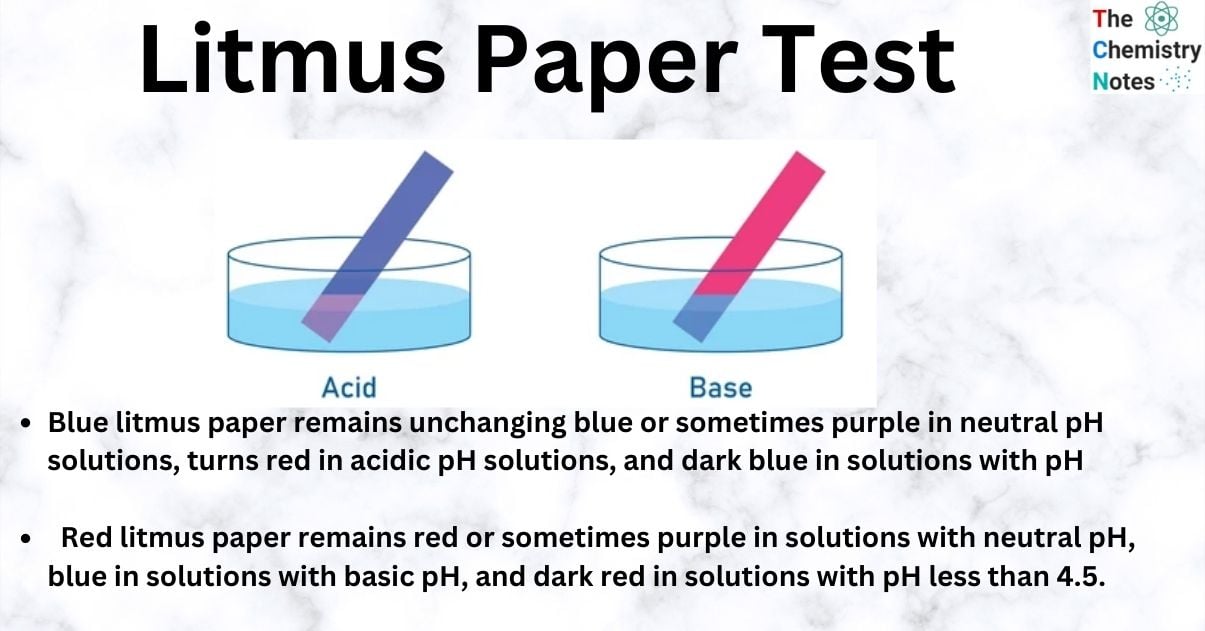
At its core, understanding the behavior of litmus paper in the presence of various substances is a foundational concept in chemistry, yet its principles underpin numerous advanced technological applications. When a base interacts with litmus paper, a distinct color change occurs. Specifically, a base will turn red litmus paper blue. This simple, observable reaction serves as a vital preliminary test in laboratories worldwide and informs the design of more sophisticated chemical sensing technologies.
Understanding Acids, Bases, and Neutrality
To fully appreciate the litmus reaction, a brief review of the pH scale is essential. The pH scale, ranging from 0 to 14, quantifies the acidity or alkalinity of an aqueous solution. A pH of 7 is considered neutral, representing pure water at standard conditions. Solutions with a pH less than 7 are acidic, meaning they have a higher concentration of hydrogen ions (H+). Conversely, solutions with a pH greater than 7 are basic (or alkaline), characterized by a higher concentration of hydroxide ions (OH-). Strong acids typically have pH values closer to 0, while strong bases have pH values approaching 14. This scale is logarithmic, meaning each whole number change in pH represents a tenfold change in acidity or basicity. For instance, a solution with a pH of 3 is ten times more acidic than a solution with a pH of 4.

The Litmus Paper Mechanism: A Primer
Litmus paper is a type of indicator paper derived from lichens. It contains a natural dye that changes color depending on the pH of the solution it contacts. This dye, a mixture of various compounds, has a pKa value (the pH at which it is half protonated/deprotonated) that allows it to act as an effective indicator around the neutral point. In acidic solutions (pH below approximately 4.5), the litmus dye appears red. In basic or alkaline solutions (pH above approximately 8.3), the dye appears blue. Between these pH values, in the transition range, litmus may appear purple. Therefore, when litmus paper, especially red litmus paper, is exposed to a basic solution, the higher concentration of hydroxide ions causes the dye molecules to deprotonate, shifting their molecular structure and, consequently, their light absorption properties, resulting in the characteristic blue color. Blue litmus paper, conversely, remains blue in the presence of a base but turns red in an acid. This straightforward chemical principle, though seemingly basic, is a cornerstone for understanding more complex chemical interactions and the development of modern analytical tools.
Bridging the Analog to Digital: Why Fundamental Chemistry Still Matters in Tech
The simple color change of litmus paper in response to a base provides an excellent analogy for the fundamental principles that govern advanced chemical sensing technologies. While the direct application of paper strips might seem antiquated in a world of smart sensors and AI, the underlying concept of an indicator responding to chemical changes remains profoundly relevant. Understanding this foundational chemistry is not merely academic; it’s crucial for engineers, software developers, and data scientists working on everything from environmental monitoring systems to biomedical diagnostic tools.
From Paper Strips to Smart Sensors: Evolution of pH Monitoring
The evolution from a piece of litmus paper to a sophisticated pH electrode, and further to integrated sensor arrays, exemplifies how basic scientific principles are translated into cutting-edge technology. Traditional pH electrodes, often glass electrodes, rely on the potential difference generated across a specialized glass membrane that is permeable to hydrogen ions. This potential difference varies with the pH of the solution and is measured electronically, providing a precise numerical reading. This leap from a qualitative visual indicator to a quantitative electrical signal is a hallmark of technological advancement in chemical analysis. Modern smart sensors, integrating microfluidics, nanotechnology, and advanced materials science, can perform rapid, accurate, and continuous pH measurements in real-time, often transmitting data wirelessly to cloud platforms for analysis. These devices automate what litmus paper can only initiate – the detection of a chemical state change – providing data vital for process control, environmental compliance, and health diagnostics.
The Role of Chemical Indicators in Modern Sensor Design
Even in advanced sensor design, the concept of a “chemical indicator” persists, albeit in more complex forms. Many optical pH sensors, for instance, utilize fluorescent dyes or chromophores that change their light emission or absorption characteristics in response to pH fluctuations. These dyes are often immobilized within a polymer matrix or integrated into fiber optic probes. The sensor then measures the emitted or absorbed light, translating it into a pH value. This is essentially a high-tech version of the litmus paper principle: a chemical entity undergoing a detectable change based on its environment. Similarly, electrochemical sensors often employ indicator electrodes coated with specific materials that exhibit a measurable electrical response (e.g., potential, current, impedance) influenced by the concentration of target ions, including H+ or OH-. The precision and sensitivity of these advanced indicators allow for applications far beyond what simple litmus paper could achieve, enabling everything from real-time monitoring of physiological pH in critical care settings to ensuring optimal conditions in complex industrial bioreactors.
Applications of pH Knowledge in Technology and Innovation
The ability to accurately measure and understand pH, rooted in fundamental chemistry principles like the litmus paper reaction, is indispensable across a vast array of technological domains. From ensuring public safety to optimizing industrial processes, pH monitoring and control are critical for success and innovation.
Environmental Tech: Water Quality and Soil Analysis
In environmental technology, pH measurement is a cornerstone of water quality assessment and soil analysis. Real-time pH sensors are deployed in rivers, lakes, and oceans to monitor the health of aquatic ecosystems. Acid rain, industrial runoff, and agricultural pollution can significantly alter water pH, impacting aquatic life. Technologically advanced pH probes, integrated with GPS and data logging systems, provide continuous data streams that inform environmental protection agencies and guide policy decisions. Similarly, in agriculture, soil pH directly affects nutrient availability for plants. Precision agriculture relies on sophisticated soil pH mapping technologies, often involving drone-mounted sensors or automated ground-based systems, to determine optimal liming or fertilization strategies. Software platforms then analyze this data to generate variable-rate application maps, ensuring efficient resource use and maximizing crop yields. Understanding how different substances affect pH, even as simply as a base turning litmus blue, provides the basis for designing and interpreting these complex environmental monitoring systems.
Industrial Automation and Process Control
Industrial sectors, from chemical manufacturing to food and beverage production, heavily rely on precise pH control for product consistency, safety, and efficiency. Automated pH monitoring systems are integrated into reactors, fermenters, and purification lines. These systems typically consist of robust pH electrodes connected to programmable logic controllers (PLCs) or distributed control systems (DCS). If the pH deviates from a set point, the system automatically triggers pumps to add acid or base, maintaining the desired range. For instance, in brewing, specific pH levels are critical during mashing, fermentation, and conditioning to ensure the correct flavor profile and prevent spoilage. In pharmaceuticals, controlling pH is vital during synthesis, purification, and formulation steps to ensure drug stability and efficacy. These automated systems prevent human error, reduce labor costs, and maintain a consistent, high-quality output, all built upon the fundamental understanding of acid-base chemistry.
Biomedical Devices and Diagnostics
In the realm of biomedical technology, pH measurement plays a critical role in diagnostics, drug delivery, and therapeutic monitoring. Blood pH is tightly regulated (typically between 7.35 and 7.45) in the human body, and deviations can indicate severe medical conditions such as acidosis or alkalosis. Portable blood gas analyzers, which include pH sensors, are essential tools in emergency medicine and intensive care units, providing rapid and accurate assessments of a patient’s physiological state. Furthermore, smart ingestible capsules with pH sensors are being developed to monitor gastrointestinal tract health and diagnose conditions like GERD (gastroesophageal reflux disease). In drug delivery, pH-sensitive materials are engineered to release therapeutic agents only at specific pH environments, such as the acidic conditions of a tumor or the alkaline environment of the small intestine, enabling targeted drug delivery and minimizing side effects. These innovations underscore how an elementary chemical concept becomes a lifeline in advanced healthcare technologies.
Data, AI, and the Future of Chemical Sensing
The evolution of chemical sensing, from rudimentary indicators like litmus paper to advanced digital probes, is increasingly intersecting with data science and artificial intelligence. This synergy promises to revolutionize how we understand, monitor, and interact with chemical processes, turning raw sensor data into actionable insights and enabling predictive capabilities far beyond what was previously imagined.
AI-Powered Analysis of Chemical Data
The sheer volume of data generated by modern pH sensors and other chemical detection systems necessitates sophisticated analytical tools. AI and machine learning algorithms are increasingly employed to process, interpret, and derive insights from this data. For instance, AI can be trained to recognize subtle patterns in pH fluctuations that might indicate the onset of an issue in an industrial process or an environmental shift, much earlier than human operators could detect. In smart agriculture, AI algorithms can integrate real-time soil pH data with weather patterns, crop growth models, and satellite imagery to recommend hyper-localized fertilization strategies. In diagnostics, AI can analyze continuous pH monitoring data alongside other physiological parameters to predict disease progression or assess treatment efficacy. This capability transforms reactive monitoring into proactive management, minimizing waste, optimizing resource utilization, and improving outcomes across diverse fields.
Developing Predictive Models for Chemical Reactions
Beyond analysis, AI is also driving the development of predictive models for chemical reactions. By feeding AI models with vast datasets encompassing various chemical compositions, temperatures, pressures, and their corresponding pH changes, scientists can build models that predict how a system’s pH will behave under different conditions. This capability is invaluable in chemical engineering for optimizing reaction pathways, designing new catalysts, or predicting the stability of formulations under various storage conditions. For example, in drug discovery, AI can help predict the solubility and stability of new drug candidates at different pH values, significantly accelerating the development process and reducing the need for extensive laboratory experimentation. The foundational principles of acid-base chemistry, as demonstrated by litmus paper, are the bedrock upon which these complex predictive models are built, providing the ground truth that AI learns to extrapolate from.

The Interplay of Chemistry and Software Development
The future of chemical sensing lies in the seamless interplay between chemistry and software development. Chemical engineers and chemists work hand-in-hand with software developers and data scientists to create integrated solutions. This collaboration involves designing robust sensor hardware, developing firmware for data acquisition and preliminary processing, creating cloud-based platforms for data storage and analysis, and building user interfaces for visualization and control. The insights gained from a simple litmus paper test – a qualitative assessment of acidity or basicity – have blossomed into complex algorithms that guide robotic systems, optimize manufacturing, and safeguard public health. As technology continues to advance, the ability to translate fundamental chemical principles into digital intelligence will remain paramount, making the understanding of basic indicators like litmus paper an enduring cornerstone for innovation.
aViewFromTheCave is a participant in the Amazon Services LLC Associates Program, an affiliate advertising program designed to provide a means for sites to earn advertising fees by advertising and linking to Amazon.com. Amazon, the Amazon logo, AmazonSupply, and the AmazonSupply logo are trademarks of Amazon.com, Inc. or its affiliates. As an Amazon Associate we earn affiliate commissions from qualifying purchases.