
Decoding Deer Vision: A Biological Overview
Understanding the visual world of a deer is not merely an academic exercise; it’s a critical component for anyone involved in wildlife observation, conservation, or hunting. Unlike humans, who are trichromats perceiving red, green, and blue, deer are primarily dichromats. This fundamental difference in retinal structure profoundly shapes their perception of the environment, rendering certain colors indiscernible while highlighting others with surprising clarity. Modern technology plays an increasingly pivotal role in bridging this sensory gap, allowing us to simulate, track, and ultimately adapt to a deer’s unique visual spectrum.
The Science of Dichromatic Vision
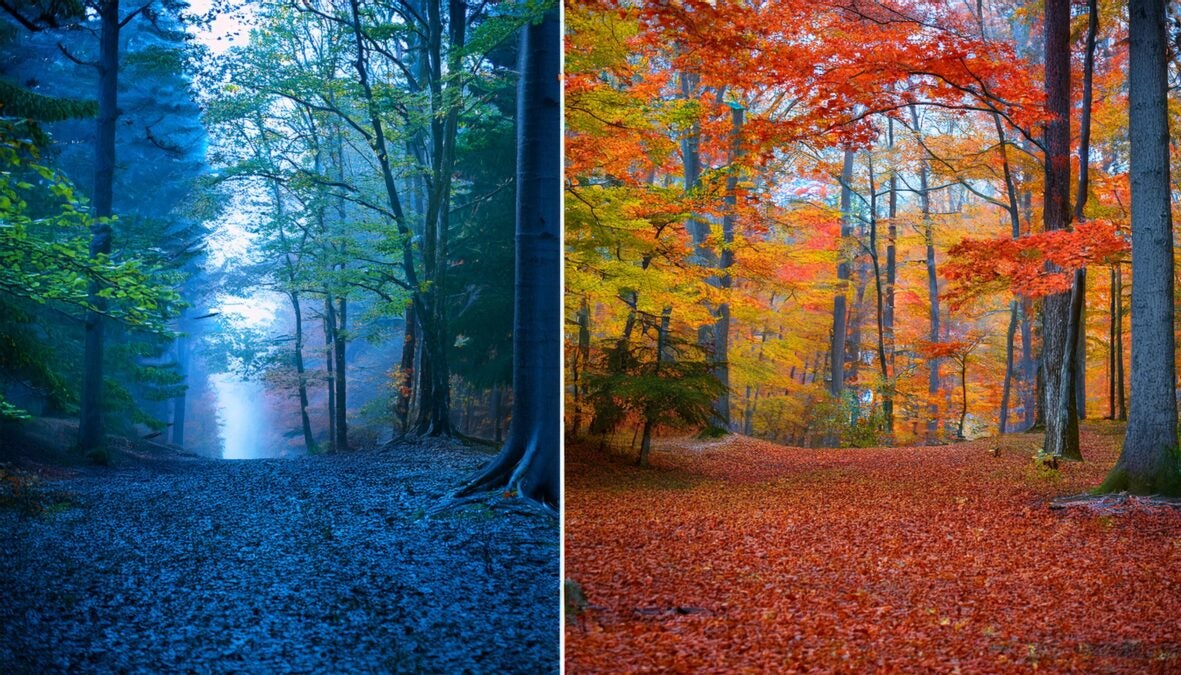
The key to deer vision lies in the photoreceptor cells within their retinas: rods and cones. Rods are responsible for low-light vision and motion detection, while cones detect color. Humans possess three types of cone cells, each sensitive to different wavelengths corresponding to red, green, and blue light. Deer, however, possess only two types of cones. Their visual system effectively sees the world in shades of yellow and blue, lacking the ability to distinguish between red and green. This means that a vibrant red apple to a human eye might appear as a muted yellowish-grey to a deer, indistinguishable from a brown branch or green foliage.
This dichromatic vision has evolved to optimize survival in their natural habitats. By lacking the ‘red’ cone, deer gain an advantage in detecting motion and discerning objects in low-light conditions, particularly during dawn and dusk when they are most active. Their eyes are also rich in rods, enhancing their sensitivity to light and movement, a crucial adaptation for detecting predators in dimly lit forests. From a technological perspective, this knowledge has profound implications for the design of surveillance equipment, camouflage patterns, and even the lighting used in wildlife research, aiming to either mimic or exploit these visual characteristics.
Ultraviolet Sensitivity: A Hunter’s Blind Spot
Perhaps the most surprising aspect of deer vision is their sensitivity to ultraviolet (UV) light. While the human eye filters out most UV wavelengths, deer possess a lens that allows significant amounts of UV light to reach their retina. This means that many natural elements and human-made materials that appear dull or invisible under UV light to us, might glow brightly to a deer. For instance, detergents commonly used in laundry contain optical brighteners that reflect UV light. A hunter’s “camo” clothing, washed in such a detergent, might appear as a glowing beacon against the natural background to a deer, completely nullifying its intended purpose.
This UV sensitivity is not just a vulnerability for hunters; it’s also a powerful tool for deer in their environment. It can help them see urine trails, which reflect UV light, or distinguish certain plants and fungi that appear differently in the UV spectrum. For tech developers, understanding this UV sensitivity has opened avenues for creating specialized coatings and fabrics that absorb UV light, making objects truly “invisible” to deer. It also informs the development of UV cameras and sensors that can reveal what deer perceive, offering unprecedented insights into their behavior and interactions with the environment.
Tech Tools for Understanding and Adapting to Deer Vision
The advent of sophisticated technology has revolutionized our ability to study and interact with the animal kingdom, and deer vision is no exception. From thermal imaging to advanced AI, these tools provide a window into how deer perceive their surroundings, allowing for more effective conservation, research, and ethical hunting practices.
Thermal Imaging: Seeing Beyond Color Perception
Thermal imaging technology offers a complete bypass of the color perception challenge. Instead of relying on visible light, thermal cameras detect infrared radiation (heat) emitted by objects. Since all living creatures, including deer, generate heat, they stand out distinctly against cooler backgrounds, regardless of ambient light conditions or camouflage. This capability is invaluable for wildlife surveys, search and rescue operations, and even for tracking injured animals, enabling observation that would be impossible with traditional optical instruments.
Modern thermal scopes and monoculars, once exclusive to military applications, are now readily available. They feature high-resolution sensors, multiple color palettes (e.g., “white hot,” “black hot,” “rainbow”) to highlight temperature differences, and often boast impressive battery life and rugged designs. For researchers, thermal imagery provides data on body temperature fluctuations, stress levels, and even herd dynamics without direct interference. For wildlife managers, it’s a critical tool for accurate population counts and monitoring movement patterns, significantly reducing the impact of human presence during data collection. The ongoing miniaturization and increased affordability of thermal sensors are pushing this technology into ever-wider applications, making it accessible to a broader range of users from professional biologists to amateur enthusiasts.
Night Vision Devices: Enhancing Low-Light Observation
While thermal imaging “sees” heat, night vision technology amplifies ambient light, making visible what is otherwise shrouded in darkness. Deer are most active during crepuscular hours (dawn and dusk) and throughout the night, making traditional observation challenging. Night vision devices, ranging from classic image intensifier tubes to digital night vision cameras, address this by collecting even minute amounts of available light (from stars, the moon, or distant artificial sources) and intensifying it to create a visible image.
Digital night vision, in particular, has seen rapid advancements. Unlike older analog systems that produce a characteristic green image, digital night vision often offers full-color observation in low light, sometimes even recording video and capturing still images. These devices are frequently integrated with other sensors, like rangefinders or GPS, to provide a comprehensive situational awareness suite. For understanding deer behavior, night vision enables continuous, unobtrusive monitoring of feeding patterns, social interactions, and predator avoidance strategies during their most active periods. This allows researchers to gather data that would otherwise be unattainable, offering richer insights into deer ecology and behavior without disturbing their natural rhythms.

AI and Machine Learning in Wildlife Monitoring
The true revolution in wildlife observation comes with the integration of Artificial Intelligence (AI) and Machine Learning (ML). These computational powerhouses can analyze vast datasets from thermal, night vision, and standard cameras, automating tasks that would be impossible for human observers. AI algorithms can be trained to recognize specific animal species, count individuals, track their movements, and even detect subtle behavioral anomalies.
For deer monitoring, AI-powered camera traps can automatically distinguish deer from other animals, filter out false triggers caused by environmental factors (like swaying branches), and immediately process images or video clips. This not only saves countless hours of manual review but also provides more accurate and consistent data. Machine learning models can analyze long-term patterns to predict migration routes, identify high-risk areas for disease transmission, or even forecast population changes based on environmental indicators. Furthermore, AI can assist in analyzing the effectiveness of different camouflage patterns or lighting strategies by processing images of deer reacting to various stimuli. This advanced analytical capability is transforming wildlife management from reactive intervention to proactive, data-driven decision-making, offering deeper insights into the complex interactions between deer and their environments.
The Impact of Tech on Hunting and Wildlife Management
The detailed understanding of deer vision, amplified by technological advancements, has tangible implications for both recreational hunting and professional wildlife management. It allows for more ethical practices, improved conservation outcomes, and a richer understanding of deer populations.
Gear Design and Camouflage Evolution
The knowledge of deer dichromatic and UV-sensitive vision has directly influenced the design of hunting gear, particularly camouflage clothing and accessories. Gone are the days when any green or brown pattern was considered effective. Modern camouflage patterns are scientifically developed not only to break up the human silhouette but also to do so in a way that minimizes contrast against the blue and yellow spectrum that deer perceive. This involves carefully selecting colors and patterns that blend seamlessly, even to a deer’s specific visual limitations.
Beyond patterns, materials science plays a crucial role. Fabrics are now engineered to absorb UV light rather than reflect it, ensuring that clothing doesn’t “glow” to a deer. Scent-control technologies, often integrated into fabrics, further reduce human presence by minimizing odors that deer detect with their acute sense of smell. Similarly, advancements in optics—from rangefinders with specialized coatings to binoculars designed for low-light performance—are tailored to provide hunters with a clearer view while minimizing any visual cues that might alert deer. The integration of GPS, weather sensors, and ballistic calculators into hunting apps further enhances efficiency and safety, demonstrating a holistic approach to adapting human tools to the deer’s sensory world.
Smart Tracking and Population Analysis
Beyond individual gear, technology offers powerful tools for comprehensive wildlife management. GPS collars, once bulky and limited, are now miniaturized, long-lasting, and can transmit data in real-time via satellite or cellular networks. These devices provide invaluable insights into deer movement patterns, home ranges, habitat use, and migratory routes. By integrating this GPS data with geographic information systems (GIS), wildlife managers can visualize and analyze complex spatial relationships, identifying critical habitat corridors, pinch points, and areas of human-wildlife conflict.
Drone technology, equipped with thermal cameras and high-resolution optical sensors, offers a cost-effective and less intrusive method for conducting large-scale population surveys. Drones can cover vast areas quickly, providing accurate counts and even assessing the health of individual animals from a safe distance. Combined with AI-powered image analysis, this creates robust datasets for understanding population dynamics, reproductive success, and the impact of environmental changes. These smart tracking and analysis systems allow wildlife agencies to make informed decisions about hunting quotas, habitat restoration projects, and disease management strategies, all aimed at ensuring sustainable deer populations and ecosystem health.
Future Innovations: Pushing the Boundaries of Perception
The trajectory of technological advancement suggests even more sophisticated tools are on the horizon, promising deeper insights and more effective interactions with deer and other wildlife.
Augmented Reality for Wildlife Observation
Imagine wearing a pair of smart glasses that overlay real-time data onto your field of view, or even simulate deer vision. Augmented Reality (AR) has the potential to transform wildlife observation by allowing users to “see” through the eyes of a deer. AR devices could process live camera feeds, filter them to simulate dichromatic vision, and even highlight areas of UV reflection, giving human observers an unparalleled understanding of how a deer perceives its immediate environment. This could be invaluable for educational purposes, teaching new hunters about effective camouflage, or for researchers needing to understand specific visual cues deer respond to. Furthermore, AR could display real-time data from tracked animals, such as their precise location, body temperature, or even behavioral alerts, directly within the user’s line of sight, creating an immersive and highly informative experience.

Advanced Sensor Technology
The development of new sensor types will continue to push the boundaries of what we can detect. Hyperspectral imaging, for example, can capture light across hundreds of narrow bands, revealing subtle differences in material composition that are invisible to the human eye and even traditional cameras. Applied to wildlife, hyperspectral sensors could differentiate between individual deer, assess their health status based on coat reflectivity, or even detect specific plant species they are foraging on. Similarly, miniaturized bio-sensors could be deployed non-invasively to monitor deer physiology, stress levels, and even early signs of disease, transmitting data wirelessly. The combination of these advanced sensors with sophisticated AI processing promises a future where our understanding of deer vision and behavior is not just enhanced, but fundamentally transformed, leading to more profound insights into these magnificent creatures and their vital role in our ecosystems.
aViewFromTheCave is a participant in the Amazon Services LLC Associates Program, an affiliate advertising program designed to provide a means for sites to earn advertising fees by advertising and linking to Amazon.com. Amazon, the Amazon logo, AmazonSupply, and the AmazonSupply logo are trademarks of Amazon.com, Inc. or its affiliates. As an Amazon Associate we earn affiliate commissions from qualifying purchases.