
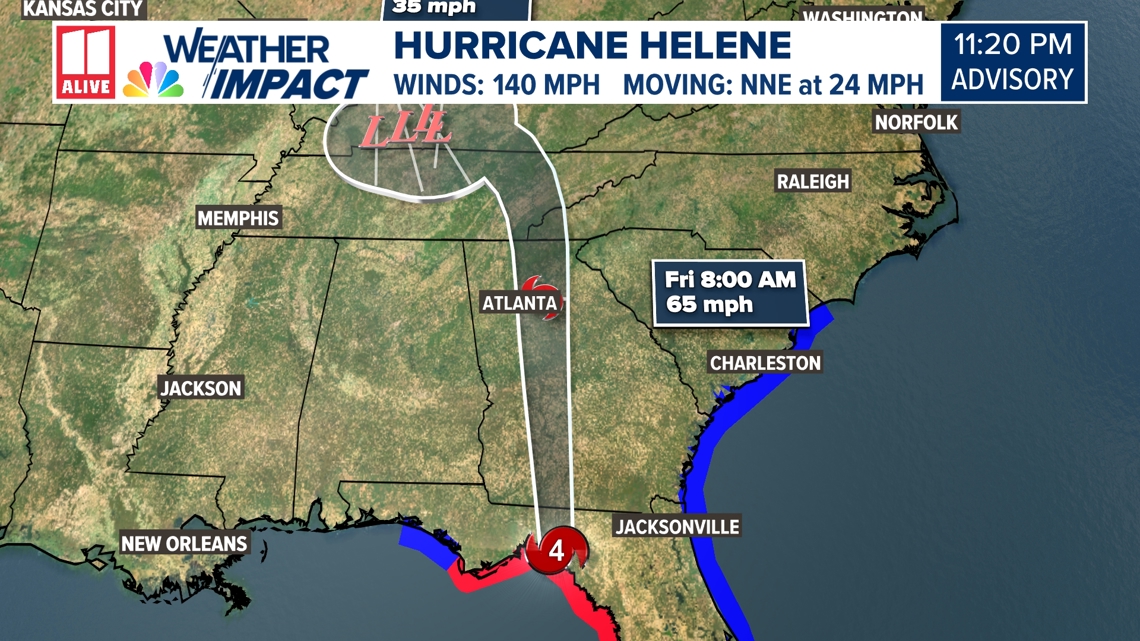
Hurricane Helene’s trajectory through the state of Georgia was not merely a meteorological event; it was a profound economic shock. As the storm moved from the Florida panhandle through South Georgia and into the Central and Northern regions, it left behind a trail of financial devastation that will take years to reconcile. For investors, business owners, and policymakers, understanding the specific cities affected and the subsequent fiscal repercussions is essential for navigating the state’s economic future. From the agricultural heartlands of Valdosta and Moultrie to the logistics hubs of Savannah and the corporate center of Atlanta, the financial toll of Hurricane Helene is a complex study in risk management, insurance volatility, and regional economic resilience.

The Immediate Financial Toll: Property Devaluation and Infrastructure Costs
The first and most visible financial impact of Hurricane Helene involves the massive destruction of physical assets. In the wake of the storm, the immediate focus for cities like Valdosta, Augusta, and Waycross has been the assessment of property damage and the mobilization of emergency capital.
Real Estate Markets in South and Central Georgia
In cities such as Valdosta, which bore the initial brunt of the storm’s inland strength, the residential and commercial real estate markets have faced a significant short-term shock. When a natural disaster of this magnitude strikes, property values in the direct path often see a temporary stagnation or decline as buyers reassess the risk of the area. For South Georgia, where the economy is tightly knit with land value, the destruction of homes and commercial storefronts translates to a loss of equity for thousands of residents.
Furthermore, the surge in insurance claims following Helene is expected to exert upward pressure on premiums across the state. In the financial sector, this is known as “risk repricing.” As insurers adjust their models to account for the increased frequency and intensity of inland storm damage in Georgia, the cost of owning property in these cities will rise, potentially impacting the long-term affordability of the region.
Municipal Budgeting and Emergency Recovery Funds
For municipal governments in cities like Augusta and Douglas, the financial strain is twofold: the loss of tax revenue from shuttered businesses and the overwhelming cost of debris removal and infrastructure repair. Georgia’s smaller cities often operate on lean budgets with limited contingency funds. The arrival of Hurricane Helene necessitated an immediate reallocation of capital toward emergency services and utility restoration.
While federal assistance through FEMA provides a critical safety net, the lag time between expenditure and reimbursement can create a liquidity crisis for local governments. This “capital gap” often leads to the issuance of municipal bonds or the tapping of emergency credit lines, increasing the long-term debt service obligations of these cities. The financial health of these municipalities depends heavily on their ability to manage these sudden outflows while maintaining essential services.
Disruptions to Georgia’s Economic Engines: Agriculture and Logistics
Georgia’s economy is anchored by its diverse industries, particularly agriculture and global logistics. Hurricane Helene’s path directly intersected with some of the state’s most profitable sectors, leading to massive losses in projected revenue and a ripple effect throughout the regional supply chain.
The Impact on South Georgia’s Agricultural Output
Georgia is a national leader in the production of poultry, pecans, cotton, and timber. Cities like Tifton, Moultrie, and Bainbridge serve as the commercial hubs for these industries. Helene struck at a critical time in the harvest cycle for many of these commodities. For pecan growers, the high winds meant the loss of decades-old trees, representing a permanent loss of capital rather than a single-season crop failure.
In financial terms, this represents a massive “impairment of assets.” A pecan grove takes years to reach maturity; thus, the destruction caused by Helene is a multi-year hit to the agricultural GDP of Georgia. Similarly, the poultry industry faced significant losses in infrastructure, such as broiler houses, leading to supply contractions that could drive up regional prices and reduce the profit margins of agribusinesses operating in the state.
Supply Chain Bottlenecks in the Port of Savannah and Logistics Hubs
While the coastal city of Savannah was spared a direct hit by the eye of the storm, its financial sector remained on high alert due to its role as a global logistics powerhouse. The Port of Savannah is one of the busiest in the United States. Hurricane Helene caused significant logistical disruptions as inland flooding and wind damage hampered the rail and trucking networks that move goods from the coast to the rest of the country.

For the logistics and warehousing industries concentrated around Savannah and Garden City, “operational downtime” is the primary financial threat. Every hour that the port or its connecting arteries are closed results in millions of dollars in lost throughput and increased demurrage costs for shipping companies. This highlights the vulnerability of Georgia’s “Money” infrastructure—the physical systems that facilitate the flow of capital and goods.
Business Continuity and the Cost of Operational Downtime
For the average business owner in affected cities like Macon or Statesboro, the financial impact of a hurricane is measured in “days of lost revenue.” Business continuity is a major theme in corporate finance, and Helene served as a stark reminder of the importance of disaster preparedness.
Financial Struggles for Small Businesses in Affected Zones
Small and medium-sized enterprises (SMEs) are the backbone of Georgia’s local economies. In the aftermath of Helene, many businesses in downtown areas faced prolonged power outages and physical damage. Unlike large corporations with diversified revenue streams, a local retailer in a city like Waycross relies on daily foot traffic and local liquidity.
When a city is paralyzed by a storm, the “velocity of money”—the rate at which money is exchanged in an economy—slows to a crawl. For many small business owners, the inability to operate for even one week can lead to a cash flow crisis, making it difficult to meet payroll or satisfy debt obligations. This often leads to a reliance on Small Business Administration (SBA) loans, which, while helpful, add to the long-term debt burden of the local business community.
The Role of Business Interruption Insurance
A critical component of business finance in the wake of Helene is the utilization of Business Interruption (BI) insurance. This financial tool is designed to replace lost income and cover operating expenses when a business is forced to close due to a covered peril. However, the complexities of these policies often lead to legal and financial disputes.
In Georgia, the “Money” niche following the storm is heavily focused on the claims adjustment process. Businesses must meticulously document their financial losses to secure the payouts necessary for survival. For those without adequate coverage, the storm represents an existential threat to their financial viability. This underscores a growing trend in corporate finance: the necessity of integrating climate risk into every facet of a company’s financial planning.
Long-Term Investment Outlook: Rebuilding and Resilience Capital
Despite the immediate financial devastation, the recovery process also triggers a massive infusion of capital into the state. The “rebuilding economy” represents a significant shift in where and how money flows within Georgia’s borders.
Shifts in Regional Investment Strategy
In the long term, investors are looking at how cities like Atlanta and its surrounding metropolitan areas manage the influx of residents and businesses that may migrate from more vulnerable coastal or rural areas. While Atlanta did not face the same level of physical destruction as South Georgia, its financial sector serves as the nerve center for the state’s recovery.
We are seeing a shift toward “resilience investing.” This involves allocating capital toward infrastructure that can withstand future climate events. For Georgia, this means investment in grid modernization, better drainage systems, and reinforced commercial construction. From a financial perspective, these investments are seen as a way to protect “Net Present Value” (NPV) by reducing future risk-adjusted costs.
Federal Aid and the Infusion of Rebuilding Capital
The declaration of federal disaster areas across dozens of Georgia counties unlocks billions of dollars in federal aid. This capital infusion acts as a stimulus for the construction and retail sectors. As residents in cities like Augusta and Valdosta begin to rebuild, there is a surge in demand for materials, labor, and professional services.
While the circumstances are tragic, the economic reality is that this rebuilding phase contributes to a temporary spike in local GDP. Contractors, hardware suppliers, and engineering firms see a significant increase in revenue. However, the challenge for the state’s financial health is ensuring that this capital is used efficiently to build back “better”—creating a more resilient economic foundation that can withstand the next inevitable storm.
In conclusion, Hurricane Helene’s impact on Georgia’s cities is a multi-faceted financial event. It has disrupted the agricultural and logistics sectors, strained municipal budgets, and challenged the survival of small businesses. Yet, through the mobilization of insurance capital, federal aid, and private investment, the state is entering a phase of economic reconstruction. For those tracking the “Money” in Georgia, the focus now shifts from loss mitigation to the strategic allocation of resources required to rebuild a more robust and resilient regional economy.
aViewFromTheCave is a participant in the Amazon Services LLC Associates Program, an affiliate advertising program designed to provide a means for sites to earn advertising fees by advertising and linking to Amazon.com. Amazon, the Amazon logo, AmazonSupply, and the AmazonSupply logo are trademarks of Amazon.com, Inc. or its affiliates. As an Amazon Associate we earn affiliate commissions from qualifying purchases.