
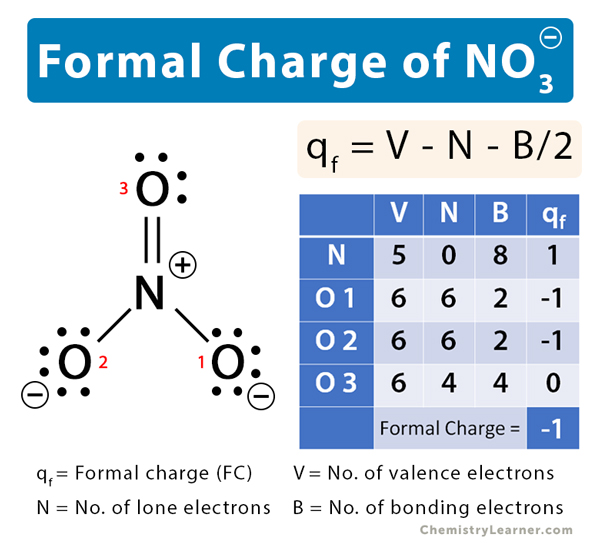
In the realm of chemistry, the question “what charge does NO3 have?” yields a straightforward answer: it is the nitrate ion, carrying a formal charge of -1. However, in the rapidly evolving landscape of modern technology, this single negative charge represents much more than a classroom fact. It is the fundamental signal processed by high-tech sensors, the data point analyzed by AI-driven agricultural platforms, and the catalyst for innovations in environmental monitoring software.
As we transition into an era of “Smart Everything,” understanding the behavior of ions like NO3⁻ has moved from the laboratory beaker to the digital dashboard. This article explores how the electrochemical properties of the nitrate ion are being harnessed through cutting-edge hardware and software to drive efficiency in industry, agriculture, and environmental protection.
The Digital Signal: How Technology Translates the -1 Charge
At its core, the “charge” of NO3 is a piece of information. To a technologist, that -1 charge is a potential difference that can be measured, quantified, and digitized. The bridge between the physical world and the digital world is built on sensor technology.
Ion-Selective Electrodes (ISE) and Potentiometric Sensing
The most common way tech interfaces with the NO3 ion is through Ion-Selective Electrodes (ISE). These are sophisticated transducers that convert the activity of a specific ion dissolved in a solution into an electrical potential. Because NO3 has a negative charge, it interacts with a specialized membrane within the sensor, creating a voltage change that is proportional to the concentration of the nitrate present.
Modern ISEs are no longer just glass tubes connected to a voltmeter. Today’s “Smart Sensors” include integrated circuits (ICs) that handle signal conditioning, temperature compensation, and analog-to-digital conversion right at the source. This ensures that the -1 charge of the nitrate ion is translated into a clean, digital data packet ready for processing by cloud-based systems.
Optical Sensing and Spectrophotometry
Beyond electrochemical methods, technology has advanced into the realm of UV-Vis spectrophotometry. Nitrate ions absorb ultraviolet light at specific wavelengths (typically around 200–220 nm). High-tech optical sensors use LED light sources and photodetectors to measure this absorbance. By leveraging the physical properties associated with the NO3 molecule, software algorithms can calculate concentrations with extreme precision, bypassing the need for chemical reagents. This represents a major trend in “Green Tech,” where hardware is designed to monitor the environment without contributing additional chemical waste.
AI and Machine Learning: From Nitrate Data to Actionable Insights
Identifying that NO3 has a -1 charge is the start of the data pipeline. The real value lies in how Artificial Intelligence (AI) and Machine Learning (ML) interpret the fluctuations in nitrate levels across various ecosystems.
Predictive Modeling for Precision Agriculture
Nitrate is a critical component of fertilizers, yet its mobility in soil—driven by its negative charge which prevents it from sticking to negatively charged soil particles—makes it prone to leaching. Agri-Tech platforms now utilize ML models to predict nitrate runoff. By feeding variables such as soil moisture, temperature, historical fertilization patterns, and real-time sensor data into a neural network, these platforms can tell a farmer exactly when and where to apply fertilizer.
This tech stack doesn’t just monitor the “charge”; it manages the economic and environmental impact of that charge. Companies like John Deere and various Ag-Tech startups are integrating these AI models into autonomous tractors, allowing for variable-rate application (VRA) that saves millions of dollars in input costs while protecting local waterways.
Neural Networks in Water Treatment Automation
In municipal water treatment, NO3 levels must be strictly controlled to prevent health issues like methemoglobinemia. Tech-driven treatment plants now use “Digital Twins”—virtual replicas of the physical plant—to simulate how different treatment protocols will affect nitrate levels. Using deep learning, these systems can predict spikes in nitrate from industrial discharge or heavy rainfall, automatically adjusting the biological denitrification process. The software ensures that the -1 charge of the nitrate ion is neutralized by bacterial action at the optimal rate, maximizing energy efficiency.
The IoT Ecosystem: Real-Time Monitoring and Digital Security
The internet of things (IoT) has revolutionized how we track chemical ions. A single sensor in a field or a river is useful, but a network of thousands of sensors provides a “High-Definition” view of environmental health.

Wireless Sensor Networks (WSN)
Modern nitrate monitoring utilizes WSNs that rely on Low Power Wide Area Network (LPWAN) technologies like LoRaWAN or NB-IoT. These gadgets are designed to live in the field for years, powered by solar panels or high-density batteries. They “wake up” periodically to measure the nitrate concentration, transmit the data to a gateway, and go back to sleep.
The technical challenge here lies in the “fouling” of the sensors. Technological innovation in this niche includes self-cleaning mechanisms and “drift-correction” software. Since NO3 sensors can lose accuracy over time, edge computing—processing data locally on the device—is used to recalibrate the sensor based on environmental metadata, ensuring the reported -1 charge remains a reliable metric.
Digital Security and Data Integrity
As nitrate monitoring becomes part of critical infrastructure (such as national water grids), digital security becomes paramount. An adversary who manipulates nitrate data could cause a treatment plant to under-process water, leading to public health crises.
Consequently, the tech niche surrounding nitrate monitoring now includes blockchain for data provenance and end-to-end encryption for sensor-to-cloud communication. Ensuring that the data point “NO3 concentration: 10mg/L” is authentic and untampered with is a growing sub-sector of industrial cybersecurity.
Software Solutions for Chemical Analysis and Simulation
For researchers and industrial chemists, the question of NO3’s charge is explored through the lens of computational chemistry and Laboratory Information Management Systems (LIMS).
Molecular Modeling Tools
Software such as Gaussian or Schrödinger allows scientists to simulate how the -1 charge of the nitrate ion interacts with new catalysts or filtration membranes at a quantum level. This “In Silico” testing speeds up the development of new technologies for nitrate removal. By simulating the electrostatic potential maps of NO3, engineers can design “molecular traps” that are perfectly tuned to the size and charge of the ion, leading to more efficient water filters and chemical sensors.
Cloud-Based LIMS and Data Visualization
In the corporate world, managing the vast amounts of data generated by nitrate testing requires robust software architecture. Cloud-based LIMS platforms allow global teams to collaborate on chemical analysis. These tools take raw data—often starting with the electrochemical signal of the -1 charge—and turn it into comprehensive reports, trend graphs, and compliance documentation. The integration of “Big Data” analytics allows companies to spot long-term trends in nitrate usage, facilitating better corporate responsibility and ESG (Environmental, Social, and Governance) reporting.
Future Frontiers: Nanotechnology and Quantum Sensing
As we look toward the future, the technology used to detect and manipulate the nitrate ion is becoming increasingly miniaturized and sophisticated.
Graphene-Based Nano-Sensors
The next generation of tech involves nanotechnology. Graphene, with its high electrical conductivity and large surface area, is being used to create “Lab-on-a-Chip” devices. These chips can detect a single nitrate ion by measuring the minute change in electrical impedance when the NO3⁻ charge touches a functionalized graphene sheet. This level of sensitivity was unthinkable a decade ago and promises a future where every household tap could have a built-in, real-time nitrate sensor.
Edge Computing and Real-Time Flux Analysis
The trend is moving away from simple “concentration” measurements toward “flux” analysis. By combining nitrate sensors with acoustic Doppler current profilers (which measure water flow), edge computing devices can calculate the total mass of nitrate moving through a river system in real-time. This requires high-speed data processing and sophisticated algorithms, representing the pinnacle of environmental tech integration.

Conclusion: More Than Just a Negative Charge
While “what charge does NO3 have” is a foundational chemistry question, the answer—a -1 charge—serves as the backbone for an entire ecosystem of modern technology. From the hardware that detects the ion’s physical presence to the AI that predicts its movement through the soil, and the digital security that protects the resulting data, the nitrate ion is a vital component of the 21st-century tech landscape.
As we continue to face global challenges in food security and water quality, our ability to digitize, analyze, and react to the charge of NO3 will be a defining factor in our technological progress. The future of environmental management is digital, and it is powered by the seamless integration of electrochemical science and advanced computing.
aViewFromTheCave is a participant in the Amazon Services LLC Associates Program, an affiliate advertising program designed to provide a means for sites to earn advertising fees by advertising and linking to Amazon.com. Amazon, the Amazon logo, AmazonSupply, and the AmazonSupply logo are trademarks of Amazon.com, Inc. or its affiliates. As an Amazon Associate we earn affiliate commissions from qualifying purchases.