
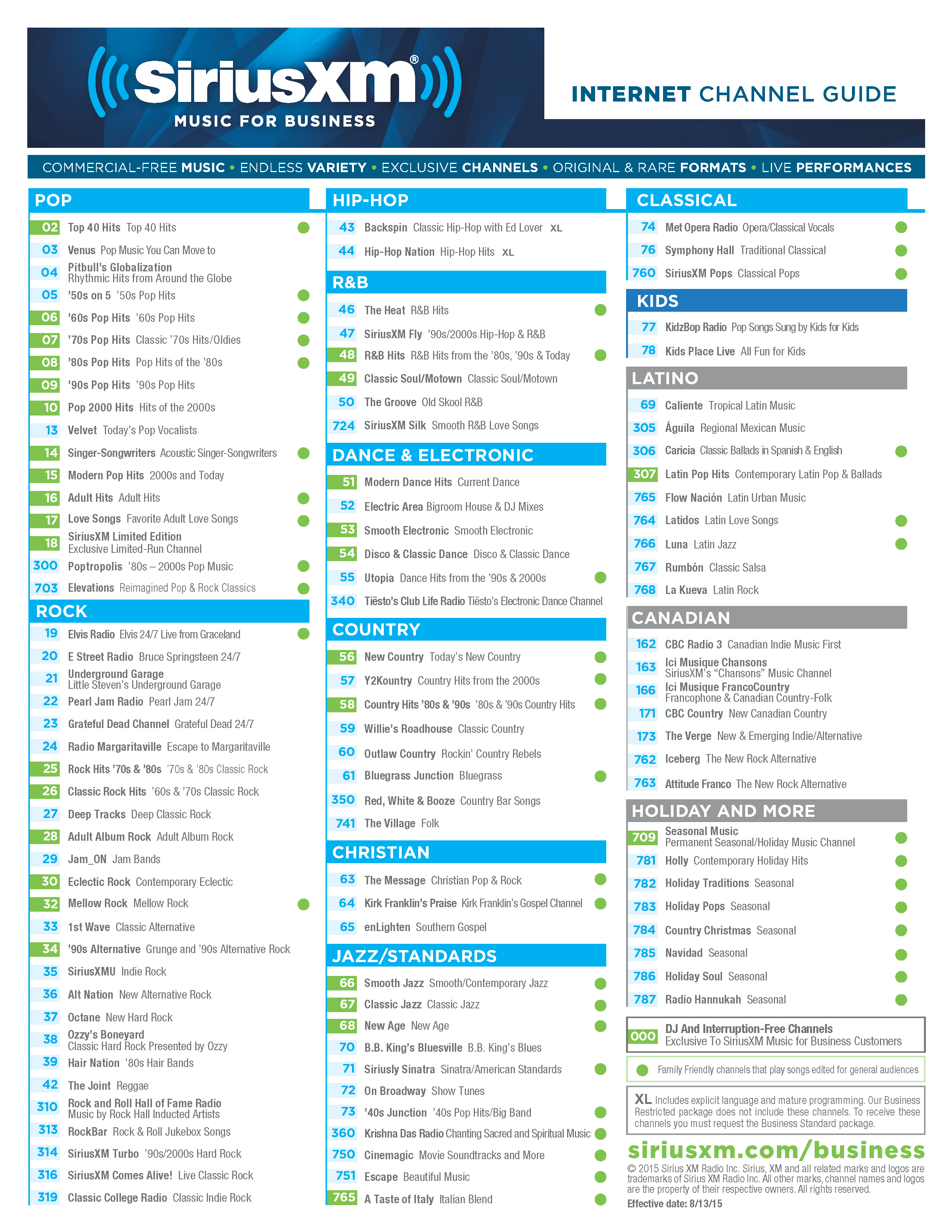
The landscape of modern audio entertainment has undergone a radical transformation, moving from the localized limitations of AM/FM signals to the global reach of satellite and IP-based streaming. When consumers ask “what channels are on Sirius Radio,” they are not just looking for a list of music stations; they are engaging with a complex technological ecosystem that delivers high-fidelity content across massive geographical footprints. SiriusXM, the titan of this industry, operates a sophisticated network that bridges the gap between hardware-based satellite reception and software-driven digital streaming.
Understanding the channel lineup requires a look at the underlying technology that enables this delivery. Unlike traditional radio, which relies on terrestrial towers with limited range, SiriusXM utilizes a constellation of satellites in both Geostationary Orbit (GEO) and Highly Elliptical Orbit (HEO). This infrastructure allows for hundreds of specialized channels to be broadcasted simultaneously, ensuring that whether a user is in a remote desert or a dense urban center, the digital signal remains constant.
The Evolution of Satellite Radio Architecture
The “channels” available on Sirius Radio are more than just audio streams; they are data packets delivered via the Satellite Digital Audio Radio Service (SDARS) spectrum. This technology allows for a high degree of multiplexing, where multiple audio and data channels are bundled into a single satellite transponder’s signal.
SDARS Technology and Signal Delivery
The core of the SiriusXM experience is the S-band spectrum, operating between 2.320 and 2.345 GHz. This frequency range is ideal for mobile reception because it can penetrate various atmospheric conditions with minimal degradation. When a user tunes to a specific channel, the receiver de-multiplexes the incoming bitstream, extracting the specific audio data associated with that channel ID. This process is governed by proprietary codecs designed to maximize audio quality while minimizing bandwidth consumption—a critical balance when managing over 150 satellite channels.
Terrestrial Repeaters and Urban Coverage
One of the primary challenges for satellite technology is the “urban canyon” effect, where skyscrapers block the line-of-sight to the satellite. To counter this, SiriusXM utilizes a network of ground-based terrestrial repeaters. These repeaters receive the satellite signal and rebroadcast it on the same frequency within city centers. The hardware in a vehicle or portable receiver is designed to seamlessly switch between the satellite signal and the terrestrial signal using a process called spatial diversity. This ensures that the channel list remains uninterrupted, regardless of the physical environment.
Navigating the SiriusXM Channel Lineup: From Music to Data Services
The SiriusXM channel lineup is categorized by content type, but from a technical perspective, these categories represent different tiers of data allocation. High-fidelity music channels generally receive higher bitrates, while news and talk channels are optimized for voice clarity to conserve bandwidth.
Audio Entertainment Categories
The music selection on SiriusXM is vast, covering every conceivable genre from the 1940s to modern indie pop. Channels like ’60s on 6, ’70s on 7, and Lithium (90s Grunge/Alt) are staples of the platform. However, the tech-heavy aspect lies in the “Xtra” channels available via the app and specialized receivers. These channels use IP-delivery to provide even more granular genre selections, such as “Coffee House Instrumental” or “Chillhop,” which are not broadcast via satellite due to bandwidth constraints.
In the realm of news and talk, the platform hosts heavy hitters like Howard Stern (Channels 100 and 101), which are exclusive to the service. The integration of major news networks—CNN, FOX News, MSNBC, and the BBC—ensures that users have access to global information in real-time. The technology enables these channels to feature “TuneStart” capabilities on compatible devices, which automatically starts a song or segment from the beginning when a user switches to that channel.
Beyond Audio: Data Services for Marine and Aviation
What many consumers do not realize is that the SiriusXM channel list extends beyond entertainment into critical data services. For the marine and aviation industries, SiriusXM provides specialized data channels that deliver high-resolution weather overlays, sea surface temperatures, and lightning strike data directly to cockpit and bridge displays. This is not delivered via a standard radio but through specialized hardware (like the Garmin GDL series) that interprets the data packets sent over the satellite stream. These “channels” are vital for navigational safety, showcasing the platform’s versatility beyond simple consumer audio.

The Convergence of Satellite and Streaming: The SiriusXM App Experience
As the industry shifts toward a “mobile-first” mentality, the distinction between a satellite channel and a streaming channel has blurred. The SiriusXM app represents the software-side evolution of the platform, offering a suite of features that traditional satellite hardware cannot match.
Personalized Stations and Algorithm-Driven Content
The app introduces “Pandora-powered” stations, an integration following the acquisition of Pandora. This technology uses the Music Genome Project to allow users to create personalized channels based on their listening habits. While the satellite signal is a “one-to-many” broadcast (everyone hears the same thing at the same time), the app provides a “one-to-one” experience. The software tracks user skips, likes, and dislikes to curate a unique stream, essentially allowing the user to design their own “what channels are on Sirius Radio” experience.
360L: The Hybrid Infotainment Platform
The pinnacle of SiriusXM’s current technology is the 360L platform, integrated into the head units of modern vehicles. 360L combines satellite delivery with a cellular data connection. This hybrid approach allows for a massive expansion of the channel list—over 350 channels—by offloading niche content to the cellular stream while keeping high-traffic channels on the satellite stream. It also enables “On Demand” content, allowing users to browse thousands of hours of archived interviews and live performances directly from their car’s dashboard.
Hardware and Device Ecosystems: From Aftermarket to Integrated Systems
The hardware used to access SiriusXM channels has evolved from clunky, dash-mounted units to sleek, integrated software modules built into the vehicle’s “Connected Car” architecture.
OEM Integration and the Connected Car
Today, most new vehicles come equipped with a SiriusXM tuner as a standard component of the infotainment system. These systems are deeply integrated with the vehicle’s CAN bus (Controller Area Network), allowing channel information, album art, and artist alerts to be displayed on the instrument cluster or heads-up display. The technology also supports voice command integration, allowing drivers to change channels via Amazon Alexa or Google Assistant, reducing driver distraction and enhancing the user interface experience.
Portable Radios and Smart Home Integration
For listeners outside the car, hardware options include portable receivers like the Onyx EZR or home-based units that connect to Wi-Fi. Furthermore, SiriusXM has heavily invested in API integrations for smart home ecosystems. Users can access their favorite channels through Sonos systems, Roku devices, and smart speakers. This cross-platform compatibility is achieved through robust backend cloud services that manage subscription authentication and stream delivery across various hardware protocols.
Digital Security and Subscription Management in the Radio Landscape
A critical technical component of the SiriusXM platform is its conditional access system. Because the satellite signal is broadcast over the entire continent, the hardware must have a way to determine if a user is authorized to listen to specific channels.
Encryption Protocols and Signal Authorization
Each SiriusXM receiver has a unique Electronic Serial Number (ESN) or Radio ID. When a subscription is purchased, an authorization signal—often referred to as a “hit”—is broadcast via the satellites. This signal contains the ESN of the target radio and the “tier” of service they are allowed to access. The receiver’s internal firmware decrypts this signal and “unlocks” the corresponding channels. This is why a radio must be powered on and have a clear view of the sky to receive an activation signal.

Managing the Digital Footprint on Mobile Devices
On the software side, security is handled through standard digital rights management (DRM) and OAuth protocols. When a user logs into the SiriusXM app, the system validates their credentials against a central database and issues a token that allows for high-quality stream access. This digital infrastructure also allows SiriusXM to implement “Profiles,” similar to Netflix, where different family members can have their own sets of favorite channels and personalized recommendations on the same account.
As the platform continues to evolve, the answer to “what channels are on Sirius Radio” will increasingly depend on the hardware and software interface being used. From the high-tech satellite arrays in orbit to the AI-driven algorithms in the mobile app, SiriusXM represents a sophisticated fusion of traditional broadcasting and modern digital delivery. Whether it is for music, real-time news, or critical maritime weather data, the technology ensures that the content is delivered with reliability and precision.
aViewFromTheCave is a participant in the Amazon Services LLC Associates Program, an affiliate advertising program designed to provide a means for sites to earn advertising fees by advertising and linking to Amazon.com. Amazon, the Amazon logo, AmazonSupply, and the AmazonSupply logo are trademarks of Amazon.com, Inc. or its affiliates. As an Amazon Associate we earn affiliate commissions from qualifying purchases.