
The question “what channel is Paramount Plus on?” is a common one, reflecting a fundamental misunderstanding rooted in decades of traditional television consumption. In an era dominated by digital transformation, the very concept of a “channel” has evolved dramatically. Paramount Plus, like Netflix, Hulu, Disney+, and a host of others, is not a traditional linear television channel that you tune into via cable or satellite. Instead, it is a cutting-edge Over-The-Top (OTT) streaming service, delivered directly to internet-connected devices via an application.
This distinction is crucial for understanding the modern media landscape. At its core, Paramount Plus is a sophisticated piece of software, an app designed to stream vast libraries of on-demand and live content, bypassing the conventional broadcast infrastructure entirely. It operates within a complex technological ecosystem, relying on high-speed internet, powerful server farms, and a myriad of consumer devices to bring its content directly to the viewer. To truly grasp what Paramount Plus is, we must delve into the technological shifts that have redefined how we consume media, moving beyond the legacy metaphor of a “channel” and embracing the reality of a global, app-driven digital platform.

The Fundamental Shift from Traditional Channels to Streaming Platforms
The journey from linear broadcast television to on-demand streaming is a technological saga, driven by advancements in internet infrastructure, data compression, and device proliferation. Understanding this evolution is key to demystifying services like Paramount Plus.
Deconstructing the “Channel” Metaphor in the Digital Age
Historically, a “channel” referred to a specific frequency band used to transmit broadcast signals, whether over the air (OTA) via antennas, through coaxial cables, or via satellite dishes. These channels delivered a pre-programmed, linear schedule of content, meaning viewers had to watch what was on at a specific time. The technology involved analog or early digital transmission, requiring dedicated tuners and infrastructure.
In stark contrast, Paramount Plus operates purely over the internet, leveraging broadband connections to deliver content. It doesn’t occupy a specific frequency band in the traditional sense; instead, it’s an internet-based service that utilizes network protocols to transmit data packets containing video and audio. The concept of “tuning in” is replaced by “opening an app” or “navigating to a website.” This fundamental shift means the service is platform-agnostic in its delivery mechanism, dependent only on an internet connection and a compatible device capable of running its software.
The Evolution of Content Delivery: From Broadcast to Broadband
The technological backbone enabling services like Paramount Plus is the internet itself. Early forms of content delivery were constrained by limited bandwidth and expensive data transmission. The widespread adoption of broadband internet – first DSL and cable, then fiber optics – was a game-changer. Broadband allowed for the sustained, high-volume transfer of data necessary for streaming high-quality video.
This evolution wasn’t just about speed; it was also about the democratization of access. As internet speeds increased and costs decreased, more households gained the capacity to receive large media files in real-time. Concurrent advancements in video compression technologies, such as MPEG-4 and later HEVC (H.265), played an equally critical role. These technologies allowed large video files to be compressed into smaller, more manageable streams without significant loss of visual quality, making real-time delivery over typical home internet connections feasible. The convergence of faster internet and efficient compression algorithms laid the groundwork for the streaming revolution.
The Rise of Over-The-Top (OTT) Services
“Over-The-Top” (OTT) is the technical term that best describes services like Paramount Plus. It signifies that the content is delivered “over the top” of existing internet service provider (ISP) infrastructure, bypassing traditional broadcast, cable, or satellite television providers. Rather than being bundled into a cable package, OTT services are accessed directly by consumers via dedicated applications or websites, typically requiring a separate subscription.
This model gives content providers unprecedented direct access to their audience, free from the gatekeeping and distribution costs associated with traditional distributors. For consumers, it offers unparalleled flexibility and choice, allowing them to subscribe only to the services with the content they desire, without being tied to extensive, often expensive, channel bundles. Paramount Plus, therefore, represents a complete disruption of the legacy content distribution model, leveraging the open architecture of the internet to become a direct-to-consumer digital offering.
Accessing Paramount Plus: A Multi-Platform Software Ecosystem
Paramount Plus exists not as a single channel, but as a digital application available across a vast array of internet-connected devices. Its accessibility is a testament to the power and flexibility of modern software development and cross-platform compatibility.
The App as Your Gateway
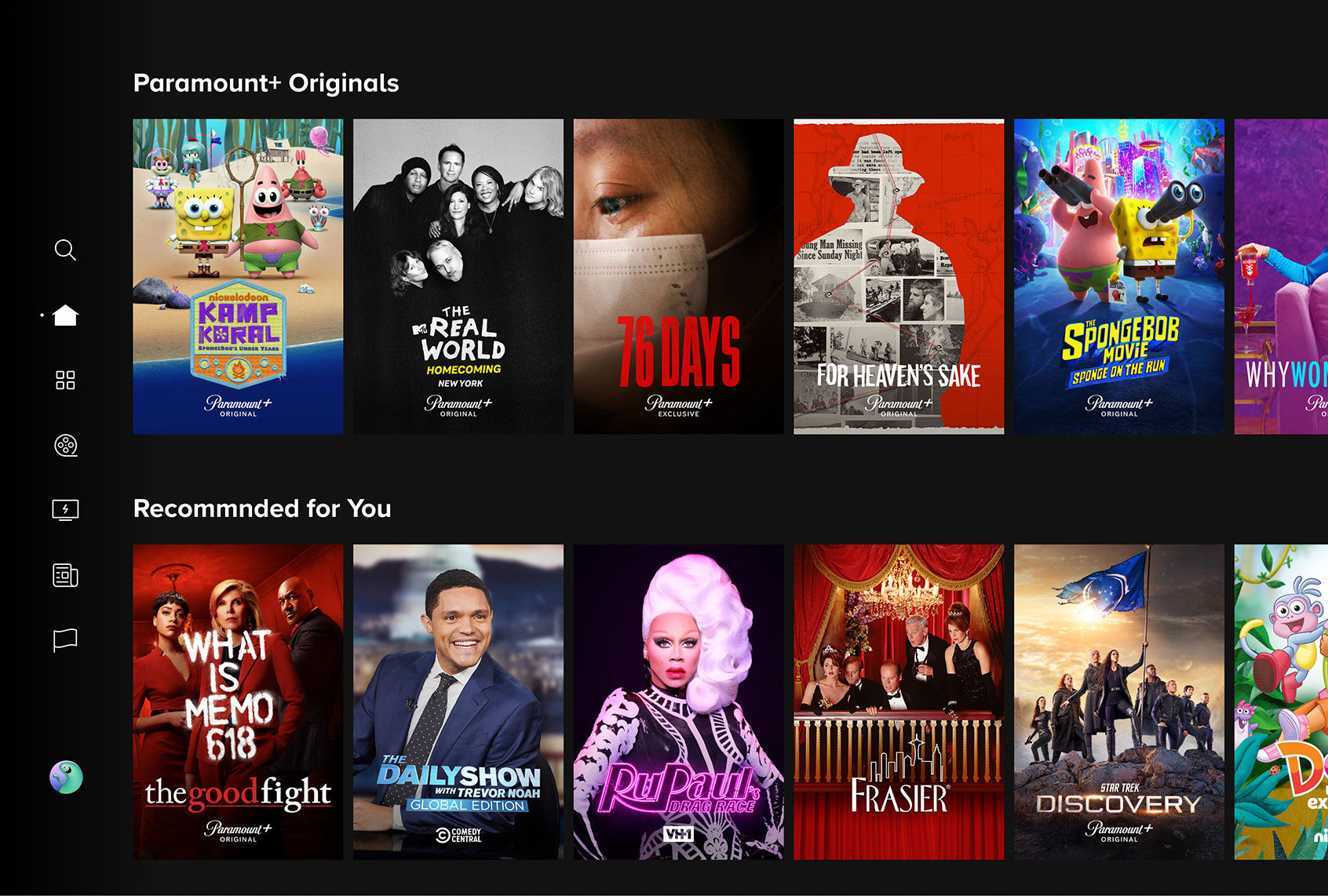
The primary method of accessing Paramount Plus is through its dedicated application. This app is a sophisticated piece of software developed for various operating systems and device types. When you launch the Paramount Plus app on your smart TV, smartphone, tablet, or streaming stick, you are interacting with a specialized program designed to:
- Authenticate your subscription credentials.
- Browse its content library.
- Request video streams from Paramount Plus’s servers.
- Buffer and Playback that video, decoding it in real-time for your display.
- Manage user profiles, watchlists, and settings.
Each version of the app—whether for iOS, Android, Roku OS, tvOS, or web browsers—is tailored to optimize performance and user experience on that specific platform, taking into account screen size, input methods, and hardware capabilities.
Supported Devices and Operating Systems
Paramount Plus’s widespread availability is a cornerstone of its strategy, ensuring that users can access their content wherever and whenever they choose. The service is available on a comprehensive list of devices, spanning several major technological categories:
- Smart TVs: Many modern smart televisions (e.g., Samsung, LG, Vizio, Sony) come with built-in app stores that allow direct download and installation of the Paramount Plus app. These TVs run proprietary operating systems (like Tizen OS, webOS, Google TV/Android TV) for which Paramount Plus develops specific app versions.
- Streaming Sticks & Boxes: Devices like Roku players, Amazon Fire TV Stick, Apple TV, and Google Chromecast are dedicated streaming hardware that plug into a TV’s HDMI port. They run their own operating systems (Roku OS, Fire OS, tvOS, Google TV) and serve as conduits for various streaming apps, including Paramount Plus.
- Mobile Devices: Paramount Plus apps are readily available for smartphones and tablets running iOS (Apple iPhones and iPads) and Android (a wide range of devices from manufacturers like Samsung, Google, OnePlus). These apps are optimized for touch interfaces and offer features like offline downloads.
- Gaming Consoles: Popular consoles such as PlayStation (PS4, PS5) and Xbox (One, Series X/S) have integrated app stores that host the Paramount Plus application, turning gaming machines into robust media centers.
- Web Browsers: For those preferring to watch on a computer, Paramount Plus is accessible directly through web browsers (Chrome, Firefox, Edge, Safari) via its official website. This web interface functions like a sophisticated web application, delivering content without requiring a separate software installation beyond the browser itself.
This broad compatibility underscores the technological imperative for streaming services: to be ubiquitous and easily accessible across the diverse hardware ecosystem of the modern consumer.
Connectivity Requirements and Best Practices
For Paramount Plus, like any streaming service, a stable and sufficiently fast internet connection is paramount. The quality of your viewing experience—from standard definition (SD) to high definition (HD) and even 4K Ultra HD—is directly tied to your internet speed.
- Minimum Requirements: Paramount Plus typically recommends a minimum download speed of 3 Mbps for standard definition content.
- HD Content: For high-definition (720p or 1080p), speeds of 5-10 Mbps are generally recommended.
- 4K Ultra HD: To stream in 4K with HDR, a consistent download speed of 15-25 Mbps or higher is advisable.
Beyond raw speed, network stability is critical. A consistent connection, often best achieved via a wired Ethernet connection for static devices like smart TVs or streaming boxes, minimizes buffering and resolution drops. For Wi-Fi, using a modern router (Wi-Fi 5 or Wi-Fi 6) on a less congested 5GHz band can significantly improve performance. Understanding these technical requirements helps users optimize their home networks for a seamless streaming experience, ensuring the underlying technology doesn’t detract from the content itself.

User Experience and Interface: Navigating a Modern Streaming App
The success of a streaming service isn’t just about its content library or technical infrastructure; it’s also profoundly influenced by the user experience (UX) and the intuitive design of its interface. Paramount Plus, as a complex software application, employs various technological features to enhance user engagement and simplify content discovery.
Personalization Through Algorithms and Profiles
One of the hallmarks of modern streaming platforms is their ability to personalize the viewing experience. Paramount Plus leverages sophisticated algorithms and data analytics to achieve this. When you create a profile and start watching content, the app collects data on your viewing habits: what you watch, how long you watch it, what you pause, what you skip, and what you search for.
This data feeds into recommendation engines, powered by machine learning, which then suggest other titles you might enjoy. These algorithms are designed to keep users engaged by presenting highly relevant content, often leading them to discover new shows or movies within the vast library. User profiles further enhance this personalization, allowing multiple household members to maintain separate viewing histories, recommendations, and parental controls, tailoring the app’s interface to individual preferences. This personalization transforms the app from a static content catalog into a dynamic, adaptive portal tailored to each user.
Features Enhancing Usability: Downloads, Watchlists, and Parental Controls
Beyond content recommendations, Paramount Plus integrates several software features designed to improve usability and convenience:
- Downloads for Offline Viewing: Many titles on Paramount Plus can be downloaded to mobile devices. This feature, enabled by robust digital rights management (DRM) and content caching technologies, allows users to watch content without an internet connection, perfect for travel or areas with poor connectivity.
- Watchlists/My List: Users can add shows and movies they intend to watch later to a personalized watchlist. This software functionality acts as a digital bookmark, making it easy to keep track of desired content across devices.
- Parental Controls: Essential for family households, parental controls are built-in software settings that allow adults to restrict access to content based on ratings, ensuring children only see age-appropriate material. These controls often require a PIN and are managed within individual user profiles.
- Continue Watching: This ubiquitous feature automatically bookmarks your progress in a show or movie, allowing you to pick up exactly where you left off, even if you switch devices. It relies on cloud synchronization to maintain your viewing state across all your logged-in Paramount Plus apps.
These features, though seemingly simple, require significant underlying software development and cloud-based infrastructure to function seamlessly across a fragmented device ecosystem.
The Role of Cloud Infrastructure in Content Delivery
Behind every smooth streaming experience lies a vast network of cloud infrastructure. Paramount Plus relies heavily on cloud computing services (such as Amazon Web Services, Google Cloud, or Microsoft Azure) to store its enormous content library, manage user data, power its recommendation engines, and deliver video streams globally.
Content is stored in secure, geographically distributed data centers. When you hit “play,” the video stream is delivered from a server that is geographically optimized for your location, minimizing latency and maximizing bandwidth efficiency. This distributed architecture, combined with Content Delivery Networks (CDNs), ensures that millions of users worldwide can access content simultaneously without experiencing slowdowns or service interruptions. The scalability of cloud infrastructure allows Paramount Plus to dynamically adjust its resources based on demand, handling peak viewing times efficiently and providing a resilient service.
The Technological Underpinnings of Streaming Quality
Delivering high-quality video efficiently across varying network conditions is a complex technical challenge. Paramount Plus, like other major streaming services, employs advanced video technologies to ensure a robust and visually pleasing experience.
Encoding, Decoding, and Adaptive Bitrate Streaming
The journey of a video from Paramount’s studios to your screen involves several crucial technological steps:
- Encoding: Raw video files are incredibly large. Before they can be streamed, they must be “encoded” into a compressed digital format (like H.264 or H.265). This process involves reducing file size while preserving as much visual information as possible. Paramount Plus typically encodes its content in multiple resolutions and bitrates (e.g., SD, HD, 4K at various quality levels).
- Adaptive Bitrate (ABR) Streaming: This is a cornerstone technology for modern streaming. Instead of sending a single, fixed-quality video stream, ABR services send multiple versions (different bitrates/resolutions) of the same content. Your Paramount Plus app constantly monitors your internet connection speed and device’s processing power. If your connection is strong, it will request a higher bitrate, higher resolution stream. If your connection degrades, it will automatically switch to a lower bitrate stream to prevent buffering, resulting in a temporary drop in quality rather than a complete stoppage. This dynamic adjustment is imperceptible to the user but critical for a smooth experience.
- Decoding: Once the compressed video stream arrives at your device, the Paramount Plus app’s built-in decoder (often accelerated by your device’s hardware) reconstructs the video and audio for playback on your screen.
This intricate dance of encoding, ABR, and decoding ensures that Paramount Plus can deliver the best possible viewing quality given the prevailing network conditions, a technological feat that distinguishes modern streaming from older, static video delivery methods.
The Importance of Digital Rights Management (DRM)
Behind every streamed piece of content lies a crucial security technology: Digital Rights Management (DRM). Paramount Plus invests heavily in DRM solutions (such as Widevine, PlayReady, or FairPlay) to protect its valuable intellectual property from piracy and unauthorized distribution.
DRM technologies encrypt the video and audio streams, ensuring that only authorized devices running legitimate Paramount Plus apps can decrypt and play the content. It also controls various aspects of content usage, such as preventing screen recording, limiting the number of simultaneous streams per account, and enforcing geographical restrictions based on licensing agreements. Without robust DRM, the economic model of streaming services would collapse, making this an invisible yet indispensable technological component.
The Future of Streaming Tech: AI, Interactivity, and Spatial Computing
The technological evolution of streaming is far from over. Future iterations of services like Paramount Plus are likely to integrate even more advanced technologies:
- AI for Enhanced Content Creation and Delivery: Artificial intelligence could play a greater role not only in content recommendations but also in optimizing video encoding, identifying audience trends for content acquisition, and even creating synthetic media elements.
- Interactivity and Personalized Narratives: Imagine shows where viewers can make choices that impact the storyline, or where AI dynamically generates personalized scenes. This level of interactivity, enabled by advanced software and real-time processing, could redefine passive viewing.
- Spatial Computing and Immersive Experiences: With the rise of virtual and augmented reality headsets, streaming services might eventually offer content in fully immersive 3D environments or blend digital content seamlessly into the physical world. This would require monumental advancements in rendering, networking, and device integration.
These burgeoning technologies highlight that streaming platforms are not just content libraries; they are dynamic software products at the forefront of digital innovation, continually pushing the boundaries of what’s possible in media consumption.
Conclusion
To ask “what channel is Paramount Plus on?” is to ask a question rooted in a bygone era. Paramount Plus is not a channel; it is a sophisticated, internet-delivered software application that serves as a gateway to a vast library of digital content. It represents the culmination of decades of technological advancement in broadband internet, video compression, cloud computing, and cross-platform software development.
From its reliance on dedicated apps and diverse device compatibility to its use of adaptive bitrate streaming, cloud infrastructure, and advanced personalization algorithms, Paramount Plus is a quintessential tech product. It embodies the paradigm shift from linear broadcast schedules to on-demand, personalized digital media consumption. Understanding this technological foundation is key to appreciating the engineering marvels that power our modern entertainment experiences and recognizing that the future of media lies firmly in the hands of innovative software and robust digital platforms.
aViewFromTheCave is a participant in the Amazon Services LLC Associates Program, an affiliate advertising program designed to provide a means for sites to earn advertising fees by advertising and linking to Amazon.com. Amazon, the Amazon logo, AmazonSupply, and the AmazonSupply logo are trademarks of Amazon.com, Inc. or its affiliates. As an Amazon Associate we earn affiliate commissions from qualifying purchases.