
In the rapidly evolving landscape of digital assets, the question of where a specific token lives is more than a technicality; it defines the asset’s utility, speed, and investment profile. For those exploring the cryptocurrency markets, XRP often stands out due to its long history and its specific focus on transforming the global financial system. To answer the fundamental question: XRP does not run on the Bitcoin blockchain or the Ethereum network. Instead, it operates on its own native, decentralized, open-source blockchain called the XRP Ledger (XRPL).
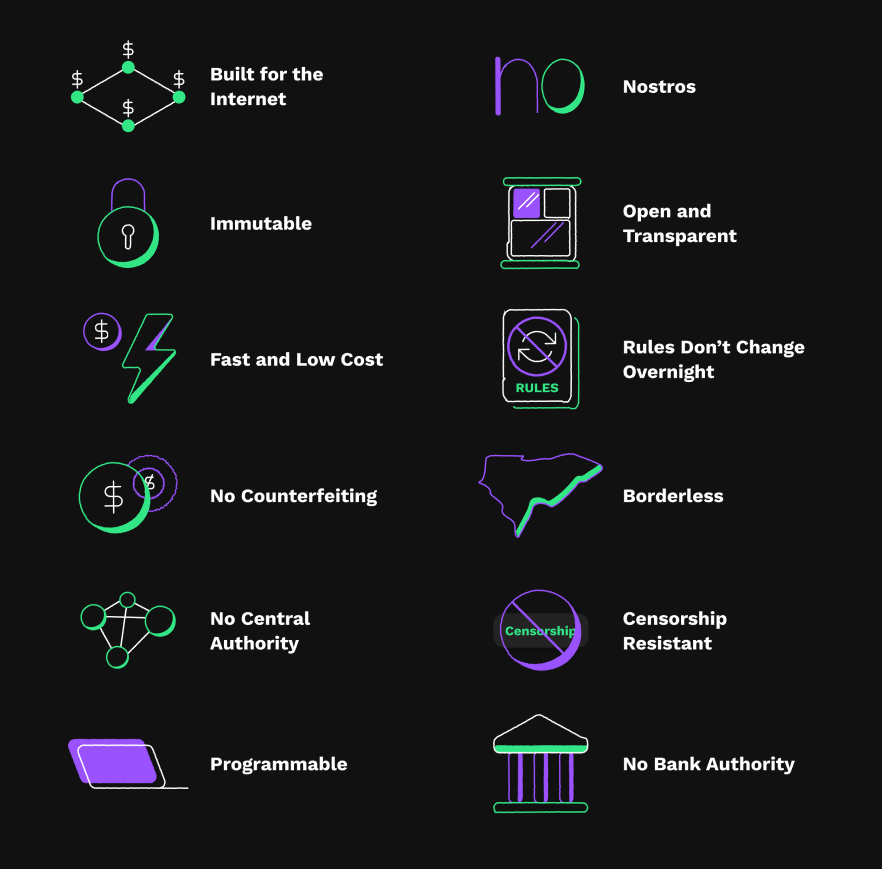
Understanding the XRP Ledger is essential for any investor or financial professional looking to grasp how digital assets are moving beyond speculation and into the realm of institutional utility. Unlike many early blockchains designed as alternative currencies or platforms for decentralized applications, the XRPL was purpose-built to solve a multi-trillion-dollar problem in the traditional banking sector: the friction, cost, and delay of cross-border payments.
The XRP Ledger (XRPL): A Deep Dive into the Protocol
The XRP Ledger is a decentralized public blockchain that was launched in 2012 by developers David Schwartz, Jed McCaleb, and Arthur Britto. While it is often associated with the company Ripple, it is crucial to understand that the ledger is independent of the corporation. The XRPL is an open-source technology that anyone can build upon, yet its architectural choices make it uniquely suited for financial transactions.
Consensus vs. Traditional Mining
One of the most significant differences between the XRPL and blockchains like Bitcoin is how transactions are verified. Bitcoin utilizes a “Proof of Work” (PoW) mechanism, which requires massive amounts of computational power to solve complex puzzles. This process is often criticized for being slow and energy-intensive.
In contrast, the XRPL uses a unique “Consensus” mechanism. Instead of miners, the network relies on a group of trusted nodes known as validators. These validators agree on which transactions are valid and in what order they should be processed. Because there is no “mining,” a transaction on the XRP Ledger can be settled in 3 to 5 seconds. From an investment perspective, this efficiency is a primary value driver, as it allows for a level of scalability and speed that traditional banking rails—and many other blockchains—simply cannot match.
Scalability and Cost Efficiency
For any financial tool to achieve global adoption, it must be cost-effective. The XRPL is designed for high throughput, capable of handling roughly 1,500 transactions per second (TPS) 24/7. When compared to Ethereum’s historical performance of 15-30 TPS, the advantage for high-volume financial institutions becomes clear.
Furthermore, the cost of a transaction on the XRPL is negligible, typically a fraction of a penny. This “dust” fee is not paid to a miner but is instead “burned,” meaning it is permanently removed from the total supply of XRP. This deflationary pressure, while subtle, is a key component of the asset’s long-term economic model. For businesses moving millions of dollars daily, replacing traditional wire fees with near-zero transaction costs represents a significant improvement in the bottom line.
XRP’s Role in Global Liquidity and Institutional Finance
The primary financial “use case” for XRP is its role as a bridge currency. To understand why this matters, one must look at the “Nostro/Vostro” system that currently governs international banking. Today, if a bank in Mexico wants to send money to a bank in the Philippines, both institutions must maintain pre-funded accounts in each other’s local currencies. This ties up trillions of dollars in stagnant capital that could otherwise be used for lending or investment.
On-Demand Liquidity (ODL)
Ripple, the enterprise software company, utilizes the XRP Ledger to power its “On-Demand Liquidity” (ODL) service. ODL allows financial institutions to swap their local currency for XRP, send that XRP across the globe in seconds, and then swap it for the destination currency on the other side.
This process eliminates the need for pre-funded accounts. By using XRP as a bridge, a bank can source liquidity “on demand.” For the financial world, this represents a shift from a “just-in-case” liquidity model to a “just-in-time” model. For investors, this utility provides a fundamental reason for the asset’s existence that is decoupled from pure retail hype. The demand for XRP in this context is driven by its ability to facilitate the movement of value.
Interoperability and Central Bank Digital Currencies (CBDCs)
As central banks around the world explore the creation of Central Bank Digital Currencies (CBDCs), the question of interoperability arises. How will a Digital Dollar move to a Digital Euro? The XRP Ledger was designed with these “Interledger” protocols in mind.
The XRPL can act as a neutral intermediary layer. Because it is not controlled by any single government or entity, it provides a “level playing field” for various national currencies to interact. This positioning makes the XRPL a critical piece of infrastructure in the “Internet of Value,” a vision where money moves as easily and instantly as information moves today.
Investing in the XRP Ecosystem: Opportunities and Risks
From a personal finance and investment standpoint, XRP occupies a unique niche. It is often categorized as an “Institutional Grade” asset. However, like any financial instrument in the digital age, it carries a specific set of dynamics that investors must navigate.
Market Volatility and Liquidity
Despite its institutional focus, XRP remains a volatile asset. Its price is influenced not only by its utility in cross-border payments but also by broader market trends, Bitcoin’s price movements, and global economic shifts. However, the XRPL boasts one of the deepest liquidity pools in the crypto space. It was the first blockchain to feature a native Decentralized Exchange (DEX) built directly into the protocol. This allows for the seamless trading of XRP and other “issued currencies” (tokens representing fiat or other assets) without the need for a centralized intermediary.
The Regulatory Landscape and Legal Precedents
One cannot discuss the financial outlook of XRP without mentioning the regulatory environment. For several years, the asset was at the center of a landmark legal battle between Ripple and the U.S. Securities and Exchange Commission (SEC). The core of the dispute was whether XRP should be classified as a security or a commodity.
In mid-2023, a significant legal ruling provided a degree of clarity that few other digital assets possess. The court determined that XRP itself is not necessarily a security, particularly when sold on public exchanges to retail investors. This distinction is vital for the “Money” category because regulatory clarity is often the prerequisite for institutional capital to enter a market. With clearer rules of engagement, XRP has become a more attractive option for diversified portfolios looking for exposure to the fintech sector.
The Future of the XRPL: Beyond Simple Payments
While the “Money” story of XRP began with payments, the evolution of the chain suggests it will play a much larger role in the broader financial stack. The XRPL is currently undergoing upgrades that will expand its capabilities far beyond simple value transfer.
Tokenization of Real-World Assets (RWAs)
One of the most significant trends in modern finance is the tokenization of Real-World Assets (RWAs). This involves taking traditional assets—such as real estate, gold, stocks, or carbon credits—and representing them as digital tokens on a blockchain.
The XRP Ledger is uniquely optimized for this. Its native “Issued Currency” feature allows any user to create a token that represents an underlying asset. Because the XRPL is fast and low-cost, it provides a more efficient secondary market for these assets. If a real estate fund is tokenized on the XRPL, investors could potentially trade fractional shares of property with the same ease they trade XRP, bringing liquidity to traditionally illiquid markets.

Smart Contracts and Sidechains
To compete with platforms like Ethereum and Solana, the XRP Ledger ecosystem is introducing “Hooks” (smart contract functionality) and the Ethereum Virtual Machine (EVM) sidechain. This is a strategic move to attract developers and decentralized finance (DeFi) protocols.
For the investor, this means the XRPL is transforming from a “payment rail” into a “comprehensive financial platform.” The introduction of automated market makers (AMMs) allows XRP holders to provide liquidity and earn a yield on their assets, similar to how one might earn interest in a high-yield savings account or through dividend-paying stocks. This adds a layer of “passive income” potential to the asset, further cementing its place in a modern financial strategy.
In summary, XRP is not just a digital token; it is the native asset of the XRP Ledger, a blockchain engineered for the specific demands of global finance. By providing a solution to the world’s liquidity problems, offering a platform for the tokenization of assets, and navigating the complexities of international regulation, the XRPL has positioned itself as a cornerstone of the future financial system. For those looking to understand where the intersection of technology and money is headed, the chain that XRP calls home is a primary area of focus.
aViewFromTheCave is a participant in the Amazon Services LLC Associates Program, an affiliate advertising program designed to provide a means for sites to earn advertising fees by advertising and linking to Amazon.com. Amazon, the Amazon logo, AmazonSupply, and the AmazonSupply logo are trademarks of Amazon.com, Inc. or its affiliates. As an Amazon Associate we earn affiliate commissions from qualifying purchases.