
Understanding how much interest you can earn in a savings account is fundamental to sound personal finance. In an era where financial decisions often feel complex, a savings account remains a cornerstone of financial security and growth for many. It’s not just about stashing money away; it’s about making that money work for you, however modestly, through the power of interest. This comprehensive guide will demystify savings account interest, helping you understand how it’s calculated, what factors influence your earnings, and how to maximize your financial growth.
Understanding the Fundamentals of Savings Account Interest
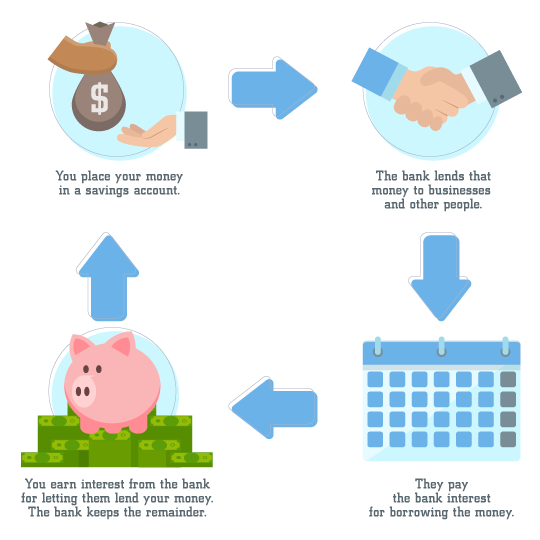
At its core, interest is the cost of borrowing money or the reward for lending it. When you deposit money into a savings account, you are essentially lending your money to the bank, and in return, the bank pays you a percentage of your deposit as interest. This seemingly simple concept has nuances that directly impact your potential earnings.
What is Interest and How is it Calculated?
Interest can be calculated in two primary ways: simple interest and compound interest.
-
Simple Interest: This is calculated only on the principal amount of your deposit. For example, if you deposit $1,000 at a 1% simple interest rate, you would earn $10 in interest per year, regardless of how long the money stays in the account. Most savings accounts do not use simple interest.
-
Compound Interest: This is the game-changer for savers. Compound interest is calculated on the initial principal and on the accumulated interest from previous periods. This means your interest earns interest, leading to exponential growth over time. Banks typically calculate interest daily, monthly, or quarterly and then add it back to your principal, leading to more significant earnings. For instance, if you earn 1% interest compounded annually on $1,000, in the first year you earn $10. In the second year, you earn 1% on $1,010, and so on. The more frequently interest is compounded, the faster your money grows.
Key Factors Influencing Interest Rates
Several macroeconomic and institutional factors play a crucial role in determining the interest rate offered on your savings account:
-
Federal Reserve (or Central Bank) Rates: The most significant influencer is the federal funds rate set by the central bank (like the Federal Reserve in the U.S.). When the Fed raises its benchmark rate, banks typically follow suit by increasing the interest rates on their savings products. Conversely, lower Fed rates usually mean lower savings rates.
-
Inflation: The rate of inflation, which is the general increase in prices and fall in the purchasing value of money, also impacts interest rates. Banks need to offer rates that, at minimum, attempt to keep pace with inflation to attract deposits. If inflation is high, your “real” return (interest earned minus inflation) might be negative, meaning your purchasing power is eroding despite earning interest.
-
Bank Competition: The competitive landscape among banks heavily influences the rates they offer. Online-only banks, with lower overhead costs, often lead the charge with higher interest rates to attract customers away from traditional brick-and-mortar institutions.
-
Account Type and Balance: Different types of savings accounts offer varying rates, and sometimes higher balances qualify for slightly better rates. Banks often reserve their best rates for high-yield accounts or those requiring significant minimum deposits.
APR vs. APY: Knowing the Difference
When comparing savings accounts, you’ll encounter two key acronyms: APR and APY. Understanding the distinction is vital for an accurate comparison.
-
APR (Annual Percentage Rate): This represents the simple annual rate of interest without taking into account the effect of compounding. It’s the straightforward percentage rate charged or earned over a year.
-
APY (Annual Percentage Yield): This is the more relevant metric for savings accounts. APY reflects the actual annual rate of return, taking into account the effect of compound interest. Because most savings accounts compound interest, the APY will always be equal to or higher than the APR. When comparing savings accounts, always look at the APY to get a true picture of your potential earnings. A bank might advertise a 0.50% APR, but if interest is compounded daily, the APY might be 0.5012%, a small but meaningful difference over time.
Types of Savings Accounts and Their Interest Potential
Not all savings accounts are created equal. Different types offer varying features, accessibility, and, critically, different interest rate potentials. Choosing the right one depends on your financial goals, liquidity needs, and risk tolerance.
Traditional Savings Accounts
These are the most common type, typically offered by brick-and-mortar banks and credit unions. While convenient, offering easy access through ATMs and branch networks, they usually offer some of the lowest interest rates. Their primary benefit lies in their accessibility and integration with other banking services like checking accounts. They are ideal for easily accessible emergency funds or short-term savings goals where immediate liquidity is more important than maximizing interest.
High-Yield Savings Accounts (HYSAs)
HYSAs have revolutionized the savings landscape. Primarily offered by online-only banks, these accounts boast significantly higher interest rates than traditional savings accounts, often 10 to 20 times greater or even more. This is because online banks have lower operating costs (no physical branches) and pass those savings onto customers in the form of better rates.
-
Pros: Much higher interest earnings, FDIC/NCUA insured (up to limits), often no monthly fees or low minimums.
-
Cons: Less direct access (no physical branches), may require linking to an external checking account for easy transfers, can sometimes have transfer limits.
They are excellent for growing an emergency fund, saving for a down payment, or any mid-to-long-term goal where you don’t need immediate physical access to your cash.
Money Market Accounts (MMAs)
Money Market Accounts often blend features of both savings and checking accounts. They typically offer higher interest rates than traditional savings accounts (though often slightly less than the highest HYSAs) and may come with limited check-writing privileges or a debit card. This makes them a flexible option for those who want better rates while retaining some transaction capabilities.
-
Pros: Better rates than traditional savings, some transactional flexibility, usually FDIC/NCUA insured.
-
Cons: Rates are variable and can fluctuate, may have higher minimum balance requirements, transaction limits (often six per month by regulation).
MMAs are a good choice for those who want a balance between competitive interest rates and some liquidity for infrequent transactions.
Certificates of Deposit (CDs)
CDs are distinct from the above in that they require you to lock up your money for a fixed period (e.g., 3 months, 1 year, 5 years) in exchange for a fixed interest rate. Generally, the longer the term, the higher the interest rate. Withdrawing funds before the term matures usually incurs a penalty, such as forfeiture of a portion of the interest earned.
-
Pros: Guaranteed fixed rate of return, typically higher rates than savings accounts, FDIC/NCUA insured.
-
Cons: Funds are illiquid (locked up), penalty for early withdrawal.
CDs are ideal for money you won’t need for a specific period, such as saving for a future large purchase, or for building a “CD ladder” to balance liquidity and higher rates.
Maximizing Your Savings Account Interest Earnings
Simply opening a savings account isn’t enough; strategic choices can significantly boost your interest earnings over time. Small changes can lead to substantial differences, especially with the power of compounding.
Comparing Rates Across Institutions
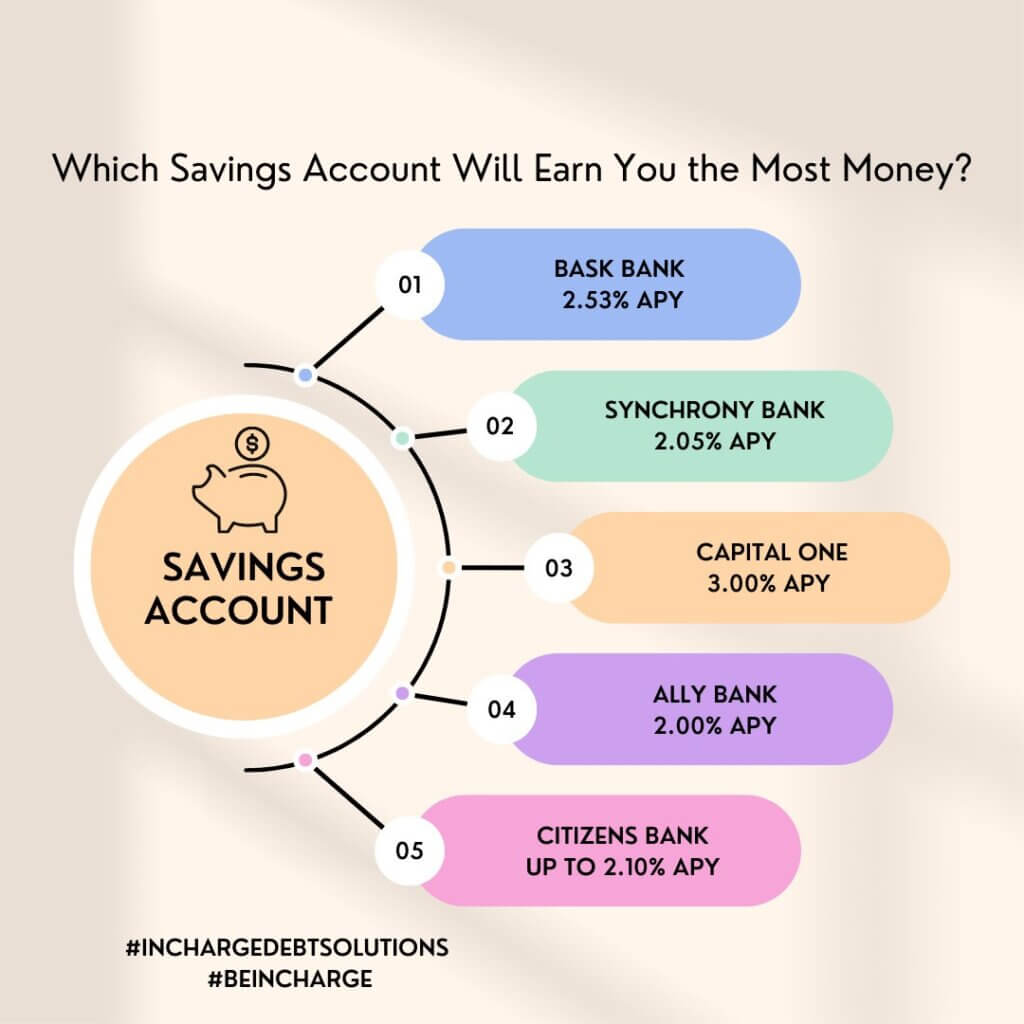
The first and most impactful step is to shop around. Don’t settle for the default savings account at your primary checking bank, especially if it’s a large traditional institution.
-
Online Banks: Regularly check rates offered by online-only banks. They consistently offer the highest APYs due to their lower operating costs. Websites specializing in financial product comparisons (e.g., Bankrate, NerdWallet) are excellent resources for finding the best current rates.
-
Credit Unions: Local credit unions can sometimes offer competitive rates, especially if you meet membership requirements. They often prioritize member benefits over shareholder profits.
-
Promotional Rates: Some banks offer introductory promotional rates for new customers. Be aware that these rates often revert to a lower standard rate after a few months.
Understanding Minimum Balance Requirements and Fees
While hunting for the highest APY, always read the fine print regarding minimum balances and fees.
-
Minimum Balance to Open: Some accounts require a certain amount to open.
-
Minimum Balance to Earn Interest: Crucially, some accounts may require a higher minimum balance to earn the advertised interest rate. If your balance dips below this, you might earn a much lower rate or no interest at all.
-
Monthly Maintenance Fees: While less common with HYSAs, some traditional savings accounts might charge monthly fees if you don’t maintain a certain minimum balance or meet other criteria. These fees can quickly erode any interest you earn. Always choose an account with no (or easily waivable) monthly fees.
The Power of Regular Contributions and Compounding
The “set it and forget it” mentality works well for savings, especially when paired with regular contributions.
-
Automate Savings: Set up automatic transfers from your checking account to your savings account on a regular basis (e.g., weekly, bi-weekly, monthly). Even small, consistent contributions add up.
-
Let Compounding Work: The longer your money stays in the account and earns compound interest, the more significant your earnings will be. The difference between earning 1% and 4% on $10,000 over 10 years, with regular contributions, can be thousands of dollars. Time is your greatest ally with compound interest.
Utilizing Promotional Rates and Sign-Up Bonuses
Occasionally, banks will offer sign-up bonuses or elevated introductory rates for new customers. These can provide a short-term boost to your savings.
-
Read Terms Carefully: Always understand the conditions to qualify for the bonus (e.g., deposit a certain amount within a timeframe, maintain balance for X months).
-
Consider Long-Term Rates: Don’t chase a short-term bonus if the standard rate after the promotion is significantly lower than other competitive HYSAs. The goal is sustained high earnings, not just a quick win.
Beyond Interest: Other Considerations for Choosing a Savings Account
While interest is a primary driver, a well-rounded financial strategy requires looking at other practical aspects of a savings account.
Accessibility and Liquidity
How quickly and easily you can access your funds is crucial.
-
Emergency Fund: For an emergency fund, high liquidity is paramount. You need to be able to access those funds quickly without penalty. High-yield savings accounts typically offer good liquidity, allowing transfers to linked checking accounts within 1-3 business days.
-
Long-Term Goals: For goals further in the future, you might tolerate less liquidity, such as with a CD, for the benefit of a higher, fixed rate.
Evaluate your potential need for funds against the accessibility features of the account.
FDIC/NCUA Insurance
Safety is non-negotiable. Always ensure your savings account is insured.
-
FDIC (Federal Deposit Insurance Corporation): Insures deposits at commercial banks up to $250,000 per depositor, per institution, per ownership category.
-
NCUA (National Credit Union Administration): Provides similar insurance for credit union accounts.
This insurance protects your money even if the bank or credit union fails, providing essential peace of mind.
Banking Convenience and Digital Tools
The modern banking experience often involves seamless digital tools.
-
Mobile Apps and Online Banking: Look for banks that offer robust, user-friendly mobile apps and online platforms for easy account management, transfers, and statements.
-
Customer Service: While online banks might not have physical branches, excellent customer service via phone, chat, or email is important.
Consider how well the bank’s digital offerings integrate with your lifestyle.
Aligning with Your Financial Goals
Ultimately, the best savings account is one that aligns with your specific financial goals.
-
Emergency Fund: Prioritize high APY and liquidity (e.g., HYSA).
-
Short-Term Savings (e.g., vacation fund): Similar to an emergency fund, liquidity and decent APY are key (e.g., HYSA, MMA).
-
Mid-Term Savings (e.g., down payment in 3-5 years): A HYSA is usually a good fit. For a portion, you might consider a short-term CD if rates are favorable and you are certain of the timeframe.
-
Long-Term Savings (e.g., retirement, but not typically in a savings account): While traditional savings accounts aren’t designed for long-term growth (due to lower returns compared to investments), they serve as a secure holding place for the liquid portion of your long-term strategy. For actual growth over decades, investing in the stock market or other assets is generally more appropriate.
The Future of Savings Account Interest Rates
The economic landscape is dynamic, and interest rates are not static. Staying informed can help you make timely decisions about your savings.
Economic Indicators and Interest Rate Trends
Interest rates are heavily influenced by the broader economy.
-
Inflation: If inflation remains high, central banks might keep interest rates elevated to curb it, which can be beneficial for savers. Conversely, low inflation might lead to lower rates.
-
Economic Growth: Strong economic growth can sometimes lead to higher rates as demand for money increases. A slowing economy might prompt central banks to lower rates to stimulate activity.
-
Geopolitical Events: Global events can introduce uncertainty, affecting central bank policies and, by extension, interest rates.
Keeping an eye on financial news and forecasts from reputable sources can provide insights into potential rate movements.
The Role of Digital Innovation in Savings
The financial technology (fintech) sector continues to evolve, bringing new tools and approaches to saving.
-
Automated Savings Apps: Apps that round up purchases or automatically transfer small amounts can make saving effortless.
-
Personalized Rate Offers: As data analytics improve, banks may offer more personalized interest rates or savings products tailored to individual behaviors and goals.
-
Embedded Finance: Savings options might become more integrated into everyday apps and platforms, making it even easier to save without actively thinking about it.
While the core concept of interest remains, the ways we interact with and optimize our savings accounts will likely continue to innovate.
In conclusion, how much interest you earn in a savings account is a function of the account type, the prevailing economic conditions, and your proactive choices as a saver. By understanding compound interest, comparing APYs, choosing the right account for your needs, and consistently contributing, you can empower your money to grow, contributing significantly to your overall financial well-being. Don’t underestimate the quiet power of a well-chosen and diligently managed savings account.
aViewFromTheCave is a participant in the Amazon Services LLC Associates Program, an affiliate advertising program designed to provide a means for sites to earn advertising fees by advertising and linking to Amazon.com. Amazon, the Amazon logo, AmazonSupply, and the AmazonSupply logo are trademarks of Amazon.com, Inc. or its affiliates. As an Amazon Associate we earn affiliate commissions from qualifying purchases.