
For decades, the question of what causes Autism Spectrum Disorder (ASD) has remained one of the most complex puzzles in modern science. ASD is not a singular condition with a solitary trigger; rather, it is a heterogeneous spectrum of neurodevelopmental variations. Historically, research was limited by the sheer volume of biological data and the lack of tools powerful enough to process it. However, we have entered a new era where the intersection of high-performance computing, artificial intelligence (AI), and advanced biotechnology is finally peeling back the layers of this mystery.
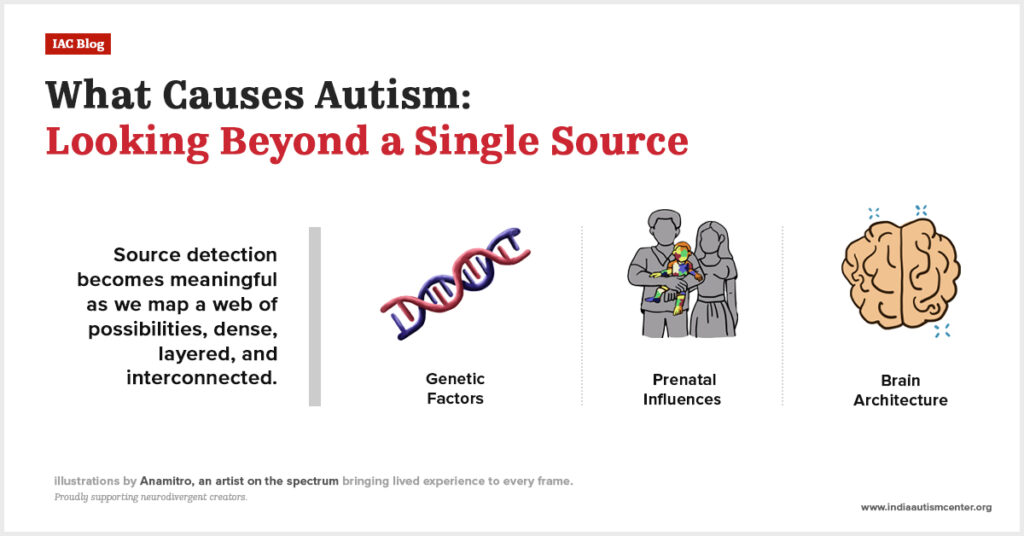
The search for the “cause” of autism has transitioned from a purely clinical endeavor to a high-tech data science challenge. By leveraging massive datasets and sophisticated algorithms, researchers are identifying the intricate interplay between genetic predispositions and environmental influences. This article explores the technological frontier that is redefining our understanding of neurodevelopmental etiology.
The Data-Driven Frontier of Genetic Research
The most significant strides in understanding the causes of ASD have occurred in the realm of genomics. We now know that genetics play a substantial role, but it isn’t as simple as identifying a single “autism gene.” Instead, it involves hundreds of rare genetic variants and common polygenic risks.
High-Throughput Sequencing and Genomic Mapping
The advent of Next-Generation Sequencing (NGS) has revolutionized our ability to look at the human blueprint. High-throughput sequencing allows scientists to sequence an entire human genome in a matter of days at a fraction of the cost of the original Human Genome Project. By using these technologies to perform Whole Genome Sequencing (WGS) on thousands of families—specifically “quad” families (two unaffected parents, one affected child, and one unaffected sibling)—tech-driven initiatives like the MSSNG project have identified over 100 genes linked to autism. These platforms generate terabytes of data, requiring robust cloud computing infrastructure to store and analyze the nuances of “de novo” mutations (new mutations not inherited from parents).
Machine Learning in Identifying Risk Variants
Identifying a mutation is one thing; understanding if it causes a change in brain development is another. This is where Machine Learning (ML) becomes indispensable. Sophisticated algorithms, such as DeepSEA (a deep learning-based algorithmic framework), are used to predict the functional effects of non-coding genetic variants. Since over 98% of our DNA does not code for proteins, traditional biology often overlooked these regions. AI models can now scan these “dark matter” areas of the genome to identify regulatory elements that, when disrupted, may lead to the neurological pathways associated with ASD.
Digital Phenotyping and Early Detection AI
To understand the cause, researchers must look at the very first signs of divergent development. Technology is now enabling “digital phenotyping”—the use of digital sensors and software to capture objective behavioral data that the human eye might miss.
Computer Vision and Eye-Tracking Algorithms
One of the hallmarks of early autism development is a difference in visual attention, particularly regarding social stimuli. Advanced eye-tracking technology, powered by infrared sensors and high-speed cameras, monitors how infants process their environment. AI-driven software analyzes these gaze patterns in real-time. By comparing the visual saliency maps of thousands of children, researchers can identify “biomarkers” of ASD as early as six months of age. This data points toward differences in the subcortical brain structures responsible for social orientation, providing a technological window into the biological causes of the disorder.
Wearable Tech and Physiological Bio-markers
The integration of wearable technology is providing a continuous stream of physiological data that helps map the autonomic nervous system’s role in ASD. Devices that track heart rate variability (HRV), skin conductance, and sleep patterns offer insights into the “sensory processing” causes of autism. When this data is aggregated and processed through predictive analytics, it reveals how certain neurological predispositions lead to the hyper- or hypo-reactivity often seen in the spectrum. These tools move us away from subjective observation toward an objective, tech-based understanding of the “why” behind the behavior.
Neural Mapping: Visualizing Brain Connectivity with AI

If genetics provide the blueprint, the brain’s “connectome” is the actual wiring. The cause of ASD is increasingly viewed through the lens of “atypical connectivity”—the way different regions of the brain communicate with one another.
Advanced MRI and Diffusion Tensor Imaging (DTI)
Traditional MRI scans provide a static picture, but Diffusion Tensor Imaging (DTI) allows us to visualize the white matter tracts—the brain’s “information highways.” Processing DTI data requires immense computational power to map the movement of water molecules along neural fibers. Technology has revealed that in many individuals with ASD, there is an overabundance of short-range connections and a deficit in long-range connections (such as those linking the frontal lobe to the rest of the brain). This structural insight, processed through automated image-recognition software, points to an early developmental “pruning” failure as a primary cause.
Functional Connectivity Modeling and Graph Theory
Beyond physical wiring, how the brain functions in real-time is being mapped using Functional MRI (fMRI) and Magnetoencephalography (MEG). Data scientists use “Graph Theory”—a mathematical framework used to study networks—to model the brain as a complex system of nodes and edges. By applying AI to these neural graphs, researchers can identify specific “sub-networks” that operate differently in neurodivergent individuals. This systems-engineering approach to the human brain allows us to see ASD not as a “broken” system, but as a system with a different optimized architecture.
Environmental Modeling and Big Data Integration
The consensus in the scientific community is that autism is caused by a “multi-hit” scenario: a genetic vulnerability triggered or modulated by environmental factors. Deciphering these environmental triggers requires the integration of disparate, massive datasets.
Geospatial Data and Toxicant Exposure
Using Geographic Information Systems (GIS), researchers are overlaying maps of ASD prevalence with environmental data, such as air quality, pesticide usage, and proximity to industrial sites. By using “Big Data” analytics, scientists can find correlations that were previously invisible. For instance, algorithmic analysis of longitudinal data has helped researchers investigate the impact of maternal immune activation during pregnancy. This tech-heavy approach allows for the control of thousands of variables simultaneously, providing a clearer picture of how external “tech-measured” factors interact with internal biology.
Longitudinal Data Sets and Predictive Analytics
The use of Electronic Health Records (EHRs) and large-scale longitudinal studies (like the SPARK study) provides a goldmine for predictive analytics. AI can scan millions of medical records to identify patterns in prenatal care, birth complications, or early childhood illnesses that correlate with an ASD diagnosis. These are not necessarily direct causes, but “contributing factors” that AI can weight in a probability model. This helps in building a holistic, multidimensional understanding of the disorder’s etiology.
The Ethical Implications and the Future of Neuro-Tech
As our technological capability to identify the causes of ASD grows, so does the responsibility of the tech and scientific communities. The goal of using AI and genomics is not to “fix” a different way of thinking, but to understand it better and provide support where it is needed most.
The Rise of Neuro-Informatics
We are seeing the emergence of “Neuro-informatics”—a field dedicated to the storage, sharing, and analysis of neuroscience data using standardized formats and computational models. This open-source approach to the “causes” of autism ensures that a lab in Tokyo can build upon the data generated by a lab in New York. By democratizing access to high-level genomic and neurological data, we accelerate the timeline of discovery.

Precision Medicine and Targeted Support
The ultimate technological goal is “Precision Medicine.” By understanding the specific genetic and neurological “cause” for a specific individual on the spectrum, we can move away from one-size-fits-all approaches. Instead, we can use technology to tailor interventions that align with that individual’s unique neural architecture. This represents the pinnacle of tech-driven healthcare: using the most advanced tools at our disposal to honor and support human diversity.
In conclusion, while the question of what causes Autism Spectrum Disorder remains complex, technology is providing the clarity that was once impossible. From the microscopic level of the non-coding genome to the macroscopic level of global environmental data, the “code” of autism is being cracked. As software becomes more intuitive and hardware more powerful, the mystery of the spectrum will continue to unfold, revealing a complex, beautiful, and tech-traceable map of human neurodevelopment.
aViewFromTheCave is a participant in the Amazon Services LLC Associates Program, an affiliate advertising program designed to provide a means for sites to earn advertising fees by advertising and linking to Amazon.com. Amazon, the Amazon logo, AmazonSupply, and the AmazonSupply logo are trademarks of Amazon.com, Inc. or its affiliates. As an Amazon Associate we earn affiliate commissions from qualifying purchases.