
Experiencing a cough that kicks in shortly after enjoying a meal can be a perplexing and sometimes even alarming symptom. While a casual cough might be dismissed, a post-meal cough can disrupt social interactions, lead to discomfort, and, in some cases, signal an underlying health issue that warrants attention. This article delves into the common culprits behind that nagging cough after eating, exploring the physiological mechanisms and offering insights into when it might be time to seek professional medical advice. We’ll also touch upon how understanding these causes can empower you with knowledge, akin to how understanding technology trends or financial markets allows for informed decision-making.
The sensation of coughing after eating is often a reflex triggered by irritation or obstruction in the airway or esophagus. It’s the body’s way of protecting itself from foreign substances entering the lungs or from potential irritants in the digestive tract. While the immediate response might be to find a quick fix, understanding the root cause is paramount for effective management and long-term well-being.
The Mechanics of a Post-Meal Cough: A Physiological Perspective
To understand why we cough after eating, it’s helpful to briefly consider the complex interplay between our digestive and respiratory systems. The act of eating involves swallowing, a coordinated process that directs food and liquids down the esophagus and towards the stomach. Simultaneously, the airway, leading to the lungs, must be protected from these substances. This protection is largely managed by the epiglottis, a flap of cartilage that seals off the trachea (windpipe) during swallowing.
A cough is essentially a forceful expulsion of air from the lungs, designed to clear the airways of irritants, mucus, or foreign particles. When this reflex is triggered after eating, it suggests that something is interfering with this delicate balance. This interference can stem from a variety of issues, ranging from simple dietary triggers to more complex medical conditions.
The Role of Gastroesophageal Reflux Disease (GERD)
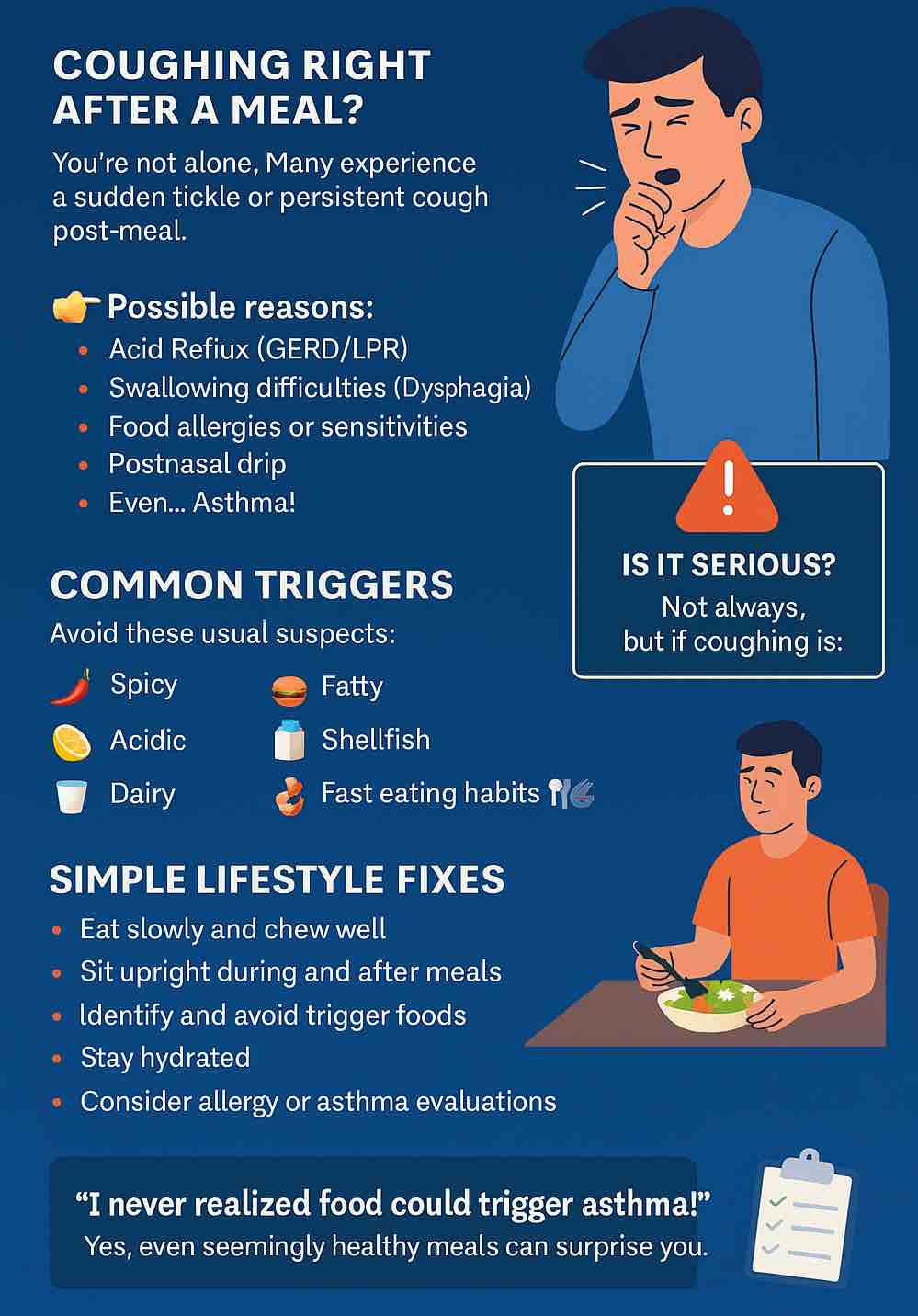
One of the most prevalent causes of a cough after eating is Gastroesophageal Reflux Disease, commonly known as GERD. GERD occurs when stomach acid flows back up into the esophagus, a condition often referred to as acid reflux. While heartburn is the most commonly associated symptom of GERD, a persistent cough can also be a significant manifestation.
When stomach acid irritates the lining of the esophagus, it can trigger nerve pathways that lead to a cough reflex. This irritation can occur in several ways:
- Direct Esophageal Irritation: The acidic contents themselves can directly stimulate the nerves in the esophagus, leading to a cough. This might be more noticeable when lying down after eating, as gravity is no longer assisting in keeping stomach contents down.
- Aspiration of Refluxate: In some individuals, particularly those with more severe GERD, small amounts of stomach acid and contents can actually “go down the wrong pipe,” meaning they enter the trachea and lungs. This microscopic aspiration can trigger a significant cough as the body attempts to expel the irritant. This is often referred to as “silent reflux” when it occurs without the classic heartburn symptom.
- Esophageal Hypersensitivity: For some people, the esophagus can become particularly sensitive to even small amounts of acid. This heightened sensitivity can lead to a cough reflex even when the reflux is not particularly severe.
Certain foods and drinks are known to exacerbate GERD symptoms, including acidic foods (tomatoes, citrus fruits), fatty or fried foods, spicy foods, chocolate, caffeine, and alcohol. Eating large meals, lying down soon after eating, and obesity can also increase the likelihood of reflux and subsequent coughing. Understanding these triggers is akin to identifying the key vulnerabilities in a software system that could lead to a security breach; awareness allows for preventative measures.
Esophageal Motility Disorders and Swallowing Difficulties
Beyond GERD, issues with how the esophagus functions can also lead to post-meal coughing. Esophageal motility disorders refer to problems with the coordinated muscular contractions that propel food down the esophagus. When these contractions are weak, uncoordinated, or absent, food can linger in the esophagus or move too slowly, increasing the chance of irritation or aspiration.
- Achalasia: This is a condition where the lower esophageal sphincter (LES), the muscle that separates the esophagus from the stomach, doesn’t relax properly. This makes it difficult for food to pass into the stomach, and it can back up, leading to coughing and regurgitation.
- Spasms: The esophagus can experience involuntary contractions or spasms, which can disrupt the normal swallowing process and potentially lead to coughing.
Swallowing difficulties, also known as dysphagia, can occur for various reasons, including neurological conditions (stroke, Parkinson’s disease), structural abnormalities in the esophagus, or as a side effect of certain medications. When the swallowing mechanism is compromised, the risk of food or liquid entering the airway significantly increases, resulting in a cough. This is a critical point, as neglecting such issues can have serious health consequences, much like ignoring cybersecurity threats can lead to catastrophic data loss.
Food Sensitivities and Allergies
While less common than GERD or motility disorders, food sensitivities and allergies can also manifest as a cough after eating. In these cases, the body’s immune system overreacts to specific food components, leading to a range of symptoms, including respiratory ones.
- Food Allergies: A true food allergy involves an immune system response that can cause symptoms ranging from mild (hives, itching) to severe and life-threatening (anaphylaxis). In some individuals, a food allergy can trigger a cough as part of the allergic reaction, often accompanied by other symptoms like wheezing, shortness of breath, or throat tightness.
- Food Sensitivities: Food sensitivities are generally less severe than allergies and don’t involve an immune system response in the same way. However, they can still cause digestive and other symptoms, including a cough. For instance, some individuals might experience a cough due to irritation from specific food additives or components that their digestive system struggles to process efficiently.
Identifying specific food triggers can be challenging and often requires a process of elimination, sometimes under the guidance of a healthcare professional. This methodical approach to diagnosis is similar to how IT professionals troubleshoot complex software bugs, systematically ruling out possibilities until the root cause is found.
When to Seek Professional Medical Advice
While occasional coughing after eating might not be a cause for alarm, certain symptoms and patterns warrant a discussion with a healthcare provider. It’s crucial to remember that while this article provides information, it should not be considered a substitute for professional medical diagnosis and treatment.
Red Flags and Warning Signs
You should consider consulting a doctor if your post-meal cough:
- Is persistent and frequent: If the cough occurs after most meals and significantly impacts your daily life.
- Is accompanied by other concerning symptoms: This includes difficulty swallowing, a feeling of food getting stuck, unintentional weight loss, chest pain, hoarseness, or recurrent pneumonia.
- Leads to choking or gagging: This suggests a significant risk of aspiration.
- Disrupts your sleep: Coughing that wakes you up at night can be a sign of a more serious underlying issue.
- Does not improve with lifestyle changes: If you’ve tried dietary modifications and behavioral adjustments without success.
Diagnostic Approaches
When you see a doctor about a post-meal cough, they will typically:
- Take a detailed medical history: This will include questions about your eating habits, specific foods that trigger the cough, other symptoms you’re experiencing, and your overall health.
- Perform a physical examination: This helps assess your general health and rule out other potential causes.
- Recommend further investigations: Depending on your symptoms, these might include:
- Upper Endoscopy (EGD): A procedure where a thin, flexible tube with a camera is inserted down your esophagus to examine its lining and look for signs of inflammation or other abnormalities.
- Esophageal Manometry: This test measures the pressure and coordination of the muscles in your esophagus to assess motility.
- pH Monitoring: This involves placing a small probe in your esophagus to measure the amount of acid reflux over a 24-hour period.
- Barium Swallow Study: You swallow a contrast agent, and X-rays are taken to visualize the passage of food through your esophagus.
- Allergy Testing: If a food allergy is suspected.
Understanding these diagnostic steps is empowering, allowing you to have a more informed conversation with your doctor and prepare for any necessary tests. This proactive approach to health management mirrors the strategic planning required for successful brand building or navigating complex financial markets.
Lifestyle and Dietary Modifications: Proactive Steps
While seeking medical advice is crucial for persistent or severe symptoms, several lifestyle and dietary adjustments can help manage and prevent a cough after eating, particularly if it’s related to mild reflux or dietary triggers. These strategies are about adopting a more mindful approach to your eating habits and overall well-being.
Dietary Considerations
- Identify and Avoid Triggers: Keep a food diary to track what you eat and when your cough occurs. Common culprits include spicy foods, acidic foods, fatty foods, caffeine, alcohol, and carbonated beverages.
- Eat Smaller, More Frequent Meals: Large meals can put more pressure on the LES, increasing the likelihood of reflux.
- Avoid Eating Close to Bedtime: Aim to finish your last meal or snack at least 2-3 hours before lying down.
- Choose Foods Wisely: Opt for lean proteins, non-citrus fruits, vegetables, and whole grains.
- Chew Thoroughly: Proper chewing breaks down food more effectively, aiding digestion.
Lifestyle Adjustments
- Maintain a Healthy Weight: Excess weight can put pressure on your abdomen and push stomach acid upwards.
- Elevate the Head of Your Bed: Raising the head of your bed by 6-8 inches can help gravity keep stomach acid down while you sleep. You can use blocks under the bedposts or a wedge pillow.
- Avoid Tight Clothing: Clothing that is too tight around your waist can constrict your stomach.
- Quit Smoking: Smoking weakens the LES and can exacerbate reflux.
- Manage Stress: Stress can worsen digestive symptoms for some individuals. Techniques like meditation, yoga, or deep breathing can be beneficial.
Implementing these changes requires discipline and consistency, much like mastering new software or building a strong personal brand requires dedication. By understanding the underlying causes and taking proactive steps, you can significantly reduce the frequency and severity of post-meal coughing and improve your overall quality of life.
In conclusion, a cough after eating is a symptom with a variety of potential causes, most commonly related to issues with the digestive system, such as GERD and esophageal motility disorders. Less frequently, food sensitivities or allergies can be implicated. Recognizing the signs that warrant medical attention and implementing appropriate dietary and lifestyle modifications are key to managing this condition effectively. By taking a proactive and informed approach, you can work towards a healthier, more comfortable post-meal experience.
aViewFromTheCave is a participant in the Amazon Services LLC Associates Program, an affiliate advertising program designed to provide a means for sites to earn advertising fees by advertising and linking to Amazon.com. Amazon, the Amazon logo, AmazonSupply, and the AmazonSupply logo are trademarks of Amazon.com, Inc. or its affiliates. As an Amazon Associate we earn affiliate commissions from qualifying purchases.