
In an increasingly digital world, where every interaction is tracked, quantified, and often gamified, understanding the nuances of digital currencies and loyalty programs has become paramount. While many apps offer direct monetary rewards or tangible benefits for user engagement, others take a more nuanced approach, focusing on community, status, and collective improvement. Waze, the popular community-driven navigation app, falls squarely into the latter category with its “Waze Points” system. Far from being a traditional currency you can spend, Waze points represent a fascinating interplay of technology, brand strategy, and indirect value, offering a compelling case study for digital engagement in the 21st century.

For new users, or even long-time Wazers who haven’t delved into the specifics, the question “What can you do with Waze points?” is often met with a shrug. There’s no Waze points store, no immediate cash-out option, and no direct exchange for physical goods. Yet, dismissing them as mere vanity metrics would be a mistake. These points are the digital lifeblood of the Waze ecosystem, intricately linked to the app’s core functionality, its brand identity, and the subtle, often overlooked, financial benefits it provides its users. This article will delve deep into the multifaceted utility and significance of Waze points, exploring their technological underpinnings, their role in Waze’s brand narrative, and the often-indirect, yet substantial, value they generate for both individual users and the collective.
Understanding Waze Points: More Than Just Numbers
At its heart, Waze is a testament to the power of crowdsourcing. Unlike traditional GPS systems that rely solely on pre-programmed maps and satellite data, Waze thrives on real-time input from its vast network of drivers. Every report of a traffic jam, a speed trap, a road hazard, or a map error contributes to a constantly updated, hyper-accurate navigation experience. Waze points are the digital acknowledgment and reward for these contributions, transforming the mundane act of driving into an interactive, collaborative game.
The Gamification Engine Behind Waze
From a technological standpoint, Waze points are a prime example of successful gamification. Gamification, the application of game-design elements and game principles in non-game contexts, is a powerful tool for driving user engagement and fostering specific behaviors. For Waze, the goal is clear: encourage users to actively participate in updating the map and reporting real-time road conditions.
The point system creates a positive feedback loop. Users report an incident, receive points, see their status rise, and are incentivized to report more. This simple mechanism leverages fundamental psychological principles:
- Achievement: Earning points and leveling up provides a sense of accomplishment.
- Recognition: Higher levels and unique “moods” (avatars) offer public recognition within the Waze community.
- Progression: The clear progression from Baby Wazer to Royalty keeps users motivated to climb the ranks.
- Altruism: Users often feel a sense of contribution to a greater good – helping fellow drivers avoid traffic and hazards.
The underlying software architecture elegantly tracks each contribution type, assigns a predetermined point value, and aggregates these points into a user profile. This real-time processing and immediate feedback are crucial for maintaining engagement and making the gamification feel responsive and rewarding.
How Points Are Earned: Your Contributions Matter
Waze points aren’t just handed out; they are earned through a variety of active contributions that directly improve the app’s data and user experience. Understanding how points are accrued sheds light on what Waze values most in its community.
- Driving: Simply driving with Waze open, especially on previously unmapped roads, earns points. This helps Waze gather road data and identify common routes.
- Reporting: This is the most significant source of points. Users get points for reporting:
- Traffic jams
- Police presence
- Accidents
- Road hazards (potholes, stalled vehicles)
- Construction
- Road closures
- Gas prices (in some regions)
- Map Editing: Advanced users, known as Map Editors, contribute significantly by correcting errors, updating road layouts, adding new roads, and improving the overall accuracy of the map. These contributions earn substantial points and are critical for the app’s long-term data integrity.
- Roadside Assistance: Requesting or offering help to other Wazers also contributes to points, fostering a sense of community support.
- Chat Messages: Engaging with other Wazers in the app’s chat features can also yield minor points, promoting social interaction.
Each action is weighted differently, reflecting its impact on the Waze ecosystem. A confirmed traffic report, for instance, is more valuable than simply driving a short distance. This tiered system ensures that the most impactful contributions are recognized and rewarded appropriately, maintaining the quality and relevance of the crowdsourced data.
Levels, Moods, and the Community Aspect
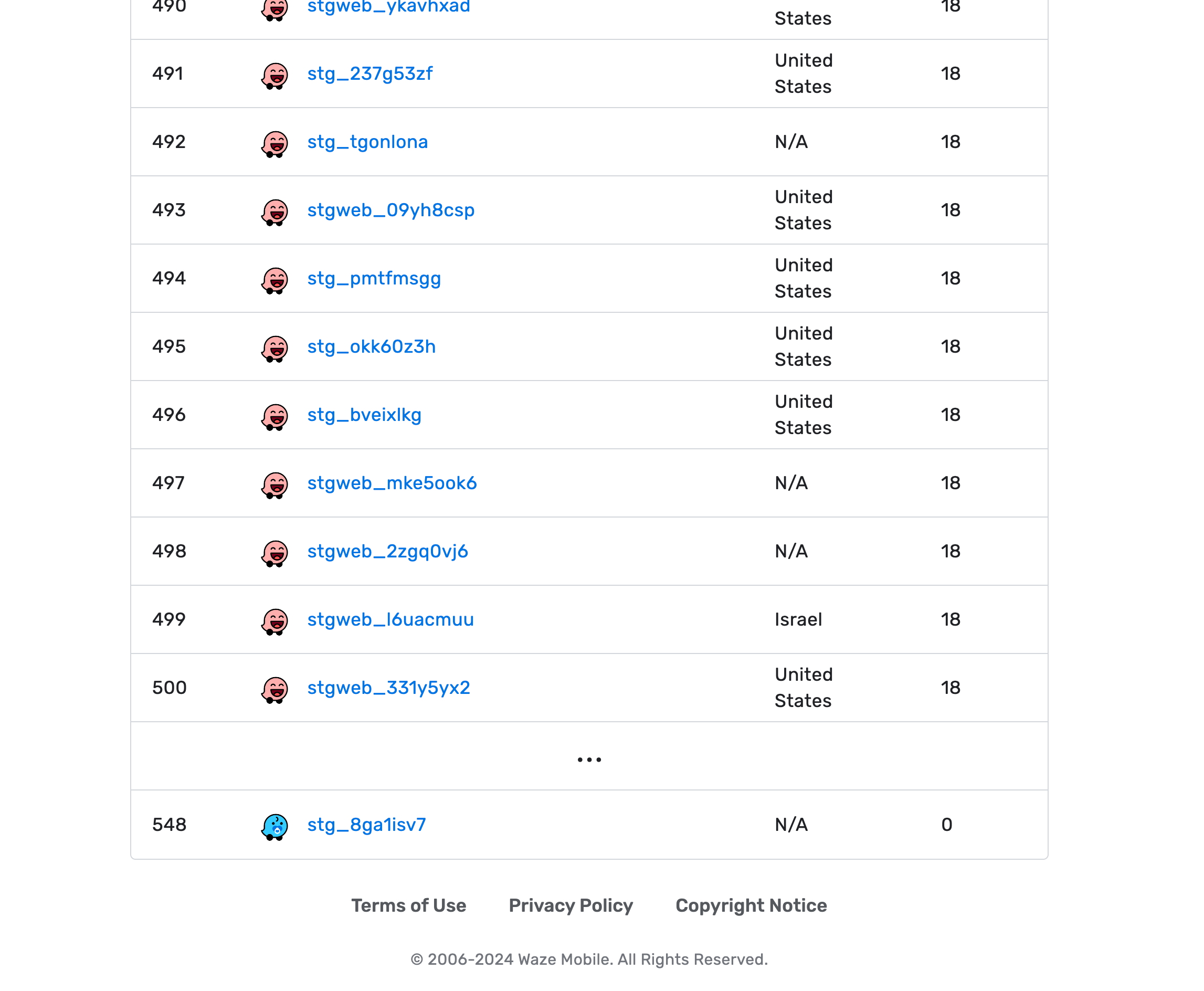
As users accumulate points, they progress through various levels, each with a quirky name and a corresponding “mood” – a small avatar that represents them on the map to other Wazers. These levels range from “Baby Wazer” to “Royalty,” with intermediate stages like “Wazer,” “Knight,” and “Prince/Princess.”
These levels and moods serve several functions:
- Status Symbol: Higher levels signify greater contribution and experience within the Waze community. This builds a sense of personal achievement and recognition.
- Community Identity: The unique moods allow users to express a bit of personality, making the driving experience feel less anonymous and more communal. Seeing other Wazers on the map, represented by their chosen mood, reinforces the idea of a shared journey.
- Trust and Authority: In the context of map editing, higher-level editors often have greater permissions and influence over map changes, reflecting their proven reliability and contribution history. This digital trust system is vital for maintaining the accuracy and integrity of the crowdsourced map.
The entire system reinforces Waze’s brand as a community-first navigation app, where users aren’t just passive consumers of information but active contributors to a collective intelligence that benefits everyone.
The Tangible (and Intangible) Benefits of Waze Points
While Waze points don’t offer direct monetary redemption, their value manifests in several indirect yet powerful ways, touching upon technology, brand, and even subtle financial advantages.
Elevating Your Driving Experience and Community Status (Tech & Brand)
From a technological perspective, the aggregated data from Waze points is the engine that drives the app’s superior real-time navigation. When you report a hazard, you’re not just earning points; you’re feeding critical information into an AI-powered system that instantly analyzes, validates, and disseminates that data to potentially millions of other drivers. This collective intelligence allows Waze to reroute drivers around traffic, warn them of hazards in advance, and provide more accurate estimated arrival times than many traditional GPS systems. The “benefit” of Waze points, therefore, is a direct contribution to and participation in this technologically advanced, self-optimizing navigation platform. Your points literally help make the technology better for yourself and others.
From a brand perspective, the points system cultivates a powerful sense of belonging and loyalty. Waze isn’t just an app; it’s a community. By encouraging users to contribute and recognizing those contributions with points and status, Waze transforms its user base into brand ambassadors. High-level Wazers often feel a strong sense of ownership and pride in the app, actively promoting it and defending its community-driven ethos. This organic brand advocacy is invaluable, fostering a resilient and engaged user base that sees the app as a shared endeavor rather than just a utility. The points system is a cornerstone of this brand strategy, reinforcing Waze’s identity as “drivers helping drivers.”
Enhancing App Functionality Through Collective Intelligence (Tech)

The points system is fundamental to Waze’s core technological offering: highly accurate, real-time traffic information. Without the incentive of points, user contributions would likely dwindle, severely impacting the quality and timeliness of the data. This would degrade the app’s primary value proposition.
- Real-time Traffic Avoidance: Every traffic report, incentivized by points, helps Waze’s algorithms identify congestion faster and suggest alternative routes, saving drivers significant time.
- Hazard Warnings: Points for reporting hazards ensure that drivers are quickly alerted to dangers like debris, stalled vehicles, or severe weather conditions, enhancing road safety.
- Dynamic Map Updates: Map editor points ensure that new roads, changed speed limits, and updated points of interest are integrated into the map promptly, keeping the navigation accurate and relevant.
- Predictive Analytics: The vast amount of data collected through point-earning activities feeds into Waze’s machine learning models, allowing for more accurate predictions of traffic patterns and optimal routing.
In essence, Waze points are the fuel for Waze’s technological engine, directly contributing to its efficiency, reliability, and innovative features. They are a proxy for the quality and quantity of user-generated data, which is the ultimate product of the Waze platform.
The Indirect Monetary Value: Saving Time and Fuel (Money)
While Waze points themselves cannot be exchanged for cash, their role in improving the navigation experience has tangible, albeit indirect, financial benefits for users.
- Fuel Savings: By providing the fastest routes and helping drivers avoid traffic jams, Waze directly contributes to reduced fuel consumption. Less time idling in traffic and fewer detours mean less money spent at the pump. Over weeks, months, and years, these savings can accumulate into a significant amount.
- Time Savings: Time is money, and Waze is exceptional at saving it. Avoiding traffic, getting accurate arrival times, and finding the quickest routes translates into more productive hours, whether for work, family, or leisure. For professionals who rely on timely arrivals, this can directly impact their income or business efficiency.
- Reduced Stress and Wear-and-Tear: While harder to quantify, the psychological and physical benefits of a less stressful commute contribute to overall well-being, which has indirect financial implications (e.g., fewer health-related expenses, greater productivity). Less wear-and-tear on a vehicle from smoother commutes also contributes to reduced maintenance costs over time.
- Informed Decisions: For businesses, particularly those involved in logistics or delivery, Waze’s real-time data (fueled by user points) can lead to optimized routes, faster deliveries, and ultimately, greater profitability. While Waze offers specific business solutions, the general utility of the app benefits many small businesses indirectly.
Compared to traditional loyalty programs that offer discounts or cashback, Waze points operate on a different financial principle: they enhance a free service that, through its efficiency, generates savings and value for its users. The “return on investment” for contributing to Waze is not a direct payout, but a collective reduction in the cost and effort of travel.
Beyond the Basics: Advanced Applications and Future Prospects
The underlying principles of Waze points—gamified engagement, crowdsourced data, and community building—offer interesting avenues for future development and interpretation, particularly when viewed through the lenses of digital security, personal branding, and potential monetization models.
Waze Points as a Driver for Digital Security & Productivity (Tech)
The collaborative nature encouraged by Waze points has implications for digital security and productivity beyond navigation.
- Digital Security Analogy: The Waze community acts as a distributed sensor network, collectively identifying “threats” (traffic, hazards) and warning others. This model could be extended to other areas of digital security, where user contributions (e.g., reporting phishing attempts, suspicious links) could strengthen collective defenses, much like Waze points incentivize reporting road incidents.
- Productivity through Collective Intelligence: The immediate, real-time feedback loop enabled by Waze points makes drivers more productive by minimizing delays. This model of real-time, user-generated data improving efficiency can be applied to other productivity tools, where micro-contributions are rewarded and aggregated to enhance collective output. Imagine similar point systems in collaborative project management tools, where recognizing helpful contributions boosts overall team productivity.
- Data Validation and Integrity: The point system, especially for map editors, implicitly creates a hierarchy of trust. Higher-level editors have proven their reliability through consistent, accurate contributions. This system of reputation and validation is a key technological feature that ensures the integrity of the crowdsourced data, a crucial aspect of any user-generated content platform.
Leveraging Your Waze Reputation: A Personal Branding Angle (Brand)
While not a traditional platform for personal branding, a high Waze points score and elevated status can, for certain individuals, contribute to a unique digital footprint, particularly for those passionate about mapping, technology, or community service.
- Expert Status: For individuals in GIS, urban planning, or logistics, a “Royalty” status on Waze signifies a deep understanding of mapping and traffic dynamics, serving as an interesting, albeit niche, credential. It showcases a commitment to improving infrastructure data.
- Community Leadership: Being a top Waze contributor demonstrates active community engagement, a willingness to help others, and leadership in a digital collective. This can be subtly incorporated into one’s personal narrative or professional profile to highlight soft skills like collaboration, attention to detail, and a service-oriented mindset.
- Brand Alignment: For individuals whose personal brand revolves around efficiency, innovation, or community involvement, showcasing their Waze contributions can be a novel way to reinforce these values, aligning themselves with a brand known for these very attributes.
While it’s unlikely to be a primary pillar of one’s personal brand, a Waze reputation can certainly act as an interesting and verifiable anecdote of digital civic engagement.
Exploring Potential Future Monetization Models (Money & Tech)
Currently, Waze points hold no direct monetary value, but the concept of rewarding user contributions with a quantifiable digital asset opens doors for future possibilities, especially as blockchain technology and tokenization become more mainstream.
- Tokenization of Contributions: Imagine if Waze points were crypto tokens. Users could earn these tokens for their contributions, and while Waze might not directly buy them back, a secondary market could emerge. This would give users a direct stake in the data they provide.
- Premium Feature Access: Points could potentially be used to unlock premium features within Waze (if they ever introduce them), such as advanced analytics for personal travel data, unique customization options, or exclusive beta access to new features. This would be a form of internal currency.
- Partnership Rewards: Waze could partner with local businesses (gas stations, coffee shops, car washes) to offer exclusive discounts or loyalty rewards to high-level Wazers, essentially creating a tiered loyalty program where Waze points act as the entry criterion. This bridges the gap between digital contribution and tangible real-world benefits, similar to how many traditional loyalty programs operate.
- Data Marketplaces: While controversial, in a future where users have more control over their data, Waze points could represent a share in the value generated by the aggregated data. Users might hypothetically be able to “sell” or license anonymized data derived from their contributions, earning actual income. This would fundamentally change Waze’s business model but highlights the inherent value of the data that Waze points represent.
While these are speculative, they underscore the inherent, unmonetized value of user contributions and the potential for Waze points to evolve beyond mere status symbols, leveraging emerging technologies and business models.
The Philosophy of Waze Points: Community, Contribution, and Connection
Ultimately, the most profound “thing” you can do with Waze points is to participate in and strengthen a global community dedicated to making driving safer, smarter, and more efficient. The points system is a powerful testament to the idea that collective action, incentivized through thoughtful design, can yield immense benefits for all.
Building a Stronger Driving Network
Every point earned, every report filed, every map edit made, contributes to a robust and responsive driving network. This network isn’t just a collection of roads; it’s a dynamic, living system powered by human interaction. Waze points are the mechanism that transforms individual drivers from isolated units into interconnected nodes of a vast, collaborative intelligence. They foster a sense of shared responsibility and mutual aid, where helping one’s neighbor avoid traffic or a hazard becomes a recognized and rewarded act.
The Psychology of Gamification and User Loyalty
Waze’s success with its point system also offers valuable insights into the psychology of user loyalty and sustained engagement. It demonstrates that not all rewards need to be monetary. The intrinsic rewards of achievement, recognition, and contributing to a collective good can be just as, if not more, powerful in fostering deep user commitment. By tapping into these fundamental human desires, Waze has built a brand that commands exceptional loyalty and active participation, transcending the typical user-app relationship to create a genuine community.
In conclusion, while you can’t literally “spend” Waze points, their value is undeniable. They are the currency of contribution, the markers of community engagement, and the silent drivers of Waze’s technological superiority. They represent a sophisticated blend of tech-driven gamification, smart brand strategy, and indirect financial benefits, proving that sometimes, the most valuable rewards aren’t those you can buy, but those you help create for everyone.
aViewFromTheCave is a participant in the Amazon Services LLC Associates Program, an affiliate advertising program designed to provide a means for sites to earn advertising fees by advertising and linking to Amazon.com. Amazon, the Amazon logo, AmazonSupply, and the AmazonSupply logo are trademarks of Amazon.com, Inc. or its affiliates. As an Amazon Associate we earn affiliate commissions from qualifying purchases.