
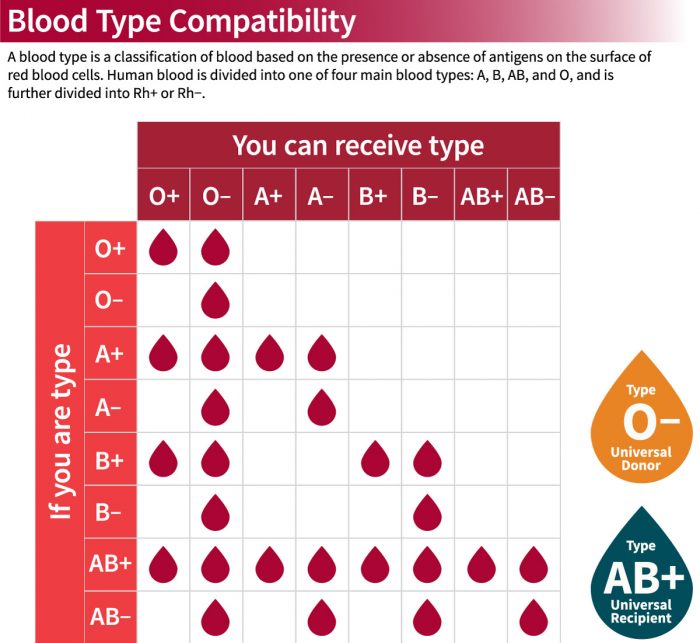
In the realm of modern medicine, the question of “what can O positive blood receive” is no longer just a biological inquiry—it is a data-driven logistical challenge. O positive is the most common blood type, found in approximately 37% to 38% of the global population. While its prevalence makes it a cornerstone of the blood supply, it also creates a massive technological requirement for management, distribution, and precision matching.
From a technological standpoint, managing the compatibility of O positive blood involves sophisticated Laboratory Information Systems (LIS), AI-driven inventory forecasting, and advanced cross-matching software. While the biological answer is simple—O positive patients can receive O positive and O negative red blood cells—the digital infrastructure required to ensure this happens safely and efficiently is a testament to the power of modern health tech.

The Digital Architecture of Blood Compatibility and Matching
The core of transfusion technology lies in ensuring that the recipient receives exactly what their body can handle. For an O positive individual, this means managing the presence of the Rh factor while accounting for the absence of A and B antigens.
Precision Matching Through Laboratory Information Systems (LIS)
Modern hospitals no longer rely on manual ledgers to determine what a patient can receive. Sophisticated Laboratory Information Systems (LIS) serve as the digital backbone of the blood bank. When a patient is identified as O positive, the LIS automatically filters available inventory, flagging O positive units as the primary choice and O negative units as a secondary, emergency-only option. These systems use complex algorithms to prevent human error, ensuring that a “B positive” bag is never cleared for an “O positive” recipient.
RFID and Barcode Integration in Chain of Custody
Technology has moved beyond simple labels. Radio Frequency Identification (RFID) tags are increasingly used to track O positive blood units from the moment of collection to the point of transfusion. Because O positive blood is in such high demand, tracking its movement in real-time prevents “silent wastage”—where blood expires because it was tucked away in a sub-optimal storage unit. These digital tags monitor temperature and location, ensuring that when an O positive patient needs a transfusion, the blood they receive is biologically viable and digitally verified.
Automated Cross-Matching Software
Before a transfusion occurs, a “cross-match” is performed. Historically, this was a manual process involving test tubes and centrifugal force. Today, automated platforms use gel technology and digital imaging to identify even the most obscure antibodies. For O positive recipients, who may have developed antibodies from previous transfusions or pregnancies, this technology is vital. The software analyzes the reaction and provides a high-resolution digital readout, confirming that the donor’s O positive blood is truly compatible with the recipient’s specific serum profile.
AI and Predictive Analytics in Supply Chain Optimization
Because O positive is the most common blood type, it is also the most frequently used. This creates a volatile supply-and-demand curve. Tech-driven predictive analytics have become essential in managing this “O positive paradox”—having the most donors but also the highest rate of consumption.
Machine Learning Models for Demand Forecasting
Leading blood centers now utilize machine learning (ML) models to predict when O positive blood will be in short supply. By analyzing years of historical data, including seasonal flu trends (which decrease donations) and holiday travel patterns (which increase accidents and demand), AI can alert administrators to a looming shortage weeks in advance. This allows for targeted digital marketing campaigns to O positive donors, ensuring the “buffer” of O positive and O negative blood remains stable.
Optimizing the “Universal” Buffer with Big Data
While O negative is the true universal donor for all, O positive can be given to any patient with a positive Rh factor (A+, B+, AB+, and O+). This makes O positive blood a “sub-universal” type. Big data analytics help hospitals decide when to use O positive blood as a substitute for other types to preserve rare inventories. By calculating the “Inventory Burn Rate” via cloud-based dashboards, hospital administrators can make real-time decisions on which blood types to prioritize during mass casualty events.
Blockchain for Blood Traceability
One of the emerging trends in “Money” and “Tech” intersectionality is the use of blockchain for medical supply chains. Implementing a decentralized ledger for O positive blood units ensures an unalterable record of the blood’s journey. This transparency is crucial for verifying that the blood was kept at the correct temperature and hasn’t been subject to any data tampering. For the recipient, this provides an ultimate layer of digital security regarding the “product” they are receiving.
Next-Generation Screening and Biotech Innovations
What an O positive person can receive is also dictated by the purity of the blood. Technological advancements in screening have made the blood supply safer than it has ever been in human history.
High-Throughput Genomic Screening
The process of screening O positive blood for infectious diseases has been revolutionized by Nucleic Acid Testing (NAT) and high-throughput genomic sequencing. These tech-heavy processes allow labs to screen thousands of samples simultaneously for HIV, Hepatitis C, and emerging threats like West Nile Virus. By using automated robotic arms and sensitive fluorescence detection, the “window period” for detecting infections has been narrowed to a few days, ensuring that the O positive blood entering a patient’s veins is clean.
Pathogen Reduction Technology (PRT)
Beyond just testing, technology now allows us to “scrub” blood. Pathogen Reduction Technology uses UV light and riboflavin to inactivate the DNA and RNA of potential viruses and bacteria within the blood bag. For an O positive recipient, this tech-enabled layer of safety reduces the risk of Transfusion-Transmitted Infections (TTIs). This is particularly important in the digital age, where global travel can spread new pathogens quickly, necessitating a tech-first approach to blood safety.
Digital Security and Donor Privacy
As blood banks collect more data on O positive donors—including genetic markers and contact information—digital security becomes paramount. Cybersecurity frameworks specifically designed for healthcare (HIPAA-compliant cloud storage, end-to-end encryption) protect the “human data” associated with the blood supply. Maintaining the integrity of these databases is essential for ensuring a steady stream of O positive donors who feel confident that their personal and biological information is secure.
The Future: Synthetic Blood and CRISPR
Looking forward, the question of “what can O positive blood receive” may eventually be answered by biotechnology and synthetic alternatives.
CRISPR and Blood Type Conversion
One of the most exciting tech trends in hematology is the use of CRISPR-Cas9 gene editing to convert blood types. Scientists are exploring ways to use enzymes to “strip” the A and B antigens from blood, effectively turning A, B, or AB blood into O type blood. While still in the experimental phase, the software used to model these enzymatic reactions is highly advanced. If successful, this technology would mean that the constraints of what O positive blood can receive would vanish, as any blood could be digitally and chemically “reprogrammed” to be O-compatible.
Artificial Blood Oxygen Carriers
The tech industry is also investing heavily in Hemoglobin-Based Oxygen Carriers (HBOCs). These are synthetic “blood substitutes” designed to perform the primary function of O positive red blood cells: carrying oxygen. For a patient who is O positive and in a remote location where no O blood is available, these synthetic products—developed through advanced bio-engineering and nanotechnology—could serve as a bridge until a traditional transfusion can be performed.
Virtual Reality (VR) in Medical Training
Finally, the “Tutorial and Apps” side of tech is improving how clinicians handle O positive transfusions. VR simulations allow nursing students and med students to practice the complex protocols of blood administration—verification, spike-in, and monitoring for transfusion reactions—in a risk-free digital environment. This ensures that when they are handling real O positive blood, their “human error” rate is near zero, thanks to tech-augmented training.
Conclusion: A Tech-Driven Lifeline
In summary, while the biological answer to “what can O positive blood receive” is O positive or O negative blood, the reality is a complex web of technological interventions. From the LIS algorithms that prevent matching errors to the AI models that ensure the shelves remain stocked, technology is the silent guardian of the O positive population.
As we move toward a future of blockchain-verified supply chains and CRISPR-enhanced blood conversion, the intersection of technology and hematology will continue to evolve. For the millions of O positive individuals worldwide, this means a safer, faster, and more reliable medical experience, powered by the cutting edge of digital innovation. The blood is human, but the system that delivers it is undeniably high-tech.
aViewFromTheCave is a participant in the Amazon Services LLC Associates Program, an affiliate advertising program designed to provide a means for sites to earn advertising fees by advertising and linking to Amazon.com. Amazon, the Amazon logo, AmazonSupply, and the AmazonSupply logo are trademarks of Amazon.com, Inc. or its affiliates. As an Amazon Associate we earn affiliate commissions from qualifying purchases.