
The garbage disposal, often an overlooked workhorse beneath our kitchen sinks, is a marvel of compact engineering designed to simplify kitchen cleanup. More than just a drain, this appliance utilizes a powerful motor and grinding components to pulverize food waste into tiny particles, which are then flushed safely down the plumbing system. However, like any sophisticated gadget, its effectiveness and longevity hinge entirely on proper usage. Misconceptions about its capabilities can lead to frustrating clogs, costly repairs, and premature replacement. This comprehensive guide aims to demystify the garbage disposal, offering clear guidelines on what it can handle, what it absolutely cannot, and best practices to ensure it remains a reliable ally in your kitchen for years to come.

Understanding Your Garbage Disposal: More Than Just a Drain
At its core, a garbage disposal is an electric appliance featuring a grinding chamber equipped with impellers or shredder rings. These components, often rotating at high speeds, pulverize food waste against a stationary grind ring, transforming solids into a slurry that can pass through your pipes without obstruction. Far from being a luxury, modern disposals are integral to efficient kitchen waste management, reducing landfill contributions and streamlining post-meal cleanup.
The Technology Behind Waste Management
The evolution of garbage disposals showcases a fascinating journey in domestic technology. Early models were simple, often loud, and prone to jamming. Today, we have a range of options from continuous feed to batch feed, featuring multi-stage grinding, sound insulation for quieter operation, and even advanced motor technologies designed to prevent jams before they start. High-torque permanent magnet motors, for instance, offer instant power to tackle tougher food scraps, while induction motors provide consistent grinding power over time. The “grind chamber” itself is often constructed from corrosion-resistant materials like stainless steel, protecting against the acidic nature of some food wastes and extending the unit’s lifespan. Understanding this underlying technology helps users appreciate the limitations and capabilities of their specific unit. For example, a single-stage, 1/3 horsepower disposal will naturally have different limitations than a multi-stage, 1 horsepower model designed for heavy-duty use.
Why Proper Usage Matters for Longevity
Treating your garbage disposal as an invincible trash can is a recipe for disaster. Each component – from the motor to the impellers and the drain pipes – is designed to handle specific types and volumes of waste. Overloading it, introducing inappropriate materials, or neglecting basic maintenance can lead to a cascade of problems: motor burnout, clogged drains, damaged shredder rings, or even complete unit failure. Beyond the immediate inconvenience, these issues often entail expensive visits from plumbers or electricians. Therefore, understanding and adhering to usage guidelines isn’t just about avoiding clogs; it’s about safeguarding your appliance, maintaining your home’s plumbing integrity, and ultimately, saving money and hassle in the long run.
The “Yes” List: What’s Safe to Grind
While the garbage disposal is a powerful appliance, its primary function is to handle soft, biodegradable food waste in moderation. Adhering to this principle is key to a long and trouble-free operational life.
Soft Foods and Scraps
The safest and most recommended items for your garbage disposal are those that are soft, easily broken down, and non-fibrous.
-
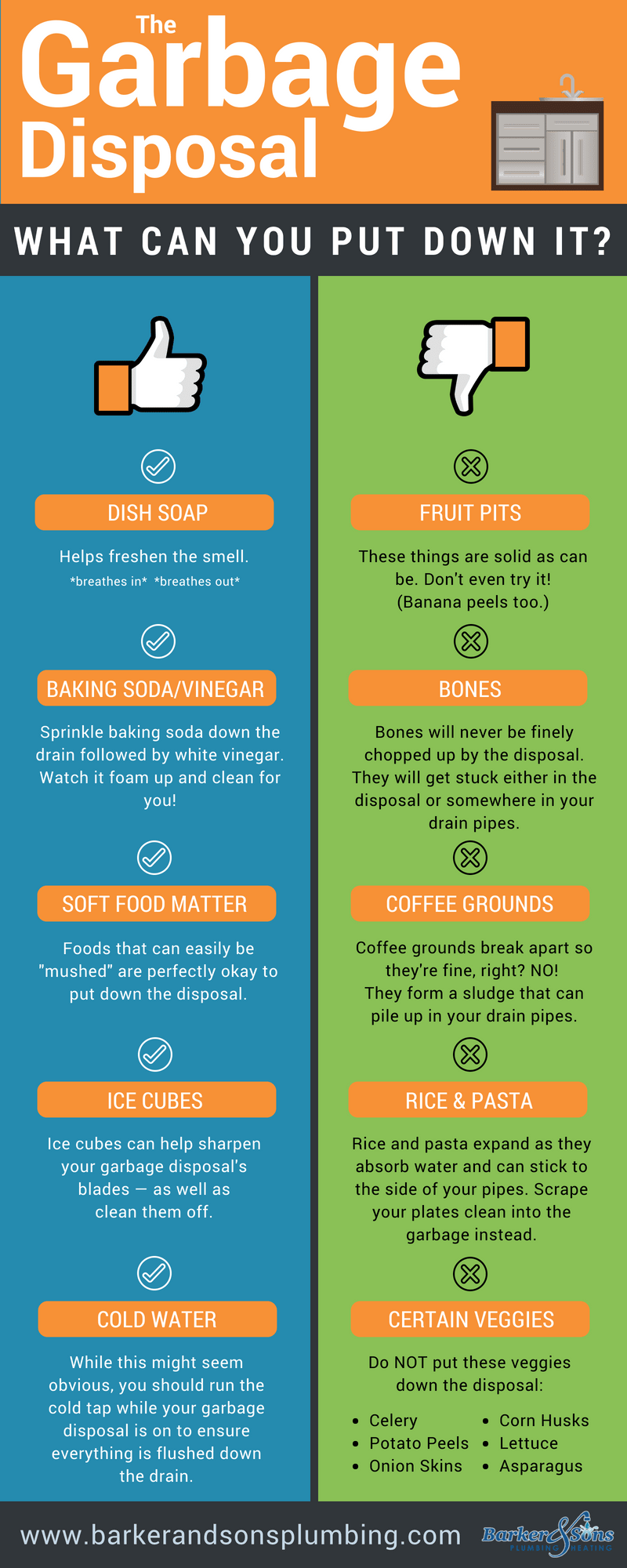
Most Fruit and Vegetable Scraps: This includes items like apple cores (without seeds), grape stems, most berries, melon rinds (cut into small pieces), cooked vegetables, and soft leafy greens (lettuce, spinach, kale). Remember to cut larger items into smaller chunks to prevent overloading.
-
Plate Scraps: Bits of leftover food from plates, such as rice, pasta, mashed potatoes, and soft cooked meats (in small quantities), are generally fine.
-
Citrus Rinds (in moderation): Small pieces of lemon, lime, or orange rinds are not only safe but can also help to clean the disposal and impart a fresh scent. However, large quantities or whole rinds should be avoided due to their fibrous nature and potential to jam the unit.
-
Coffee Grounds (in very small quantities): While often debated, a small amount of coffee grounds can pass through. However, large daily deposits can accumulate and cause clogs over time, so it’s best to dispose of most grounds in compost or the trash.
Always ensure a strong stream of cold water is running before, during, and for at least 30 seconds after grinding to help flush the particles completely through the plumbing system.
Small Bones and Citrus Peels (with caveats)
Some sources suggest small bones and citrus peels are acceptable, and in some high-horsepower, multi-stage disposals, this can indeed be true. However, these come with significant caveats.
-
Small Bones: Very small, soft bones like those from fish or tiny chicken bones might be handled by powerful disposals. However, larger, harder bones (beef, pork, substantial chicken bones) are a definite no-go. They can dull the grinding components, jam the motor, or even break off pieces of the disposal. When in doubt, err on the side of caution and throw bones in the trash.
-
Citrus Peels: As mentioned, small amounts are good for deodorizing. But larger quantities or entire peels can be problematic. The fibrous material can wrap around the impellers, leading to jams, while the bulk can overload the motor. Always cut them into small, manageable pieces.
The key here is moderation and knowing the power of your specific disposal unit. If you have a basic model, it’s safer to avoid these items entirely.
Liquids and Biodegradable Detergents
Liquids are, of course, safe to go down the drain. This includes water, juices, and most liquid food waste. Biodegradable, non-abrasive detergents are also safe and can be used to clean the disposal. Never pour harsh chemicals like drain cleaners into your disposal, as they can corrode the metal components and damage the plumbing.
The “No” List: Items to Absolutely Avoid
This section is perhaps the most critical for maintaining your garbage disposal’s health. Many common kitchen items, seemingly innocuous, can wreak havoc on your appliance and your plumbing.
Fibrous and Starchy Offenders
These are among the most common culprits for jams and clogs.
-
Fibrous Vegetables: Asparagus stalks, celery stalks, corn husks, artichokes, onion skins, and potato peels (in large quantities) are notorious. Their stringy fibers can wrap around the grinding components, causing jams or tangles that prevent proper rotation.
-
Starchy Foods: Pasta, rice, potato peels, and bread can expand when wet, forming a thick, glue-like paste that clogs pipes downstream from the disposal. A small amount from plate scrapings is usually fine, but never dump a whole pot of leftover spaghetti or a large quantity of potato peels.
-
Eggshells: While they seem to grind easily, the membrane lining the inside of eggshells can stick to the grinding components and pipes, potentially contributing to clogs over time. It’s generally safer to dispose of them in the trash or compost.

Grease, Oils, and Fats: A Plumbing Nightmare
This category deserves special emphasis because it’s a significant cause of plumbing issues, not just for the disposal but for your entire drainage system.
- Cooking Oils, Bacon Grease, Lard, Butter: When hot, these substances are liquid and seem to flow freely. However, as they cool, they solidify and cling to the inside of your pipes. Over time, this buildup restricts water flow, eventually leading to severe clogs that can be very difficult and expensive to clear. They also trap other food particles, accelerating the clogging process. Always collect grease in a container and dispose of it in the trash once it has solidified.
Non-Food Items and Hard Materials
This might seem obvious, but accidental drops happen, and sometimes users underestimate the potential for damage.
-
Utensils and Cutlery: Spoons, forks, knives, and other kitchen tools can cause immediate and severe damage to the grinding components or the motor. If one accidentally falls in, never reach in with your hand. Use tongs or pliers to retrieve it after turning off the power to the disposal.
-
Glass, Metal, Plastic, Rubber: These materials are not biodegradable and cannot be ground by the disposal. They will damage the unit, creating shards that can injure users or plumbing, or simply cause a jam.
-
Seeds and Pits: Avocado pits, peach pits, cherry pits, and other large, hard seeds are too tough for a disposal and can cause jams or damage.
-
Cleaning Chemicals: While some mild, biodegradable detergents are fine, harsh drain cleaners or other strong chemicals can corrode the disposal’s metal components and seals, leading to leaks or complete failure.
Expanding Foods and Chemicals
Anything that expands significantly with water (like certain instant oatmeals or expanding pasta types) should be avoided in large quantities. Similarly, paint, automotive fluids, and other non-food chemicals are toxic to drain into your wastewater system and can damage your disposal.
Best Practices for Optimal Disposal Performance
Beyond knowing what to feed it, how you operate and maintain your garbage disposal plays a crucial role in its efficiency and longevity.
The Importance of Cold Water
Always run a strong stream of cold water before, during, and for at least 30 seconds after grinding food waste. Cold water helps to solidify any grease or oils that might be present, allowing the disposal to grind them into smaller, more manageable pieces that can be flushed away. Hot water, conversely, can melt fats, causing them to accumulate and solidify further down the drain, leading to clogs. The cold water also helps to keep the motor from overheating during operation.
Grinding in Small Batches
Resist the urge to dump a large amount of food waste all at once. Instead, feed food scraps into the disposal gradually and steadily. This allows the motor to process the waste efficiently without getting overloaded or jammed. Overloading forces the motor to work harder, increasing wear and tear and potentially leading to burnout.
Regular Cleaning and Deodorizing
Even with proper usage, food particles can accumulate inside the grinding chamber and pipes, leading to unpleasant odors. Regular cleaning is essential.
-
Ice Cubes and Rock Salt: Grinding a tray of ice cubes (perhaps with a handful of rock salt) helps to dislodge food particles clinging to the grinding components and keeps them sharp.
-
Citrus Peels: As mentioned, grinding small pieces of citrus peels (lemons, limes, oranges) provides a natural, fresh scent and can help to clean the disposal.
-
Baking Soda and Vinegar: For a deeper clean and deodorizer, pour half a cup of baking soda into the disposal, followed by a cup of white vinegar. Let it sit for 10-15 minutes, then flush with cold water. The fizzing action helps to break down grime and eliminate odors.
-
Specialty Disposal Cleaners: Several commercial disposal cleaners are available, often using enzymatic action to break down organic matter. Follow product instructions carefully.
When to Call a Professional (Troubleshooting Tips)
Despite best practices, issues can arise. Knowing when to troubleshoot yourself and when to call a professional is important.
-
Jamming: If the disposal hums but doesn’t grind, it’s likely jammed. First, turn off the power at the wall switch or circuit breaker. Use an Allen wrench (usually provided with the disposal) to insert into the hexagonal hole on the bottom center of the unit and crank it back and forth to free the impellers. If no Allen wrench port exists, some disposals have a manual reset button. Alternatively, use tongs or pliers to carefully remove any visible obstruction from the grinding chamber (NEVER use your hand!).
-
Reset Button: If the disposal stops working entirely but isn’t jammed, check for a small red reset button on the bottom of the unit. Press it firmly. If it trips repeatedly, there might be an underlying electrical issue or a persistent jam that needs professional attention.
-
Leaks: Leaks often indicate a problem with the seals, connections, or cracks in the housing. Minor leaks might be fixable by tightening connections, but persistent leaks, especially from the unit’s body, usually require a professional plumber for repair or replacement.
-
Persistent Odors or Noisy Operation: While cleaning can resolve many odor issues, persistent smells despite cleaning, or unusually loud/grinding noises, could signal deeper problems with the unit’s internal components or the plumbing. In such cases, professional diagnosis is recommended.
The Evolution of Disposal Technology
Modern garbage disposals are a testament to continuous innovation in kitchen appliance technology. Beyond mere grinding power, advancements have focused on user experience, environmental impact, and seamless integration into smart home ecosystems.
From Basic Grinders to Advanced Features
Early disposals were rudimentary, single-speed devices. Today, high-end models feature multi-stage grinding, which involves several internal chambers that progressively reduce food waste into finer particles, allowing them to pass through even small diameter pipes more easily. Sound insulation technology, utilizing advanced baffling and dampening materials, has transformed once-noisy appliances into remarkably quiet operators. Anti-jamming features, such as powerful permanent magnet motors that deliver instant high torque, or auto-reverse functions, actively work to free lodged food particles, significantly reducing user intervention.
Energy Efficiency and Smart Integration
Manufacturers are also focusing on energy efficiency, developing motors that consume less power while still delivering superior performance. Some disposals now incorporate smart technology, with sensors that detect when the grinding chamber is empty, automatically shutting off to conserve energy. While not yet a mainstream feature, the future could see disposals integrating with smart home systems, offering voice control or even diagnostic feedback via smartphone apps, further elevating their status from a simple appliance to a connected component of the modern kitchen. These technological strides not only improve performance and convenience but also underscore the disposal’s role in a more sustainable and efficient home.
By understanding what your garbage disposal is designed to handle and adhering to best practices, you can maximize its efficiency, prolong its lifespan, and ensure it remains a convenient and dependable tool in your kitchen’s technological arsenal. Treat it right, and this unsung hero will continue to silently dispose of your food waste for years to come.
aViewFromTheCave is a participant in the Amazon Services LLC Associates Program, an affiliate advertising program designed to provide a means for sites to earn advertising fees by advertising and linking to Amazon.com. Amazon, the Amazon logo, AmazonSupply, and the AmazonSupply logo are trademarks of Amazon.com, Inc. or its affiliates. As an Amazon Associate we earn affiliate commissions from qualifying purchases.