
For decades, the prevailing narrative in the world of personal finance and career development was that a four-year bachelor’s degree was the minimum entry requirement for a middle-class life. However, as the cost of higher education continues to outpace inflation and student loan debt reaches astronomical levels, savvy individuals are re-evaluating the financial math of education. The question is no longer just “Should I go to college?” but rather “How can I achieve the highest return on investment (ROI) for my education?”
When we look at the financial landscape, the associate’s degree emerges not as a “lesser” credential, but as a strategic financial lever. It represents a condensed, high-impact investment that minimizes debt while maximizing entry-level earning potential. In the context of personal finance and wealth building, an associate’s degree can be the catalyst for a debt-free start to professional life.
The Financial Blueprint: Analyzing the Return on Investment (ROI)
In any investment, the two primary variables are the initial capital outlay and the eventual yield. When applying this to an associate’s degree, the financial advantages over a traditional four-year degree are staggering. The “Money” niche is defined by optimization, and choosing a two-year path is often the ultimate optimization of educational spending.
Lower Tuition, Higher Liquidity
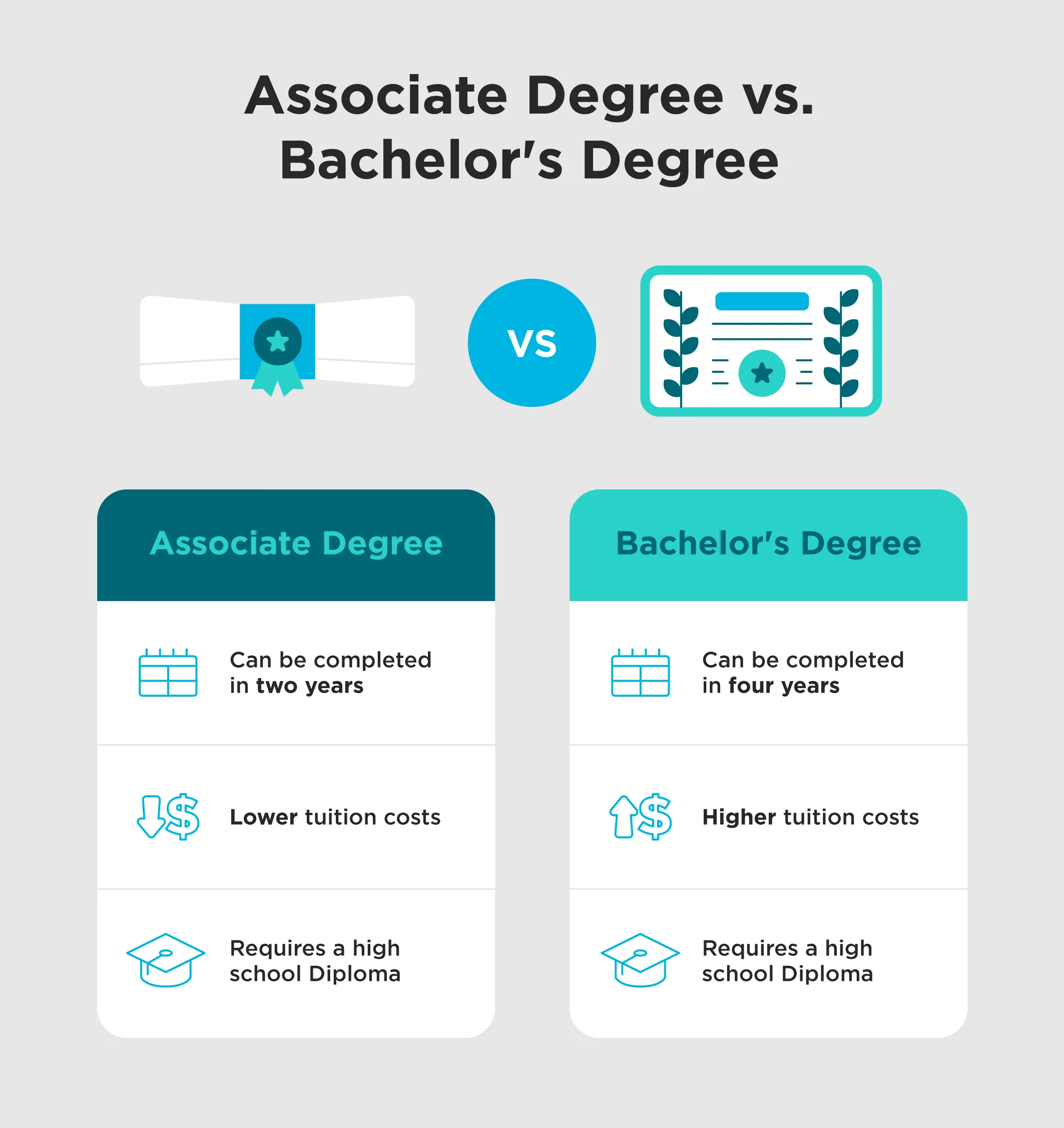
The most immediate benefit of an associate’s degree is the drastically lower price tag. According to data from the College Board, the average tuition for a public two-year community college is a fraction of the cost of a four-year public or private institution. For a student focused on capital preservation, this is a game-changer. By spending significantly less on the “front end” of their career, graduates can maintain higher liquidity.
This liquidity allows young professionals to start investing in 401(k)s, Roth IRAs, or even real estate years before their counterparts who are saddled with six-figure student loans. While a bachelor’s degree holder might spend their first decade of employment paying down interest, the associate’s degree holder is often already building compound interest. In the world of finance, time in the market beats timing the market; starting to invest at 20 instead of 26 can result in hundreds of thousands of dollars in additional wealth by retirement.
Speed to Market: The Opportunity Cost of Time
In finance, “opportunity cost” is the loss of potential gain from other alternatives when one alternative is chosen. When you spend four years in a classroom, you are not just paying tuition; you are also “losing” two years of potential income that you would have earned had you graduated in two.
An associate’s degree allows for a rapid “Speed to Market.” By entering the workforce two years earlier, a graduate gains 24 months of salary, benefits, and professional experience. If a specialized technician earns $50,000 a year, the opportunity cost of staying in school for an additional two years to get a general bachelor’s degree is $100,000 in lost wages, plus the additional tuition paid. When you run the numbers, the break-even point for a four-year degree often takes a decade or more to reach when compared to a high-demand two-year technical degree.
High-Yield Career Paths: Top-Paying Associate’s Degree Sectors
Not all degrees are created equal. To maximize the value of an associate’s degree, one must look at the “high-yield” sectors—industries where the demand for specialized technical skills far outweighs the supply of workers. These sectors offer salaries that frequently rival or exceed those of generalist bachelor’s degree holders.
Healthcare and Specialized Medical Services
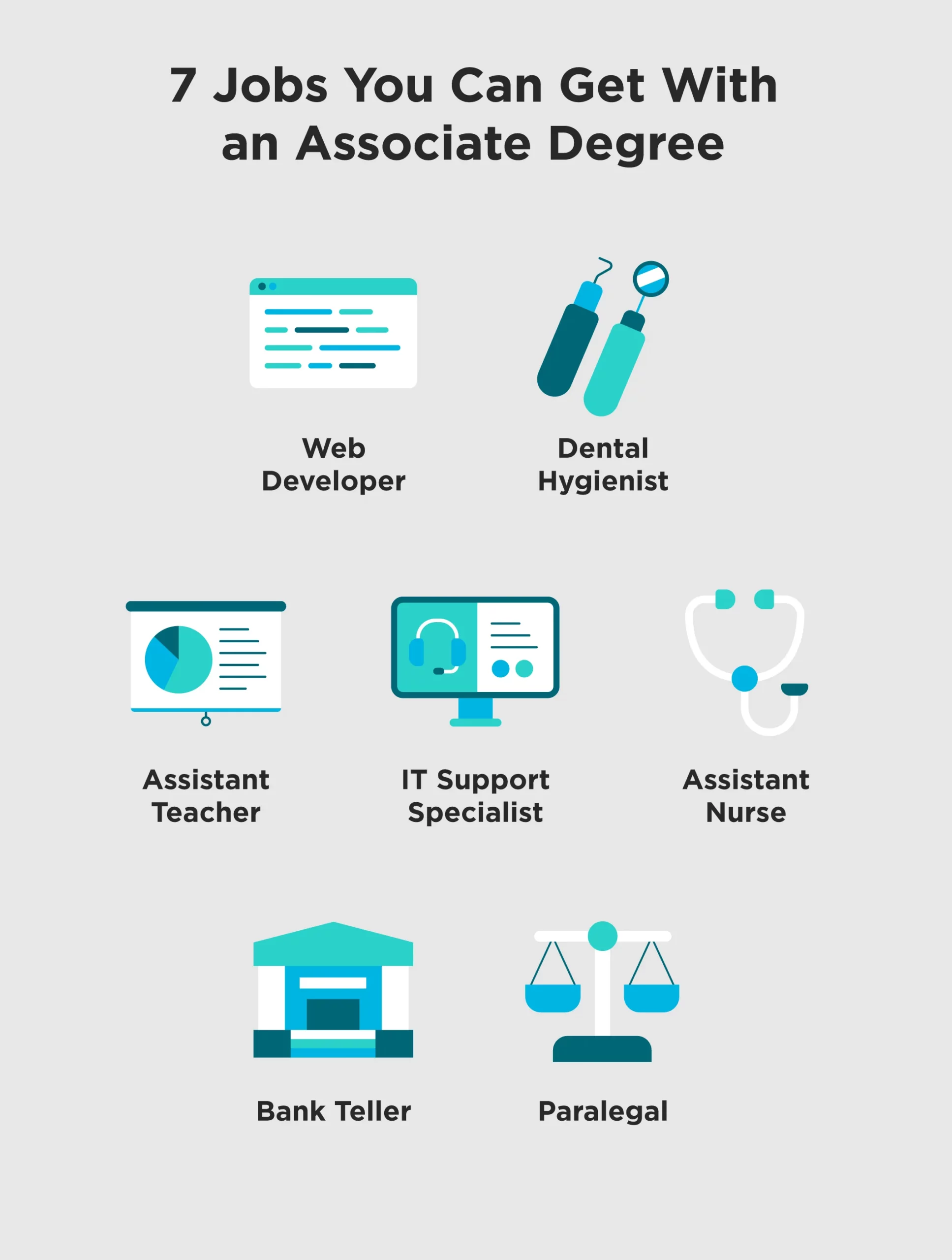
The healthcare sector is arguably the most lucrative arena for associate’s degree holders. Roles such as Dental Hygienists, Diagnostic Medical Sonographers, and Radiation Therapists require specialized two-year degrees but offer median salaries ranging from $70,000 to over $90,000.
From a financial planning perspective, these roles are “recession-resistant.” Health services are a necessity, not a luxury, meaning income stability is high even during economic downturns. For a person focused on steady cash flow and low career volatility, a two-year medical certification is one of the safest “Blue Chip” investments one can make in their own human capital.
Advanced Manufacturing and Technical Trades
We are currently seeing a “Silver Tsunami” in the skilled trades, as the older generation of technicians retires, leaving a massive vacuum. This supply-demand imbalance has driven up wages for those with associate’s degrees in fields like Avionics Technology, Nuclear Technicians, and Electrical Engineering Technology.

These are not the “blue-collar” jobs of the past; they are high-tech, precision-oriented roles that require sophisticated training. Air Traffic Controllers, for instance, can often enter the field with an associate’s degree through specific FAA-approved programs, entering a career path where six-figure salaries are the norm. By focusing on these technical niches, a student can bypass the “degree inflation” found in corporate offices and enter a specialized market where their skills command a premium price.
Strategic Wealth Building: Using an Associate’s Degree as a Financial Lever
The most sophisticated financial strategy involving an associate’s degree is using it as a “stepping stone” rather than a final destination. This is often referred to as the “2+2 Pathway” or “Educational Arbitrage.”
Employer Reimbursement and the 2+2 Pathway
Smart investors look for ways to use “Other People’s Money” (OPM) to grow their assets. An associate’s degree allows you to do exactly this with your education. By obtaining a two-year degree and securing a position in a high-demand field, you can often find an employer who offers tuition reimbursement.
In this scenario, the student pays for the first two years (at low community college rates) and then gets their employer to foot the bill for the remaining two years of a bachelor’s or master’s degree. This strategy results in the same four-year credential as their peers but at 25% of the cost. It is a classic move of financial efficiency: minimizing personal liability while maximizing the asset’s value.
Avoiding the Debt Trap
The “student loan crisis” is a significant drag on the modern economy. High debt-to-income ratios prevent young adults from qualifying for mortgages, starting businesses, or taking professional risks. By choosing an associate’s degree, many students are able to work part-time and pay for their tuition in cash, graduating with zero debt.
In personal finance, being “debt-free” is the equivalent of having a head start in a race. Without a $500 monthly student loan payment, that capital can be diverted into a high-yield savings account or a brokerage account. Over 40 years, that $500 monthly investment—saved because of a strategic educational choice made at age 18—can grow into nearly $2 million (assuming an 8% annual return). The associate’s degree is, quite literally, a million-dollar financial decision.
The Long-Term Economic Outlook: Stability and Income Growth
When analyzing the “Money” aspect of a degree, one must look at the long-term trajectory. Critics often argue that an associate’s degree has a “ceiling” on earnings. While this can be true in certain corporate hierarchies, the modern economy is shifting toward a “skills-based” valuation rather than a “degree-based” one.
Recession-Proofing Your Skillset
During economic contractions, companies look to cut costs. Generalist roles—middle management, marketing assistants, and general administrators—are often the first to go. However, the person who knows how to repair a CT scanner, manage a power grid, or navigate an aircraft is indispensable.
An associate’s degree often focuses on “hard skills” that are directly tied to revenue generation or essential infrastructure. From a risk management perspective, having a tangible, high-demand skill provides a “margin of safety” for your personal finances. Even if you are laid off, the time-to-rehire for specialized technical roles is significantly shorter than for generalist roles.
Lifetime Earnings and Career Progression
While the initial salary of a bachelor’s degree holder might be higher on average, the lifetime earnings of a strategic associate’s degree holder can be superior when adjusted for debt and investment gains. Furthermore, the associate’s degree does not preclude future growth.
Many of the wealthiest individuals in the technical and construction sectors started with a two-year degree, gained field experience, and then launched their own businesses. In the world of entrepreneurship, your clients don’t care where you went to school; they care if you can solve their problem. An associate’s degree provides the technical foundation to solve high-value problems, which is the ultimate key to wealth creation.
In conclusion, “what an associate’s degree can get you” is more than just a job; it gets you a financial head start. It provides a path to high-income sectors, a way to bypass the debilitating cycle of student debt, and a platform for strategic career moves. For the person focused on net worth rather than social prestige, the two-year degree is one of the most efficient financial tools available in the modern era.
aViewFromTheCave is a participant in the Amazon Services LLC Associates Program, an affiliate advertising program designed to provide a means for sites to earn advertising fees by advertising and linking to Amazon.com. Amazon, the Amazon logo, AmazonSupply, and the AmazonSupply logo are trademarks of Amazon.com, Inc. or its affiliates. As an Amazon Associate we earn affiliate commissions from qualifying purchases.