
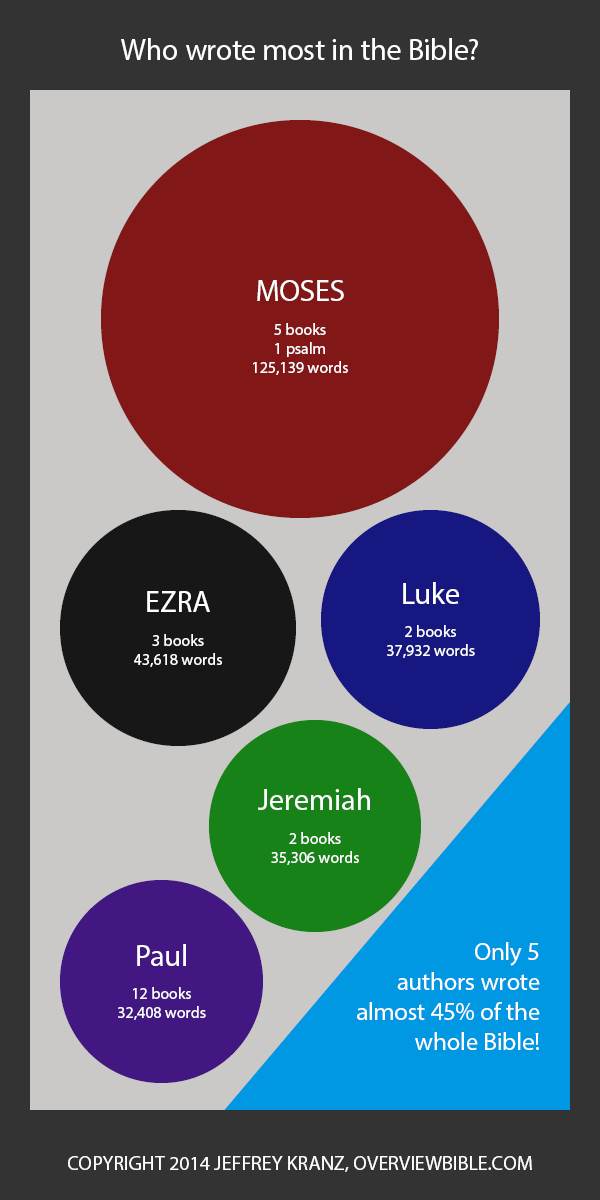
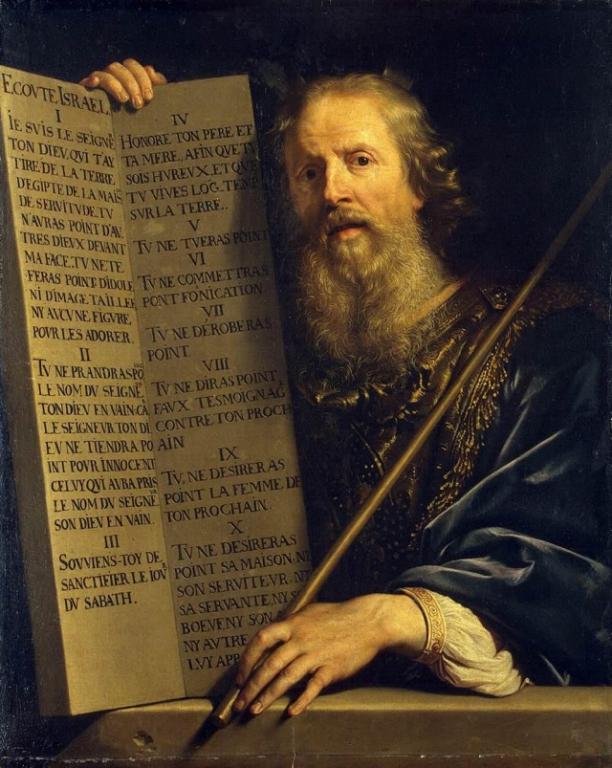
The question of which books of the Bible were authored by Moses—traditionally cited as the Pentateuch: Genesis, Exodus, Leviticus, Numbers, and Deuteronomy—has moved beyond the realm of traditional theology into the sophisticated world of computational linguistics and artificial intelligence. For centuries, the “Mosaic authorship” was a matter of faith and hermeneutics. Today, it is a data science challenge. By leveraging high-performance computing, Natural Language Processing (NLP), and stylometric analysis, researchers are uncovering the layers of these ancient texts with a level of precision that was previously impossible.
The Digital Frontier of Biblical Authorship Analysis
The intersection of ancient literature and modern software has given birth to the field of Digital Humanities. When we ask, “What books of the Bible did Moses write?” we are essentially asking for a forensic audit of textual data. Modern technology treats these five books not just as sacred literature, but as massive datasets that can be parsed, tokenized, and analyzed for patterns.
Stylometry and Machine Learning in Textual Criticism
Stylometry is the statistical study of linguistic style. In the tech world, this involves using algorithms to identify the “fingerprint” of an author based on word frequency, sentence structure, and the use of function words (like “and,” “but,” and “of”). When applying machine learning to the books of Moses, researchers use supervised learning models trained on known Hebrew writing styles to see if a single “authorial signature” exists across the Pentateuch.
Software tools like R and Python, equipped with libraries such as NLTK (Natural Language Toolkit) and Scikit-learn, allow researchers to perform cluster analysis. If the data shows significant variance in the linguistic signature between Genesis and Deuteronomy, the software can flag these as potential shifts in authorship or editorial intervention. These AI-driven insights have provided a quantitative basis for theories that previously relied on subjective observation.
The Transition from Traditional Scholarship to Algorithmic Attribution
Historically, scholars used the “Documentary Hypothesis” to suggest that the books attributed to Moses were actually a compilation of four distinct sources (J, E, D, and P). In the last decade, AI has been used to test this hypothesis. Algorithms designed for plagiarism detection and authorship attribution have been repurposed to scan the Hebrew Masoretic Text.
By utilizing Support Vector Machines (SVM) and Neural Networks, technologists have been able to categorize verses with over 90% accuracy based on their linguistic profile. This tech-driven approach allows us to see “seams” in the text where one stylistic source ends and another begins, providing a high-resolution map of how these books were likely constructed over time, rather than being the work of a single individual writing in a vacuum.
Decoding the Pentateuch: AI Tools and Data Modeling
To determine the extent of Moses’s contribution to the first five books of the Bible, data scientists employ complex data modeling techniques. This involves more than just counting words; it involves understanding the evolution of language over centuries.
Genesis and the Challenge of Multiple Source Codes
Genesis presents a unique challenge for AI because it contains various literary genres, from genealogical lists to narrative prose. When fed into a deep learning model, Genesis often reveals a “polyphonic” structure. Using K-means clustering, researchers can separate the text into distinct groups that share common vocabulary and grammatical syntax.
For instance, the creation account in Genesis 1 differs significantly from the narrative in Genesis 2 when analyzed through NLP. The software identifies shifts in the naming conventions for the divine and different syntactic complexities. While tradition attributes the entire book to Moses, the data suggests a complex layering of legacy data—ancient oral traditions and earlier documents—that were integrated using an early form of “textual version control.”
Exodus and Leviticus: Identifying Linguistic Fingerprints
Exodus and Leviticus are often viewed as the core of the Mosaic contribution, focusing on the law and the journey of the Israelites. In these books, AI analysis reveals a more consistent “legalistic” tone. High-frequency patterns in the use of imperative verbs and specific prepositional phrases suggest a more unified authorial intent compared to the diverse narratives of Genesis.

Technologists use Sentiment Analysis and Topic Modeling (such as Latent Dirichlet Allocation) to see how themes evolve. In Leviticus, the topic density around “holiness” and “ritual” is so statistically distinct that it forms its own linguistic cluster. If Moses is the primary architect of these laws, the AI confirms that these sections possess a specialized “technical vocabulary” that sets them apart from the surrounding narrative, much like how documentation for a software API differs from a project’s marketing copy.
Natural Language Processing (NLP) and Ancient Hebraic Syntax
One of the greatest hurdles in using tech to identify what Moses wrote is the nature of Ancient Hebrew. Unlike modern English, Ancient Hebrew is a highly inflected language where prefixes and suffixes carry significant grammatical weight.
Training Models on Ancient Manuscripts
To accurately analyze the Pentateuch, AI models must be specifically trained on “Dead Language” datasets. Standard LLMs (Large Language Models) like GPT-4 or Claude are optimized for modern languages. However, specialized models like “Hebrew-BERT” have been developed to handle the nuances of Semitic syntax.
By training these models on the entire corpus of the Hebrew Bible, as well as extra-biblical texts like the Dead Sea Scrolls, researchers can create a baseline for “Mosaic Era” Hebrew. The tech can then measure “linguistic distance.” If the Hebrew used in Deuteronomy appears “younger” (more evolved) than the Hebrew in Exodus, the software provides a chronological timestamp that challenges the idea of all five books being written simultaneously by one man.
Distinguishing the “Mosaic” Signature from Later Editing
A critical function of AI in this field is identifying the “Redactor”—the editor who synthesized various texts into the final form of the Bible. In the world of software development, this is akin to identifying who merged several branches of code into the “main” repository.
Using anomaly detection algorithms, researchers can find “interpolations”—verses or phrases that do not fit the surrounding linguistic environment. For example, the account of Moses’s death at the end of Deuteronomy is a clear anomaly if Moses were the sole author. AI can pinpoint exactly where the primary author’s signature ends and the editor’s signature begins, allowing for a more nuanced understanding of “authorship” as a collaborative, multi-generational process managed by ancient “database administrators.”
The Future of Digital Theology and Archival AI
The application of technology to the question of what Moses wrote is not just about debunking or confirming tradition; it is about the preservation and deeper understanding of human history through digital tools.
Preserving the Integrity of Historical Records
As we digitize ancient manuscripts, we use Computer Vision to reconstruct damaged or faded texts. Tools like Multi-Spectral Imaging (MSI) allow us to see layers of text invisible to the naked eye. Once these images are converted into machine-readable data via OCR (Optical Character Recognition), they become part of the global dataset for authorship analysis.
This tech ensures that the search for the “Books of Moses” is based on the most accurate data possible. By removing human bias from the analysis, AI provides a neutral platform where different theories can be tested against the raw data of the manuscripts. This is “Evidence-Based Theology,” powered by the same logic that drives modern cybersecurity and data forensics.
Beyond Moses: The Scalability of AI in Literary Forensics
The methodologies developed to analyze the Pentateuch are being scaled to analyze other historical mysteries. The same software used to determine if Moses wrote the Book of Numbers is used to verify the authenticity of historical documents, detect modern academic fraud, and even analyze the “DNA” of corporate branding materials to ensure consistency in voice.
In conclusion, while the traditional answer to “What books of the Bible did Moses write?” is the Pentateuch, modern technology offers a more complex and fascinating answer. Through the lens of AI, we see a collection of books that may have been sparked by a single historical figure but were curated, edited, and preserved through a sophisticated system of ancient information management. The tech does not replace the history; it illuminates it, allowing us to parse the “source code” of Western civilization with unprecedented clarity.
aViewFromTheCave is a participant in the Amazon Services LLC Associates Program, an affiliate advertising program designed to provide a means for sites to earn advertising fees by advertising and linking to Amazon.com. Amazon, the Amazon logo, AmazonSupply, and the AmazonSupply logo are trademarks of Amazon.com, Inc. or its affiliates. As an Amazon Associate we earn affiliate commissions from qualifying purchases.