
The highly anticipated Amazon Prime Video series, “The Lord of the Rings: The Rings of Power,” has finally arrived, bringing the vast and intricate world of J.R.R. Tolkien back to the forefront of popular culture. For many, this sprawling epic is their first true immersion into Middle-earth, sparking a natural curiosity: What book is Rings of Power based on? While the show draws inspiration from Tolkien’s expansive legendarium, the answer isn’t as straightforward as pointing to a single novel. Instead, the series delves into the appendices and supplemental materials of his most famous work, “The Lord of the Rings.”
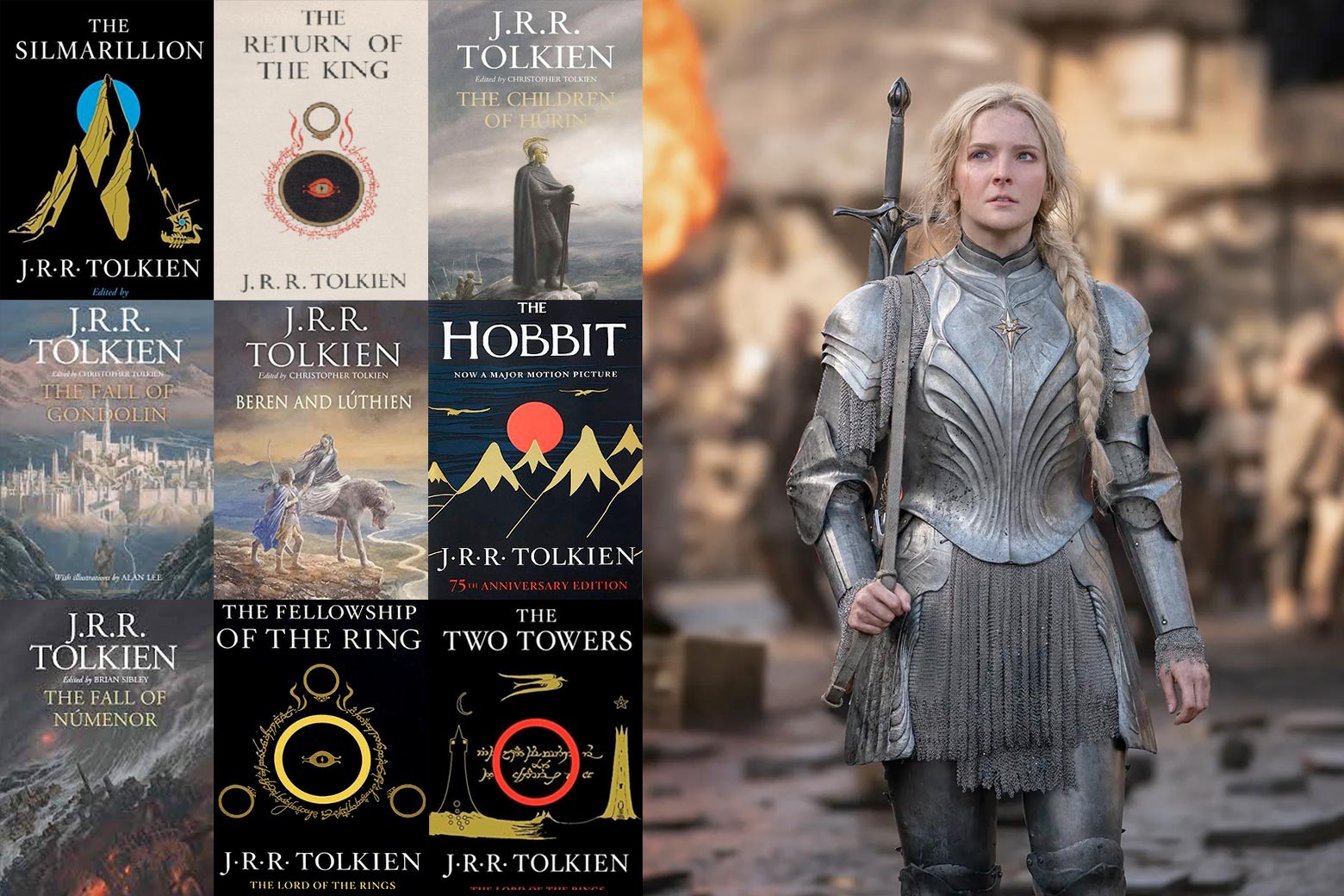
This approach allows for a unique narrative opportunity, exploring a period in Middle-earth’s history that Tolkien himself detailed but didn’t fully dramatize in a singular narrative. Understanding this source material is key to appreciating the depth and nuance of “The Rings of Power,” and it’s where we can begin to explore the rich tapestry woven by the series.
The Foundation: Tolkien’s Masterpiece and Its Expansive Lore
J.R.R. Tolkien was not just a storyteller; he was a meticulous world-builder. His primary literary contributions to the world of Middle-earth are “The Hobbit” and “The Lord of the Rings.” “The Hobbit” serves as a prequel, introducing many beloved characters and the foundational elements of Middle-earth. “The Lord of the Rings,” however, is the monumental saga that chronicles the War of the Ring.
However, the story of Middle-earth doesn’t end with Frodo’s journey to Mount Doom. Tolkien, a philologist by profession, spent decades developing the history, languages, and mythology of his invented world. This extensive background material, often referred to as the “legendarium,” was compiled and published after his death by his son, Christopher Tolkien, in the multi-volume “The History of Middle-earth” series, and most notably in “The Silmarillion.”
“The Rings of Power” primarily draws its narrative from the appendices of “The Lord of the Rings.” These appendices are not just footnotes; they contain a wealth of information about the history of the Third Age of Middle-earth, the rise and fall of kingdoms, the genealogy of characters, and crucial historical events. This period, known as the Second Age, is where “The Rings of Power” is set, a time of relative peace after the defeat of the first Dark Lord, Morgoth, but before the rise of Sauron.
The Second Age: A Time of Shadows and Creations
The Second Age of Middle-earth is a pivotal era, spanning thousands of years. It’s a period characterized by the establishment of great kingdoms, the forging of powerful artifacts, and the subtle, insidious rise of a new evil. The primary focus of “The Rings of Power” is the creation of the Rings of Power themselves.
These magical rings, gifted to the rulers of Elves, Dwarves, and Men, were originally conceived by the Elven smiths of Eregion, under the guidance of the master smith Celebrimbor. Their intention was to preserve the beauty and power of Middle-earth, but they were ultimately deceived by the Dark Lord Sauron, who had pledged his service to Morgoth in the First Age and had been reshaping the remnants of Morgoth’s power.
Sauron, disguised as the fair lord Annatar (“Lord of Gifts”), manipulated the Elven smiths, teaching them much of what they knew and ultimately aiding in the forging of the Rings. This deception is a central theme that the series aims to explore, highlighting how power can corrupt and how even the most well-intentioned creations can be twisted for dark purposes.
The forging of the Rings is detailed in “The Silmarillion,” particularly in the “Akallabêth” (The Downfall of Númenor) and “Of the Rings of Power and the Third Age” sections. While “The Silmarillion” is a more mythical and historical account, “The Rings of Power” series takes these skeletal historical facts and fleshes them out with character development, dramatic arcs, and visual storytelling.
Adapting the Unwritten: Challenges and Opportunities for “The Rings of Power”
Adapting Tolkien’s work for the screen is an immense undertaking. Peter Jackson’s “The Lord of the Rings” film trilogy masterfully brought “The Lord of the Rings” novel to life. However, “The Rings of Power” faces a different set of challenges and opportunities because it is based on material that is less narrative-driven and more encyclopedic.
The appendices of “The Lord of the Rings” and the historical accounts in “The Silmarillion” provide the chronological framework and key events, but they often leave significant gaps in terms of character motivations, interpersonal relationships, and the day-to-day lives of the inhabitants of Middle-earth during the Second Age. This is where the creative license of the showrunners, Patrick McKay and John D. Payne, comes into play.
Building Beyond the Framework: Original Storylines and Character Arcs
The decision to focus on the Second Age means that “The Rings of Power” is not a direct adaptation of any single book. Instead, it’s an ambitious attempt to weave together various threads from Tolkien’s writings to create a cohesive and compelling narrative. This involves:
- Developing original characters and storylines: While many prominent figures from Tolkien’s lore are present, such as Galadriel and Elrond, the series introduces new characters and explores their journeys and relationships. This allows for the exploration of themes that might have been present in Tolkien’s mind but not explicitly written down. For example, the show delves into the early lives and relationships of key Elven characters, providing context for their later actions in “The Lord of the Rings.”
- Expanding on existing lore: The series takes the historical events and characters mentioned in the appendices and gives them flesh and blood. The rise of Sauron from a shadowy presence to a tangible threat, the political machinations between different races, and the complex relationships between Elves, Dwarves, and Men are all explored in greater detail.
- Visualizing a less-seen era: The Second Age is largely unillustrated in popular media. “The Rings of Power” has the monumental task of bringing this era to life visually, from the grandeur of Númenor to the underground cities of the Dwarves and the elven realms. This requires immense creativity in set design, costume design, and special effects.
The core of the series’ narrative revolves around the threat of Sauron’s return and the subsequent forging of the Rings of Power. The show explores the period leading up to this, detailing how Sauron, after the defeat of Morgoth, gradually consolidated his power and began his machinations to enslave Middle-earth. This includes his efforts to deceive the Elves into creating the Rings, which he intended to control.
Beyond the Books: Technological Innovation in Bringing Middle-earth to Life
The creation of “The Rings of Power” is not only a feat of storytelling but also a testament to technological innovation in the entertainment industry. The sheer scale and ambition of the project have pushed the boundaries of what is possible in television production.
The Digital Canvas: Visual Effects and World-Building
The visual effects in “The Rings of Power” are crucial to realizing the world of the Second Age. The series employs cutting-edge CGI and practical effects to create:
- Breathtaking landscapes: From the pristine elven cities of Lindon and the mining kingdom of Khazad-dûm to the majestic island kingdom of Númenor, the series showcases diverse and visually stunning environments that are both faithful to Tolkien’s descriptions and imaginatively rendered.
- Mythical creatures and beings: The world of Middle-earth is populated by a variety of creatures, including Orcs, Harfoots (ancestors of Hobbits), and potentially other beings. The visual design and animation of these characters require advanced technology to achieve a level of realism and impact.
- Epic battles and action sequences: As with any fantasy epic, “The Rings of Power” features significant action sequences. The precise choreography and visual execution of these moments rely heavily on sophisticated motion capture, digital compositing, and advanced rendering techniques.
The use of technologies like Unreal Engine for virtual production and real-time rendering plays a significant role in shaping the visual landscape of the series. This allows filmmakers to build and explore virtual sets, experiment with lighting and camera angles, and ensure a cohesive visual style throughout production. The ability to iterate and refine these digital environments in real-time is a game-changer for large-scale fantasy productions.
Performance Capture and Digital De-aging
While not as prominently featured in the Second Age setting as in some other productions, the underlying technologies for character performance are equally advanced. The ability to capture subtle nuances of human and non-human performance through motion capture and translate them into digital characters with a high degree of fidelity is essential.
For characters that might appear younger or undergo significant transformations, digital de-aging or aging techniques can be employed, further enhancing the believability of the narrative. The seamless integration of these digital elements with live-action performances is a testament to the ongoing evolution of visual effects.
Branding Middle-earth: Marketing a Legacy and a New Era
The successful launch of “The Rings of Power” also involves a sophisticated branding strategy that aims to appeal to both long-time fans of Tolkien and a new generation of viewers.
Tapping into a Cult Following: Respecting the Lore
Amazon’s approach to marketing “The Rings of Power” has been to acknowledge and celebrate the deep-rooted love for Tolkien’s works. This involves:
- Engaging with the existing fanbase: Through behind-the-scenes content, interviews with cast and crew, and dedicated fan forums, Amazon has sought to involve the established community of Tolkien enthusiasts. This builds anticipation and ensures that the core essence of Tolkien’s world is respected.
- Highlighting the connection to “The Lord of the Rings”: While distinct in its story and setting, the marketing consistently emphasizes the lineage of the series, connecting it to the beloved characters and themes of Peter Jackson’s films and, by extension, Tolkien’s novels. This creates a sense of continuity and familiarity.
- Focusing on the epic scale and ambition: The marketing has consistently portrayed “The Rings of Power” as a grand, cinematic experience, aiming to evoke the same sense of awe and wonder that audiences felt with “The Lord of the Rings.”
Building a New Brand: Attracting a Wider Audience
Simultaneously, Amazon aims to build “The Rings of Power” as a standalone brand, capable of captivating viewers who may not be intimately familiar with Tolkien’s lore. This involves:
- Emphasizing universal themes: The marketing highlights themes of friendship, courage, sacrifice, and the struggle between good and evil, which resonate with a broad audience.
- Showcasing compelling characters and storylines: Trailers and promotional materials have focused on intriguing character dynamics, the promise of adventure, and the visual splendor of Middle-earth, aiming to draw viewers into the narrative regardless of their prior knowledge.
- Leveraging the power of streaming platforms: Amazon’s global reach and its Prime Video platform allow for a synchronized worldwide release, creating a shared cultural moment and fostering widespread discussion and engagement.
The corporate identity of “The Rings of Power” as a premium, high-budget fantasy series is crucial. The investment in storytelling, production value, and marketing all contribute to this brand perception. The success of the series will not only be measured in viewership but also in its ability to establish itself as a major force in the fantasy genre, worthy of the legacy it inherits.
Financial Implications: The Colossal Investment in Middle-earth
The production and marketing of “The Rings of Power” represent one of the largest financial investments ever made in a television series. This colossal expenditure reflects Amazon’s ambition to create a flagship show for its streaming service and its belief in the enduring power of Tolkien’s world.
A Sky-High Budget: The Cost of Epic Storytelling
Reports suggest that Amazon spent upwards of $250 million for the rights to the series and an additional estimated $200 million per season for production. This dwarfs the budgets of most other television shows and underscores the scale of their commitment.
This immense financial outlay is spread across various aspects:
- Talent: Securing a diverse and talented cast, acclaimed directors, and a seasoned production team requires significant financial resources.
- Visual Effects and Technology: As discussed, the advanced visual effects and technological infrastructure needed to bring Middle-earth to life are incredibly expensive.
- Set Design and Construction: Building elaborate sets for the various kingdoms and locations in the Second Age requires substantial investment in materials and labor.
- Marketing and Promotion: To ensure a global audience, a massive marketing campaign is essential, involving advertising, public relations, and digital outreach.
The financial strategy here is one of long-term investment. Amazon is betting that “The Rings of Power” will become a tentpole franchise, attracting and retaining subscribers to Prime Video for years to come. The potential for future seasons, spin-offs, and related merchandise creates a lucrative ecosystem.

Monetizing Middle-earth: Beyond Subscription Revenue
While subscription revenue from Prime Video is the primary driver, the financial success of “The Rings of Power” can be amplified through various avenues:
- Merchandising: The global appeal of “The Lord of the Rings” has always translated into massive merchandise sales, from action figures and collectibles to apparel and home goods. “The Rings of Power” offers a fresh wave of opportunities for branded products.
- Licensing: The intellectual property itself can be licensed for use in video games, theme park attractions, and other media, generating additional revenue streams.
- Brand Partnerships: Collaborations with other brands, aligning with the fantasy and epic themes of the series, can also be a significant source of income.
The business finance behind such a venture is complex, involving meticulous budgeting, risk assessment, and strategic allocation of resources. Amazon’s willingness to commit such vast sums indicates a high level of confidence in the profitability and cultural impact of “The Rings of Power.” The series represents not just an entertainment product but a significant business opportunity to further solidify Amazon’s position in the streaming wars and expand its brand influence.
In conclusion, “The Rings of Power” is based on the rich, but less directly narrative, appendices and lore surrounding J.R.R. Tolkien’s “The Lord of the Rings,” particularly focusing on the Second Age of Middle-earth. The series undertakes the ambitious task of expanding upon these historical accounts, weaving original storylines and character arcs to bring this pivotal era to life. This endeavor is supported by groundbreaking technological advancements in visual effects and digital production, while its marketing and financial strategies aim to build a powerful new brand around a beloved legacy, securing its place as a monumental achievement in fantasy storytelling and a significant financial venture.
aViewFromTheCave is a participant in the Amazon Services LLC Associates Program, an affiliate advertising program designed to provide a means for sites to earn advertising fees by advertising and linking to Amazon.com. Amazon, the Amazon logo, AmazonSupply, and the AmazonSupply logo are trademarks of Amazon.com, Inc. or its affiliates. As an Amazon Associate we earn affiliate commissions from qualifying purchases.