
In the current landscape of rapid digital evolution, few technologies have sparked as much debate, confusion, and genuine excitement as blockchain. While the term is frequently tethered to the volatile world of cryptocurrencies, blockchain itself is a foundational technological shift—a paradigm change in how we store, verify, and transmit data across the internet. At its core, blockchain is a distributed ledger technology (DLT) that enables the secure, transparent, and immutable recording of transactions. To understand what blockchain is from a purely technical perspective, one must look past the market hype and examine the sophisticated engineering that allows a network of untrusted parties to reach a consensus on the truth without a central authority.
The Structural Foundation: The Anatomy of a Block
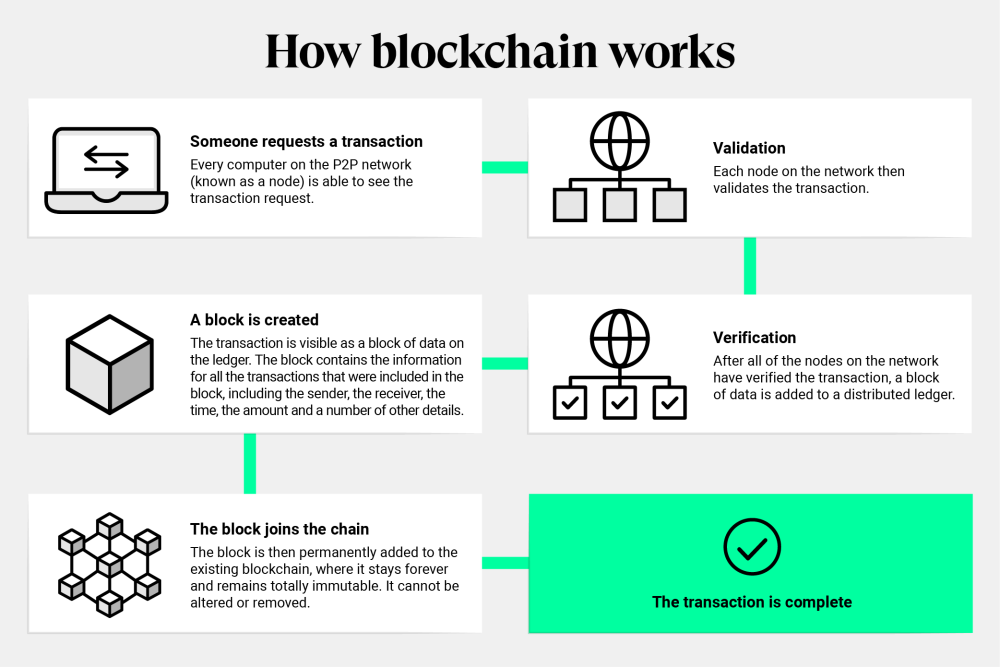
To understand the macro-system of a blockchain, one must first understand its micro-component: the block. A blockchain is essentially a digital chain of chronological data packages. Each “block” contains a specific set of information, and once a block is filled, it is sealed and “chained” to the previous one, creating a permanent timeline of data.
Data, Hashes, and the Chain of Trust
Every block in a blockchain consists of three primary elements: the data, a hash, and the hash of the previous block. The “data” stored depends on the type of blockchain; for a transactional ledger, it might include the sender, receiver, and amount. However, in modern enterprise blockchains, this data could be anything from supply chain logistics to medical records.
The “hash” is the most critical technical component for security. You can think of a hash as a digital fingerprint. It is a hexadecimal string generated by a cryptographic algorithm (such as SHA-256). The moment a block is created, its hash is calculated. If anything inside the block changes, the hash changes completely. Because each block also contains the hash of the previous block, a mathematical link is created. If a malicious actor attempts to alter the data in block 2, block 2’s hash changes. This makes the hash stored in block 3 invalid, effectively breaking the entire chain and alerting the network to the tampering.
The Role of Cryptography and Public-Key Infrastructure
Blockchain relies heavily on asymmetric cryptography, or public-key infrastructure (PKI), to ensure data integrity and user authentication. Users possess a “public key,” which acts like an email address or a destination for data, and a “private key,” which serves as a digital signature. When a transaction occurs, the user signs it with their private key, proving they are the rightful owner of the data or asset being moved. The network can then verify this signature using the public key without the private key ever being revealed. This cryptographic layer ensures that while the ledger is transparent and visible to all, the control over specific data points remains strictly with the authorized holder.
Decentralization and the Mechanics of Consensus
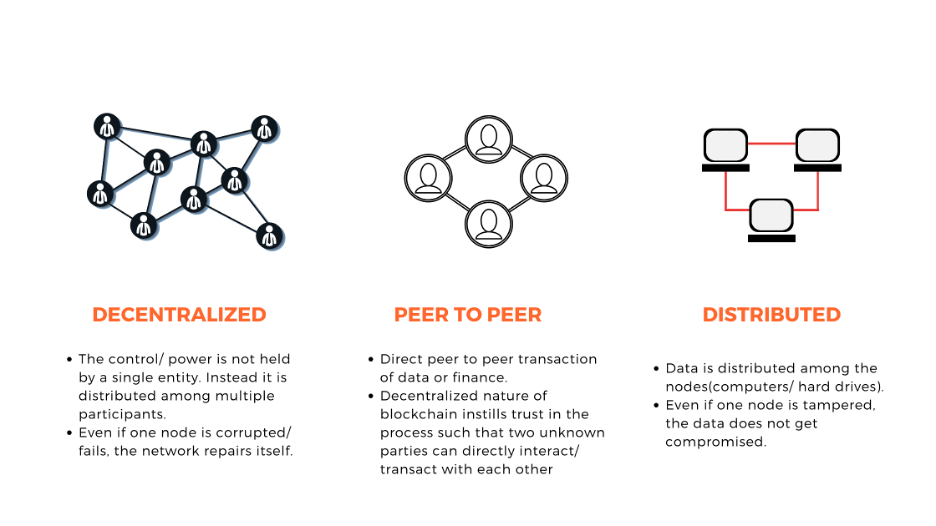
The revolutionary aspect of blockchain technology isn’t just how the data is structured, but where it is stored. Traditional databases are centralized; they live on a single server or a cluster controlled by one entity (like a bank or a government). Blockchain flips this model on its head by utilizing a Peer-to-Peer (P2P) network.
Distributed Ledger Technology (DLT)
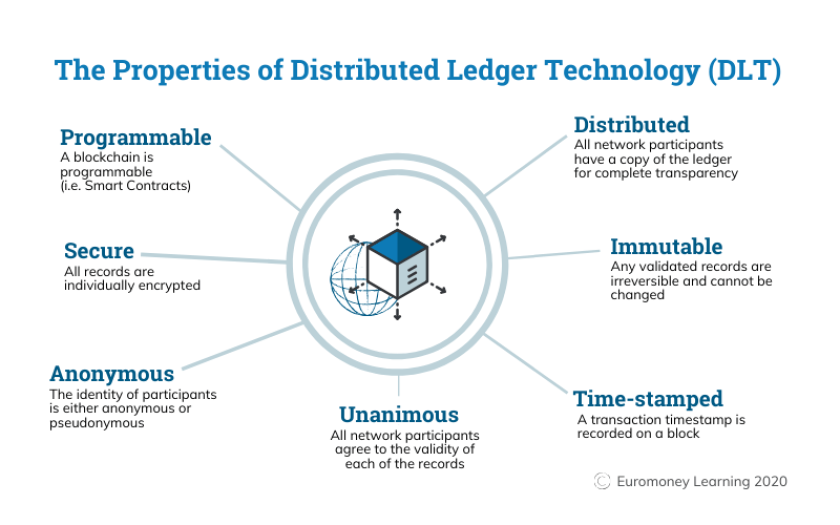
In a blockchain network, every participant—known as a “node”—maintains a full copy of the entire ledger. When a new block is added, every node updates its record simultaneously. This redundancy is what makes the technology so resilient. There is no “master copy” for a hacker to target. To successfully compromise a blockchain, an attacker would have to alter the data on a majority of the nodes simultaneously, a feat that becomes mathematically and computationally impossible as the network grows. This distributed nature eliminates single points of failure, ensuring that the system remains online and accurate even if large portions of the network go offline.
Reaching Agreement: Proof of Work vs. Proof of Stake
Because there is no central “boss” to decide which transactions are valid, the network must use a consensus mechanism—a set of rules that allow the nodes to agree on the state of the ledger.
The most famous mechanism is Proof of Work (PoW). In a PoW system, nodes (miners) compete to solve complex mathematical puzzles. The first one to solve the puzzle earns the right to add the next block to the chain. This process is energy-intensive by design; it makes the cost of attacking the network prohibitively expensive.
As technology has evolved, many newer networks have moved toward Proof of Stake (PoS). In this model, the right to validate transactions is granted to users based on the number of tokens they “stake” or lock up as collateral. This significantly reduces energy consumption while maintaining security through economic incentives—if a validator attempts to process a fraudulent transaction, they lose their staked assets. These consensus protocols are the engine of the blockchain, ensuring that the “truth” is maintained through math and game theory rather than human trust.
Beyond Simple Ledgers: Smart Contracts and Programmable Logic
While the earliest iteration of blockchain was designed merely to track the movement of digital assets, the second generation of the technology introduced the concept of “programmability.” This was spearheaded by the launch of Ethereum, which integrated a Turing-complete programming language into the blockchain architecture.
The Rise of the Smart Contract
A smart contract is a self-executing piece of code that lives on the blockchain. It automatically triggers an action when predefined conditions are met. For example, a smart contract could be programmed to release payment to a vendor only after a shipping carrier confirms the delivery of goods. Because these contracts are stored on the blockchain, they are immutable and transparent. No middleman is required to enforce the agreement; the code is the law. This shifts the technical requirement from “trusting a person” to “verifying the code,” which significantly reduces the friction and cost of complex digital interactions.
The Ethereum Virtual Machine (EVM) and Decentralized Apps (dApps)
The introduction of the Ethereum Virtual Machine (EVM) allowed developers to build decentralized applications (dApps) on top of the blockchain. These apps function similarly to the apps on your smartphone, but they operate on a decentralized network rather than a centralized server. This has led to a massive expansion of the tech stack, enabling decentralized storage, decentralized identity protocols, and complex automated systems that can operate 24/7 without human intervention. The blockchain is no longer just a spreadsheet; it has become a global, decentralized computer.
Security, Privacy, and the Modern Tech Stack
As blockchain matures, its integration into the broader technology ecosystem is becoming more sophisticated. It is no longer a standalone silo but a tool used to enhance digital security and data sovereignty.
Enhancing Cybersecurity and Data Integrity
In a traditional IT environment, “data at rest” is often a target for breaches. If a hacker gains access to a central server, they can alter or steal sensitive information. Blockchain provides a solution through “hashing” and “immutability.” By storing the hashes of critical system files or sensitive data on a blockchain, IT administrators can create an “integrity audit trail.” If a file is altered by malware or an unauthorized user, the hash on the blockchain will no longer match the file’s current state, triggering an immediate alert. This makes blockchain an invaluable tool for securing IoT (Internet of Things) devices and protecting critical infrastructure.
Decentralized Identity (DID) and Self-Sovereignty
One of the most promising technical applications of blockchain is Decentralized Identity (DID). Currently, our digital identities are fragmented across various platforms (Google, Facebook, Government portals), and we do not truly own them. Blockchain allows for the creation of a “self-sovereign identity.” A user can store their verified credentials—such as a driver’s license or a university degree—in a digital wallet. When they need to prove their identity, they can provide a “zero-knowledge proof” (ZKP) to a third party. This allows the user to prove they are over 21, for example, without revealing their actual birth date or address. The blockchain acts as the verification layer that confirms the credential is valid without storing the actual private data on the public ledger.
The Future: Layer 2 Scaling and Interoperability
Despite its potential, blockchain technology faces a significant hurdle known as the “Blockchain Trilemma”—the challenge of achieving security, decentralization, and scalability simultaneously. Early blockchains were secure and decentralized but were slow and expensive to use. The current frontier of blockchain engineering is focused on solving these throughput issues.
Solving the Scaling Puzzle with Layer 2
To handle the volume of data required for global adoption, engineers are developing “Layer 2” solutions. These are protocols that sit on top of the main blockchain (Layer 1). They process transactions off-chain, bundle them together, and then settle the final result on the main chain. Technologies like “Rollups” and “State Channels” allow a blockchain to process thousands of transactions per second, rivaling traditional payment processors like Visa, while still inheriting the security of the underlying decentralized network.
The Quest for Interoperability
As thousands of different blockchains emerge, the next technical challenge is interoperability—allowing different blockchains to talk to one another. In the early days, a piece of data on the Bitcoin blockchain could not easily interact with the Ethereum blockchain. Today, “cross-chain bridges” and “inter-blockchain communication (IBC) protocols” are being built to create a “network of networks.” This will eventually lead to a seamless digital environment where data and assets move freely across different protocols, much like how different email providers (Gmail, Outlook) can communicate seamlessly today.
In conclusion, blockchain is much more than a financial tool; it is a fundamental shift in data architecture. By combining cryptography, P2P networking, and consensus algorithms, it creates a new type of digital environment where trust is decentralized and data is immutable. As we move further into the era of Web3, the technical principles of blockchain will likely become as integral to the internet as the TCP/IP protocols that power our web browsing today. Whether through smart contracts, enhanced cybersecurity, or decentralized identities, blockchain is redefining the boundaries of what is possible in the digital world.
aViewFromTheCave is a participant in the Amazon Services LLC Associates Program, an affiliate advertising program designed to provide a means for sites to earn advertising fees by advertising and linking to Amazon.com. Amazon, the Amazon logo, AmazonSupply, and the AmazonSupply logo are trademarks of Amazon.com, Inc. or its affiliates. As an Amazon Associate we earn affiliate commissions from qualifying purchases.