
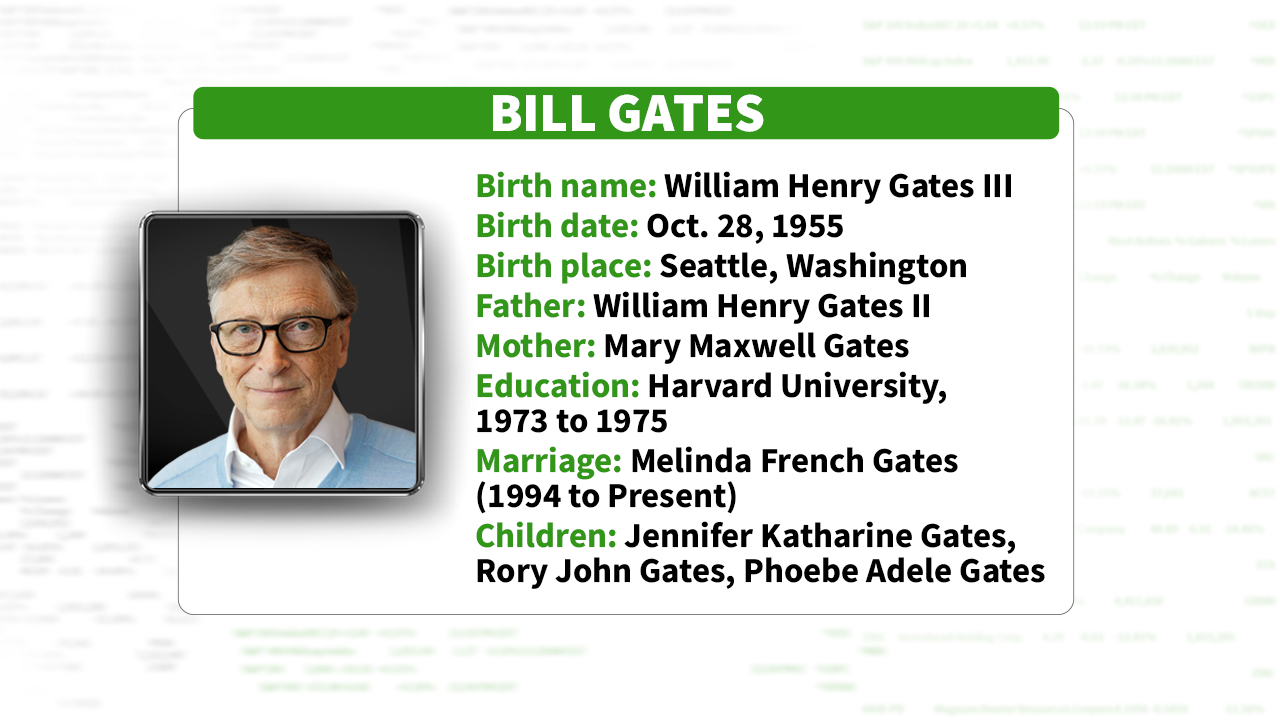
For decades, the name Bill Gates was synonymous with a single entity: Microsoft. As the co-founder of the software giant that put a computer on every desk and in every home, Gates’ wealth was inextricably linked to the volatile world of technology. However, a look at his current balance sheet reveals a profound transformation. Today, Bill Gates is not just a tech pioneer; he is one of the most sophisticated and diversified institutional-grade investors in the world.
Through his private investment arm and personal holdings, Gates has built a portfolio that prioritizes long-term stability, essential infrastructure, and sustainable growth. Understanding “what Bill Gates owns” is more than a study in celebrity wealth; it is a masterclass in capital preservation and strategic asset allocation.

The Engine of Wealth: Cascade Investment LLC
The most significant shift in Gates’ financial journey occurred when he began systematically divesting his Microsoft shares to fund his philanthropic efforts and diversify his personal wealth. The vehicle for this transformation is Cascade Investment LLC, a secretive but incredibly powerful private investment firm based in Kirkland, Washington.
The Role of Michael Larson and the Philosophy of Diversification
Since the mid-1990s, Gates’ wealth has been managed by Michael Larson. The mandate given to Larson was clear: protect the principal and ensure steady growth through diversification. This strategy moved Gates away from a tech-heavy concentration and into “old economy” sectors. By selling Microsoft stock—a high-growth but volatile asset—and reinvesting in railroads, waste management, and agriculture, Gates insulated his fortune from tech sector bubbles. This approach mirrors the “Value Investing” philosophy championed by his close friend, Warren Buffett, focusing on businesses with high barriers to entry and consistent cash flows.
From Software to Hard Assets
Cascade Investment operates much like a sovereign wealth fund. It does not chase the latest crypto trends or speculative tech IPOs. Instead, it looks for “moats”—companies that dominate their respective industries. By shifting from intangible software code to tangible hard assets like real estate and machinery, Gates has ensured that his wealth is anchored in the physical realities of the global economy.
The King of Farmland: Agriculture as a Strategic Asset
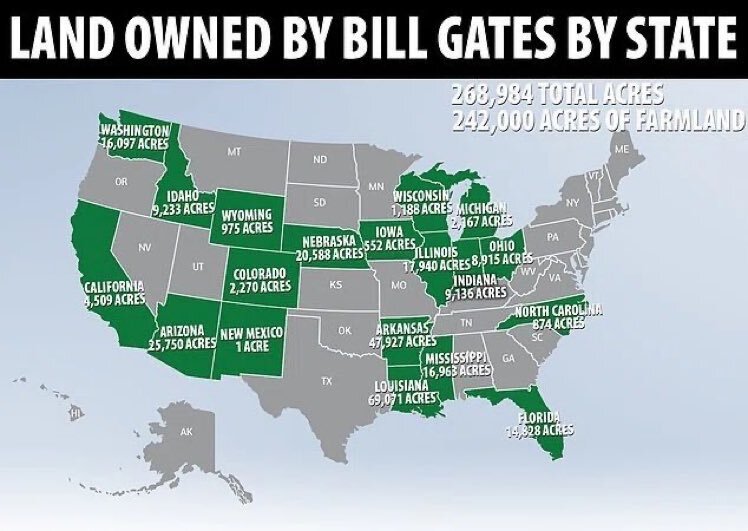
One of the most surprising revelations in recent years is that Bill Gates is the largest private owner of farmland in the United States. Spanning approximately 270,000 acres across dozens of states, his agricultural holdings are a testament to a long-term “Money” strategy that prizes utility and scarcity.
Why Farmland is a Financial Fortress
In the world of personal finance and institutional investing, farmland is often referred to as “gold with a yield.” Unlike gold, which sits in a vault, farmland produces a tangible product every year. For an investor of Gates’ scale, farmland serves as an excellent inflation hedge. As the global population grows and the amount of arable land decreases, the value of that land—and the food it produces—is statistically likely to rise. Gates’ ownership of massive tracts in states like Louisiana, Arkansas, and Nebraska provides a stable, non-correlated asset class that performs well even when the stock market is bearish.
Sustainable Productivity and AgTech Integration
While the acquisition of land is a classic real estate play, the management of that land reflects a forward-looking business strategy. Through his investments, Gates is positioned to benefit from the modernization of agriculture. By implementing data-driven farming techniques and sustainable soil management, the value of the “Gates Farmland” increases not just through land appreciation, but through improved yield efficiency. It is a prime example of turning a traditional commodity into a high-performance business asset.
Significant Stock Holdings: The Pillars of Infrastructure
Beyond land and private equity, a massive portion of Gates’ wealth is held in public equities. These are not speculative bets; they are investments in the “circulatory system” of the North American economy.
Canadian National Railway and the Power of Logistics
Gates owns a significant stake in the Canadian National Railway (CN). In the world of investing, railways are the ultimate “moat” businesses. It is virtually impossible for a new competitor to build a cross-continental rail network today. CN serves as a vital artery for transporting grain, chemicals, and consumer goods. For Gates, this investment represents a bet on the enduring necessity of physical logistics. As long as goods need to move across North America, the railway will generate massive, predictable dividends.
Waste Management Inc. and Essential Services
Another cornerstone of the Gates portfolio is Waste Management Inc. This choice highlights a key investment principle: investing in what people need, regardless of the economic climate. Trash collection and disposal is a recession-proof industry. Waste Management Inc. holds vast landfill assets that are increasingly difficult to permit, creating a natural monopoly in many regions. This investment provides the kind of steady, boring, and reliable cash flow that characterizes the Gates financial strategy.
Ecolab and Water Security
Through Cascade, Gates is a major shareholder in Ecolab, a company specializing in water treatment, purification, and hygiene. This reflects a sophisticated understanding of future resource scarcity. As clean water becomes a more valuable global commodity, companies that provide the technology to conserve and treat it become essential. From a financial perspective, Ecolab represents a strategic play on ESG (Environmental, Social, and Governance) trends before they were even mainstream.
Private Equity and the Future of Energy
While much of Gates’ portfolio is defensive, he also allocates significant capital to high-stakes, long-term ventures through private equity and specialized funds. These investments are where he seeks “alpha”—returns that significantly outperform the market.
TerraPower and the Nuclear Renaissance
One of Gates’ most ambitious “owned” entities is TerraPower, a nuclear innovation company. Recognizing that the world requires massive amounts of carbon-free baseload power, Gates has invested hundreds of millions into developing traveling-wave reactors and molten salt storage. While nuclear energy has long development cycles, the payoff for a successful, scalable reactor would be astronomical. This is venture capital at its most profound level: solving a global problem while owning the intellectual property of the solution.
Breakthrough Energy Ventures
Gates is the lead force behind Breakthrough Energy Ventures (BEV), a fund that invests in companies working to reach net-zero emissions. Unlike traditional VC funds that look for a 5-year exit, BEV has a “patient capital” approach, with a 20-year horizon. By owning stakes in dozens of startups focused on green hydrogen, long-duration batteries, and sustainable cement, Gates has positioned himself as a primary stakeholder in the “Green Industrial Revolution.”
Hospitality and the Four Seasons
Gates also owns a majority stake in the Four Seasons Hotels and Resorts. In 2021, Cascade Investment LLC acquired a controlling interest from Saudi Prince Alwaleed bin Talal, valuing the company at $10 billion. This move into luxury hospitality is a classic real estate and brand play. Luxury assets tend to retain value better than mid-market assets during economic downturns, and the global footprint of the Four Seasons provides a diversified stream of high-end service revenue.
Lessons for the Modern Investor
The sheer scale of what Bill Gates owns can be overwhelming, but the principles guiding his ownership are accessible to any serious investor. His portfolio is a blueprint for building multi-generational wealth.
The Power of Long-Term Thinking
The most striking characteristic of Gates’ investments is their time horizon. Whether it is a railway, a forest, or a nuclear startup, Gates does not invest for next quarter’s earnings report. He invests for decades. This “patient capital” allows him to ride out market volatility that shakes out smaller, less disciplined investors.
Resilience Through True Diversification
Gates’ transition from 100% Microsoft to a mix of farmland, railways, waste management, and energy is the ultimate example of diversification. He has moved from a “growth” profile to a “balanced” profile that can survive any economic weather. For the modern investor, the lesson is clear: true wealth is not just about how much you make, but how much you keep and how well you protect it against systemic risks.
Conclusion: A Legacy Built on Assets
In conclusion, what Bill Gates owns is a reflection of a strategic shift from the digital world to the physical world. By owning the land that grows our food, the rails that carry our goods, the companies that manage our waste, and the technology that will power our future, Gates has created a financial fortress. His portfolio is a testament to the idea that while technology may change the world, the ownership of essential resources and infrastructure is what sustains a legacy of wealth.
aViewFromTheCave is a participant in the Amazon Services LLC Associates Program, an affiliate advertising program designed to provide a means for sites to earn advertising fees by advertising and linking to Amazon.com. Amazon, the Amazon logo, AmazonSupply, and the AmazonSupply logo are trademarks of Amazon.com, Inc. or its affiliates. As an Amazon Associate we earn affiliate commissions from qualifying purchases.