
In the current landscape of digital finance, the lines between software applications and traditional banking institutions have become increasingly blurred. Venmo, a household name in the United States, has transitioned from a simple tool for splitting dinner bills into a comprehensive financial ecosystem. However, a fundamental question remains for the millions of users who entrust the platform with their capital: What bank is Venmo through?
To understand Venmo’s operations, one must first recognize that Venmo is not a bank. It is a money transmitter and a social payment service owned by PayPal, Inc. Because it does not hold a national banking charter, it relies on a sophisticated network of partner banks to facilitate its various financial products, handle regulatory compliance, and provide federal insurance for user funds. Understanding this infrastructure is essential for any consumer looking to optimize their personal finance strategy and ensure their assets are protected.
The Dual-Bank Infrastructure: The Bancorp Bank and Wells Fargo
Venmo does not rely on a single institution to manage its various services. Instead, it utilizes a multi-bank approach to handle different aspects of its financial offerings. The two primary pillars of Venmo’s backend banking operations are The Bancorp Bank and Wells Fargo.
The Role of The Bancorp Bank
If you carry a Venmo Debit Card in your wallet, you are indirectly a customer of The Bancorp Bank. The Bancorp Bank is a leader in the “Banking as a Service” (BaaS) sector, providing the underlying infrastructure for many of the world’s most popular fintech applications. When you use your Venmo card at a merchant or an ATM, The Bancorp Bank processes the transaction, manages the ledger, and ensures the funds are moved securely.
This partnership allows Venmo to offer banking-like features—such as direct deposit and Mastercard-branded debit services—without having to undergo the rigorous and expensive process of becoming a fully chartered bank itself. For the consumer, this means that while the interface is Venmo, the actual movement of money and the regulatory oversight of the card products are handled by a seasoned commercial bank.
Wells Fargo and Backend Processing
While The Bancorp handles the card-related products, Wells Fargo plays a significant role in the backend movement of funds, particularly concerning the Automated Clearing House (ACH) transfers. When you “cash out” your Venmo balance to your personal bank account, or when you pull funds from a linked bank account to pay a friend, the transaction often moves through the plumbing provided by Wells Fargo.
Why the Partnership Model Matters
This collaborative model is the standard for the modern fintech industry. By partnering with established banks, Venmo can focus on user experience, social integration, and software innovation, while the banks handle the heavy lifting of compliance, liquidity, and security. For users, this means that “Venmo” is effectively a high-tech front-end for a group of traditional, highly regulated financial institutions.
FDIC Insurance and the Safety of Your Funds
One of the most critical aspects of personal finance is the security of one’s deposits. In a traditional bank, the Federal Deposit Insurance Corporation (FDIC) protects balances up to $250,000 per depositor. Because Venmo is not a bank, the insurance situation is more nuanced and depends entirely on how you use the platform.
Pass-Through FDIC Insurance
Venmo offers “pass-through” FDIC insurance, but only under specific circumstances. This insurance is provided through its partner banks, such as The Bancorp Bank. To qualify for this protection, a user must generally have completed a specific action that links them to the banking infrastructure, such as:
-
Adding a Venmo Debit Card to their account.
-
Setting up Direct Deposit.
-
Utilizing the “Buy Crypto” feature (though crypto itself is not insured).
When these features are active, your funds are not held by Venmo in a general corporate account. Instead, they are moved into custodial accounts at partner banks. If the partner bank were to fail, your individual balance would be covered by the FDIC up to the legal limit.
The Risk of the Unverified Balance
The primary risk for Venmo users lies in the “unverified” or “standard” balance. If you simply receive money from friends and leave it sitting in your Venmo account without having a debit card or direct deposit set up, those funds may not be covered by FDIC insurance. In the event of a catastrophic failure of the parent company, PayPal, these uninsured funds could theoretically be at risk. This is why financial experts often recommend that users “sweep” their balances into a traditional, insured bank account regularly rather than using Venmo as a primary savings vehicle.
Custodial Accounts Explained
The mechanism that allows for insurance is the custodial account. Venmo acts as an agent, placing your money in a pooled account at a partner bank. The bank maintains records of which portion of that pool belongs to you. This legal structure ensures that your money is segregated from Venmo’s corporate operating capital, providing a layer of protection against the company’s potential business liabilities.
The Credit Ecosystem: Synchrony Bank and Venmo
As Venmo expanded its financial tools, it moved into the realm of consumer credit. This required another major partnership, this time with Synchrony Bank. If you apply for and receive a Venmo Credit Card, your relationship is legally with Synchrony, not Venmo or PayPal.
Synchrony Bank’s Role
Synchrony Bank is one of the largest issuers of store-brand and co-branded credit cards in the United States. For the Venmo Credit Card, Synchrony handles the underwriting—deciding who gets approved and what their credit limit will be—as well as the interest rate (APR) calculations and the monthly billing statements.
Integration with the App
Despite the backend being managed by Synchrony, the user experience remains entirely within the Venmo app. This seamless integration allows users to track their spending in real-time, pay their credit card bill using their Venmo balance, and manage rewards. This represents a sophisticated level of branding where the financial product (the credit line) is a bank product, but the service delivery (the app) is a tech product.
Impact on Credit Reporting
Because Synchrony Bank is the issuer, your Venmo Credit Card activity is reported to the major credit bureaus (Equifax, Experian, and TransUnion). Responsible use of the Venmo Credit Card can help build your credit score, just like any other traditional credit card. Conversely, missed payments will negatively impact your credit profile, reinforcing the fact that this is a serious financial instrument backed by a major lending institution.
How Venmo Moves Money: The ACH and Wire Systems
To truly understand which bank Venmo is “through,” one must look at how money enters and leaves the system. The platform relies on the two primary rails of American finance: the Automated Clearing House (ACH) and the Real-Time Payments (RTP) network.
Standard Transfers (ACH)
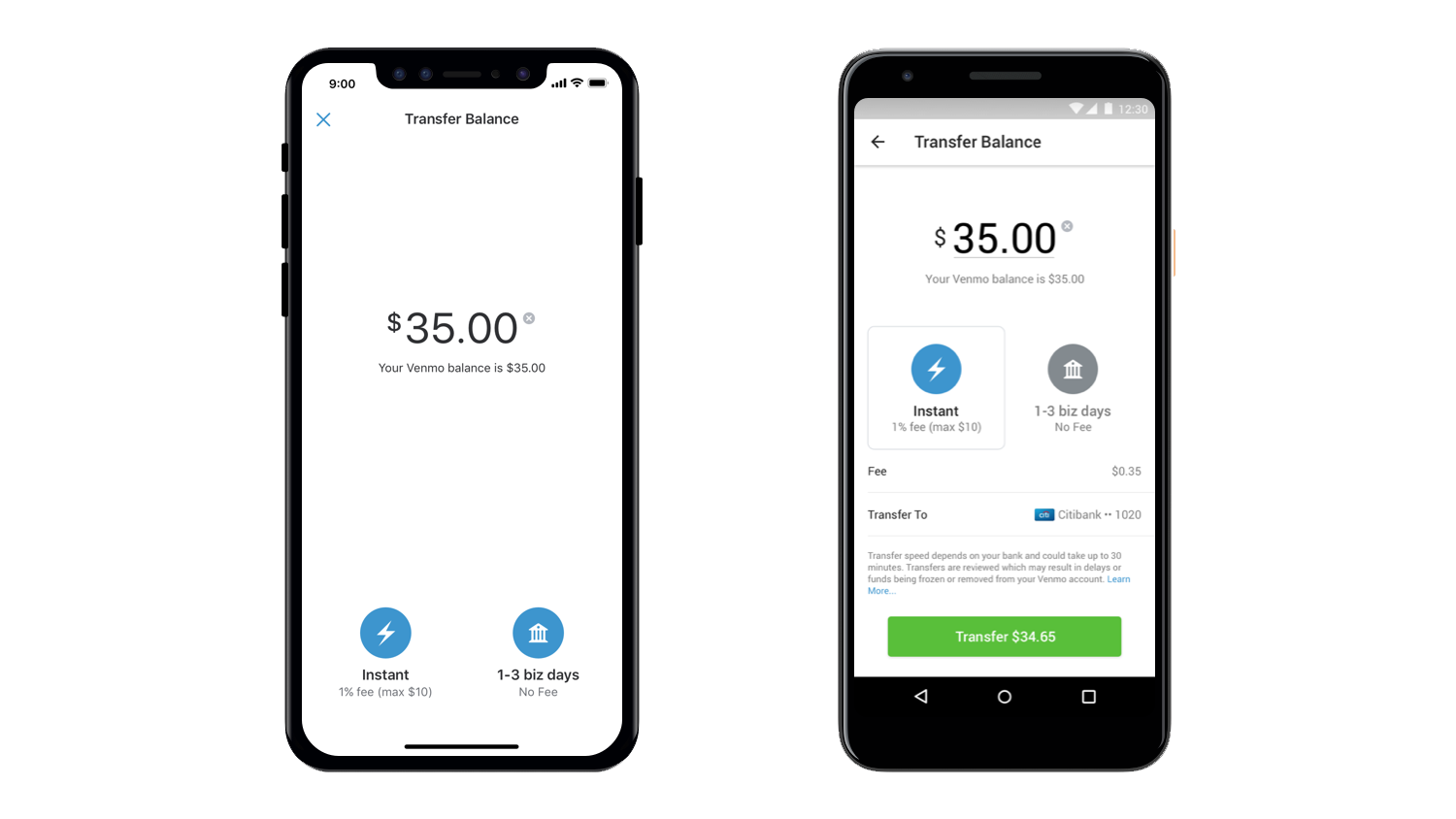
When you initiate a standard transfer from Venmo to your bank, it usually takes 1–3 business days. This process is handled via the ACH network, a centralized system used by all U.S. financial institutions. Venmo’s partner banks act as the originators for these files, sending instructions to the Federal Reserve to move money from Venmo’s custodial accounts to your personal bank account.
Instant Transfers
Venmo also offers an “Instant Transfer” feature for a small fee. This service typically utilizes the Visa Direct or Mastercard Send networks. By leveraging the existing debit card rails, Venmo can push funds to your bank account in minutes. This is a prime example of how fintech apps sit atop existing global banking and payment networks to provide a superior user experience than traditional wire transfers.
The Cost of Liquidity
The fees associated with instant transfers or credit card usage on Venmo are a reflection of the costs Venmo pays to its banking partners and card networks. Every time you move money, there is a “toll” paid to the underlying banking infrastructure. Venmo’s business model involves balancing these costs while providing a platform that feels “free” and “instant” to the casual user.
Strategic Financial Management in the P2P Era
Knowing the banking mechanics behind Venmo allows users to make more informed decisions about their personal finances. While Venmo is an incredibly convenient tool for peer-to-peer (P2P) transactions, it should be viewed as a gateway to banking rather than a replacement for it.
Best Practices for Venmo Users
-
Maintain Low Balances: Unless you have confirmed that your account is eligible for pass-through FDIC insurance, do not keep significant sums of money in your Venmo balance. Treat it as a “digital wallet” for immediate spending, not a “vault” for long-term storage.
-
Enable Security Features: Since Venmo is connected to your primary bank accounts through its partners, ensuring your account has two-factor authentication (2FA) and biometric locks is essential. A breach of your Venmo account can provide a pathway to your broader financial life.
-
Understand the Credit Relationship: If you use the Venmo Credit Card, remember that your legal obligations are to Synchrony Bank. Read the cardholder agreement to understand how interest is calculated and how your data is shared between the bank and the app.
-
Verify Direct Deposit Details: If you use Venmo for direct deposit, you will notice that the routing and account numbers provided are actually associated with a partner bank (often The Bancorp Bank). Ensure these are entered correctly in your payroll system to avoid delays.

The Future of Fintech and Traditional Banking
The partnership between Venmo and banks like The Bancorp, Wells Fargo, and Synchrony is a blueprint for the future of finance. We are moving toward a world where “banking” is an invisible utility that powers the apps we use every day. As regulations evolve, we may see Venmo or its parent company, PayPal, seek their own banking charters, but for now, the stability of the platform rests on the shoulders of its established banking partners.
In conclusion, Venmo is “through” a network of banks, primarily The Bancorp Bank and Wells Fargo, with Synchrony Bank handling its credit operations. By understanding this web of relationships, consumers can better navigate the digital economy, ensuring their money is not only mobile and convenient but also secure and insured.
aViewFromTheCave is a participant in the Amazon Services LLC Associates Program, an affiliate advertising program designed to provide a means for sites to earn advertising fees by advertising and linking to Amazon.com. Amazon, the Amazon logo, AmazonSupply, and the AmazonSupply logo are trademarks of Amazon.com, Inc. or its affiliates. As an Amazon Associate we earn affiliate commissions from qualifying purchases.