
The meteoric rise of digital payment platforms has fundamentally reshaped how we manage and move money. Among these, Cash App has emerged as a prominent player, offering a user-friendly interface for peer-to-peer payments, stock investing, Bitcoin trading, and even direct deposit. However, for many users, the underlying financial infrastructure remains somewhat opaque. A common question that arises is: “What bank is Cash App through?” Understanding this connection is crucial for comprehending the security, reliability, and regulatory framework that underpins Cash App’s operations. This exploration delves into the banking relationships that empower Cash App, examining their implications for users and the broader fintech landscape.
The Banking Backbone of Cash App: Regulatory Compliance and Partnering for Trust
Cash App, a product of Block, Inc. (formerly Square, Inc.), operates as a financial services platform. While it doesn’t hold a traditional bank charter itself, it relies heavily on partnerships with established, FDIC-insured banks to facilitate its core banking functions. This model is a common strategy within the fintech industry, allowing innovative companies to offer banking-like services without the immense regulatory burden and capital requirements of becoming a full-fledged bank.
The Role of FDIC Insurance: A Cornerstone of User Protection
The Federal Deposit Insurance Corporation (FDIC) is an independent agency of the United States government that protects depositors in U.S. banks. When an FDIC-insured bank fails, depositors are reimbursed for the loss of their insured deposits, up to at least $250,000 per depositor, per insured bank, for each account ownership category. This is a critical distinction. While Cash App itself is not FDIC-insured, the funds held within the linked bank accounts of its partner banks are. This means that if one of Cash App’s partner banks were to experience financial distress, the funds deposited through Cash App would be protected up to the FDIC insurance limits.
This partnership with FDIC-insured institutions is paramount to building user trust and confidence. Users can be assured that their funds are held in a secure environment, subject to the same protections as traditional banking. The financial stability and regulatory oversight of these partner banks provide a robust safety net, even though Cash App itself functions as an intermediary.
Partnering with Established Financial Institutions: Building Credibility and Scalability
Cash App strategically partners with well-established financial institutions that possess the necessary infrastructure, regulatory compliance, and capital to handle the volume and complexity of transactions. These partnerships are not merely transactional; they represent a strategic alignment aimed at leveraging the strengths of both entities. For Cash App, it means access to a regulated banking network, enabling services like direct deposit, debit card processing, and secure fund transfers. For the partner banks, it provides a pathway to engage with a rapidly growing, digitally native customer base and expand their reach within the fintech ecosystem.
The specific banking partners can evolve over time as companies scale and refine their strategies. However, the principle remains consistent: Cash App will always seek partners that meet stringent regulatory requirements and can support its ambitious growth plans while ensuring the security and integrity of user funds. This dynamic approach allows Cash App to remain agile in the fintech landscape, adapting to new technologies and market demands.
The Mechanics of Cash App’s Banking: Direct Deposit and Fund Management
The integration of banking services through partner banks is most evident in how Cash App handles direct deposits and manages user funds. This functionality is central to its utility as a comprehensive financial tool.
Direct Deposit: A Streamlined Pathway to Accessing Funds
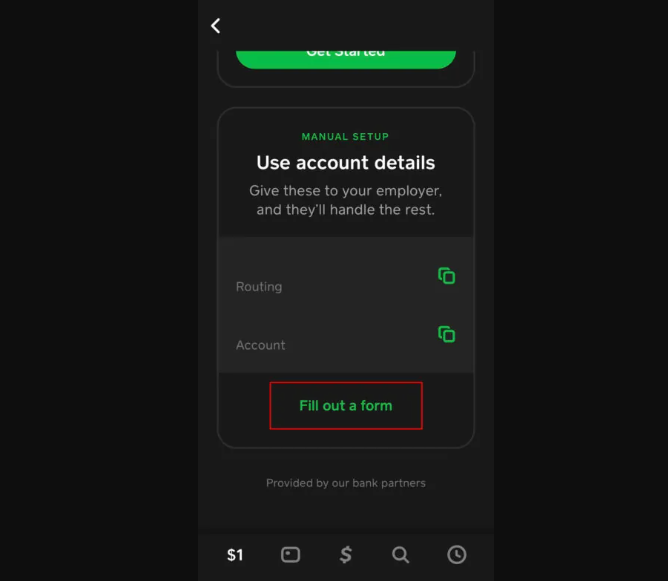
One of the most significant features Cash App offers is the ability to receive direct deposits from employers or government agencies. This is made possible by the banking infrastructure provided by its partners. When a user enables direct deposit with Cash App, they are essentially providing routing and account numbers that are linked to an account held at one of Cash App’s partner banks.
This process allows paychecks, tax refunds, and other electronic payments to be deposited directly into the user’s Cash App balance. This eliminates the need for paper checks and offers faster access to funds compared to traditional methods. The speed and convenience of direct deposit are key drivers of Cash App’s popularity, particularly among individuals seeking efficient ways to manage their income. The underlying banking relationships ensure that these transactions are processed reliably and securely, adhering to established financial protocols.
Holding and Managing User Funds: Segregation and Security
Cash App’s operational model involves holding customer funds in segregated accounts at its partner banks. This segregation is a critical regulatory requirement. It ensures that customer funds are kept separate from the company’s own operational funds. This separation is a fundamental principle of safeguarding customer assets, providing an additional layer of protection in the event of a financial issue with Cash App itself.

When a user deposits money into their Cash App account or receives a payment, these funds are not directly held by Cash App as an entity. Instead, they reside in accounts at the partner financial institutions. This distinction is vital for understanding the flow of money and the ultimate custodianship of user assets. The partner banks act as the primary custodians, managing the balances and ensuring compliance with banking regulations. Cash App then provides the interface and functionality to access and utilize these funds through its app.
Beyond Payments: Expanding Financial Services Through Banking Partnerships
Cash App’s ambition extends beyond simple peer-to-peer payments. Its partnerships with banks enable it to offer a suite of integrated financial services, transforming the app into a more comprehensive financial hub.
Investing in Stocks and Bitcoin: Leveraging Financial Market Access
The ability to invest in stocks and Bitcoin through Cash App is a testament to its sophisticated financial infrastructure. While Cash App facilitates these transactions, the underlying market access and clearing mechanisms are often managed through specialized financial institutions and custodians that work in conjunction with Cash App’s partner banks.
For stock trading, Cash App partners with regulated broker-dealers. These entities are responsible for executing trades on stock exchanges and holding securities on behalf of Cash App users. Similarly, for Bitcoin trading, Cash App partners with cryptocurrency exchanges and custodians who manage the digital assets. The funds used for these investments are typically drawn from or deposited into the user’s Cash App balance, which, as discussed, is underpinned by their partner banks. This allows for a seamless transition between managing fiat currency and engaging with alternative assets, all within a familiar interface.
The Cash Card: A Tangible Link to Digital Funds
The Cash Card, a Visa debit card linked to a user’s Cash App balance, is a powerful example of how Cash App bridges the gap between digital funds and the physical world. This card functions like any other debit card, allowing users to make purchases at point-of-sale terminals, withdraw cash from ATMs, and manage their spending.
The operation of the Cash Card is entirely dependent on the underlying banking relationships. When a Cash Card transaction occurs, it is processed through the Visa network, which then communicates with the acquiring bank and the issuing bank. In this case, the issuing bank is one of Cash App’s partner financial institutions. This bank holds the user’s funds and authorizes or declines transactions based on the available balance and spending limits. The seamless integration of the Cash Card underscores the robust banking infrastructure that supports Cash App’s entire ecosystem.
The Future of Cash App and its Banking Relationships: Innovation and Evolution
As the fintech landscape continues to evolve at an unprecedented pace, Cash App’s banking relationships are likely to remain a critical component of its strategy. The company’s success hinges on its ability to provide a secure, reliable, and feature-rich platform, all of which are directly tied to the strength and adaptability of its banking partners.
Adapting to Emerging Technologies and Regulations
The fintech industry is characterized by rapid technological advancements and an ever-evolving regulatory environment. Cash App, through its partnerships, is well-positioned to adapt. As new payment technologies, such as real-time payment networks and blockchain-based solutions, become more prevalent, Cash App will likely leverage its existing banking relationships or forge new ones to integrate these innovations.
Furthermore, regulatory changes can significantly impact the fintech sector. By partnering with established banks, Cash App benefits from their deep understanding of and compliance with financial regulations. This allows Cash App to navigate the complex regulatory landscape more effectively, ensuring that its services remain compliant and secure as the rules and guidelines governing digital finance continue to develop.
The Growing Role of Fintech and Traditional Banking Collaboration
The relationship between fintech companies like Cash App and traditional banks is a symbiotic one. Fintechs bring innovation, agility, and a user-centric approach, while traditional banks offer established infrastructure, regulatory expertise, and a trusted brand. Cash App’s reliance on banking partners exemplifies this collaborative model.
As the demand for digital financial services continues to grow, this collaboration is expected to deepen. We may see more instances of fintechs seeking banking licenses or traditional banks acquiring or partnering more closely with fintechs. For Cash App, the ongoing dialogue and strategic alignment with its banking partners will be crucial for maintaining its competitive edge and expanding its service offerings. The question of “what bank is Cash App through” ultimately points to a sophisticated network of financial institutions working in concert to deliver a modern, accessible, and secure financial experience to millions of users.
aViewFromTheCave is a participant in the Amazon Services LLC Associates Program, an affiliate advertising program designed to provide a means for sites to earn advertising fees by advertising and linking to Amazon.com. Amazon, the Amazon logo, AmazonSupply, and the AmazonSupply logo are trademarks of Amazon.com, Inc. or its affiliates. As an Amazon Associate we earn affiliate commissions from qualifying purchases.