
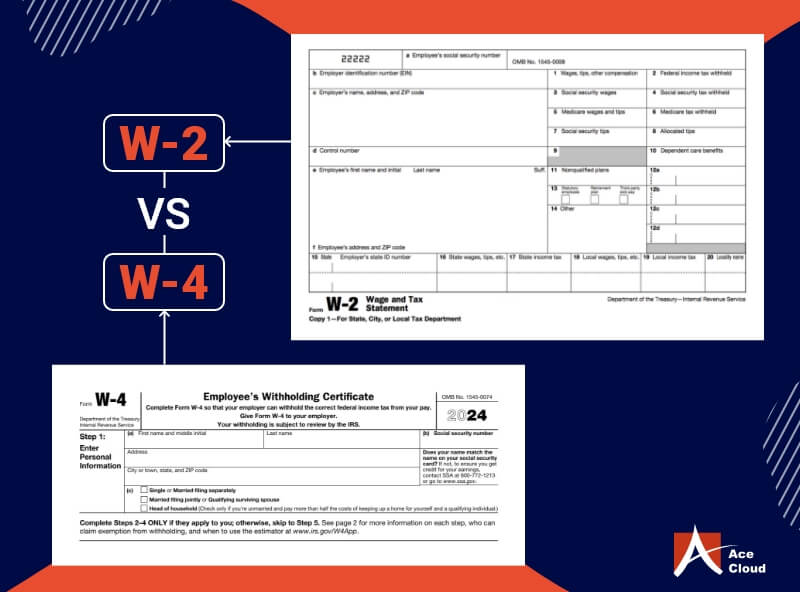
The W-4 form, officially known as the Employee’s Withholding Certificate, is a crucial document that every employee in the United States must complete when starting a new job. While it might seem like a simple piece of paperwork, the information you provide on your W-4 has a direct and significant impact on your paycheck and your overall financial well-being. It dictates how much federal income tax your employer withholds from each of your earnings, ultimately affecting the amount of tax you owe or receive as a refund when you file your annual tax return. Understanding the intricacies of the W-4 form is not just about compliance; it’s a fundamental aspect of effective personal finance management. By correctly completing your W-4, you can ensure you are withholding the right amount of tax, avoiding unwelcome surprises come tax season, and optimizing your cash flow throughout the year.

The Core Function: Determining Your Tax Withholding
The primary purpose of the W-4 form is to empower employees to inform their employers about the amount of federal income tax that should be deducted from their wages. The U.S. tax system is a “pay-as-you-go” system, meaning taxes are collected throughout the year rather than in one lump sum at the end. Your employer acts as a withholding agent, remitting these collected taxes to the Internal Revenue Service (IRS) on your behalf. The W-4 form is the mechanism by which you communicate your personal tax situation, allowing your employer to calculate this withholding accurately.
Understanding Federal Income Tax and Withholding
Federal income tax is levied on the income you earn from various sources, including wages, salaries, tips, and other compensation. The tax rates are progressive, meaning higher earners pay a larger percentage of their income in taxes. Without a W-4, your employer would be forced to withhold taxes at the highest possible rate, which would likely lead to over-withholding and a substantial refund when you file your taxes. Conversely, under-withholding can result in owing a significant amount of money to the IRS, potentially with penalties.
The W-4 form provides the IRS and your employer with the necessary information to estimate your annual tax liability. This estimation is based on several factors you declare, including your filing status, the number of dependents you claim, and any additional income or deductions you anticipate. By accurately reflecting these elements, you help your employer strike a balance, withholding enough to cover your tax obligations without taking too much from your earnings each pay period.
The Role of the IRS and Employer in the Process
The Internal Revenue Service (IRS) sets the rules and provides the guidelines for tax withholding. The W-4 form itself is designed by the IRS, and its structure and the calculations it necessitates are all dictated by federal tax law. Your employer, on the other hand, is the entity responsible for collecting the information from your W-4 and using it to perform the actual withholding. They use IRS-provided tables and computational methods to determine the correct amount of tax to deduct from your gross pay based on the information you’ve provided.
It’s crucial to recognize that your employer doesn’t create the tax rules; they are simply administrators of the system. Therefore, the accuracy and completeness of your W-4 are paramount. Any errors or omissions on your part will directly translate into incorrect withholding from your paychecks.
Key Sections of the W-4 Form and Their Significance
The W-4 form has undergone several revisions over the years to simplify its complexity and improve accuracy. The current version, often referred to as the redesigned W-4, aims to be more straightforward while still capturing essential personal tax information. Understanding each section is vital for accurate completion.
Step 1: Personal Information
This is the most basic section of the W-4 and requires your name, address, Social Security number, and your filing status.
Filing Status
Your filing status significantly impacts your tax liability and, consequently, your withholding. The common filing statuses are:
- Single or Married Filing Separately: For individuals who are unmarried, divorced, or legally separated.
- Married Filing Jointly: For married couples who choose to file one tax return together. This status generally offers more favorable tax rates and deductions.
- Head of Household: For unmarried individuals who pay more than half the cost of keeping up a home for a qualifying child.
Choosing the correct filing status is the first critical step in determining your withholding. Filing jointly, for instance, can result in lower overall taxes compared to filing separately if both spouses have similar incomes.
Multiple Jobs or Spouse Works
If you hold more than one job, or if your spouse also works, you need to indicate this in Step 2. This is a critical step to prevent under-withholding, as the tax brackets are designed assuming a single income for a given filing status. When you have multiple income streams, the combined income could push you into a higher tax bracket than anticipated by withholding on each job individually at a lower rate. The W-4 provides different methods to account for multiple jobs or spousal income, including using the IRS’s Tax Withholding Estimator, the Multiple Jobs Worksheet, or simply checking the box if you and your spouse have similar pay.
Step 2: Dependents
This section allows you to claim dependents, such as children or other qualifying relatives. For each dependent, you will need to provide their name, Social Security number, relationship to you, and whether they meet the criteria for a qualifying child or a qualifying relative.
Tax Credits for Dependents
Claiming dependents can significantly reduce your tax liability through tax credits. The Child Tax Credit, for example, can provide a substantial credit for each qualifying child. By accurately reporting your dependents on the W-4, you ensure your employer takes these potential tax benefits into account, leading to lower withholding and more money in your pocket throughout the year. It’s important to note that you should only claim dependents that you are legally entitled to claim.
Step 3: Other Income and Deductions
This section is for individuals who have income from sources other than their primary job (e.g., freelance work, investments) or anticipate claiming significant deductions beyond the standard deduction.
Accounting for Additional Income

If you have substantial income from sources not subject to withholding (e.g., self-employment income, rental income), you can use Step 3 to adjust your withholding accordingly. You can indicate an amount of additional tax you want withheld each pay period to cover this extra income, thereby avoiding a large tax bill at the end of the year.
Claiming Deductions
While the W-4 is designed to align with standard deductions for most taxpayers, if you plan to itemize deductions that are expected to be significantly higher than the standard deduction, you can use Step 3 to adjust your withholding. You can estimate the total amount of deductions you plan to claim and use this information to reduce your taxable income for withholding purposes. This requires a careful estimation of your potential itemized deductions.
Step 4: Other Adjustments
This final section is for miscellaneous adjustments that can further fine-tune your withholding.
Extra Withholding
If you prefer to have more tax withheld than the calculations suggest, perhaps to ensure a larger refund or as a safeguard against unexpected tax liabilities, you can specify an additional amount to be withheld from each paycheck.
Withholding Adjustments for Exemptions (Less Common)
In some limited circumstances, individuals may be eligible for exemption from federal income tax withholding. This typically applies to individuals who had no federal income tax liability in the prior year and expect to have no federal income tax liability in the current year, and who are generally dependents of another taxpayer. If you qualify for an exemption, you would indicate this in Step 4. It’s crucial to understand the strict criteria for claiming exempt status, as claiming it improperly can lead to significant tax liabilities and penalties.
Why Accurate W-4 Completion Matters for Your Finances
The W-4 form is more than just a procedural requirement; it’s a powerful tool for financial planning and management. Making informed decisions when filling out your W-4 can have a profound impact on your cash flow, your savings, and your overall financial health.
Avoiding Tax Surprises and Penalties
The most immediate benefit of accurately completing your W-4 is avoiding surprises when you file your taxes. Over-withholding, while resulting in a refund, means you’re essentially giving the government an interest-free loan throughout the year. This could be money you could have invested, used for debt repayment, or saved. Conversely, under-withholding can lead to a substantial tax bill that you may not be prepared for. Furthermore, the IRS can impose penalties for significant underpayment of taxes throughout the year, even if you eventually pay the balance due.
Optimizing Your Cash Flow
By withholding the correct amount of tax, you ensure that your net pay (the amount you actually receive in your bank account) is as close as possible to what you should be receiving after accounting for your tax liability. This allows for better budgeting and more effective management of your monthly expenses. Having a predictable and appropriate amount of money hitting your account each payday provides financial stability and reduces the stress associated with unexpected tax obligations.
The Power of Tax Refunds and Strategic Withholding
While the goal is typically to withhold accurately to avoid large refunds or tax bills, some individuals strategically choose to have slightly more tax withheld to receive a larger refund. This can act as a forced savings mechanism, providing a lump sum of money at the beginning of the year that can be used for specific financial goals, such as a down payment on a house, a vacation, or paying off debt. However, this strategy requires discipline to ensure the refund isn’t frittered away. Conversely, if you are a diligent saver and investor, you might choose to withhold less to have more money available for investment opportunities throughout the year, aiming for greater returns than you might receive from a tax refund.
When and How to Update Your W-4
Your tax situation is not static; it can change significantly throughout your working life. Therefore, it’s essential to review and update your W-4 form whenever your circumstances change.
Life Events Requiring a W-4 Update
Several common life events necessitate revisiting your W-4:
- Marriage or Divorce: These events directly impact your filing status and potentially your withholding calculations.
- Birth or Adoption of a Child: This affects your dependent status and eligibility for tax credits.
- Change in Employment Status: Starting a new job, leaving a job, or taking on a second job requires a new W-4.
- Significant Change in Income: A substantial raise, a pay cut, or taking on a second job with significant income.
- Major Changes in Deductions: If you anticipate significantly higher or lower deductions than in previous years (e.g., purchasing a home, significant medical expenses, or the elimination of certain deductible expenses).
- Changes in Your Spouse’s Employment: If your spouse starts working, stops working, or experiences a significant change in income.
Utilizing the IRS Tax Withholding Estimator
The IRS offers a valuable online tool called the Tax Withholding Estimator. This tool allows you to input detailed information about your income, deductions, credits, and other tax-related factors to determine the most accurate W-4 settings for your situation. It’s a highly recommended resource for anyone looking to fine-tune their withholding or ensure accuracy. By using the estimator, you can get personalized recommendations for filling out your W-4, making the process less daunting and more precise.
The Process of Submitting a New W-4
To update your W-4, you generally need to request a new form from your employer’s HR or payroll department. You will then complete the updated form and submit it back to them. Your employer will begin withholding taxes based on the new W-4 for pay periods that begin after they receive it. It’s advisable to submit any updates as soon as possible after a life event occurs to ensure your withholding is adjusted promptly.
In conclusion, the W-4 form is a cornerstone of managing your personal finances effectively. By understanding its purpose, diligently completing each section, and regularly reviewing your withholding as your life circumstances evolve, you can gain greater control over your tax obligations, optimize your cash flow, and build a more secure financial future.
aViewFromTheCave is a participant in the Amazon Services LLC Associates Program, an affiliate advertising program designed to provide a means for sites to earn advertising fees by advertising and linking to Amazon.com. Amazon, the Amazon logo, AmazonSupply, and the AmazonSupply logo are trademarks of Amazon.com, Inc. or its affiliates. As an Amazon Associate we earn affiliate commissions from qualifying purchases.