
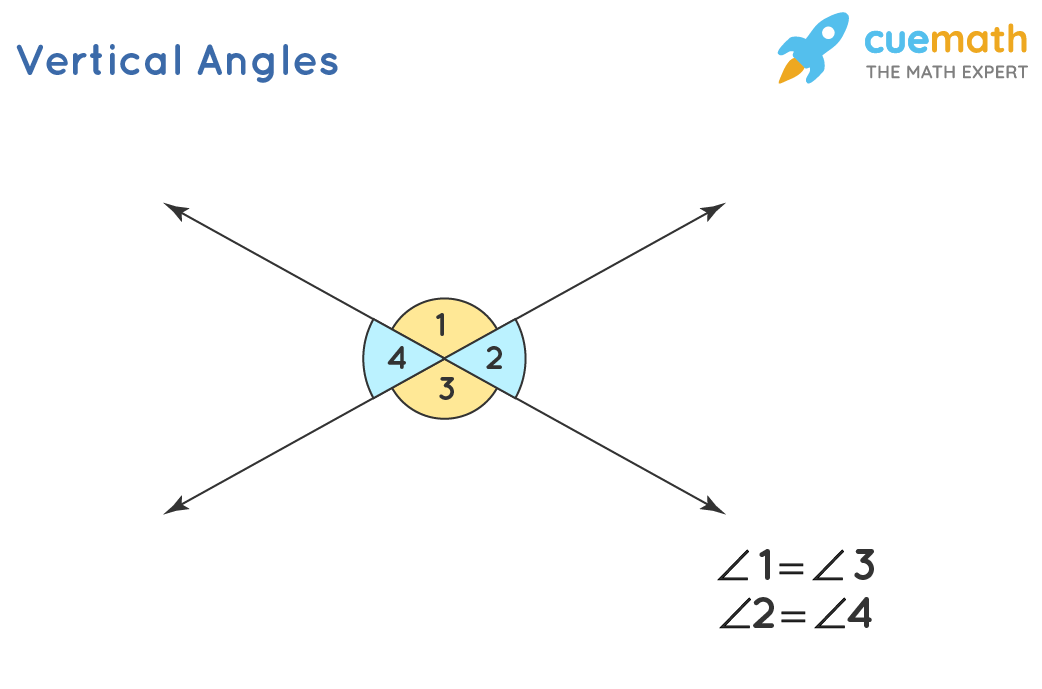
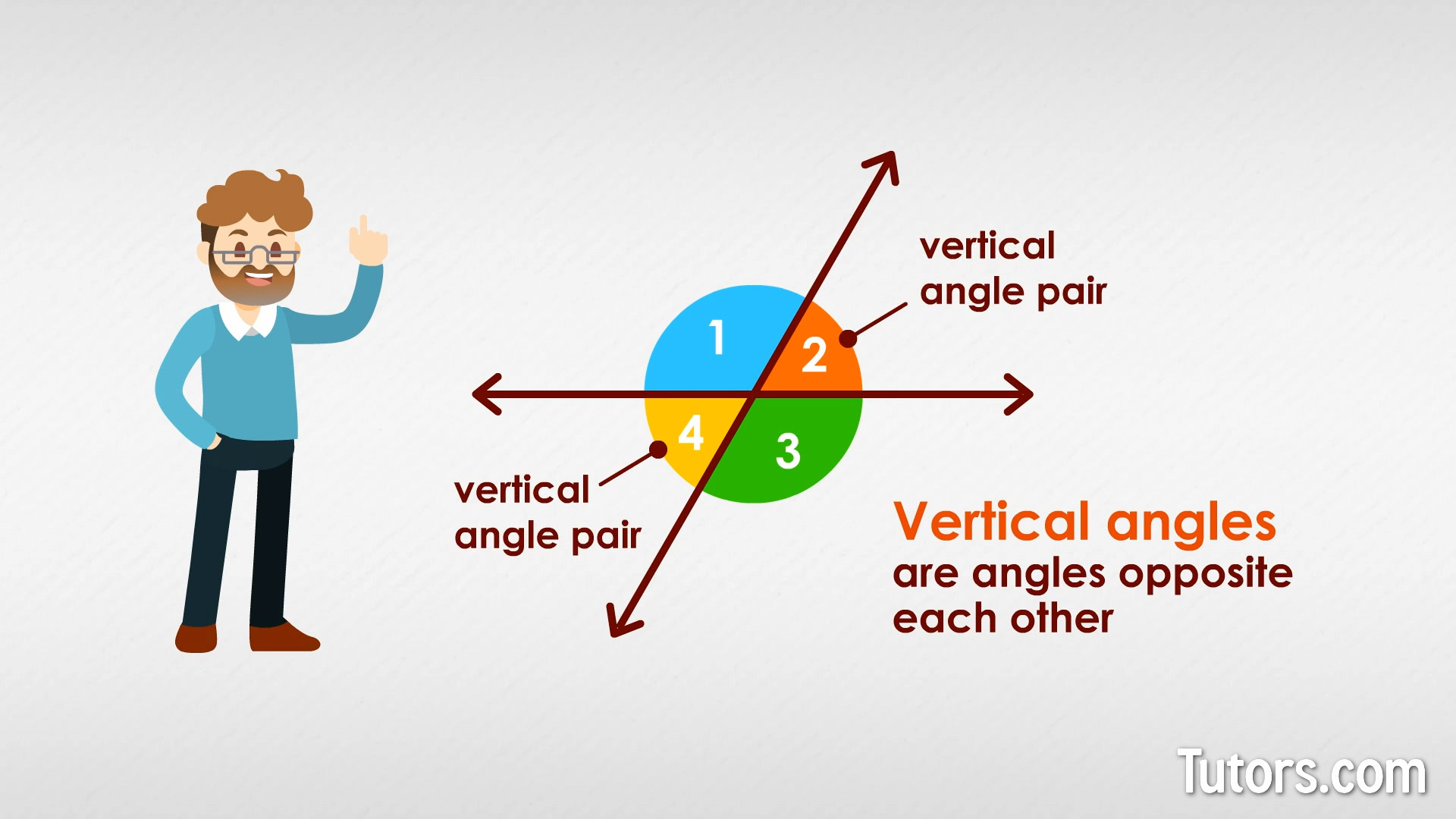
In the realm of geometry, vertical angles are a fundamental concept, defined as the pairs of opposite angles formed by two intersecting lines. These angles are always congruent, meaning they have the exact same measure. While this might seem like a basic principle taught in secondary school mathematics, its implications in the world of technology, software engineering, and digital design are profound. For developers, architects using Computer-Aided Design (CAD) software, and computer graphics engineers, understanding the properties of vertical angles is not just about solving for “x” on a whiteboard; it is about ensuring precision, symmetry, and functionality in complex digital environments.
As we move deeper into the era of spatial computing and high-fidelity 3D rendering, the geometric foundations that govern our physical world are being translated into code. Vertical angles serve as a cornerstone for these translations, providing the mathematical reliability needed to render light, calculate structural loads, and program autonomous systems.
Understanding Vertical Angles in Modern Computing
At its core, the study of vertical angles in a technological context is the study of intersections. In any digital space, whether it is a two-dimensional user interface or a three-dimensional virtual world, the intersection of lines and planes creates the geometry we interact with.
The Mathematical Foundations of Intersecting Lines
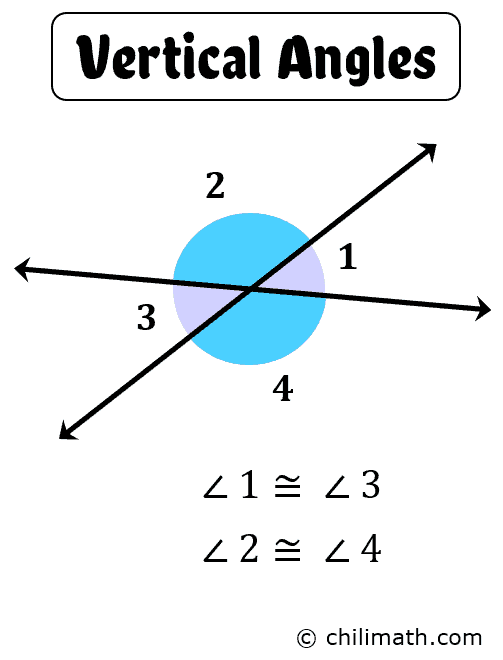
When two lines intersect at a single point, they create four distinct angles. The angles that are non-adjacent—those that sit directly across from one another—are vertical angles. In software logic, this relationship is expressed through the theorem of equality. If line A and line B intersect, angle 1 and angle 3 will always be equal, regardless of the angle of intersection.
For developers working in computational geometry, this property allows for the optimization of code. Instead of calculating the value of every single angle in a complex network of intersecting lines, a program can use the congruence of vertical angles to infer values. This reduces the computational overhead required for real-time rendering, which is essential for performance-heavy applications like gaming and simulations.
Symmetry and Congruence in Digital Logic
Digital design thrives on symmetry. From the layout of a smartphone application to the structural grid of a high-rise building designed in BIM (Building Information Modeling) software, the balance provided by congruent angles ensures both aesthetic appeal and functional stability. Vertical angles provide a “shortcut” for achieving this symmetry. By defining one angle of an intersection, a software system automatically defines its vertical counterpart. This inherent predictability is utilized in algorithmic design to maintain consistency across large-scale digital models.
Vertical Angles in Computer Graphics and 3D Modeling
The world of computer graphics is essentially a massive exercise in geometry. Every character, landscape, and object in a modern video game or cinematic visual effect is composed of polygons. These polygons are defined by vertices and edges, and where these edges meet, angles are formed.
Ray Tracing and Collision Detection
One of the most significant advancements in recent graphics technology is ray tracing. This technique simulates the way light behaves in the real world. When a “ray” of light hits a surface and reflects or passes through an object, the angles of intersection are calculated with extreme precision. Vertical angles come into play when calculating the behavior of light passing through transparent mediums or when simulating the reflection of light off complex, multi-faceted surfaces.
Similarly, in game development, collision detection is the technology that prevents a character from walking through a wall. This relies on the “intersection of bounds.” When the lines representing the character’s position intersect with the lines representing an object, the software must calculate the angles of contact to determine the direction of the resulting bounce or stop. Understanding the properties of vertical angles allows physics engines to calculate these reactions instantaneously.
Transforming 2D Shapes into 3D Realities
In 3D modeling software like Blender or Maya, artists often start with 2D wireframes. As these wireframes are extruded and transformed, the geometric relationships between lines must remain intact to prevent mesh distortion. Vertical angles ensure that as a model is scaled or rotated, the fundamental relationship between intersecting lines remains constant. If a modeler rotates an intersection, the software uses the geometric properties of vertical angles to ensure that the opposite angle moves in perfect synchronization, preserving the integrity of the 3D mesh.
The Role of Geometry in Architectural Tech and CAD Software
Architectural technology has revolutionized how we build the physical world. Software such as AutoCAD, Revit, and Rhino 3D allows architects to create blueprints that are mathematically perfect. In this niche, the “vertical angle” is more than a theorem; it is a requirement for structural safety.
Precision Engineering and Structural Integrity
In structural engineering software, every intersection of steel beams or wooden rafters must be accounted for. If two beams intersect at an angle, the vertical angles formed at that joint must be understood to calculate the distribution of weight and tension. If a software tool were to miscalculate these angles by even a fraction of a degree, the simulated structural integrity of the building would be compromised.
By leveraging the geometric certainty of vertical angles, CAD software can automate the verification of designs. For example, if an architect adjusts the pitch of a roof, the software automatically updates all intersecting angles. Because vertical angles are always congruent, the system can quickly validate that the new design meets the necessary geometric constraints without requiring the user to manually recalculate every junction.
Automating Layouts with Algorithmic Geometry
Generative design is a growing trend in the tech-heavy architecture industry. It involves using algorithms to generate thousands of design possibilities based on specific constraints. These algorithms often rely on geometric rules to create layouts for floor plans or urban developments. Vertical angles act as a constant in these algorithms. When the software generates a street grid or a room layout, it uses the predictable nature of intersecting lines to ensure that spaces are functional and that the geometry is solvable for construction crews.
Vertical Angles in Robotics and Machine Vision
The field of robotics is perhaps the most practical application of vertical angles in modern tech. For a robot to move through a room or for an autonomous vehicle to navigate a busy intersection, it must perceive and interpret the geometry of its surroundings.
Pathfinding and Spatial Awareness
Robots use sensors like LiDAR (Light Detection and Ranging) to map their environment. This process involves shooting lasers in every direction and measuring the time it takes for them to bounce back. The result is a “point cloud” that represents the geometry of the space. When a robot identifies two lines—such as the corner of a room or the intersection of two hallways—it uses geometric principles to determine its orientation.
The recognition of vertical angles allows the robot’s software to confirm that the lines it is seeing are straight and that it has a clear understanding of the intersection’s geometry. This spatial awareness is critical for pathfinding. If the robot knows the measure of one angle at an intersection, it can immediately deduce the others, allowing it to calculate the widest path for travel or the safest angle for a turn.
Sensor Fusion and Angle Calculation
In autonomous driving, “sensor fusion” is the process of combining data from cameras, radar, and LiDAR. Computer vision algorithms are trained to recognize patterns, such as the lines on a road or the edges of a building. When these lines intersect in the camera’s field of view, the software uses the properties of vertical angles to calibrate the depth and distance of objects.
If a camera perceives an intersection at a specific angle, the software can compare this to the data from the radar. If the vertical angles calculated by the computer vision system match the physical geometry expected by the radar, the vehicle can proceed with high confidence. This geometric verification is a layer of digital security that prevents the AI from making errors based on optical illusions or lens distortion.
The Future of Geometry-Driven Tech
As we look toward the future of technology, the role of basic geometry like vertical angles will only increase. In the development of the “Metaverse” or complex AR (Augmented Reality) interfaces, the bridge between our physical perception and digital projection is built on these mathematical truths. When an AR headset overlays a digital object onto a physical table, it must calculate the angles of the table’s edges to ensure the digital object sits flat. The intersection of those digital and physical lines relies on the same vertical angle theorems that have existed for centuries.
Furthermore, in the world of AI-driven design tools, we are seeing a shift toward “geometric deep learning.” This is a niche of machine learning that focuses on teaching AI to understand non-Euclidean data and complex geometric structures. Even at this cutting edge, the fundamental rules of Euclidean geometry—like the fact that vertical angles are congruent—provide the “ground truth” that these AI systems use to learn and evolve.
In conclusion, “what are vertical angles in geometry” is a question that finds its answer far beyond the classroom. It is answered in the code of the world’s most popular video games, in the structural blueprints of our tallest skyscrapers, and in the navigation systems of the cars of tomorrow. By understanding and applying these geometric constants, technology continues to build a more precise, efficient, and visually stunning digital world. The simple intersection of two lines remains one of the most powerful tools in a developer’s arsenal, proving that the most basic geometric principles are often the ones that support the most complex technological innovations.
aViewFromTheCave is a participant in the Amazon Services LLC Associates Program, an affiliate advertising program designed to provide a means for sites to earn advertising fees by advertising and linking to Amazon.com. Amazon, the Amazon logo, AmazonSupply, and the AmazonSupply logo are trademarks of Amazon.com, Inc. or its affiliates. As an Amazon Associate we earn affiliate commissions from qualifying purchases.