
In the landscape of personal finance, purchasing a vehicle is often the second-largest expenditure a household will make, trailing only the purchase of a home. While the sticker price of a car is the most visible figure, the true cost of ownership is heavily dictated by the financing terms—specifically, the interest rate. Understanding used car interest rates is not merely a matter of checking a box during a transaction; it is a critical exercise in financial literacy that can save a consumer thousands of dollars over the life of a loan.
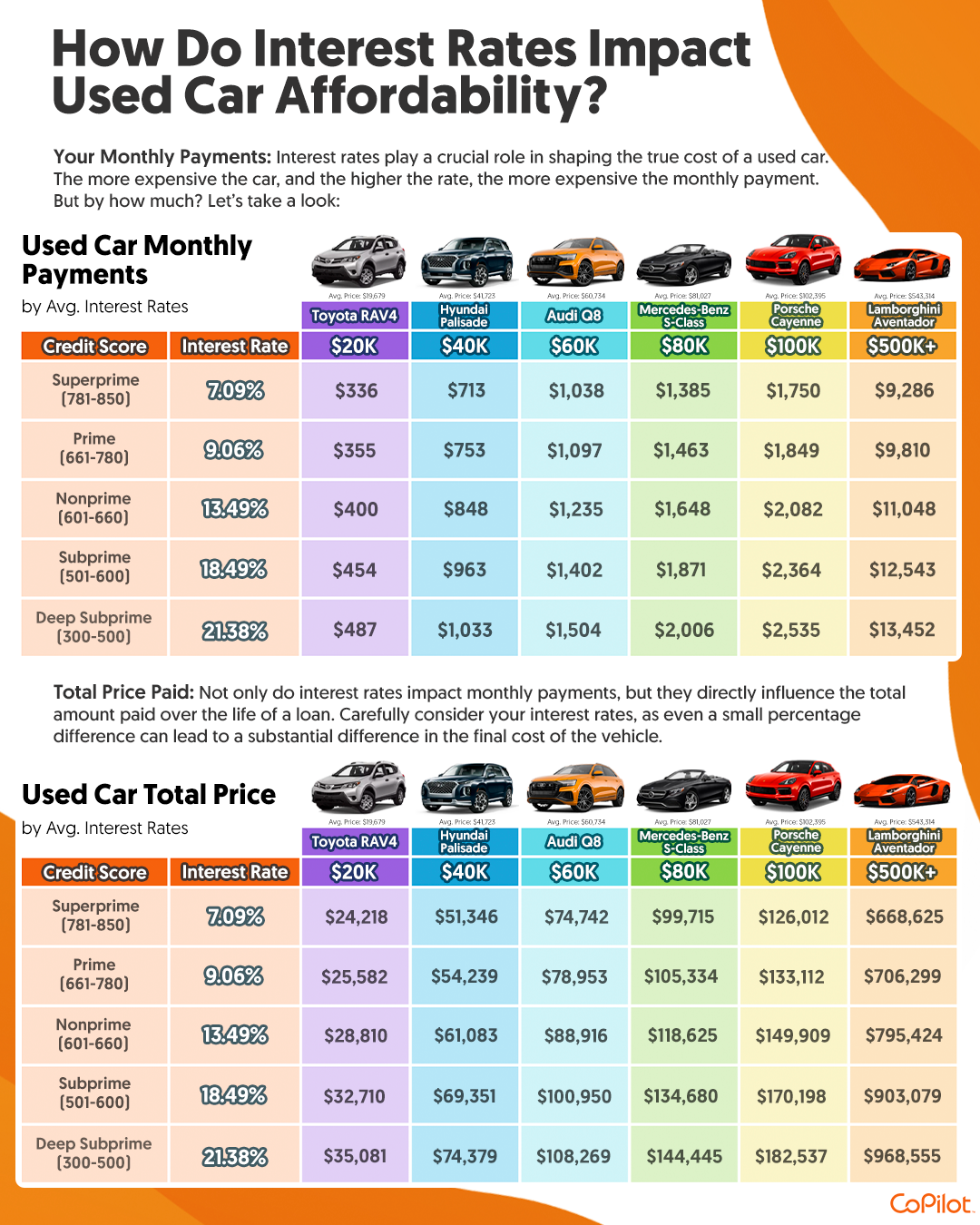
Used car interest rates are inherently more complex than those for new vehicles. They are influenced by a convergence of macroeconomic factors, individual credit profiles, and the inherent risk associated with depreciating assets. This guide explores the mechanics of auto financing, the variables that drive rate fluctuations, and strategic approaches to securing the most favorable terms in a volatile market.
Key Factors That Determine Your Used Car Interest Rate
Interest rates are essentially the price of borrowing money. For a lender, providing a loan for a used car involves a calculated risk. Unlike new cars, which have predictable valuations and manufacturer warranties, used vehicles carry uncertainties regarding mechanical longevity and resale value. Consequently, lenders use several specific metrics to determine the Annual Percentage Rate (APR) offered to a borrower.
The Role of Credit Scores and Financial History
Your credit score is the single most influential factor in determining your interest rate. Lenders categorize borrowers into tiers: Superprime (781–850), Prime (661–780), Near Prime (601–660), Subprime (501–600), and Deep Subprime (300–500).
For those in the Superprime tier, used car interest rates often hover only slightly above new car rates. However, as the credit score drops, the “risk premium” increases. A borrower in the subprime category might face interest rates three to four times higher than a prime borrower. This disparity exists because lenders require a higher return to offset the statistical likelihood of default.
Loan Term and Vehicle Age
The structure of the loan itself impacts the rate. Generally, shorter loan terms (36 to 48 months) carry lower interest rates than longer terms (60 to 72+ months). While a longer term lowers the monthly payment, it increases the lender’s exposure to risk over time, leading to a higher APR.
Furthermore, the age of the vehicle is a primary variable. Many lenders have “rate tiers” based on the car’s model year. A three-year-old vehicle will typically qualify for a better rate than a ten-year-old vehicle. This is because a newer used car serves as better collateral; if the lender has to repossess and sell the car, a newer model retains more value than an older, high-mileage one.
Debt-to-Income Ratio (DTI) and Down Payments
Lenders also examine your broader financial health through your Debt-to-Income ratio. If a large portion of your monthly income is already committed to housing and existing debt, a lender may view you as a higher risk, even with a decent credit score.
Conversely, the “Loan-to-Value” (LTV) ratio—the amount you are borrowing compared to the car’s actual worth—can be improved by a substantial down payment. By putting more money down upfront, you reduce the lender’s risk, which often translates into a more competitive interest rate.
Navigating the Macroeconomic Landscape of Auto Financing
While personal financial habits dictate your specific rate, the “floor” of that rate is set by the broader economy. Understanding why rates are currently high or low requires a look at the fiscal environment managed by central banks and the automotive market’s supply chain.
The Influence of the Federal Reserve and Prime Rates
In the United States, the Federal Reserve’s decisions on the federal funds rate serve as the benchmark for almost all consumer lending. When the Fed raises rates to combat inflation, the cost of capital for banks increases. These banks, in turn, pass those costs on to consumers in the form of higher APRs for auto loans.
For a personal finance strategist, timing the market is difficult, but staying informed about Fed meetings can provide a window into whether rates are likely to rise or stabilize in the near future. In high-rate environments, the importance of “rate shopping” becomes even more pronounced, as the spread between different lenders can widen significantly.

Inventory Challenges and Collateral Value
The used car market experienced unprecedented volatility in recent years due to supply chain disruptions in the new car sector. When new cars are scarce, the demand for used cars surges, driving up prices. From a financing perspective, this creates a unique challenge: inflated used car prices can lead to “upside-down” loans, where the borrower owes more than the car is worth almost immediately.
Lenders monitor these market trends closely. If they perceive that used car prices are artificially inflated and likely to “correct” or drop sharply, they may increase interest rates to hedge against the potential loss in collateral value.
The Financial Math: New vs. Used Car Interest Rates
A common question in personal finance is why used car interest rates are almost always higher than new car rates. Even for a borrower with perfect credit, a used car loan might be 1% to 3% higher than a loan for a brand-new vehicle.
Understanding the Risk Premium
The primary reason for this discrepancy is the predictability of the asset. New cars have a “MSRP” (Manufacturer’s Suggested Retail Price) and a clear depreciation curve. Used cars, however, vary wildly in condition. A lender cannot be certain if a used vehicle has been properly maintained or if it will suffer a catastrophic mechanical failure that leads the owner to stop making payments. The higher interest rate on used cars serves as a “risk premium” to cover these unknowns.
Finding the Sweet Spot: Certified Pre-Owned (CPO) Financing
For the savvy investor or budget-conscious consumer, Certified Pre-Owned (CPO) vehicles offer a middle ground. CPO cars are used vehicles that have undergone rigorous inspections and come with extended manufacturer warranties. Because these vehicles are vetted by the manufacturer, many captive finance companies (like Ford Credit or Toyota Financial Services) offer promotional interest rates on CPO models that are significantly lower than standard used car rates, sometimes even rivaling new car financing.
Practical Strategies to Secure the Best Rates
Securing a low interest rate is not a passive process; it requires preparation and a proactive approach to dealing with financial institutions.
The Power of Pre-Approval
One of the most common mistakes consumers make is walking into a dealership without a financing plan. Dealerships often act as intermediaries, sending your credit profile to multiple lenders and adding a “markup” to the interest rate they offer you.
To avoid this, obtain a pre-approval from a bank or credit union before you visit the lot. A pre-approval gives you a “ceiling” for your interest rate. If the dealer can beat your pre-approved rate, you win. If they can’t, you have a solid financing foundation already in place.
Credit Unions vs. Traditional Banks
In the world of personal finance, credit unions are often the “hidden gems” of auto lending. Because credit unions are member-owned, non-profit entities, they frequently offer interest rates that are 0.5% to 1.5% lower than large commercial banks. Additionally, credit unions tend to have more flexible lending criteria for their members, making them an excellent choice for used car loans.
The 14-Day Shopping Window
Many consumers fear that checking their credit at multiple lenders will damage their credit score. However, credit scoring models (like FICO) recognize “rate shopping” for auto loans. Generally, all inquiries for an auto loan within a 14- to 45-day window are treated as a single inquiry for scoring purposes. This allows you to apply at a local bank, an online lender, and a credit union to compare rates without a compounding negative impact on your credit report.

Long-Term Financial Impact of Interest Rates
To put the importance of used car interest rates into perspective, consider a $25,000 loan over 60 months. At a 4% interest rate, the total interest paid is approximately $2,624. At a 9% interest rate (common for near-prime borrowers in a high-rate environment), the total interest jumps to $6,141.
That $3,500 difference is capital that could have been directed toward an IRA, a high-yield savings account, or paying down higher-interest credit card debt. In the context of building long-term wealth, minimizing the interest paid on depreciating assets like vehicles is a fundamental pillar of financial success.
By understanding the interplay between your credit profile, the age of the vehicle, and the current economic climate, you can navigate the used car market with confidence. The goal is not just to buy a car, but to finance it in a way that supports your broader financial goals and preserves your monthly cash flow.
aViewFromTheCave is a participant in the Amazon Services LLC Associates Program, an affiliate advertising program designed to provide a means for sites to earn advertising fees by advertising and linking to Amazon.com. Amazon, the Amazon logo, AmazonSupply, and the AmazonSupply logo are trademarks of Amazon.com, Inc. or its affiliates. As an Amazon Associate we earn affiliate commissions from qualifying purchases.