
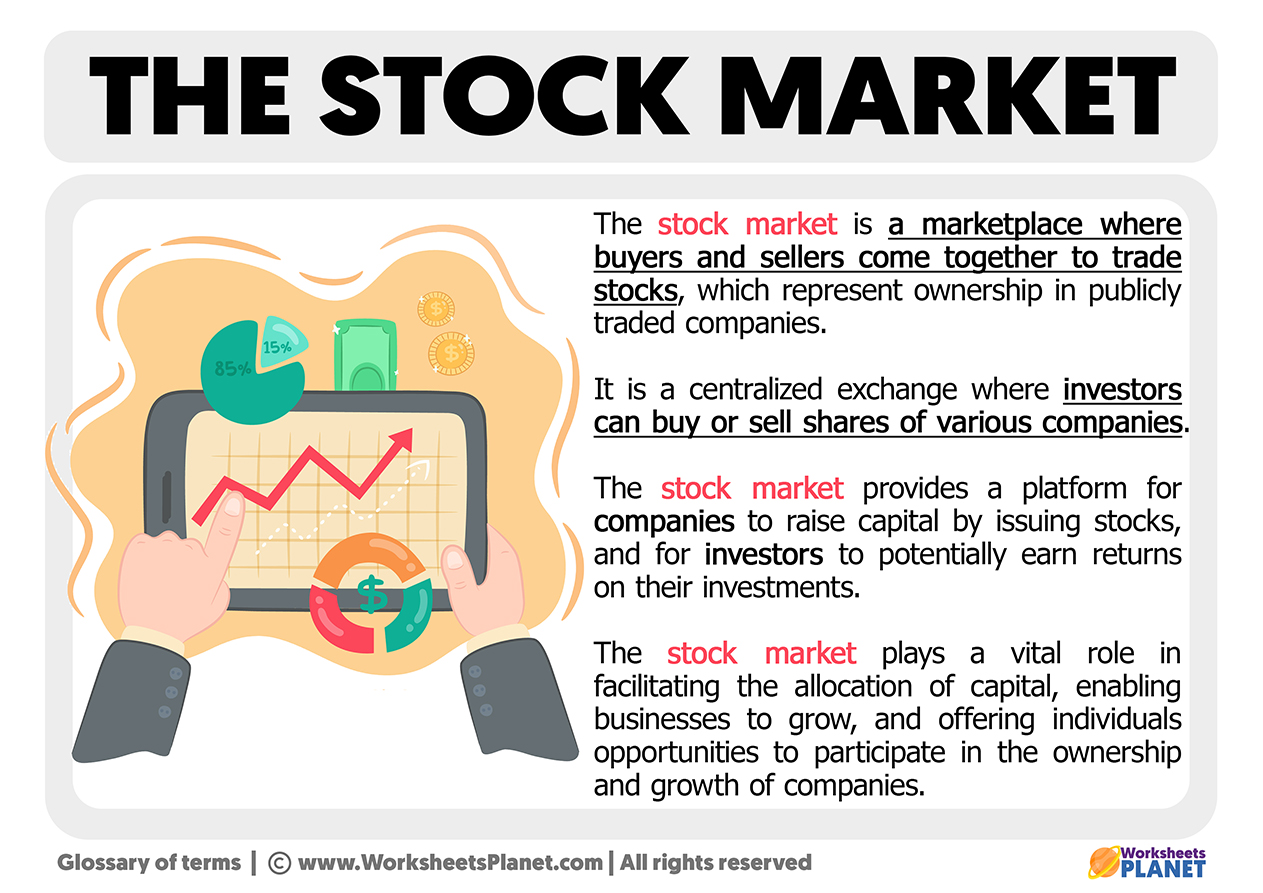
The term “stock market” often conjures images of bustling trading floors, flashing ticker symbols, and dramatic headlines about fortunes made and lost. While these perceptions hold a kernel of truth, they merely scratch the surface of a sophisticated and indispensable global financial ecosystem. At its core, the stock market is far more than a physical location; it’s a vast network of exchanges and digital platforms where shares of publicly traded companies are bought and sold. It serves as a crucial engine for economic growth, enabling businesses to raise capital for expansion and offering individuals and institutions avenues to invest and build wealth. Understanding the stock market is not just for aspiring financiers; it’s fundamental for anyone seeking to comprehend the mechanisms driving global economies, manage personal finances, and potentially participate in the growth of leading enterprises. This exploration delves into the intricate workings of the stock market, demystifying its components, participants, and profound impact on the financial landscape.

The Core Function and Evolution of Stock Markets
The genesis of stock markets lies in a fundamental economic need: connecting those who have capital with those who need it. Throughout history, businesses have required funding beyond what internal resources or traditional loans could provide. The stock market evolved as an elegant solution, creating a standardized, regulated environment for capital formation and investment.
Bridging Capital and Opportunity
At its most fundamental level, the stock market acts as a bridge. On one side are companies with innovative ideas, growth ambitions, or operational needs that require significant financial backing. On the other side are individuals, pension funds, mutual funds, and other institutions with surplus capital they wish to invest for future returns. The stock market facilitates this connection by allowing companies to issue ownership stakes—shares of stock—in exchange for investment. This process, known as equity financing, provides businesses with the necessary funds to develop new products, expand operations, enter new markets, or pay down debt, all of which contribute to economic productivity and job creation. Without this mechanism, many of today’s largest and most innovative companies might never have reached their full potential.
The Concept of Equity Ownership
When an investor buys a share of a company’s stock, they are purchasing a small fraction of ownership in that company. This ownership comes with certain rights, typically including voting rights on company matters (proportional to the number of shares owned) and a claim on a portion of the company’s earnings, often distributed as dividends. This concept of equity ownership is powerful because it aligns the interests of investors with the success of the company. As the company grows, becomes more profitable, and increases its value, the value of its shares tends to rise, benefiting shareholders. Conversely, if the company underperforms, the share value may decline. This direct link between company performance and shareholder wealth is a cornerstone of the market’s appeal and its risk profile.
Primary vs. Secondary Markets: Two Distinct Arenas
The stock market isn’t a monolithic entity; it comprises distinct phases where shares are traded. These are primarily categorized into the primary market and the secondary market.
The primary market is where new stocks are issued for the first time. This typically occurs through an Initial Public Offering (IPO), where a private company sells its shares to the public to raise capital. Investment banks play a crucial role in underwriting these offerings, helping the company determine the offering price and facilitating the sale of shares to institutional investors and, eventually, to the public. The funds raised in the primary market go directly to the issuing company, providing the capital it needs for its operations and growth.
Once shares have been issued in the primary market, they are then traded among investors in the secondary market. This is what most people refer to when they talk about “the stock market.” Stock exchanges like the New York Stock Exchange (NYSE) or Nasdaq are examples of secondary markets. In the secondary market, the company that originally issued the stock does not receive any direct funds from these subsequent trades; the transaction is solely between two investors. The secondary market is vital for providing liquidity, meaning investors can easily buy or sell their shares. This liquidity is what makes investing in stocks attractive, as it offers the flexibility to convert investments back into cash when needed. Without a robust secondary market, investors would be reluctant to participate in primary offerings, as they would have no clear exit strategy for their investment.
Key Components and Participants of the Stock Market
The functioning of the stock market relies on a complex interplay of various entities, each playing a critical role in maintaining its integrity, efficiency, and accessibility. From the physical or virtual spaces where trades occur to the diverse groups of people making those trades, understanding these components is essential.
Exchanges: The Trading Hubs
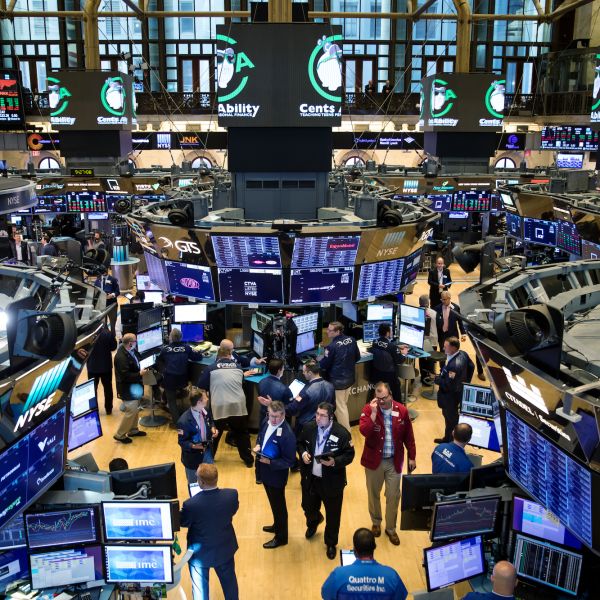
Stock exchanges are the centralized marketplaces where securities are bought and sold. Historically, these were physical locations with bustling trading floors, such as the iconic floor of the New York Stock Exchange. Today, while some physical elements remain, most trading occurs electronically through sophisticated computer networks. Key exchanges globally include:
- New York Stock Exchange (NYSE): Known for listing many of the world’s largest and most established companies, the NYSE is a “hybrid” market incorporating both human specialists and electronic trading.
- Nasdaq Stock Market: Famous for its technology-heavy listings and entirely electronic trading system, Nasdaq facilitates millions of trades daily.
- London Stock Exchange (LSE): One of the world’s oldest stock exchanges, serving as a hub for international listings.
- Tokyo Stock Exchange (TSE): A dominant force in Asian markets.
- Euronext: A pan-European exchange spanning several countries.
These exchanges provide the infrastructure, rules, and regulatory oversight necessary for orderly trading, ensuring transparency and fairness for all participants. They also collect and disseminate real-time price information, enabling investors to make informed decisions.
Brokers and Financial Intermediaries
Individual investors typically do not trade directly on the stock exchange. Instead, they interact with brokerage firms or financial intermediaries. These firms act as agents, executing buy and sell orders on behalf of their clients. Brokers offer various services, ranging from full-service brokers who provide extensive financial advice, research, and portfolio management, to discount brokers who offer lower commissions for self-directed investors using online platforms. The advent of online brokerage platforms has democratized access to the stock market, allowing millions of retail investors to manage their own portfolios with relative ease and low cost. Beyond individual brokers, other intermediaries include investment banks, which facilitate IPOs and mergers, and asset management firms, which manage large portfolios for institutions and high-net-worth individuals.
Investors: From Retail to Institutional
The stock market is powered by investors, whose capital fuels its activities. Investors can be broadly categorized into two main types:
- Retail Investors: These are individual investors who buy and sell securities for their personal accounts, often through online brokerage platforms. They typically invest smaller sums compared to institutions, driven by personal financial goals such as retirement savings, college funds, or wealth accumulation.
- Institutional Investors: This category includes large organizations that invest substantial sums of money on behalf of their clients or members. Examples include:
- Mutual Funds and Exchange-Traded Funds (ETFs): Pooled investment vehicles managed by professionals that invest in diversified portfolios of stocks.
- Pension Funds: Funds set aside by employers to provide retirement benefits for their employees.
- Hedge Funds: Aggressively managed portfolios that use advanced strategies to generate high returns.
- Insurance Companies: Invest premiums collected from policyholders to generate returns that help cover future claims.
- Sovereign Wealth Funds: State-owned investment funds that invest national reserves.
Institutional investors often have significant market influence due to the sheer volume of capital they manage. Their trading decisions can have a profound impact on stock prices and market trends.
Issuers: The Companies Raising Capital
The fundamental players that kickstart the entire process are the issuers—the companies themselves. These are public corporations that have chosen to raise capital by selling shares of their ownership to the public. When a company decides to go public, it undergoes a rigorous process, including meeting regulatory requirements and demonstrating financial viability. Once public, these companies have ongoing obligations to shareholders, including regular financial reporting and adherence to corporate governance standards. The success and growth of these companies are what ultimately drive value in the stock market.
How Stocks Are Traded and Priced
The seemingly complex dance of stock prices moving up and down is governed by fundamental economic principles, facilitated by sophisticated trading mechanisms and guided by comprehensive market indicators.
Supply, Demand, and Market Dynamics
The price of a stock, like any other commodity, is primarily determined by the forces of supply and demand. If more investors want to buy a particular stock (high demand) than there are sellers (low supply), the price will tend to rise. Conversely, if more investors want to sell a stock (high supply) than there are buyers (low demand), the price will tend to fall. These dynamics are influenced by a myriad of factors:
- Company Performance: Earnings reports, revenue growth, product launches, and management changes directly impact investor sentiment.
- Economic Indicators: Broader economic data such as GDP growth, inflation rates, interest rate decisions by central banks, and unemployment figures can affect the overall market and individual sectors.
- Industry Trends: Shifts in technology, consumer preferences, or regulatory environments can significantly impact an entire industry and the stocks within it.
- Geopolitical Events: International conflicts, trade disputes, or political instability can introduce uncertainty and volatility into markets globally.
- Investor Sentiment: Psychological factors, market rumors, and fear or greed can lead to irrational buying or selling, sometimes creating bubbles or crashes.
Order Types and Execution
When investors decide to buy or sell shares, they place orders through their brokers, specifying the stock, the number of shares, and the type of order. Common order types include:
- Market Order: An instruction to buy or sell a stock immediately at the best available current price. Market orders prioritize speed of execution over specific price.
- Limit Order: An instruction to buy or sell a stock only at a specific price or better. For a buy limit order, the stock will only be purchased at the limit price or lower. For a sell limit order, it will only be sold at the limit price or higher. Limit orders prioritize price control over immediate execution.
- Stop Order: An instruction to buy or sell a stock once it reaches a certain price, known as the stop price. Once the stop price is hit, the stop order becomes a market order. Stop-loss orders are commonly used to limit potential losses on a position.
Once an order is placed, it is routed to the appropriate exchange, where it is matched with a corresponding buy or sell order. Modern electronic trading systems can match millions of orders per second, ensuring highly efficient price discovery and execution.
Market Indices: Barometers of Performance
Given the thousands of stocks traded, it’s impractical to track every single one. Market indices provide a convenient way to measure the overall performance of a market, a sector, or a specific segment of the economy. These indices are portfolios of selected stocks designed to be representative of a larger market. Key examples include:
- Dow Jones Industrial Average (DJIA): A price-weighted index of 30 large, publicly owned companies traded on the NYSE and Nasdaq.
- S&P 500: A market-capitalization-weighted index of 500 of the largest U.S. publicly traded companies, widely considered a benchmark for the overall U.S. stock market.
- Nasdaq Composite: A market-capitalization-weighted index of all stocks traded on the Nasdaq stock exchange, heavily weighted towards technology and growth companies.
- FTSE 100: An index of the 100 companies listed on the London Stock Exchange with the highest market capitalization.
- Nikkei 225: A price-weighted index of 225 large, publicly owned companies in Japan.
Changes in these indices are reported daily and are often used as a shorthand to describe the health and direction of the stock market and the broader economy.
Regulation and Market Integrity
To ensure fairness, transparency, and protect investors, stock markets are heavily regulated. In the United States, the primary regulatory body is the Securities and Exchange Commission (SEC), established after the 1929 stock market crash. The SEC enforces federal securities laws, oversees exchanges, brokers, and investment advisors, and works to prevent fraud and manipulation. Similar regulatory bodies exist in other countries (e.g., Financial Conduct Authority (FCA) in the UK, European Securities and Markets Authority (ESMA) in the EU). These regulations include requirements for companies to disclose financial information regularly, prohibitions against insider trading, and rules for broker-dealer conduct. Robust regulation is crucial for maintaining investor confidence and the overall integrity of the financial system.
The Role of Stock Markets in the Economy
Beyond facilitating individual trades, stock markets play a much broader, systemic role in shaping national and global economies. They are not merely arenas for speculation but vital mechanisms for economic development, wealth distribution, and price discovery.
Facilitating Economic Growth
One of the most critical functions of the stock market is its role in fostering economic growth. By providing companies with access to capital through equity financing, the market enables businesses to invest in research and development, build new facilities, hire more employees, and expand into new markets. This corporate expansion directly translates into increased economic activity, innovation, and job creation. From nascent startups seeking initial funding to established corporations pursuing ambitious projects, the ability to tap into public capital markets is a cornerstone of modern industrial and technological advancement. Without this avenue, many promising ventures would struggle to scale, limiting overall economic progress.
Wealth Creation and Distribution
For individuals and institutions, the stock market serves as a powerful engine for wealth creation. By investing in publicly traded companies, investors can participate in the long-term growth of these enterprises and, by extension, the broader economy. Over extended periods, historical data suggests that equity investments have often outperformed other asset classes, making the stock market a popular vehicle for retirement planning, savings, and general wealth accumulation. This access to growth opportunities helps distribute wealth more broadly, allowing individuals to build financial security and improve their living standards. However, it’s also important to acknowledge that access and success in the stock market are not evenly distributed, contributing to discussions about wealth inequality.
Price Discovery and Efficiency
The continuous buying and selling of stocks by millions of participants mean that market prices are constantly being updated to reflect all available information. This process is known as price discovery. In an efficient market, the current stock price theoretically reflects all publicly known information about the company and its future prospects. This efficiency ensures that capital is allocated effectively to companies that are deemed most promising by the collective judgment of investors. Accurate price discovery helps businesses gauge their market valuation, influences their strategic decisions, and guides investors in allocating their capital to opportunities with the greatest perceived value. It allows for the swift incorporation of new information—whether it’s an earnings announcement, a geopolitical event, or a technological breakthrough—into asset valuations.
A Reflection of Economic Health
The overall performance of the stock market is often viewed as a leading indicator of economic health. A rising stock market typically signals investor confidence in future corporate earnings and economic growth, while a declining market can suggest pessimism. While not a perfect predictor, major market movements can influence consumer and business sentiment, which in turn affects spending and investment decisions. Policymakers and economists closely monitor market indices as part of their assessment of the economic landscape, using them as a barometer to understand underlying trends and potential challenges. However, it’s crucial to remember that the stock market is just one component of the economy and can sometimes decouple from broader economic realities due to speculation or specific sector trends.
Navigating the Stock Market: Opportunities and Risks
For investors, the stock market presents both compelling opportunities for growth and inherent risks that must be carefully managed. A successful approach requires understanding both the potential rewards and the pitfalls.
Potential for Returns
The primary allure of the stock market is its potential for significant financial returns. Historically, equities have offered attractive returns that can outpace inflation, helping preserve and grow purchasing power over time. Returns come in two main forms:
- Capital Appreciation: This occurs when the market price of a stock increases, allowing an investor to sell shares for more than they originally paid.
- Dividends: Many profitable companies distribute a portion of their earnings to shareholders in the form of regular cash payments. These dividends can provide a steady stream of income, especially for long-term investors.
Compounding, the process of earning returns on both the initial investment and the accumulated returns, is a powerful force in stock market investing, allowing small investments to grow substantially over decades.
Inherent Risks: Volatility and Loss
Despite the potential for returns, the stock market is not without risk. Investors face the possibility of losing some or all of their invested capital. Key risks include:
- Market Risk: The risk that the entire market or a broad segment of it will decline, affecting even well-managed companies. This is often driven by macroeconomic factors or widespread investor sentiment.
- Specific Company Risk (Idiosyncratic Risk): The risk associated with a particular company’s performance, such as poor management decisions, competitive pressures, or product failures, which can cause its stock price to fall independently of the broader market.
- Liquidity Risk: Although the secondary market generally offers high liquidity, some less frequently traded stocks may be difficult to sell quickly without significantly impacting their price.
- Volatility: Stock prices can fluctuate dramatically over short periods due to news, sentiment, or trading activity. While volatility can create opportunities, it also introduces uncertainty and potential for rapid losses.
The Importance of Research and Strategy
Successful investing in the stock market is rarely a matter of luck; it requires diligent research and a well-defined strategy. Investors should:
- Conduct Due Diligence: Understand the companies they invest in, including their business model, financial health (revenue, earnings, debt), competitive landscape, and management team.
- Diversify: Spread investments across different companies, industries, and asset classes to mitigate specific company risk. A diversified portfolio is less vulnerable to the poor performance of any single holding.
- Define Investment Goals: Clearly articulate financial objectives, risk tolerance, and time horizon to choose appropriate investment strategies.
- Stay Informed: Keep abreast of market news, economic developments, and company updates, but avoid making impulsive decisions based on short-term headlines.
Long-Term vs. Short-Term Approaches
Investors typically adopt either a long-term or short-term approach:
- Long-Term Investing (Buy and Hold): This strategy involves holding investments for many years, often decades, to benefit from compounding returns and weather short-term market fluctuations. It emphasizes fundamental analysis and patience.
- Short-Term Trading: This involves buying and selling stocks rapidly, sometimes within the same day (day trading), to profit from small price movements. This approach relies heavily on technical analysis and can be highly risky and time-consuming, generally suited for experienced traders with a high-risk tolerance.
For most individual investors, a long-term, diversified approach is recommended, aligning with the historical trend of equity markets generating positive returns over extended periods, despite intermittent downturns.
In conclusion, the stock market is an intricate, dynamic, and fundamental pillar of the global financial system. It empowers businesses to grow, provides avenues for wealth creation, and acts as a crucial barometer for economic health. While offering substantial opportunities, it demands a disciplined approach, thorough understanding, and a keen awareness of its inherent risks. For those willing to engage thoughtfully, the stock market remains one of the most powerful tools for participating in, and benefiting from, the world’s economic progress.
aViewFromTheCave is a participant in the Amazon Services LLC Associates Program, an affiliate advertising program designed to provide a means for sites to earn advertising fees by advertising and linking to Amazon.com. Amazon, the Amazon logo, AmazonSupply, and the AmazonSupply logo are trademarks of Amazon.com, Inc. or its affiliates. As an Amazon Associate we earn affiliate commissions from qualifying purchases.