
In the rapidly evolving landscape of technology, from software development to the creation of complex hardware systems, the “Engineering Design Process” (EDP) serves as the foundational blueprint for innovation. Unlike a simple linear checklist, the engineering design process is a structured, iterative methodology that engineers use to identify problems and devise the most effective solutions. In the tech sector—where speed, scalability, and security are paramount—understanding these steps is essential for any professional looking to transition a concept from a mere idea into a functional, market-ready product.
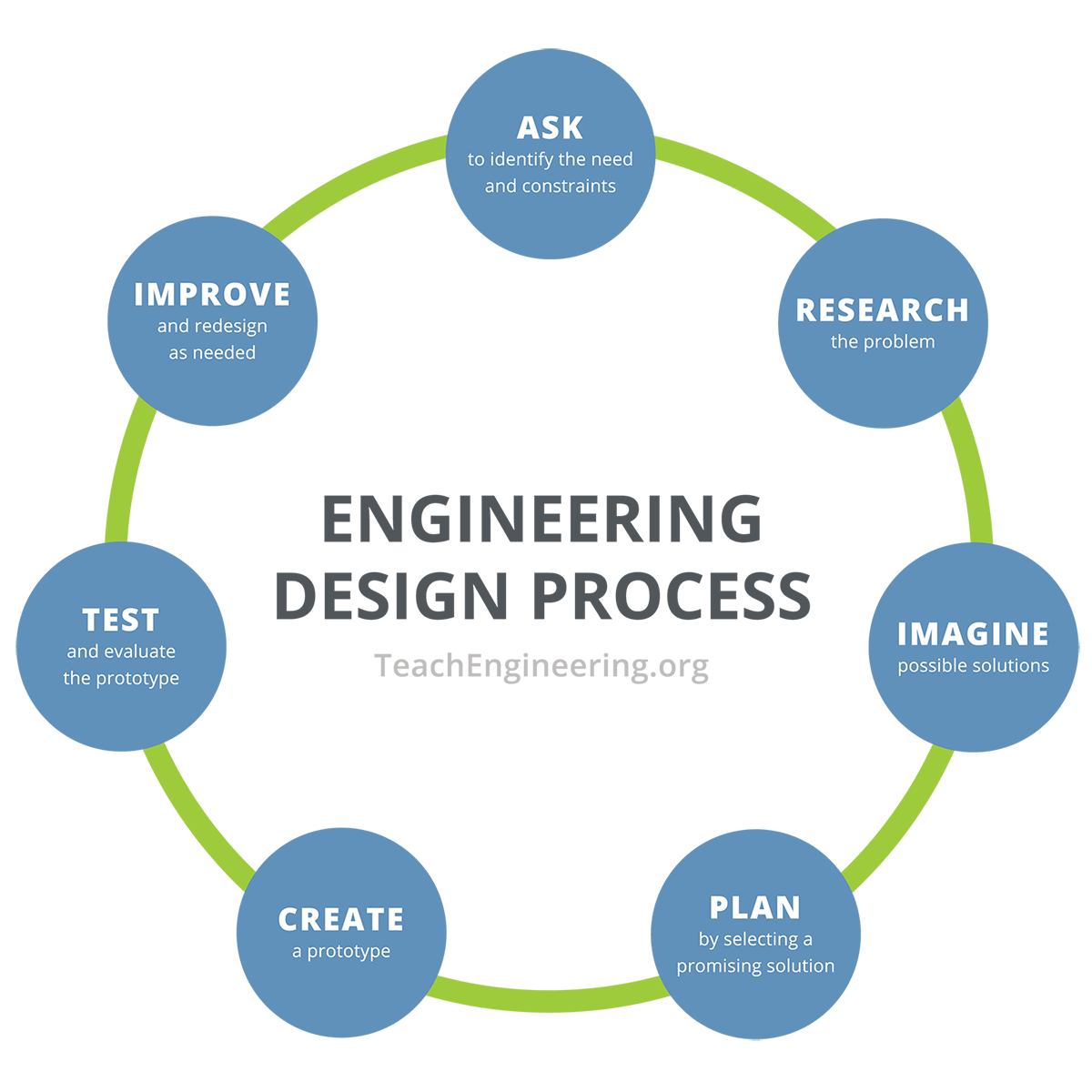
Understanding the Framework: The Definition and Importance of Engineering Design
At its core, the engineering design process is a series of steps that guide engineering teams as they solve problems. It is the bridge between a theoretical concept and a tangible technological application. In the niche of modern technology, this process is rarely a “one-and-done” sequence; rather, it is a cycle of continuous improvement.
The Iterative Nature of Modern Tech Design
In traditional engineering, such as civil or mechanical, the design process often concludes once a physical structure is built. However, in the tech world—particularly in software engineering and AI systems—the process is highly iterative. The “Agile” and “DevOps” methodologies, which are staples in software circles, are essentially applications of the engineering design process that emphasize rapid cycles of prototyping and testing. This iterative nature allows tech companies to pivot based on user data, patch vulnerabilities in real-time, and ensure that the technology remains relevant in a fast-paced market.
Differentiating Software Engineering from Traditional Systems
While the fundamental steps remain similar, technology-focused engineering design places a heavier emphasis on abstraction and logic. While a mechanical engineer might focus on the tensile strength of a material, a software engineer focuses on the efficiency of an algorithm or the security of a database architecture. Despite these differences, both rely on the same logical framework to ensure that the final product meets the specified requirements and solves the user’s pain points.
The Core Phases: From Problem Definition to Conceptualization
The first half of the engineering design process is dedicated to understanding the “why” and the “how.” Without a clear definition and deep research, the subsequent technical development is likely to fail or solve the wrong problem.
Identifying the Problem and Setting Constraints
Every great technological innovation begins with a problem. In this initial stage, engineers must define the problem in specific, technical terms. This involves identifying the “target audience” (users), the “needs” (functionality), and the “constraints” (limitations).
In tech, constraints often include hardware limitations, processing power, battery life, budget, and time-to-market. For example, if an engineer is designing a new AI-driven mobile app, a major constraint would be the device’s RAM and the latency requirements of the model. Defining these parameters early prevents “scope creep”—the tendency for a project to grow beyond its original goals.
Information Gathering and Research in the Tech Sector
Once the problem is defined, the research phase begins. Tech engineers rarely start from zero. They examine existing solutions, analyze competitor products, and research available technologies—such as APIs, open-source libraries, or specific hardware components—that could be integrated into the design.
This stage also involves a “Technical Feasibility Study.” Engineers must ask: Does the technology exist to support this design? If it doesn’t, can it be developed within the project’s timeframe? Researching patents and technical documentation ensures that the team isn’t reinventing the wheel or infringing on existing intellectual property.
Brainstorming and Solution Synthesis
With a solid foundation of research, the team enters the brainstorming phase. Here, “divergent thinking” is encouraged—the goal is to generate as many potential solutions as possible without immediate criticism. In a tech environment, this might involve whiteboarding system architectures, sketching user interface (UI) flows, or mapping out data structures.
After a wide array of ideas has been generated, the team moves to “convergent thinking.” This involves narrowing down the options based on the previously defined constraints. The best candidate for development is chosen not just for its innovation, but for its reliability, cost-effectiveness, and technical viability.
Development and Prototyping: Bringing Technical Ideas to Life
Once a conceptual solution is chosen, the engineering design process shifts from theory to creation. This is where the technical “heavy lifting” occurs, transforming diagrams and ideas into functional models.
Design Selection and Analysis
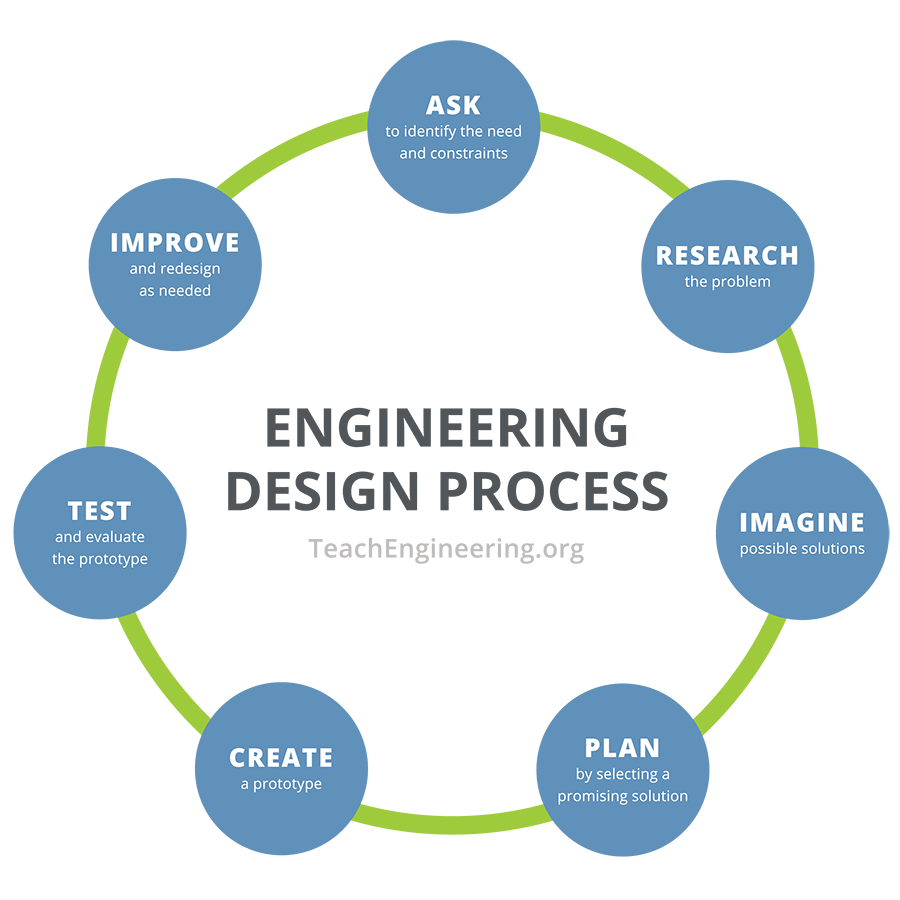
Before building, engineers perform a rigorous analysis of the chosen solution. In software, this might involve “complexity analysis” (Big O notation) to ensure an algorithm is efficient. In hardware, this involves using Computer-Aided Design (CAD) software to create 3D models and perform simulations.
Engineers use “Decision Matrices” to compare different design paths against the project’s criteria. If the goal is a high-speed data processing tool, the selection will favor designs that prioritize low latency over aesthetic complexity.
Building the MVP (Minimum Viable Product)
The first physical or digital manifestation of the design is often referred to as the Prototype or the Minimum Viable Product (MVP). The goal of a prototype is not to be a perfect, finished product, but to be a “functional representation.”
In software tech, this might be a “wireframe” or a “beta version” that includes only the core features. In hardware, it might be a 3D-printed model or a circuit board built on a breadboard. Prototyping allows engineers to see how the design behaves in the real world and identify unforeseen issues—such as a component overheating or a software bug that only appears under specific loads.
Utilizing CAD and Simulation Tools
Modern technology has revolutionized the prototyping phase through simulation. Instead of building ten physical versions of a drone, an aerospace engineer can run thousands of simulations in a virtual environment to test aerodynamics. Similarly, software engineers use “Sandboxes” and “Staging Environments” to run code in an isolated setup that mimics the real world. This reduces costs and accelerates the development cycle significantly.
Testing, Iteration, and Deployment in a Digital Ecosystem
The final stages of the engineering design process are perhaps the most critical. This is where the product is polished, validated, and finally delivered to the end-user.
Rigorous Testing and Verification
Testing is the phase where the design is pushed to its limits. For tech products, this includes:
- Unit Testing: Testing individual components of code.
- Stress Testing: Seeing how the system handles extreme loads (e.g., thousands of simultaneous users).
- User Acceptance Testing (UAT): Having actual users interact with the technology to see if it meets their needs and is intuitive.
Verification ensures that the product was “built right” (meets technical specs), while validation ensures the “right product” was built (solves the original user problem).
The Feedback Loop and Continuous Improvement
If a design fails during testing—which it often does—the process loops back to an earlier stage. This is the “Iteration” step. In the tech industry, failure is viewed as data. If a mobile app crashes during a stress test, the engineer goes back to the design or development phase to optimize the memory management. This loop continues until the product meets the necessary quality standards.
Communicating Results and Deployment
The final step is the official launch or deployment. However, the engineering design process doesn’t end with a “Download” button. Engineers must document the entire process—creating technical manuals, API documentation, and codebase comments. This communication is vital for future maintenance and for other engineers who may work on the project later. In the cloud-computing era, this also involves “Continuous Deployment” (CD) pipelines, where small updates are constantly pushed to the product to improve it post-launch.
The Role of AI and Automation in Modern Engineering Design
As we look toward the future of technology, the engineering design process itself is being transformed by Artificial Intelligence and automation.
Generative Design and Machine Learning
Generative design is a paradigm shift where engineers input their constraints (materials, weight, strength, cost) into an AI tool, and the software generates thousands of optimized design variations. This allows engineers to explore shapes and structures that the human mind might not have considered. In software, AI-powered coding assistants (like GitHub Copilot) are streamlining the development and testing phases, allowing for faster iterations and fewer syntax errors.
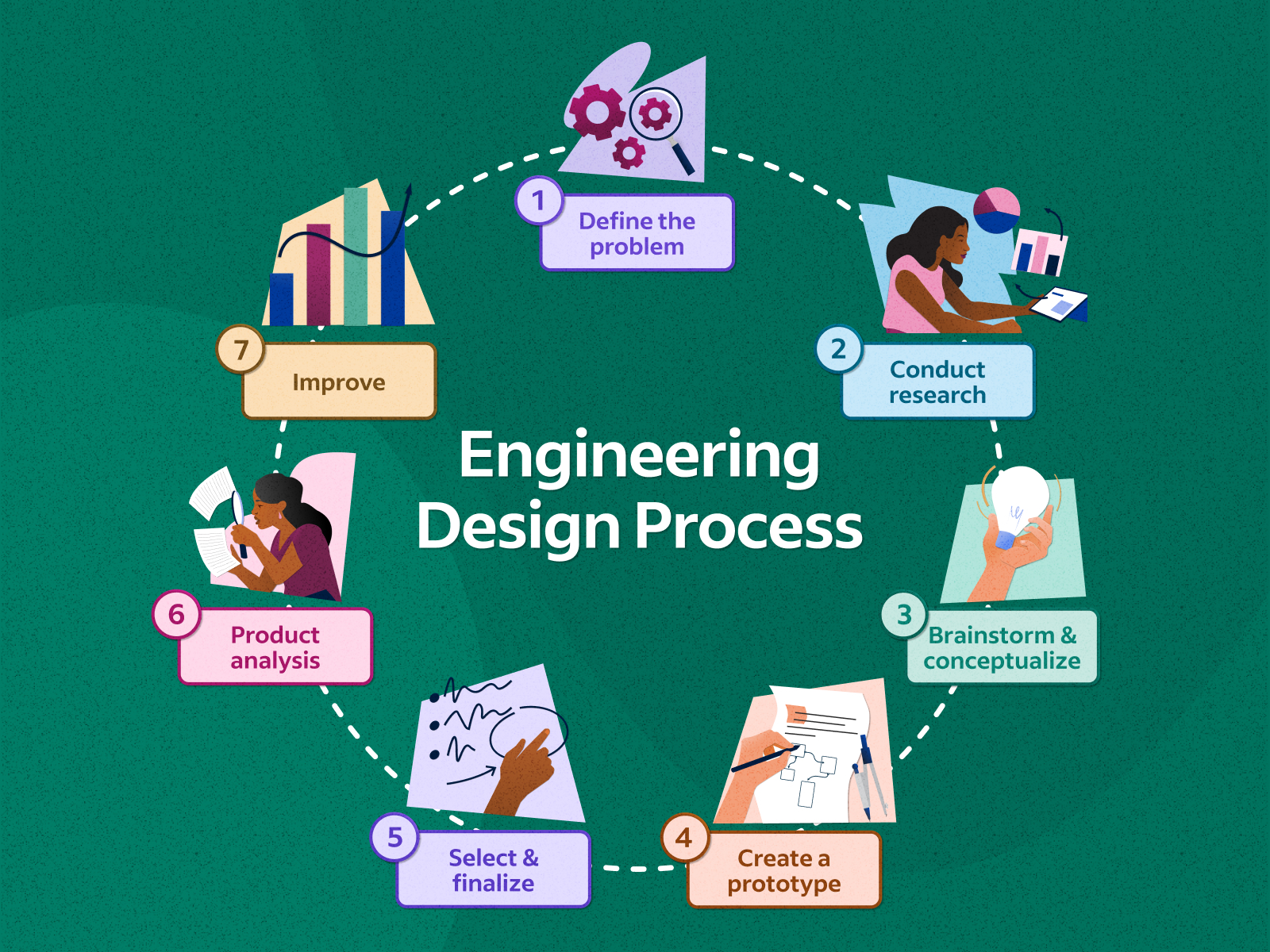
Future Trends in Tech Engineering Workflow
We are moving toward a future where the engineering design process is increasingly automated and data-driven. “Digital Twins”—virtual replicas of physical systems—allow for real-time monitoring and predictive maintenance. As AI continues to integrate into the EDP, the time from “Problem Identification” to “Final Deployment” will shrink, leading to an even faster rate of technological innovation.
By following these structured steps—Defining, Researching, Imagining, Prototyping, and Testing—engineers ensure that the technologies we rely on every day are safe, efficient, and genuinely helpful. Whether you are building a simple app or a complex satellite system, the engineering design process remains the gold standard for turning technical challenges into human triumphs.
aViewFromTheCave is a participant in the Amazon Services LLC Associates Program, an affiliate advertising program designed to provide a means for sites to earn advertising fees by advertising and linking to Amazon.com. Amazon, the Amazon logo, AmazonSupply, and the AmazonSupply logo are trademarks of Amazon.com, Inc. or its affiliates. As an Amazon Associate we earn affiliate commissions from qualifying purchases.