
In the landscape of modern science and technology, precision is the bedrock upon which innovation is built. When we discuss the fundamental measurements that govern the physical world—length, mass, time, and electricity—we often overlook the critical role of thermal energy. However, for engineers, software developers, and hardware architects, understanding the SI unit of temperature is not merely a theoretical exercise; it is a prerequisite for maintaining the integrity of every digital system on the planet.
The International System of Units (SI) identifies the Kelvin (K) as the base unit of thermodynamic temperature. Unlike the more common Celsius or Fahrenheit scales, which are relative measures based on the freezing and boiling points of water, the Kelvin scale is an absolute scale. It begins at absolute zero, the theoretical point where all molecular motion ceases. In the tech industry, where we push the limits of silicon performance and explore the frontiers of quantum computing, the Kelvin scale provides the absolute framework necessary for high-precision engineering.
The Absolute Scale: Why Kelvin is the Standard for Modern Technology
The choice of the Kelvin as the SI unit of temperature is rooted in the laws of thermodynamics. For the technology sector, the distinction between a relative scale and an absolute scale is vital. Most consumer electronics report temperatures in Celsius, but the underlying physics—from the behavior of electrons in a processor to the efficiency of a cooling fan—operates according to absolute thermodynamic principles.
The Definition of Kelvin and the Boltzmann Constant
Historically, the Kelvin was defined by the triple point of water, the exact temperature and pressure at which water exists simultaneously as a solid, liquid, and gas. However, in 2019, the scientific community moved toward a more stable definition based on fundamental constants. Today, the Kelvin is defined by the Boltzmann constant ($k$), which relates the average relative kinetic energy of particles in a gas with the thermodynamic temperature.
This shift toward constant-based definitions is a reflection of the “Tech First” mindset. By anchoring temperature to a universal physical constant rather than the properties of a specific substance like water, scientists ensure that measurements remain consistent across the universe. For developers working on satellite technology or deep-space communication tools, this level of universal standardization is essential for calibrating sensitive thermal sensors that operate far beyond Earth’s atmospheric conditions.
Comparing Kelvin to Celsius and Fahrenheit in Tech Applications
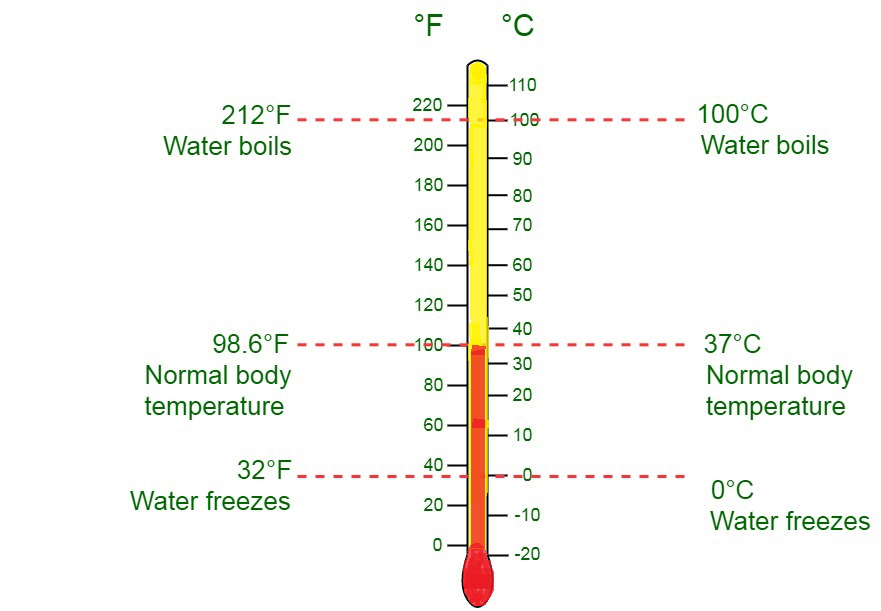
While the Kelvin scale is the standard for scientific calculation, the tech industry often performs a “translational dance” between scales. One Kelvin is equal in magnitude to one degree Celsius. The primary difference is the starting point: 0 K is equivalent to -273.15°C.
In hardware reviews and consumer software, Celsius remains the dominant unit because it is intuitive for human users. A CPU running at 80°C is easily understood as “hot.” However, in the realm of semiconductor physics and cryogenic research, Celsius becomes cumbersome. When calculating the efficiency of a liquid nitrogen cooling system for extreme overclocking, using a scale that begins at the point of zero molecular energy simplifies the complex calculus of heat transfer and energy entropy.
Thermal Dynamics in Semiconductor Engineering
The relationship between temperature and technology is most visible in the lifecycle of a microprocessor. Every time a transistor switches states, it generates a minuscule amount of heat. With billions of transistors firing billions of times per second, the thermal energy produced is immense. This is where the SI unit of temperature becomes a critical metric for hardware designers.
Heat Dissipation and Silicon Longevity
Semiconductors are highly sensitive to thermal fluctuations. As the temperature of a chip rises, the kinetic energy of the atoms within the silicon lattice increases. This leads to a phenomenon known as “leakage current,” where electrons jump their intended paths due to thermal agitation. If left unchecked, this leads to a “thermal runaway” scenario, where the heat increases the leakage, which in turn increases the heat, eventually leading to the physical destruction of the hardware.
Engineers use the Kelvin scale to calculate the thermal resistance of materials used in heat sinks and thermal interface materials (TIM). By measuring the temperature gradient in Kelvins per watt of power dissipated, designers can create cooling solutions that ensure a processor stays within its safe operating range, thereby extending the MTBF (Mean Time Between Failures) of enterprise-grade hardware.
Thermal Throttling: The Software-Hardware Intersection
Modern operating systems and BIOS/UEFI firmware utilize sophisticated thermal management algorithms. When a sensor detects that a component is approaching its “T-junction” maximum, the software intervenes through a process called thermal throttling. This reduces the clock speed of the CPU to lower the power consumption and, consequently, the heat output.
For software developers, particularly those working on high-performance computing (HPC) or gaming engines, understanding these thermal limits is crucial. Code that is not optimized for thermal efficiency can trigger throttling, leading to unexpected latency spikes and performance degradation. By understanding the thermodynamic limits expressed through the SI unit of temperature, developers can write more efficient “thermal-aware” code that maximizes hardware potential without triggering protective shutdowns.
Quantum Computing and the Engineering of Extreme Cold

Perhaps no area of technology relies more heavily on the Kelvin scale than quantum computing. Unlike classical computers that operate comfortably at room temperature (approximately 293 K), quantum processors require environments that are among the coldest in the known universe.
Superconductivity and the Need for MilliKelvin Environments
Quantum bits, or qubits, are the fundamental units of quantum information. Many leading quantum architectures, such as those developed by IBM and Google, utilize superconducting circuits. Superconductivity—the ability of a material to conduct electricity with zero resistance—only occurs when certain materials are cooled below a specific “critical temperature.”
These systems typically operate at temperatures measured in milliKelvins (mK)—thousandths of a Kelvin. To put this in perspective, outer space has a background temperature of about 2.7 K. Quantum computers are often cooled to 0.015 K (15 milliKelvins). In this extreme niche of the tech industry, the Celsius scale is entirely irrelevant. The precision required to maintain a stable quantum state (coherence) demands the absolute measurement accuracy that only the Kelvin scale provides.
Cryogenic Infrastructure in Data Science
The hardware required to reach these temperatures is a feat of modern engineering. Dilution refrigerators use isotopes of helium to leach heat away from the processor. For the tech professionals managing these sites, monitoring temperature isn’t just about checking a dashboard; it’s about managing a complex thermodynamic environment where a fluctuation of even a few milliKelvins can ruin a multi-day computational experiment. As quantum technology moves from the lab to the cloud, the “Kelvin-as-a-Service” model of cooling infrastructure will become a standard part of the tech stack.
Precision Sensing and IoT: Translating Physical Heat into Digital Data
The Internet of Things (IoT) has led to a proliferation of temperature sensors in everything from smart thermostats to industrial manufacturing lines. These sensors act as the bridge between the physical world and digital analytics, and their calibration relies heavily on SI standards.
Digital Thermometry and Calibration Standards
Most digital sensors use thermistors or Resistance Temperature Detectors (RTDs) to measure heat. These devices work on the principle that the electrical resistance of a material changes in a predictable way as its temperature changes. To ensure that an IoT sensor in a German factory provides the same data as one in a Brazilian warehouse, they must both be calibrated against the Kelvin scale.
In the world of Digital Security and “Secure IoT,” temperature data can even be used as a security metric. For example, some cryptographic systems use thermal noise—the random movement of electrons measured in Kelvin—as a source of entropy for generating truly random encryption keys. Without the precise measurement of the SI unit of temperature, our digital security protocols would be significantly less robust.
Edge Computing and Harsh Environment Operations
As tech moves toward “Edge Computing,” where processing happens on-site rather than in a centralized data center, hardware is being deployed in increasingly harsh environments. From oil rigs to polar research stations, these edge devices must operate in extreme temperatures. Engineers must design these systems to withstand thermal cycles—the expansion and contraction of materials as they heat and cool. Using the Kelvin scale allows for more accurate modeling of material stress and fatigue, ensuring that the digital infrastructure remains resilient regardless of the external climate.
The Future of High-Performance Cooling in the AI Era
The explosion of Artificial Intelligence (AI) and Machine Learning (ML) has created an unprecedented demand for computational power. Training large language models requires massive GPU clusters that generate heat at a density previously unseen in the commercial tech sector. This has forced a revolution in data center design and thermal management.
Liquid Immersion and Two-Phase Cooling
Traditional air cooling is reaching its physical limits. The tech industry is now pivoting toward liquid immersion cooling, where entire server racks are submerged in non-conductive dielectric fluid. This fluid is significantly more efficient at absorbing and transporting heat than air.
Calculating the efficiency of these systems requires a deep understanding of the thermodynamic properties of the fluids, often measured in terms of their heat capacity and thermal conductivity relative to Kelvin. We are also seeing the rise of “two-phase” cooling, where the coolant boils and turns into vapor, carrying away latent heat before being condensed back into a liquid. This phase-change technology, once reserved for high-end aerospace applications, is becoming a staple of the AI data center.
Scaling Global Infrastructure with Thermal Efficiency
As we look toward the future, the tech industry’s focus on the SI unit of temperature will only intensify. With global energy costs rising and environmental regulations tightening, “Thermal Efficiency” is becoming a key performance indicator (KPI) for corporate infrastructure. Data centers are now being rated by their Power Usage Effectiveness (PUE), a metric that is heavily influenced by how effectively they can manage their Kelvin-based thermal gradients.
In conclusion, while the average user may never need to think about the Kelvin scale, it remains the silent guardian of our digital world. From the micro-scale of a transistor to the macro-scale of a global data center, the SI unit of temperature provides the fundamental language through which we understand, manage, and optimize the machines that power the modern age. Whether we are cooling a quantum bit or preventing an AI server from melting, Kelvin is the measure of our success in the digital frontier.
aViewFromTheCave is a participant in the Amazon Services LLC Associates Program, an affiliate advertising program designed to provide a means for sites to earn advertising fees by advertising and linking to Amazon.com. Amazon, the Amazon logo, AmazonSupply, and the AmazonSupply logo are trademarks of Amazon.com, Inc. or its affiliates. As an Amazon Associate we earn affiliate commissions from qualifying purchases.